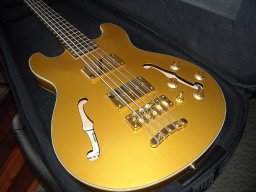
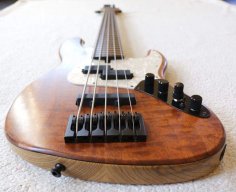
There are a lot of variables. You should be able to answer the question yourself, really. If you have a 4 string, and you've needed the low or high range of a 5 or 6 string, then yes. If you've been fine with the 4, then no!
Not to sound dismissive, but I think we get caught up in the theoretical problems that other people have sometimes. I've learned to just deal with the needs that I have rather than the ones I might have, and for me that means that I rarely need a 5 string, but enough to own one. But for the past 6 years, I really didn't need one.
Actually there is even MORE than this. You have to ask if having added range will be a DETRIMENT to your playing. If you are playing classic rock with bass lines by the masters I find that even a 5 string creates a temptation for for me to "improve" the bass lines with added notes. This is NOT a good idea.
Also if you are into slapping. I find that slapping is much easier on a 4 string and a 5er tends to make my slapping worse and a 6er much worse just due to the string spacing and extra strings to deal with.
But having said that, i'll say that after playing 4 stringers for MANY years, today I only play 5,6, and 7 string basses (except for my 8 string which is basically a 4) I started on piano (check the "extended" range on a piano both up and down) and playing in horn bands could NEVER understand what goofball cut off the bass low notes at E. What were they thinking? I really don't understand all the "coming home to 4" posts in TB. It'd be like me getting out the chainsaw, whacking off the piano keyboard of all notes below E and then crowing about how I finally "came home". I don't think so. Personally I ALWAYS felt the limitation of no Eb from the beginning and was never so happy as when 5ers started to be readily available.
And moving to a 5er is when I discovered that it really isn't just a 4 string bass with an extra string. You play it a different way. Things flow across the neck. It's much easier. Yeah, maybe one could say "lazy" but works for me. Hence I'm playing notes ABOVE E on the B string much more often than those few low notes.
And then I got intersted in stratospheric bass solos and got a 6er. Basically the same 5 string patterns and ways of playing work there, only you have a bit more range on the high notes without going up the neck (which you still do as well to get the really high notes). And also I had been into a few bass chords on the 4 and always noted how you had to choose your chords and double stops wisely to keep from sounding too muddy. Same is just as true for 5er. But a 6 or 7 strings gets you up out of the mud.
But do you NEED these things. As pottsdambass8 says that is the KEY. For the longest time all I played were 6ers. I needed that high range. At the same time I strung my 5er (Carvin AC50 which does not come in 6) with a high C. Worked great. But then things shifted and I no longer needed those high notes. Plus my main axes becames my G&L L2500 basses which only come in 5 string. Plus just being lazy I simply didn't want to deal with the extra 6 string weight and neck width if I wasn't using it at all. So now my 6 strings are just sort of sitting except for practice and fun.
But I"m not getting rid of ANY of them: 5, 6 or 7. Because for me I just never know what I might NEED. I simply do NOT want to need extended range and then being force to compromise with some other notes. I had WAY too much of that back in my 4 string days looking for the Eb that was never there. If I NEED the notes I want them on the bass. If I'm not using them then I can still have them and not use them, but usually I prefer taking an easier way out with a bass with fewer strings. If the music is writen for 4 strings then I'll play 4 strings.
I don't get the religion around here where people think you can only play one kind of bass (the kind they play) and then have to argue with everyone about it.

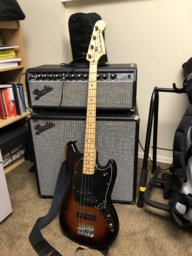

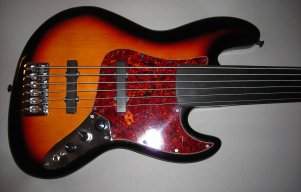

 I really like the 5`ers, especially if it is a 34" scale. I feel like many 35" scale basses looses their meat and the bottom of the high strings.. The B on a 34" sounds great if you just use a light string gauge. Like a 110 instead of a 125 B-string