• TalkBass has been independent since 1998. Add your voice.
    Create a free account to reply to discussions, view embedded media, and browse with fewer display ads.
    Join freeLog in
    Want zero display ads or expanded classifieds tools? Compare plans.

is only the headstock copyrighted?

so why the headstock alone?? why not the body?? oh, yea.. thats the original question.... so in essence, this answered NOTHING... :hmm:

Fender chose to trademark the headstock design, not the body. To be clear, the answers to the original questions are provided below.

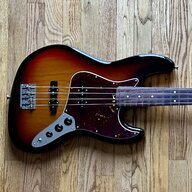
ok. so I know that when a company like SX makes a Jazz bass copy, for example, they cannot copy the headstock shape exactly, because that is a fender trademark, right?

Right.

but the body shape, pickguard shape, etc. are exactly the same, are they not?

Nothing is ever identical (including identical twins), but some copies are closer than others.

why is this allowed, but not the headstock?

Because Fender trademarked the headstock design.

did fender, and the other original makers just have to decide on one distinguishing factor?

They didn't have to, but that is what Fender did.

 
To my knowledge the headstock is not patented but trademarked. The words offset body contour MIGHT be trademarked but I can't find it.

If the offset body contour was ever patented (doubt it) then it has since expired (patents re only good for 20 years max)

I think this one was true. fender forced Gibson to redesign the Firebird and thunderbird at they infringed upon the offset body design. Hence the non-reverse body designs.

You may be right about the patent expiring though at the brought back the reverse body later.
 
It's true that Fender got Gibson to change the Tbird, but the actual suit was decided in Gibson's favor. Leo Fender, as I understand it, was quick to sue for what he felt were infringements on his proprietary designs.

Fender claimed to have established first use of the offset body (which, ironically enough, is a feature I really dislike about the J bass). In response Gibson brought a 1930's F5 mandolin to court to show the judge its offset waist.

That put the end to claims on behalf of Fender for that particular feature.

It didn't stop Fender from (rightly, in my opinion) enforcing its ownership of the peghead shape -- probably one of the most distinctive around.
 
Lots of incorrect info above. I can't address all of the issues, but here's a start:

First, TMs, CR's and patents are all different. TM's protect words, logos, etc. used to indicate the source of goods

Would be nice to be more clear. I have written one of the "above" replies and it is %100 CORRECT. If you say it is not, I'd like to hear your explications. If you have not pointed my reply, then see my first sentence in this reply.