• TalkBass has been independent since 1998. Add your voice.
    Create a free account to reply to discussions, view embedded media, and browse with fewer display ads.
    Join freeLog in
    Want zero display ads or expanded classifieds tools? Compare plans.

Is that really a "single coil" pickup?

Yamaha's RBX170 page, under "Specs", says "Pickups: Split Coil x 1, Single Coil x 1".

I look at the picture, and each pickup clearly has eight little poles sticking out.

Yamaha's copywriters are confused, right? Or am I? All I know about pickups is what I could find quickly on wikipedia.

(Context: I'm looking for a bass that picks up a little less buzz than my current bass. "Avoid single coil pickups" seems to be common enough advice for someone in my situation. Maybe I should post a separate "help me buy a new bass" question.)
 
Split-coil is the 'P' pickup, because the two coils are in separate housings. Single-coil is the 'J' pickup, because the windings run the entire length of the housing, under all four strings on the wire bobbin. If the 'J' pickup was humbucking, there would be two wire bobbins in the case, one under the 'E' and 'A', and one under the 'D' and 'G'. Since there is one wire bobbin under all four strings, it is a single-coil pickup. Hope this helps. Cheers. ;^D.
 
Split-coil is the 'P' pickup, because the two coils are in separate housings. Single-coil is the 'J' pickup, because the windings run the entire length of the housing, under all four strings on the wire bobbin. If the 'J' pickup was humbucking, there would be two wire bobbins in the case, one under the 'E' and 'A', and one under the 'D' and 'G'. Since there is one wire bobbin under all four strings, it is a single-coil pickup. Hope this helps. Cheers. ;^D.
Yes, you can get humbucking / hum-cancelling J pickups, several different varieties exist, but in the RBX170 page, I have to assume they mean good old buzz-prone single coil, or they'd be bragging about it. OP, number of polepieces is independent of number of coils, the J has 8 polepieces on 1 coil, a bass humbucker would normally have 8 polepieces across 2 coils, different beasts entirely.
 
  • Like
Reactions: bfields
Yeah you're a little confused, even though a j-pickup has 8 poles there is still only 1 "coil" running around all eight. The number of poles does not determine the number of coils.

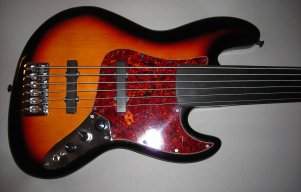
889d1187367722-dscf0008.jpg

^single coil jazz

b-nj4se_34view.jpg

^split coil jazz (hum-canceling)

1.jpg

^dual coil jazz humbucker

IMG_7006.jpg

^stacked jazz humbucker
 
JBE_JBass2.png

Another solution I intend to try - Joe Barden's dual rail humbucker J. I assume there are two narrow coils under there.
Curtis Novak's take:
jb-hc.jpg
 
Yamaha's RBX170 page, under "Specs", says "Pickups: Split Coil x 1, Single Coil x 1".

I look at the picture, and each pickup clearly has eight little poles sticking out.

Yamaha's copywriters are confused, right? Or am I? All I know about pickups is what I could find quickly on wikipedia.

(Context: I'm looking for a bass that picks up a little less buzz than my current bass. "Avoid single coil pickups" seems to be common enough advice for someone in my situation. Maybe I should post a separate "help me buy a new bass" question.)

If you want to avoid single coil pickups (which I personally quite like, but, to each his own), then you should probably buy something else. If you just have to have one of those, though, the solution is easy enough. The split coil is (or should be) a humbucker already - that split-coil P-Bass pickup was Leo Fender's solution to having a humbucker without having to pay royalties to Gibson, IIRC - so, all you would need to do is replace the one Jazz -style pickup with either a split-coil or stack-coil Jazz. I imagine the pickup could be changed out fairly easily and inexpensively.:)
 
The split coil is (or should be) a humbucker already - that split-coil P-Bass pickup was Leo Fender's solution to having a humbucker without having to pay royalties to Gibson, IIRC - so, all you would need to do is replace the one Jazz -style pickup with either a split-coil or stack-coil Jazz. I imagine the pickup could be changed out fairly easily and inexpensively.:)

Yeah, my actual bass is an older low-end Yamaha (probably the RBX260), which has the one split-coil pickup. So I'm not sure if a different bass or pickups would help or what to look for.

I did take it to a guitar repair guy who poked around and who seemed to think that the noise was more than normal but that there was nothing obviously broken. (It's the only guitar I've played so I don't really even have a good feel for what's normal.) I like the bass otherwise, but lately have been recording a little (just for my own practice) and I've been noticing the noise more.

I'd rather not take on an upgrade project, so I've thought about buying another, but obviously just checking specs for "not single coil" isn't enough, so I'm a bit at a loss for what to look for. Money's not too tight (a less low-end bass would be fine if that's what's required) but I don't want to go overboard either.
 
Yeah, my actual bass is an older low-end Yamaha (probably the RBX260), which has the one split-coil pickup. So I'm not sure if a different bass or pickups would help or what to look for.

I did take it to a guitar repair guy who poked around and who seemed to think that the noise was more than normal but that there was nothing obviously broken. (It's the only guitar I've played so I don't really even have a good feel for what's normal.) I like the bass otherwise, but lately have been recording a little (just for my own practice) and I've been noticing the noise more.

I'd rather not take on an upgrade project, so I've thought about buying another, but obviously just checking specs for "not single coil" isn't enough, so I'm a bit at a loss for what to look for. Money's not too tight (a less low-end bass would be fine if that's what's required) but I don't want to go overboard either.
We all had to learn sometime so don't be embarrassed to come on here and ask for help when you need it. If you're in the market for an entirely new bass the keywords you'll want to look for are "humbucker" or "dual coil", rather than "not single coil". Even still, it may not be easy to tell what kind of pickup is hiding under a soap bar cover (though generally they are humbuckers), and sometimes the pickups will be only be referred to by their specific model name.
 
Yeah, my actual bass is an older low-end Yamaha (probably the RBX260), which has the one split-coil pickup. So I'm not sure if a different bass or pickups would help or what to look for.

I did take it to a guitar repair guy who poked around and who seemed to think that the noise was more than normal but that there was nothing obviously broken. (It's the only guitar I've played so I don't really even have a good feel for what's normal.) I like the bass otherwise, but lately have been recording a little (just for my own practice) and I've been noticing the noise more.

I'd rather not take on an upgrade project, so I've thought about buying another, but obviously just checking specs for "not single coil" isn't enough, so I'm a bit at a loss for what to look for. Money's not too tight (a less low-end bass would be fine if that's what's required) but I don't want to go overboard either.

More hints: Hum (buzz) comes from two places. 1. Electrostatic hum. 2.. Single coil hum. #1 is eliminated with proper shielding and grounding of electronics. You can tell when hum is coming from #1 by touching strings or other "ground" (like jack body) If the hum goes away or gets less that means you have static hum and shielding needs looked at!

In the case of #2, single coil hum, touching ground or strings won't change hum level at all.. However in this case if moving and rotating the bass around (even into unplayable positions) changes the hum level (or even "nulls" the hum), that means you have single coil hum. The ONLY fix for that is install a humbucking pickup or moving away from the hum source (My amp power supply is an EXCELLENT source of single coil hum!)

A final note. A Jazz pickup with two coils is called a "split coil". Essentially one coil picks up two strings and the other coil picks up the other two. If the magnets and coils are the same direction in both coils it is no different from a standard single coil pickup. It will hum. But you can turn off two strings if you want. On the other hand, SOME split coils have one coil and it's magnets reversed from the other coil. This creates a hum-canceling pickup! It will NOT give you single coil hum!

The down-side of split-coil and other hum-canceling Jazz pickups is that they DO NOT sound as good as single coils. How "not as good" seems to depend on how much money you are willing to spend. For high dollars one can find some pretty nice hum-canceling pickups though probably won't quite nail the single coil tone. This is why people put up with single coil hum. A humbucker jazz pickup that sounds just like a single coil is sort of the holy grail that everyone is searching for.

Hope this helps.
 
Last edited:
Ok, thanks bassbenj, I understand, really it,s very good your explanation, but, and about my "why"?

You wrote: "...The down-side of split-coil and other hum-canceling Jazz pickups is that they DO NOT sound as good as single coils...". Why? Technically, what makes them sounds like humbuckers?

I understand stack or side-by-side singles are Humbuckers, for my poor knowledge they "seem" like humbuckers, but "in line" splits (I use Aguilars HC splits) sounds to me like "authentic" singles, or should. Thanks again.
 
Ok, thanks bassbenj, I understand, really it,s very good your explanation, but, and about my "why"?

You wrote: "...The down-side of split-coil and other hum-canceling Jazz pickups is that they DO NOT sound as good as single coils...". Why? Technically, what makes them sounds like humbuckers?

I understand stack or side-by-side singles are Humbuckers, for my poor knowledge they "seem" like humbuckers, but "in line" splits (I use Aguilars HC splits) sounds to me like "authentic" singles, or should. Thanks again.

No, it's not necessarily that they "sound like humbuckers". Note that one reason humbuckers have a fatter different tone from jazz pickups is that the area of the strings that is producing signals is much less narrow (because you have two pickups spaced at a distance) than a single jazz pickup.

So you ask, well, doesn't a side by side "split coil" humbucker (like say your Aguilars HC which are humbuckers) solve that problem by only having a single line of poles picking up the sound? And the answer, of course is "yes it does...to a degree". It is the "degree" thing that is the problem.

One of the "split coil" problems is that because the magnets in one half must be reversed from the other half to make it cancel hum, that distorts magnetic field at the top of the pickup from a single coil. Note that a P-bass has the same problem but minimizes it by moving the two coils off-set from each other. That moves the magnetic field distortion away to a degree, but the price you pay is that now the two halves are looking at two different spots relative to the total length of the string. Still, it is a decent compromise and works pretty well.

And there is more. Because you are winding two coils side by side there is a space limitation for winding wire. This causes coils to be underwound, and changes the impedance and inductance and capacitance and hence the "tone" of the pickup. The "art" of all this is trying to get those two coils to approximate the sound of a larger single coil. Nordiy big splits, for example, use the P-bass idea of angling the coils to each other to attempt to gain more winding space. Seems to work pretty well, but again you can see it's a compromise. Hence the tone of hum-canceling pickups can be quite good, but you can see just from the geometry problem of fitting wire, compromises occur. The skill of the pickup maker is to find how to make the pickup sound as good as possible while keeping hum canceled.

The last solution is simply to use real single coil pickups, but rather than just letting them hum, you add an other coil just for the purpose of picking up hum. You electronically mix that hum into the pickup output to cancel your single coil hum. Alembic has had this system for years. Now Audere is offering a "phantom coil" system like this for jazz basses as well. Haven't tried it, but seems like a good idea. Downside, of course is bass now must be active and hence electronics is much more complex.

Bottom line is that if your pickups cancel hum and sound good to you, then that's good enough. My PJ has a Dimarzio Ultrajazz (split coil humbucker) that sounds good enough to me. So that means it's good enough. My Jazz V deluxe has two SCN pickups I installed. They happen to be stacked coil which in the past (Carvin) did not impress me, but I totally LOVE the sound of SCNs and LOVE the fact that single coil hum is gone. So if I'm happy, they I guess that is good enough for me! The reason the SCNs were installed was because the bass originally had Fender "noiseless" pickups which were side by side split coils and I HATED the tone! Didn't sound anything like a single coil to me.

So like I said, pickup makers are working on this, but it is really about getting the right combination of things going. If it sounds good to you then it IS good! If not, then try something else.
 
Ok, a magnetic field distorted, because the reversed poles, degrades tone. Inductance, capacitance and impedance changes caused by "space" between the two "in line" coils - or winding limitations -, that's certainly more than enough reason (too) to modify the tone of the split-coils pickups. If I understood perfectly your explanation, so, my conclusion is that "splits" don't sounds like humbuckers, just don't have a authentic single coil tone. I think the Audere phantom solution looks the best. But what matters is to be happy, like you said, with our pickup (and bass) tone. I really like the Aguilars HC. Thanks again "teacher" bassbenj.
 
By the way, I just ran across this while looking for a different post, and thought I'd update: lack of shielding was indeed the cause of the noise I was hearing. I used a kit with copper tape from stewmac, and the problem went away. People say that's an easy job, but I personally found it kind of fiddly and time-consuming, and my results a little sloppy. So more recently when bought a fretless version of the same model (the Yamaha 260F), I took to it to a pro for shielding, and was happy with the results.

Thanks to everyone again for your help getting me started figuring this all out--four years later I'm a much more confident bass owner and player!
 
  • Like
Reactions: bholder

Latest posts