• TalkBass has been independent since 1998. Add your voice.
    Create a free account to reply to discussions, view embedded media, and browse with fewer display ads.
    Join freeLog in
    Want zero display ads or expanded classifieds tools? Compare plans.

Is the Precision still #1?

Leo got everything wrong, he insisted on calling tremolo vibrato, and vibrato tremolo, and oriented the P pickups the wrong way, so that the thick low strings would sound even boomier, and the thin high strings would sound even tinier, causing imbalance across the board, instead of balancing it out.

A totally missed opportunity.

And why is the P Bass then so popular, one word: tradition!
Agree on the reverse P. Though as far as tradition goes, I think it's fair to say that the precision bass sound supports a band mix very well and is audible for the player too. In many genres, and it also excels for recording. Maybe that is why it's popular, in addition to tradition.
 
  • Like
Reactions: Ash Jazz
Agree on the reverse P. Though as far as tradition goes, I think it's fair to say that the precision bass sound supports a band mix very well and is audible for the player too. In many genres, and it also excels for recording. Maybe that is why it's popular, in addition to tradition.
I say if it did not sound good, people would not have used it to begin with, and you would not have "tradition"! I still use a hammer (in most cases) to drive a nail, not because its tradition but because it is the best tool for the job! So, I agree with you!
 
I still use a hammer (in most cases) to drive a nail, not because its tradition but because it is the best tool for the job! So, I agree with you!

that's the point, IMHO, and it was discussed in many in-depth videos explaining the frequency spectrum of different basses, and why the Precision is still the most used.

one can prefer the brighter sound of a Jazz, the scooped and metallic sound of an active bass, the nasal and bright sound of a Stingray, but still most "played" music is recorded with a Precision, with rounds or flat.

it just works, serves the frequency range that is usually dedicated to the bass line in a "easier" way.

just a few months ago I went to record some tracks, and took with me three basses:

a Precision with nickel rounds
a BB3000 with Rotosound (it sounds different from a Fender, totally different EQ)
a Manson JPJ with EMG 35P and EMG35TW with nickel rounds.

the Precision just worked better, and we recorded with it.

live I usually go with the Manson, even for blues gigs, because it works better with DI and mixers, but when recording, the P bass is second to none... except if you DON'T need it.

we don't play the same music, and there are a lot of contexts where the Precision is not the best.
 
I say if it did not sound good, people would not have used it to begin with, and you would not have "tradition"! I still use a hammer (in most cases) to drive a nail, not because its tradition but because it is the best tool for the job! So, I agree with you!
I don't get this, what exactly is the hammer representing in this analogy?

If a P Bass is a hammer, then what are other basses, screwdrivers?

And in that case are nails better than screws, or would that be a matter of what you are building and authenticity to the given construction from a historical perspective?

Also I never said P Basses sound bad, could have been better designed, but no strong contenders at the time it became a tradition that did it much better.
 
Last edited:
There is a certain elegance in simplicity when a design is just very, very right.

While we can certainly kick around things you might change or fine-tune (reversed pickups, scale length, etc.), Mr Fender got it very right, especially the second generation with the kinder body contours and the split-humbucking pickup.

They're easy to play, easy to run through the FOH, and generally easy to record, and with their age, lots and lots of collective, accumulated experience with this platform. And something a beginner can buy and use for many years, or serve a long-time experienced player as well.

It's the Everyman Bass.
 
My guess is the P-bass is still #1 overall. I could care less and I suggest that you should play whatever bass bass you want.

Back when I first started, I was anti-P. My first bass was a Ric 4001. The Ric remained my number one for 13 years or so. My second #1 was a Yamaha BB5000. Looked pretty much like a 5-string PJ, but I don't think it sounded quite like a real PJ. Played the BB5000 for 3-4 years until I got the Jones for a 6-string. Yamaha TRB6P has been my #1 since about 1995. The TRB6P is sort of a J shaped object. I did not actually choose the TRB6P. I was a military bandsmen and the TRB6P was the only 6-string bass owned by the organization. The BB5000 was also a military axe.

I actually own a Fender Precision Elite II. It's active and doesn't really sound like the typical P. It's the only Fender bass I have ever owned...never gigged it. Back in the early 80s I was tempted by the Precision Special. It's another active bass. From what I remember it had sort of a P sound but was more HiFi sounding and had more highs and lows. I was also very tempted by the Roscoe Beck 5.
I have a 1983 Fender Elite II too. Sounds great, very 80s vibe.
 
I don't get this, what exactly is the hammer representing in this analogy?

If a P Bass is a hammer, then what are other basses, screwdrivers?

And in that case are nails better than screws, or would that be a matter of what you are building and authenticity to the given construction from a historical perspective?

Also I never said P Basses sound bad, could have been better designed, but no strong contenders at the time it became a tradition that did it much better.
They would be a nail gun, if I was driving screws I would use a screwdriver! BTW I responded to Bass4liferRS not you! However, you did say Leo got "everything" wrong so one could infer you meant sound as well!
 
Last edited:
  • Like
Reactions: Ash Jazz
I just purchased my very first P bass (and only 2nd Fender) in my 40 years of playing. I had a Power Jazz Special in the late 80’s early 90’s. This bass just has THE sound. I love the simplicity of it. Still struggling with the wider neck as I”m very used to a 1 1/2” nut.
 
  • Like
Reactions: Ash Jazz
It wasn’t that long ago as Gen X remembers things that P basses were metaphorically spit upon and reviled by the great many of Talkbass users. They only had one pickup, generally only available with 4 strings, no active preamp, no coffee table top woods, etc. Dinosaurs. For old men, in particular. There wasn’t a single genre of music where they wouldn’t be out-performed by a Ken Smith, a Sadowsky, a MTD, a Stingray, a passive or active Jazz, or even a Warmoth parts build. Not long ago at all.

It seemed to turn after the 2008 American Standards were released, and then accelerated with the 2012-2016s. People “discovered” Pino Palladino, James Jamerson, and Carol Kaye’s most famous work, and suddenly everyone needed vintage this and vintage that.

I dunno, maybe my memory is faulty, I hear that happens.

Anyway, I’ve owned Stingrays, Dimensions, Jazzes, Thunderbirds, and others too numerous to mention. They’re all great. It’s bass guitars that I love, and amps, and cabs, and pickups. Great bass parts. Great bass performances. Great bass tones.

However, for me, my hands and ears and eyes need a P bass. I recently sold off all of my basses except 5 P basses and one Jazz, and then bought two Jazz basses, which for whatever reason I try to make sound like P basses. So I’m down to eight basses right now, all Fenders and all but two are US made.
 
It wasn’t that long ago as Gen X remembers things that P basses were metaphorically spit upon and reviled by the great many of Talkbass users. They only had one pickup, generally only available with 4 strings, no active preamp, no coffee table top woods, etc. Dinosaurs. For old men, in particular. There wasn’t a single genre of music where they wouldn’t be out-performed by a Ken Smith, a Sadowsky, a MTD, a Stingray, a passive or active Jazz, or even a Warmoth parts build. Not long ago at all.

It seemed to turn after the 2008 American Standards were released, and then accelerated with the 2012-2016s. People “discovered” Pino Palladino, James Jamerson, and Carol Kaye’s most famous work, and suddenly everyone needed vintage this and vintage that.

I dunno, maybe my memory is faulty, I hear that happens.

Anyway, I’ve owned Stingrays, Dimensions, Jazzes, Thunderbirds, and others too numerous to mention. They’re all great. It’s bass guitars that I love, and amps, and cabs, and pickups. Great bass parts. Great bass performances. Great bass tones.

However, for me, my hands and ears and eyes need a P bass. I recently sold off all of my basses except 5 P basses and one Jazz, and then bought two Jazz basses, which for whatever reason I try to make sound like P basses. So I’m down to eight basses right now, all Fenders and all but two are US made.
I have heard a lot of people say the same thing, especially during the 90's! But I think they were still being recorded with in large numbers!
 
  • Like
Reactions: Ash Jazz
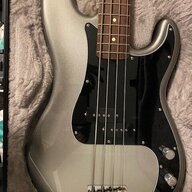
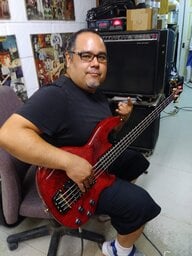
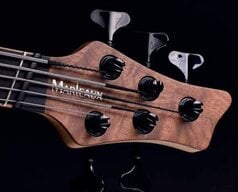
I can't say if the P Bass is #1 or if it ever was #1 but if I may express myself, when I hear the word, "bass", these are the 2 images that come into my head.

1758116448943.png
1758116479670.png
 
Leo got it right the first time. OK, the body had edges that got in the way, so he fixed that. Leo got it right the 2nd time. Oh, that issue of...hum. So he split the pickup. Leo got it right the 3rd time. OK, people eventually decided they liked necks that wren't quite that wide - "modern" P's are 1 5/8" wide, not 1 3/4". So, CBS got it right...on the fourth overall try?
But CBS introduced horrendous headstocks and logos! So was it ever right?
 
  • Like
Reactions: Ash Jazz