• TalkBass has been independent since 1998. Add your voice.
    Create a free account to reply to discussions, view embedded media, and browse with fewer display ads.
    Join freeLog in
    Want zero display ads or expanded classifieds tools? Compare plans.

Is there a significant difference in tone between neck-through and bolt-on basses?

Here, let me clarify the price difference. Judging on the overall specs, would it be worth 2k more? And the reason it says "No longer available" is because they've set it aside for me to come check it out.

Fodera Emperor - Buckeye Burl

Fodera Emperor II Elite 5-string - Natural

Both beautiful, love those buckeye tops. Btw note that they aren't the same specs. Other than body wood (I believe the bolt-on is ash VS neck-thru is mahogany) the neck-thru is made with an Oak neck while the bolt-on has a regular maple neck... they probably will sound very different and not because of the neck construction. I tried a red oak neck at the Fodera shop and IMHO it sounded way more bigger in the low end and waaay thinner in the mid range.

For completing the neck options this is my Fodera (for sale) with a dovetail neck joint:

IMG_0316.JPG


IMG_0320.JPG
 
  • Like
Reactions: capnsandwich
Both beautiful, love those buckeye tops. Btw note that they aren't the same specs. Other than body wood (I believe the bolt-on is ash) the neck-thru is made with an Oak neck while the bolt-on has a regular maple neck... they probably will sound very different and not because of the neck construction. I tried a red oak neck at the Fodera shop and IMHO it sounded way more bigger in the low end and thinner in the mid range.

For completing the neck options this is my Fodera (for sale) with a dovetail neck joint:

View attachment 2824039

View attachment 2824040
I don't like either. Wow now it makes sense 2k more than a 10k bass
 
  • Like
Reactions: capnsandwich
Both beautiful, love those buckeye tops. Btw note that they aren't the same specs. Other than body wood (I believe the bolt-on is ash VS neck-thru is mahogany) the neck-thru is made with an Oak neck while the bolt-on has a regular maple neck... they probably will sound very different and not because of the neck construction. I tried a red oak neck at the Fodera shop and IMHO it sounded way more bigger in the low end and waaay thinner in the mid range.

For completing the neck options this is my Fodera (for sale) with a dovetail neck joint:

View attachment 2824039

View attachment 2824040

Yeah, I've been eyeballing a few Foderas in the classifieds, yours included. Tell me, off the top of your head, do you know the fretboard radius? You said it had a small neck which may mean a smaller radius. I like a larger radiused fretboard myself. But dude, the buckeye is KILLER on that one!
 
  • Like
Reactions: giovabass
Yeah, I've been eyeballing a few Foderas in the classifieds, yours included. Tell me, off the top of your head, do you know the fretboard radius? You said it had a small neck which may mean a smaller radius. I like a larger radiused fretboard myself. But dude, the buckeye is KILLER on that one!

Thanks bro, it is indeed :D

The radius of my bass is the very same standard Fodera spec which I believe is a compound 10" radius. The neck is their standard narrower neck with string spacing adjustable up to 17.5mm.
 
  • Like
Reactions: capnsandwich
Wait until the Fodera people chimes in. It's those people who said that no headless bass has crossed their bench that has that tonal characted of a headed bass. About the same BS as there would be HUGE difference between a bolt on, neck through bass. Or even detectable.
 
  • Like
Reactions: capnsandwich
And denial does not make something go away.

Nobody is denying anything. My point is there’s nothing to substantiate the claim some are making other than anecdotal evidence. Which is not to say it doesn’t. But there’s a big difference between allowing something may be possible - and accepting it as being true.

My comment was directed at the poster I responded to who keeps asserting there is without furnishing anything other than repeated assurances it is so.

For the record, I don’t have a horse in this race. I own basses with all three types of neck. They’re all excellent sounding basses with great tone and good sustain. So I can’t agree that a through neck design is undeniably the single key factor in a universally superior bass tone. My own anecdotal evidence says: “not so.” But there’s no way to prove something isn’t. You can only prove something is. So I don’t rule anything out.

But I’m still waiting for some solid and undisputable supporting evidence before I sign on to the theory that neck through basses have clearly superior tone purely due to their neck through design.

Being skeptical is not the same thing as being a denialist. I’m a skeptic.
 
I'm currently looking at 2 basses, both from the same builder. One is a bolt-on body style and the other a neck-through. The neck-through, however, is roughly $2k more than the bolt-on. Both are gorgeous basses and have similar wood combinations.

My question is this; is it worth it in tonal aspects to fork over $2k more for a neck-through? BTW, I'm checking them both out come this Sunday so that answers that but still want to know the opinions of some of you all.

Basically, they are neck and neck.
 
Heres a fun thought for when you're super baked and jamming in your kitchen at 2am..... is neck thru a joyous extension of the neck???? Or a heinous interruption of the body????
This message brought to you by Packing, Pulling, and Popping.
....uuuuuh..... yeah. "Super baked" is something I have absolutely no interest in.
 
  • Like
Reactions: pasi
my experience is that is depends upon how well the neck and body make contact. If the joint is very flat and the neck is perfectly mated to the body, then there is little to no loss of sustain. I have two neck throughs, and prefer them because they don't have a heel. And that is the only reason. I played a neck through that had a ultra precise milling machine cut and mated joint and it had more sustain than my neck through had. Plus, if it's sustain you are after, look at the neck construction first. A multi laminate with a graphite or carbon fiber layer will get you what you want.
 
Last edited:
  • Like
Reactions: capnsandwich
Coming in late. But since working with repairing both guitars and basses dime a dozen in music shop. I've come to the law of devils, or murphys law, if something can go wrong it does. I e the amount of Gibson Les Pauls that has come in for broken headstocks overwhelms even the copycats designs. I e thus, the more set neck, or neck through, the more CURSED it seems to be to end up with a broken headstock, and of course, almost impossible to repair, or at least not without major surgery. I have to leave those to luthiers. Those with bolt on necks seems less prone to this, or aren't as much cursed. It's almost like "accidents waiting to happen". Of course one can fix a broke headstock on a bolt on bass, but I've never ever recommended this to any user, but recommended swapping out the neck instead. No old pre-CBS has crossed my bench where a swapped out neck would've been totally out of question of course.

I mean, it's much easier to repair a broken headstock anyway on a bolt on neck, since you can take it off. Fixing a NT or SN leaves you with handling the whole of the bass all of the time. There ARE subtle differences in tone but mind you that it's barely detectable and may only be so for the one who plays it. If a bass should be 2K more expensive you should have built in insurance to it, but there more often than not isn't, that the inevitable neck reset WILL OCCUR in the future, it's just a matter of time, but it's ususally within the 20-30 year span for a high quality boutiqe bass. The "inevitable neck reset" will occur too in the future for bolt on necks, but that you can do without significant labor or costs, and you can even swap out necks easily for yourself without having to leave it for a skilled luthier with "steam" machines to bend back the neck and so on.

- - - - - - - - - - - -

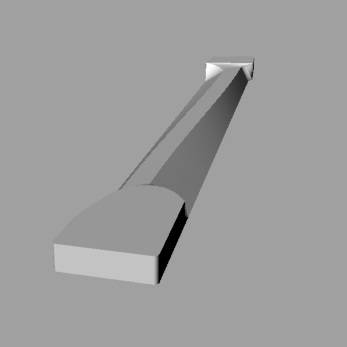
Regarding the sleek design joint for easier access at the upper frets beats me. These days .Strandberg* guitars has these thick Trapezoid neck profile called "endureneck" that are MORE ergonomic than usual neck profile. Guess what? Well the feel all along the neck just as thick as when you happen to bump into the bolt on neck joint on a bt neck, but without the feel of the steel. The endurneck seems to get more and more praise for ergonomic and reach the upper frets anyway.
7s-twist-2.jpg


I find it - for example - very odd, that the screws for any neck has to appear wherever the body starts and ends. You can do as SCHACK does with their CNF system, covered neck fixing system, to produce a smooth transition behind the neck profile and the body part. And still make it easy repairable. The trick of the trade is that the neck carries on way into the body and the neck "bolts" are visible when opening up the neck pickup cavity... and are screwed FROM ABOVE or routed from the top of the body. Ore screws and screws, they have a metal plate mechanism instead...

Invalid Link Removed

CNF-Foto.jpg


Oh, BTW, they are 2K USD more than almost any other bass out there...too...


But since hunting or chasing or nailing that neck through sound on a bolt on neck isn't my priority at all, I still choose regular bolt on necks, any day any time. Even boutique Dingwalls do bolt ons all of the time.
 
my experience is that is depends upon how well the neck and body make contact. If the joint is very flat and the neck is perfectly mated to the body, then there is little to no loss of sustain. I have two neck throughs, and prefer them because they don't have a heel. And that is the only reason. I played a neck through that had a laser cut and mated joint and it had more sustain than my neck through had. Plus, if it's sustain you are after, look at the neck construction first. A multi laminate with a graphite or carbon fiber layer will get you what you want.

First and foremost, playability is important. After that, tone. Sustain is important but I really need a bass that I can get low action on, like 2/32 on the G string. I like a burpy, Jaco-like tone for fingerstyle but with the ability to get a nice, hot slap tone when needed.
 
I'm currently looking at 2 basses, both from the same builder. One is a bolt-on body style and the other a neck-through. The neck-through, however, is roughly $2k more than the bolt-on. Both are gorgeous basses and have similar wood combinations.

My question is this; is it worth it in tonal aspects to fork over $2k more for a neck-through? QUOTE]
Try one of the Chinese imported basses like SX. You can get neck through for as little as $200 or even less depending on what model is being phased out. That leaves a lot of cash for a decent amp or to upgrade the pots if you think it worthwhile.
 

Latest posts