• TalkBass has been independent since 1998. Add your voice.
    Create a free account to reply to discussions, view embedded media, and browse with fewer display ads.
    Join freeLog in
    Want zero display ads or expanded classifieds tools? Compare plans.

Is there a significant difference in tone between neck-through and bolt-on basses?

I don't know about tone, but in my experience the neck through is more stable.

I have a '94 Carvin and a '16 4003 s. both neck though and I do not remember ever touching the truss rod on either. If a gun was held to my head, I couldn't even be sure if either had them.

My Fender Jazz and Ibby SR650 are both bolt on and I have had to adjust the truss rod a few times on each.

The Carvin and RIC also seem to hold tune better as well. I have to tweek the bolt on's every time I play them. The neck through seem to be once a week unless I bump a tuner.

Of course I can be full of crap too, this is just my experience

So there may be some qualities to a nt that helps in stability. Hmmmm.....food for thought. Thank you!
 
They are not essentially connected. You choose to connect them. Even then there can be an order of precedence between them in only one direction. That's what I tried to describe.

But never mind all that. TalkBass, indeed the interwebs, is no place for rigorous logical discourse. So just go for it! :D

I hear ya. Yeah, my whole purpose was to get an answer to a compounded question.
 
  • Like
Reactions: Snaxster
I'm currently looking at 2 basses, both from the same builder. One is a bolt-on body style and the other a neck-through. The neck-through, however, is roughly $2k more than the bolt-on. Both are gorgeous basses and have similar wood combinations.

My question is this; is it worth it in tonal aspects to fork over $2k more for a neck-through? BTW, I'm checking them both out come this Sunday so that answers that but still want to know the opinions of some of you all.
Ive owned a few Ken Smith’s, neck through’s & bolt on’s.. Status graphite “neck thru’s” & bolt on’s.. my conclusion- i do hear differences.. it seems bolt on’s are a bit “ snappier” & resonant, neck thru’s have a smoother attack.. I prefer bolt on’s personally, they seem to have bit more punch... I remember a long time ago Billy Sheehan said in an interview in Bp mag, he preferred the “bolt on” sound.. and you can change the necks out if need be.. Ymmv...
 
In Rickenbacker land...;)... most all of us will tell you that there Is.
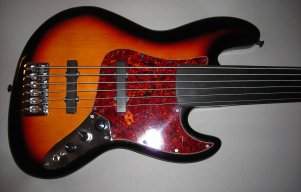


I love my 3 bolt ons. 2 of them are ‘economy’ models... (read: I got Great deals from EBay)!
...a Fender, a Squier, and an $80 Ibanez I will Never part with.

Play the pair for a couple of hours on Sunday.
Damn! $2,000 is A Lot of money.
Do you know how many Quality beers you can buy for 2K?!?
 
Ok, ok. If I gotta come up with something, I’d say I have found that bolt-on basses have a better or more defined attack.

Yeah, I know, I know, but is sorta true. Basically I (and others) tend find that bolt-on tends to have a more "punchy" sound. I other words a more defined attack. And I do notice a small but real difference in my basses, but let me note that generally speaking all my neck-through are 24 frets (usually 6 string) and most of my bolt-ons (usually 5 string) have fewer Fenderish number of frets. That of course, immediately makes slap sound different which probably has nothing at all to do with the bolt-on, neck-through thing. IMHO 24 frets don't sound as good for slap. I think it has to do with where the last fret hits the strings. There are urban legends about neck-through having fab sustain and so on, but I've never noticed any difference except for the punchy/attack thing.
 
  • Like
Reactions: Mili and Afc70
Neck through designs can be very beautiful; and they do seem to me to have a more pure fundamental.

But, bolt on lutherie has come a long ways; and there are some very practical advantages to bolt on necks.

For example, when something goes wrong with a truss rod in a neck through build, there needs to be a way for the builder to service the inner workings. Alembic actually has a sacrificial peel layer between the fingerboard and the neck for just this purpose. Even so, I can say from experience, that is a VERY hairy repair project. A bolt on neck, OTOH, can simply be replaced if something goes wrong.

I play either design. Bolt on seems more practical, which matters more as I get older and the gigs pile up. Neck through can be beautiful; but, be aware that a properly designed neck through from a service standpoint will come at premium price, with some subtle tonal variation.
 
What about the third option? The set-neck? Gibson has used this gluing method for decades on thousands and thousands of guitars and basses. No love?


(Yeah, throwing a monkey wrench in. I have both bolt on's and neck through, and both have advantages. My last one was a bolt on.)
 
  • Like
Reactions: 47th Street
To an engineer (and I'm a retired engineer) the answer always has to be - yes, there's a difference. Is there a significant difference? I'd have to say it depends on whether or not you want it to be so, and your definition of "significant". I can tell you that a $2K price difference certainly qualifies in my world. But, what difference neck-thru vs. bolt on makes to the sound, I couldn't really say. There are so many other variables that, IMO, I don't think you really can say, one way or the other. Out of 24 basses I own, 10 have bolt on necks; 7 are neck-thrus, and 7 are set necks. But, I didn't buy any of them because of the type of neck. I bought them because of what they were. Gibson Thunderbirds and Rickenbackers are neck-thrus. Period. P-Basses and their clones, with very few exceptions, are bolt necks. Period. They simply are what they are...
Some people say bolt necks have a sharper/more defined attack. IMO, my set neck Alembic Epic and my neck-thru Kramer Forum III will give any bolt neck a run for their money in that category. Personally, I think other variables are more significant in this category, though..
Some people say that a neck-thru has better sustain. My Ricks are certainly very good at this; The Forum III and my Carvin LB-20 are no slouches; but, my T-Birds actually don't do well, sustain-wise. But, my bolt-on Aluminum-necked Kramer 450B will sustain well into the next century... it's just ridiculous. And, personally, I think all basses have too much sustain, anyway...
So, I'd say it really boils down to which bass you really want. If it were me? I don't really care how the neck is put on, as long as it doesn't try to wiggle around - or come off. I do care about having 2 Grand to spend on something else, though...:thumbsup:
 
What about the third option? The set-neck? Gibson has used this gluing method for decades on thousands and thousands of guitars and basses. No love?


(Yeah, throwing a monkey wrench in. I have both bolt on's and neck through, and both have advantages. My last one was a bolt on.)

If one of these basses I'm currently looking at had that option, I'd ask about that too. All info is welcomed here. My mind is a sponge in this thread.
 
Does anyone have darts, and a dartboard we can use for the answer?
LX50hqD.gif
 
  • Like
Reactions: 47th Street
Like the dreaded tonewood topic, I love this reply: "Through headphones, studio setup, or practice amp in your bedroom, perhaps, BUT on stage during a show at concert volumes - no." :) Have a nice day.

Well, I plan on using this bass in the studio, not just gigs, so I know any nuance of tone will b e picked up. It's also important to me, personally, to like my tone. I feel more confident on stage when I've got it just how I like it.
 
  • Like
Reactions: 47th Street