I am trying to learn electronics and was curious about this - is there anything that can't be done e.g. in a pedal later in the signal chain?

Enjoy the benefits of a premium membership!
Upgrade Account
-
TalkBass has been independent since 1998. Add your voice.
Create a free account to reply to discussions, view embedded media, and browse with fewer display ads.
Join free Log in
Want zero display ads or expanded classifieds tools? Compare plans.
You are using an out of date browser. It may not display this or other websites correctly.
You should upgrade or use an alternative browser.
You should upgrade or use an alternative browser.
Is there anything onboard electronics (e.g. active preamp) can do that cannot be done offboard?
- Thread starter SonofJud
- Start date
More options
Who Replied?
I am trying to learn electronics and was curious about this - is there anything that can't be done e.g. in a pedal later in the signal chain?
No, not really. I just find it to be more convenient to set my amp once where I like it and have control of my EQ onboard. I don't really care for messing with pedals or amp at a gig, so active preamp at my fingertips works for me. Though I do have, and use, passive basses also. But for live gigs I normally take active.


Yes, but it's all passive. coil tapping, phase, series wiring with the pickup. Manipulation of the cross-loading of the pickups.
i have both active and passive basses. I'll take a solid Passive instrument over an active: as long as it's my stuff.
If it's a backline: Active that way i have more control.
I don't use outboard stuff (pedals) I have previously, and found that a passive bass signal is more predictable when a pedalboard is employed.
i have both active and passive basses. I'll take a solid Passive instrument over an active: as long as it's my stuff.
If it's a backline: Active that way i have more control.
I don't use outboard stuff (pedals) I have previously, and found that a passive bass signal is more predictable when a pedalboard is employed.
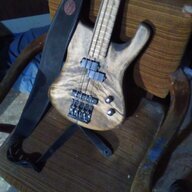
I have passive bases and feel I'd ont have the tonal variation you'd get with a cut boost eq...hits the amp harder to with active I suppose tooI am trying to learn electronics and was curious about this - is there anything that can't be done e.g. in a pedal later in the signal chain?

Other than possibly drive long cables better, not really. You can adjust tone and gain at the amp or with pedals or preamps.

In a nutshell: no.
I’d even go so far as to say there really isn’t anything I’ve ever heard onboard electronics do that couldn’t be done more effectively and better by using outboard gear, even when it comes to buffering a long cable run.
If you’re routinely running a long enough instrument cable that you need buffering between your bass and your amp, then I think it’s time for you to consider going wireless.
I’d even go so far as to say there really isn’t anything I’ve ever heard onboard electronics do that couldn’t be done more effectively and better by using outboard gear, even when it comes to buffering a long cable run.
If you’re routinely running a long enough instrument cable that you need buffering between your bass and your amp, then I think it’s time for you to consider going wireless.
Last edited:
I am trying to learn electronics and was curious about this - is there anything that can't be done e.g. in a pedal later in the signal chain?
Hello. Routing, switching, selection, blending, and/or equalization within a multi-coil, multi-tapped, and/or mult-pickup complement... those would be prohibitively complex to do outside of the instrument.

Passinwind
I know nothing.
- Dec 3, 2003
- 23,042
- 45,892
- Disclosures
- Designer/Toaster Tech @ Passinwind Electronics
Yes, driving the cable between instrument and amp with lower parasitic capacitance loss. That's a function of lower source impedance (relative to the impedance of passive pickups) driving the cable. Whether that matters to you, and if so, how much, is something one needs to decide for themself.I am trying to learn electronics and was curious about this - is there anything that can't be done e.g. in a pedal later in the signal chain?
Hello. Routing, switching, selection, blending, and/or equalization within a multi-coil, multi-tapped, and/or mult-pickup complement... those would be prohibitively complex to do outside of the instrument.
Ok. But that’s mostly just coil switching games. You don’t need an active bass to do any of that. Pickups are mainly passive devices except for the fairly rare active pickup you’ll run into every so often.
Where an onboard preamp does shine however is in helping you get good string balance on five and six string basses. You have a lot more leeway with your pickup height adjustments with an onboard preamp boosting everything up. Once the lower output strings are pumped up to a healthy level it’s easier to just back off on the lows and get things in balance rather than to try and teeter totter back and forth like you have to with a fully passive bass.
I’m thinking that’s probably why most five and six string basses seem to be active. An onboard preamp just makes it more practical when dealing with widely different gauged strings. And also why so many players leave their onboard EQ flat and only use the preamp to boost.
I think it’s a good idea to have a preamp on a fiver. On a 6-string I think it’s probably essential you have one.

I got one of those Sadowsky preamp pedals, which basically puts their standard onboard active bass & treble boost in a stomp box. In theory, I shouldn't need to have any active basses - just run them all through that.
In practice, it's not quite the same overall experience (as having an active bass with the active tone controls right at your fingertips). For me it's about access and not having to worry about cable loading when I really want that treble.
I have kind of a love/hate relationship with onboard preamps. A good passive bass can be a thing of real beauty and most active EQs don't quite nail that vibe IME. But when I'm going to be doing a lot of stuff with that crisper "modern" sound, at the end of the day I prefer to have the preamp onboard. YMMV
In practice, it's not quite the same overall experience (as having an active bass with the active tone controls right at your fingertips). For me it's about access and not having to worry about cable loading when I really want that treble.
I have kind of a love/hate relationship with onboard preamps. A good passive bass can be a thing of real beauty and most active EQs don't quite nail that vibe IME. But when I'm going to be doing a lot of stuff with that crisper "modern" sound, at the end of the day I prefer to have the preamp onboard. YMMV

If you have a piezo pickup in your bass, you really need a buffer to get that signal to the outside world in decent shape. If you want to mix a piezo with your magnetic pickups, again, that's best done on board. Aside from that, everything else can be done (with some smart System Engineering) as well off the bass as on.

Roland GR 88
Commercial User
Absolutely, if your name is Paul Vo....
Gut shot of the Moog Guitar.

Gut shot of the Moog Guitar.
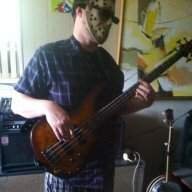
There's nothing an active bass can do that for the most part can't also be done with pedals, if you look at it practically. Well, my SRH505F has a cool feature in that the active pickup system brings gain staging per individual string to the table, and I can't replicate that otherwise, however the active pre-amp on my sire gives me 3 band EQ with mid sweep at my fingertips on the bass.
Now, I might not be able to find a pre-amp or EQ pedal that offers the same tones the pre-amp on my Sire can.. but I can put an active EQ on my pedalboard, as well as buffering for long cable length if needed.
The only thing I can't do with that setup, is adjust my EQ while not standing at my amp or pedalboard, where I could with an active pre-amp and EQ knobs in a bass.
Now, I might not be able to find a pre-amp or EQ pedal that offers the same tones the pre-amp on my Sire can.. but I can put an active EQ on my pedalboard, as well as buffering for long cable length if needed.
The only thing I can't do with that setup, is adjust my EQ while not standing at my amp or pedalboard, where I could with an active pre-amp and EQ knobs in a bass.

The buffering part can't really be brought further. It preserves the highs in your signal, just so you can cut them further on. Or not.
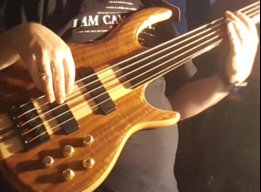
Exactly, the only unique thing an on-board preamp can do is buffer your output so you no longer lose tone with long or cheap guitar cables.
Practically speaking though, you also get convenient controls on the instrument, which is often make or break for changing sounds on the fly.
Practically speaking though, you also get convenient controls on the instrument, which is often make or break for changing sounds on the fly.

#1) Pickup selection and blending. There's a reason that happens onboard. Offboard would involve looping back into the electronics on your bass, which would just be weird and overly-complicated.
#2) Volume swells. These are quite different depending upon whether you are using your knob(s) or a volume pedal. Generally speaking, a volume pedal is taking the full signal of your bass + prior signal chain and lowering it. So the sound tends to remain static except for the volume. In contrast, the volume knob on your bass reduces the strength of your signal, so the actual tone will change as well as the volume. This is especially noticeable when you are using certain effect pedals or the gain stage on your amp. Musicality and context will determine which type of volume control you employ.
#2) Volume swells. These are quite different depending upon whether you are using your knob(s) or a volume pedal. Generally speaking, a volume pedal is taking the full signal of your bass + prior signal chain and lowering it. So the sound tends to remain static except for the volume. In contrast, the volume knob on your bass reduces the strength of your signal, so the actual tone will change as well as the volume. This is especially noticeable when you are using certain effect pedals or the gain stage on your amp. Musicality and context will determine which type of volume control you employ.
Bringing the signal of both pickups separately to the amp is very easily done through a TRS jack. No looping of anything needed.
I got one of those Sadowsky preamp pedals, which basically puts their standard onboard active bass & treble boost in a stomp box. In theory, I shouldn't need to have any active basses - just run them all through that.
In practice, it's not quite the same overall experience (as having an active bass with the active tone controls right at your fingertips). For me it's about access and not having to worry about cable loading when I really want that treble.
I have kind of a love/hate relationship with onboard preamps. A good passive bass can be a thing of real beauty and most active EQs don't quite nail that vibe IME. But when I'm going to be doing a lot of stuff with that crisper "modern" sound, at the end of the day I prefer to have the preamp onboard. YMMV
I have Sadowsky preamp in a Fender Jazz Deluxe 5 and don’t use it. Sounds great etc but I prefer the external dual tube Noble preamp. Onboard can’t do tubes, and that’s a major weakness for me!

I don’t thing so. Not with most of the active basses out today that actually use passive pickups. Lot of companies make a pedal equivalent of their onboard EQ. The Sadowsky one is pretty good for example. My main player is an active Dingwall but I really like that I can just flip a toggle and play it passive if the batteries die. I’ve never been a big fan of onboard eq. They tend to add more negatives like noise than benefit. Some are definitely better than others. I did like the Audere 4 band I had in the Warwick thumb nt6 and my Dingwall has a darkglass tone capsule which is essentially a 4 band without the highs because the three eq knobs are set at frequencies that are more like bass, low mid, and high mid, its doesn’t have that unusable high frequency high control that just seems to add noise and harshness.I am trying to learn electronics and was curious about this - is there anything that can't be done e.g. in a pedal later in the signal chain?
But yeah ironically enough even though i don’t care for onboard eq much most of the basses I’ve bought over the years happened to be active basses so I’ve gotten in the habit of always running the eq on the bass flat and using my hands, pedals, or the amp to get the sounds I want.
It can't ?IOnboard can’t do tubes, and that’s a major weakness for me!


