• TalkBass has been independent since 1998. Add your voice.
    Create a free account to reply to discussions, view embedded media, and browse with fewer display ads.
    Join freeLog in
    Want zero display ads or expanded classifieds tools? Compare plans.

Jeff Berlin discussing music education part 3

Status
Not open for further replies.
Hey Jeff, I've been playing bass for a about two years now, and (not trying to sound "braggy") but am the "best" bass player I know. What this means, is that I no longer have musician friends that can "teach" me things anymore.

I've read the last few pages (I don't have the time to read all 131 pages...) and I was wondering if you could suggest a practice routine, or exercise, or anything really that a intermediate to advanced bass player (or any instrumentalist really, I play others too) could do to push themselves to the "next level."

Are you near a university? Often they have good jazz programs. If you can find a teacher then the responsibility is on them to create a program of study for you. Go look for a teacher there and let me know how it works out for you. P.S. Don't teach yourself if you can help it.
 
Regarding teaching yourself music is the "wrong" way, Jeff, I have to disagree to a certain extent.

Currently I am not in a position to afford a music teacher but I do have access to lots of different jazz books. I use about 3 of those available books to teach myself everything from reading treble/bass clefs, triad construction and why those triads are constructed that way, 6ths,7ths chords etc, chord tones, scales (utilising different ranges) , diads, intervals....

I listen to an exercise from those books and play them, except I don't stop there, I take the knowledge provided by those exercises and transpose them to different keys, create my own different progressions and apply chord tones/scales to the progressions to see what works and what doesn't (and why does it work/not work).

I don't have a very wide grasp of knowledge yet and to achieve what I know took me a long time and I am pretty certain that if I would have a teacher my progress would be much quicker. At the same time I feel that the stuff I have learnt is sticking in my head much clearer due to lots of trial and error.

In conclusion, I don't agree that teaching yourself music theory is bad if you continue to pursue as much information as possible, but it IS bad if you "teach" yourself music by reading tabs and chugging powerchords.

Interesting points! I find that many people reading out of books may not know the right books to buy, how to study, or how NOT to study. I have found that everything done well by a person was usually taught by someone else. This person's job is to save you years of making mistakes. I know that some opt for teaching themselves, but I also know that most people don't know how to teach themselves but still try to do this. So I opt for not teaching yourself music, but hiring someone far more qualified to do this for you. There's a saying in the legal profession (I paraphrase) If you defend yourself in court, then you have a fool for a client!
 
Hi jeff, I think I asked you a while ago about playing with a light touch which is something that I've always done although it takes more attention to maintain it live in some situations where I can't hear myself above the band when the natural tendency is to dig in(a relative term considering my hard playing is a soft touch compared to some guys).

My next question pertains to setup because I'm finding it hard to completely eliminate fret buzz with a low action despite a light touch. Do you tolerate a certain amount of buzz so long as it's not affecting the sustain of your bass or choking notes off? Also do you like your truss rod with a minimum amount of relief? Thank you.

To start, you won't hear yourself better by playing harder. Pick-ups don't work that way. If you can't hear yourself, then turn up your amp or your monitors.

If your neck is buzzing, it is due to the straightness of your neck and the lowness of your bridgepieces. Both need to be adjusted to obtain a great marriage between neck and bridge. Plus, getting a fretjob isn't such a bad idea either. A light planing of the frets could help with your buzzing issue. But before you go this route, check your neck to see if the trussrod needs relaxing, and check each individual bridge piece to see if they need lowering or raising as well.
 
To start, you won't hear yourself better by playing harder. Pick-ups don't work that way. If you can't hear yourself, then turn up your amp or your monitors.

If your neck is buzzing, it is due to the straightness of your neck and the lowness of your bridgepieces. Both need to be adjusted to obtain a great marriage between neck and bridge. Plus, getting a fretjob isn't such a bad idea either. A light planing of the frets could help with your buzzing issue. But before you go this route, check your neck to see if the trussrod needs relaxing, and check each individual bridge piece to see if they need lowering or raising as well.

+1..A good fret-level job is worth its weight in gold if you want low action!
 
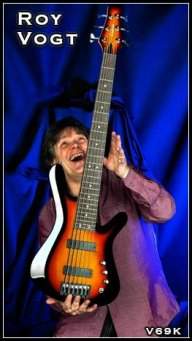
Roy Vogt - Watching Jeff talking about the metronome/drum machine triggered a lightbulb moment for me. Jeff, sometimes this stuff makes more sense if I hear you say it than if I've read a column or a post.

JEFF This is because I am a terrible writer. I can articulate way better than spell it out.

Roy Vogt -When you are truly learning a musical idea you are regarding it as the musical idea-slowly and out of time. The musical idea can be anything from a Charlie Parker lick to a Bach excerpt to a Victor Wooten slap trick. The metronome has no place there. It's like trying to learn a Martial Arts move in a sparring match.
AFTER you have learned the musical idea, you are in Performance mode. Like Gary Burton in your anecdote, the metronome has a place as a substitute drummer. But, it's PERFORMANCE and not LEARNING the information-big difference.

JEFF - Gary never got his time from a click. But your points about learning out of time to find the specific flavors and facts related to what you are studying are true. Well done Grasshopper!

Roy Vogt - I was trying to demonstrate this yesterday by asking a student to translate something from English to French. I started snapping my fingers rhythmically and asked her if this helped her do this any faster.....;)

JEFF - Exactly! Good time, in fact musical knowledge and playing ability also never come when one demands that they do. This is why metronomes have ruined most bass player's futures; these guys still don't know where good time comes from. But, I have seen that more and more people are starting to understand the concept much better. This is good news for everybody.
 
The metronome is also highly useful for increasing foot turnover in running. We are most efficient at 180 steps per minute. Unfortunately the gnome does 184 so I have to work a little harder than need be. This oddly does not equate to speed, you run slowly at 180 and you run faster at 180 depending on stride.

Might have as much to do with music as BBQ but...

MMMMMMMMMMMMMM! BBQ!!!!!!!!!!!!!!!!!!!
 
About six months ago I tried Jeff's metronome theory on my son's friend. He's 14. I show him how to play a song that he had never heard, and it took him some time to get the notes right, but after he had it down he was still having trouble with his timing. So I played the chairdrum with him and he nailed it. At that point I believed Jeff, that anyone can play in time. I watched it happen with my own two ears. So, the other day my guitar player (bro-in-law) and I were playing with our drum machine and my 5 year old nephew comes in and tells me he wants to play me his music. I thought "that's cute, he wants to play my bass". Well, I was shocked that he could play in time, but even more that he was hitting downbeats and upbeats. It sounded good and it was pretty cool. Although I have never used a metronome besides a drum machine, I am 100% sure that they are unnecessary. Now I just really have to start practicing so not to be replaced by my nephew.
 
Hey Jeff, I've been playing bass for a about two years now, and (not trying to sound "braggy") but am the "best" bass player I know. What this means, is that I no longer have musician friends that can "teach" me things anymore.

I've read the last few pages (I don't have the time to read all 131 pages...) and I was wondering if you could suggest a practice routine, or exercise, or anything really that a intermediate to advanced bass player (or any instrumentalist really, I play others too) could do to push themselves to the "next level."

I think you being in St. Pete, FL, you're pretty close to Jeff's location. You could easily attend his program.
 
JEFF - Exactly! Good time, in fact musical knowledge and playing ability also never come when one demands that they do. This is why metronomes have ruined most bass player's futures; these guys still don't know where good time comes from. But, I have seen that more and more people are starting to understand the concept much better. This is good news for everybody.

I remember Rich Appleman talking about this. His point was that you had to have an internal sense of time so you should devote a significant amount of time to playing by yourself with no metronome at all. Always relying on the drum machine or the metronome to establish this means that your sense of time is always externalized. In short, you're only as good as the drummer you play with. This is very dangerous professionally and can be demonstrated the first time you are in a band or (worse) recording session and the drummer isn't sure of himself. The producer or bandleader won't be interested in who's at fault-all he'll know is that the band feels bad and you're one of the two culprits. Bye, bye session account or gig!
If you're sure of your own time you may be the one who saves the day and gives the drummer something to latch on to and play off of. As he feels more confident, the band will sound better and everyone will be happy and making money....
If you take the time to develop a good sense of time internally, playing with a click on a session or Musical is no problem at all-in fact you can do all of the cool timing tricks that bassists like David Hood, Willie Weeks, and Will Lee do to make the band feel really, really good. You're not playing with the click at that point, you're playing Music and a Great Groove. People will notice!
 
I remember Rich Appleman talking about this. His point was that you had to have an internal sense of time so you should devote a significant amount of time to playing by yourself with no metronome at all. Always relying on the drum machine or the metronome to establish this means that your sense of time is always externalized. In short, you're only as good as the drummer you play with. This is very dangerous professionally and can be demonstrated the first time you are in a band or (worse) recording session and the drummer isn't sure of himself. The producer or bandleader won't be interested in who's at fault-all he'll know is that the band feels bad and you're one of the two culprits. Bye, bye session account or gig!
If you're sure of your own time you may be the one who saves the day and gives the drummer something to latch on to and play off of. As he feels more confident, the band will sound better and everyone will be happy and making money....
If you take the time to develop a good sense of time internally, playing with a click on a session or Musical is no problem at all-in fact you can do all of the cool timing tricks that bassists like David Hood, Willie Weeks, and Will Lee do to make the band feel really, really good. You're not playing with the click at that point, you're playing Music and a Great Groove. People will notice!

This is a good point.
I always have more difficulty grooving with a drummer that is "locked-in" with an external time keeping device..
Seems like they are paying more attention to the "click" than the other musicians...
 
This is a good point.
I always have more difficulty grooving with a drummer that is "locked-in" with an external time keeping device..
Seems like they are paying more attention to the "click" than the other musicians...

If I have to record with a drummer on a click in the studio and it's someone I trust, I always turn the click OFF in my cue. I want to play with the drummer, not a click....
If the drummer is paying TOO much attention to the click, he is not "getting out of his own way" and going to the Zen state of "in the moment" that works best for making music, IMHO.
 
If I have to record with a drummer on a click in the studio and it's someone I trust, I always turn the click OFF in my cue. I want to play with the drummer, not a click....
If the drummer is paying TOO much attention to the click, he is not "getting out of his own way" and going to the Zen state of "in the moment" that works best for making music, IMHO.

Exactly what I do!:D
 
I remember Rich Appleman talking about this. His point was that you had to have an internal sense of time so you should devote a significant amount of time to playing by yourself with no metronome at all. Always relying on the drum machine or the metronome to establish this means that your sense of time is always externalized. In short, you're only as good as the drummer you play with. This is very dangerous professionally and can be demonstrated the first time you are in a band or (worse) recording session and the drummer isn't sure of himself. The producer or bandleader won't be interested in who's at fault-all he'll know is that the band feels bad and you're one of the two culprits. Bye, bye session account or gig!
If you're sure of your own time you may be the one who saves the day and gives the drummer something to latch on to and play off of. As he feels more confident, the band will sound better and everyone will be happy and making money....
If you take the time to develop a good sense of time internally, playing with a click on a session or Musical is no problem at all-in fact you can do all of the cool timing tricks that bassists like David Hood, Willie Weeks, and Will Lee do to make the band feel really, really good. You're not playing with the click at that point, you're playing Music and a Great Groove. People will notice!

You pretty well sum it up Roy and let me add that the click or the nome is peripheral to what you're doing. Its the same as working with conductor if you watch him and make him your focus the the music becomes peripheral, how can you play, read when watching him?
I have never meet anyone who has suffered as a result of working with a nome to internalize a sense of time. I have meet and changed the practice of many who have not understood it because they externalize it to much, they play to it rather than play with it.:)
 
You pretty well sum it up Roy and let me add that the click or the nome is peripheral to what you're doing. Its the same as working with conductor if you watch him and make him your focus the the music becomes peripheral, how can you play, read when watching him?
I have never meet anyone who has suffered as a result of working with a nome to internalize a sense of time. I have meet and changed the practice of many who have not understood it because they externalize it to much, they play to it rather than play with it.:)
I think the key is working with the 'nome on things you can already play-hence, it's a performance and not learning the music. If I could always practice with a drummer 24/7 with impeccable time I'd love to do that, but the time feel is really something I create for myself. To harken back to the Martial Arts/Boxing analogy, it's a tool-like the Stationary Bag. The Stationary Bag is not going to teach you to box any more than the metronome will "give" anyone good time.
The dichotomy with working with a 'nome is to remember who's boss. The time can (and has to) come from you. Jeff's little demo with the cameraman (singing "Mexican Hat Dance" at various tempos and having the cameraman clap the rhythm in time) helped me totally understand this. The cameraman "knew the notes" so timing was not a problem. At that point he was "performing" and not learning.
Going back to the first rule of practicing I've heard from everyone from Jeff to Stanley Clarke to Rufus Reid: "Don't waste time playing things that you can already play." Practice is for the most part not performance, although I can affirm that some practice (rehearsal) to affirm ideas we already know is something everyone from a Rock Band to A Symphony Orchestra does. That's practicing a performance, not learning something new.
If I can get out of my own prejudices and look at methodology with no agenda everything makes a whole lot of sense.
 
wait what

You can really just learn this from finding recordings of these guys and playing along or listening to them.
Willie plays on what he calls the "Dark Side" of the beat-slightly behind the drums and the kick drum in particular. My personal favorite recording of his is Donny Hathaway Live. He was a young man and still doing this.
Will is the same way, but being a New York player he seems to put more energy into his playing. I learned a lot from listening to how he played on everything from Joan Armatrading to the Brecker Brothers and Donald Fagan. (Fagan's The Nightfly is "feel school"-you can see how Will, Anthony Jackson, Abe Laboriel, Chuck Rainey, and a young Marcus Miller all feel the time. What a bargain!)
Kodachrome by Paul Simon and Stranger in a Strange Land by Leon Russell are two of my favorite Muscle Shoals rhythm tracks, but there's a ton more. Go to www.allmusic.com and punch in David Hood's name as an artist to find some. Dave plays even farther behind the beat than Willie.
Finally, one thing that I did with Standing in the Shadows of Motown when I first got it over 20 years ago was to put the playalong tracks of the guys I dug (usually in this order: Studio Cats/Jazz Guys/and finally Rock Stars) on my 4 track on another tape (this WAS a long time ago) and try to match their feel in my own performance and recording it on another track (with and without the bass track). I learned a lot about my own timing and feel this way. It was my Pre-Show warmup on the Road with Jerry Reed for a long time.
You Digital youngsters can do this with Garage Band or some free/shareware DAW program and some way of getting audio in and out of your computer with no latency. Hearing a recording of your performance will teach you a lot as well.
 
In Jeff's demo of the Mexican Hat Dance, it showed a very important thing that he didn't mention. Not all songs have a constant tempo. There are retards and breakdowns that occur.

Roy: +1 on recording yourself. Being a computer geek, I love recording myself and playing it back. I did a fine recording of the old Otis Redding classing "These Arms of Mine" last night. My version has a nice fat bass track now. :)
 
Status
Not open for further replies.

Latest posts