• TalkBass has been independent since 1998. Add your voice.
    Create a free account to reply to discussions, view embedded media, and browse with fewer display ads.
    Join freeLog in
    Want zero display ads or expanded classifieds tools? Compare plans.

Just how bright were the 80s?

I was told several times that I was off topic on the original idea of the thread, so I am staying out of the conversation.

So if you want to talk (PM me) - do not keep my off topic parts going forward. But do not contact me to explain why I do not prefer a certain music - everyone has their opinions.

Thank you
I don’t think anyone cares what you prefer. It’s the fact that you presented a very negative, close minded opinion about an entire decade of music that was probably the most diverse and innovative ever seen.

If you had phrased it differently or maybe even contributed positively to what the thread is actually about, you probably wouldn’t have received the pushback that you did. .
 
The 80s were my CowPunk years!
X, The Blasters, Los Lobos, Jason and the Scorchers, Rank and File, The Lonesome Strangers, Rockpile.
Life was GOOD. 😊
Yes! Those were some bands in those days. Saw most of these live. And some are still touring. Los Lobos are in town next week. X was here a month or two ago. Some people think the 80s was all New Wave or hair metal but there was a lot of other powerful stuff going on. Don't get me started....
 
I have felt the same way at least about the early portion of the decade. Then I heard Jack Stanton give his master class on mixing / sound recording and it was during one of the lectures he shares a conversation that Bob Clearmountain the renowned mixing engineer and producer had with him. It was when Jack asked Bob if he could get the "Chic" sound now in this age and era that the obvious slapped me on the face.
Its the transition between analog and digital recording - going from magnetic tape to digital tape or digital storage. This had a considerably huge impact on how the music sounded. Having years and years adapted to compensating for the effects that saturation and tube compression did that they had the wrong EQ curves in place - tape lost high frequencies signal strength quicker than low frequencies so they boosted these as compensation. This is why more than ever you hear the whole early and early mid 80s music do thin...it's not the music itself.
 
Just speaking for myself, throughout the '80s I favored bright roundwound strings, a trebly sort of Colin Hodgkinson/John Wetton timbre. But today I listen to recordings we made then, and regret that I didn't stick with the sound of flats that I had going in the '60s. - Well, I'm back there now.
 
I was listening to a new John Patitucci interview this morning where he talked about how he's been leaning toward darker tones as he's gotten older: "I lived through the 80s, and I grew to hate brightness." (37m15s)

I've heard that bass tones and amps in the 80s were notably bright, but since I wasn't around then and the 80s are probably my least listened-to decade, I'm curious—any examples of those overly bright 80s bass tones?

Edit: I don't mean I don't listen to 80s music or that I hate it; I just mean it's probably the decade I'm least familiar with.
I was stationed in the UK in the 1980's, and the music that was on the radio then? I grew up in the 1950's - when Buddy Holly and Eddie Cochran were on the radio - for real. '80's music was... annoying. I built most of my Blues, and Grateful Dead CD collection during those years... A lot of the really annoying... stuff... on the English radio, was too crappy to make it to the States. Count yourself fortunate... :rollno::rollno:
 
I was in school (including a couple years in music school) and began working as an audio engineer in the 80s. It was a unique time. As mentioned, aural exciters were often used in the studio. Digital recording and playback was in its infancy and most emphasized the crack and sizzle of the high end. Synths and drum machines were everywhere, and drums (real or machine) became much more prominent in mixes, especially snare and cymbals.

Cassettes were a major format, too, and many listeners liked playing Dolby cassettes without the button pressed for more high end.

And there were the speakers. At the time the quite bright and bass deficient Yamaha NS10s were ubiquitous in studios as near field monitors. It was thought to reflect the speakers in most home systems.

I knew a few engineers that, when they were able, had the bassist record a track an octave higher. They'd keep it low in the mix, but the thinking was the higher bassline could then still be heard on small speakers and in cars.

I remember running sound for some oldies bands (Drifters, the guy who did "Yellow Polka Dot Bikini," and the one who did "Sea Cruise"), and the producer told me, "Most of these people only listen through a three in television speaker, so keep the bass and volume down."

So there was a general emphasis on the upper frequency range just about everywhere. And reverb, now that I think about it. Everyone wanted oodles of reverb.
 
Ah what a great decade for bassists, especially the latter half of it. It was the era of aural exciters, BBA Sonic Maximizers, 4x10 cabs with tweeters, and SWR amps with tone-suck knobs. I used (overused) all of it. What a great time to be a bass player!
I knew somebody would bring up SWR amps. Those babies can sizzle, especially the RedHead.
From my own experience I think the point about the early digital technology is a good one. Some of the early ADAT’s in the studios were dreadful, brittle and bright, and a world away from today’s tech.
 
Last edited:
I was just a kid in the 80’s - first albums I had were the soundtracks for “Beverly Hills Cop” and “Footloose”, on tape played on my little Sony. Adolescence (and picking up the bass) hit at the same time as Grunge, so I identify much more with that. But a couple things from the 80’s stuck with me - a love for synthesizers in general, and the sound of bass with a chorus pedal played with a pick. I still use that sound quite a bit, although I play a short scale with flats and my music doesn’t really sound “80’s” at all. One thing I do not miss from that time is that gated snare drum sound. Oof, that kills me.
 
Having years and years adapted to compensating for the effects that saturation and tube compression did that they had the wrong EQ curves in place - tape lost high frequencies signal strength quicker than low frequencies so they boosted these as compensation.


Whilst that might seem like a rational explanation, it simply isn't true, for one very important reason : the engineers recording, and mixing records in the 80's were experienced professionals, who kept getting hired because they had great ears.

They were not setting up preset "EQ curves", and not listening to the results.

It was an aesthetic choice, afforded by the combination of technological advancements (synchronizing multiple tape machines together / synchronizing MIDI to tape / the emergence of digital workflows), and the abundance of money in the industry (the willingness to actually spend the extra time in the studio, to work on the separation of individual elements at the tracking stage) leading to an obsession with high fidelity.

Really, the only time EQ guesswork was required (and could paint you into a corner) was when you had more elements required, than tracks available: in which case you might have to for example set up what would be the final mix of the rhythm section (say 8 tracks of drums, and 2 tracks of bass), and bounce that down to 2 tracks, before most of the other tracks have been recorded, and then erase the original 10 tracks, as you use them to record all the other elements (keyboards, guitars, vocals etc) - all the while hoping that the combined effects of imprinted EQ and tape compression on the rhythm section haven't scuppered your ability to deliver the killer mix of the song you set out to achieve (because you can't un-bake a cake).
 
Whilst that might seem like a rational explanation, it simply isn't true, for one very important reason : the engineers recording, and mixing records in the 80's were experienced professionals, who kept getting hired because they had great ears.

They were not setting up preset "EQ curves", and not listening to the results.

It was an aesthetic choice, afforded by the combination of technological advancements (synchronizing multiple tape machines together / synchronizing MIDI to tape / the emergence of digital workflows), and the abundance of money in the industry (the willingness to actually spend the extra time in the studio, to work on the separation of individual elements at the tracking stage) leading to an obsession with high fidelity.

Really, the only time EQ guesswork was required (and could paint you into a corner) was when you had more elements required, than tracks available: in which case you might have to for example set up what would be the final mix of the rhythm section (say 8 tracks of drums, and 2 tracks of bass), and bounce that down to 2 tracks, before most of the other tracks have been recorded, and then erase the original 10 tracks, as you use them to record all the other elements (keyboards, guitars, vocals etc) - all the while hoping that the combined effects of imprinted EQ and tape compression on the rhythm section haven't scuppered your ability to deliver the killer mix of the song you set out to achieve (because you can't un-bake a cake).
Well it was a statement made by an engineer that is renowned worldwide. You miss the fact that digital was a new technology. I think even professionals get challenged at times - why ther are problems to be solved in every profession., wether audio or medical or construction. Your statement assumes that professionals in an industry never have challenges to overcome. Listen to every recording of that era regardless if the genre...the early cds as well all treble heavy. But let's see what a professional audio engineer says not just us two forum debaters -take the time and research how the change from analog to digital and things like tape - reverbs - delays - and consoles being introduced challenged these professionals - it's well known among those who are familiar with mixing and the history of sound recording
 
Well it was a statement made by an engineer that is renowned worldwide. You miss the fact that digital was a new technology. I think even professionals get challenged at times - why ther are problems to be solved in every profession., wether audio or medical or construction. Your statement assumes that professionals in an industry never have challenges to overcome. Listen to every recording of that era regardless if the genre...the early cds as well all treble heavy. But let's see what a professional audio engineer says not just us two forum debaters -take the time and research how the change from analog to digital and things like tape - reverbs - delays - and consoles being introduced challenged these professionals - it's well known among those who are familiar with mixing and the history of sound recording


Admittedly I wasn't a professional audio engineer in the 80's, but I was working professionally by the early 90's, and it was almost entirely analogue (except for samplers / sequencers / some outboard effects etc / and some aspects of mastering, such as editing / album sequencing) right up until the late 90's.

Hybrid sessions were pretty common on higher end projects, throughout the mid-90's, as Pro Tools gained traction (being the first complete hardware & integrated software solution you could buy with a credit card, rather than a bank loan), but even the TV, and movie industries were pretty slow to adopt digital workflows (it was a big deal when Band Of Brothers took the leap to work entirely in Pro Tools).

Dance records were mostly sequenced on an Atari, triggering digital synths and samplers, and routed through a mixer direct to either ADAT, or DAT - so, with the exception of the odd analogue synth, or effect, or live vocal, they were mostly digital productions.

Things didn't go full "in the box" digital until almost a decade into the new millennium.

My point is, that digital didn't just happen overnight, and the challenges that are to be overcome, are overcome every day, on multiple fronts - before the master is approved.

There are so many skilled ears throughout the chain, listening critically, that it's not realistic to say "the wrong EQ curve" was used, and nobody noticed, or made corrective adjustments.

Whether you think the early CD's had excessive treble or not, that was an aesthetic choice that was made to highlight the fidelity of the new medium.

Now, where there was a learning curve with digital (and particularly early CD's) was the narrow dynamic range between the analogue noise floor, and full scale clipping ; that required careful attention with regards to summing, headroom, dynamic compression, and understanding dither noise. Those that hadn't got to grips with it, turned out some pretty harsh sounding digital masters.
 
  • Like
Reactions: cdef
Yeah... but other metal bands were also guilty of burying the bass. Suicidal Tendencies "How Will I Laugh Tomorrow, When I Can't Even Smile Today" is a good example. Megadeth "Rust in Peace".... another one.
This is why I love Anthrax, Overkill, and Nuclear Assault! The bass is very prominent in the mix in their 80s albums.

I can't say enough amazing things about Frank Bello! His bass tone is amazing, especially on Anthrax's Among the Living. He's easily one of my favorite thrash metal bassists ever! I'm learning the entirety of Anthrax's Spreading the Disease just because I'm a fan. After that, I might just be learning Among the Living.

If you want to listen to the Big Four of Thrash without bass that’s buried under the guitars and drums, please listen to Anthrax!

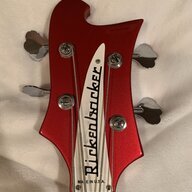
DD Verni invented modern metal bass tone (The Clank) in the late 1980s. He switched from playing a Ric 4001 to a BC Rich bass with two EMG active P pickups. So he took the brightness of the decade to the extreme starting on Overkill's third album Under the Influence in 1988.

Danny Lilker's bass on Nuclear Assault's first few albums is grindy, but not as bright as others in thrash metal at the time. Even Frank Bello and DD Verni think he's incredibly talented! He was also the bassist on Anthrax's first album Fistful of Metal.
 
Last edited:
  • Like
Reactions: scottycameron
This is why I love Anthrax, Overkill, and Nuclear Assault! The bass is very prominent in the mix in their 80s albums.

I can't say enough amazing things about Frank Bello! His bass tone is amazing, especially on Anthrax's Among the Living. He's easily one of my favorite thrash metal bassists ever! I'm learning the entirety of Anthrax's Spreading the Disease just because I'm a fan. After that, I might just be learning Among the Living.

If you want to listen to the Big Four of Thrash without bass that's buried under the guitars and drums, please listen to Anthrax!

DD Verni invented modern metal bass tone (The Clank) in the late 1980s. He switched from playing a Ric 4001 to a BC Rich bass with two EMG active P pickups. So he took the brightness of the decade to the extreme starting on Overkill's third album Under the Influence in 1988.

Danny Lilker's bass on Nuclear Assault's first few albums is grindy, but not as bright as others in thrash metal at the time. Even Frank Bello and DD Verni think he's incredibly talented! He was also the bassist on Anthrax's first album Fistful of Metal.
Lilker's bass tone on Speak English... is probaby peak 80's metal bass for me.
 
  • Like
Reactions: MrAB4003