• TalkBass has been independent since 1998. Add your voice.
    Create a free account to reply to discussions, view embedded media, and browse with fewer display ads.
    Join freeLog in
    Want zero display ads or expanded classifieds tools? Compare plans.

Kappalite coaxials!!

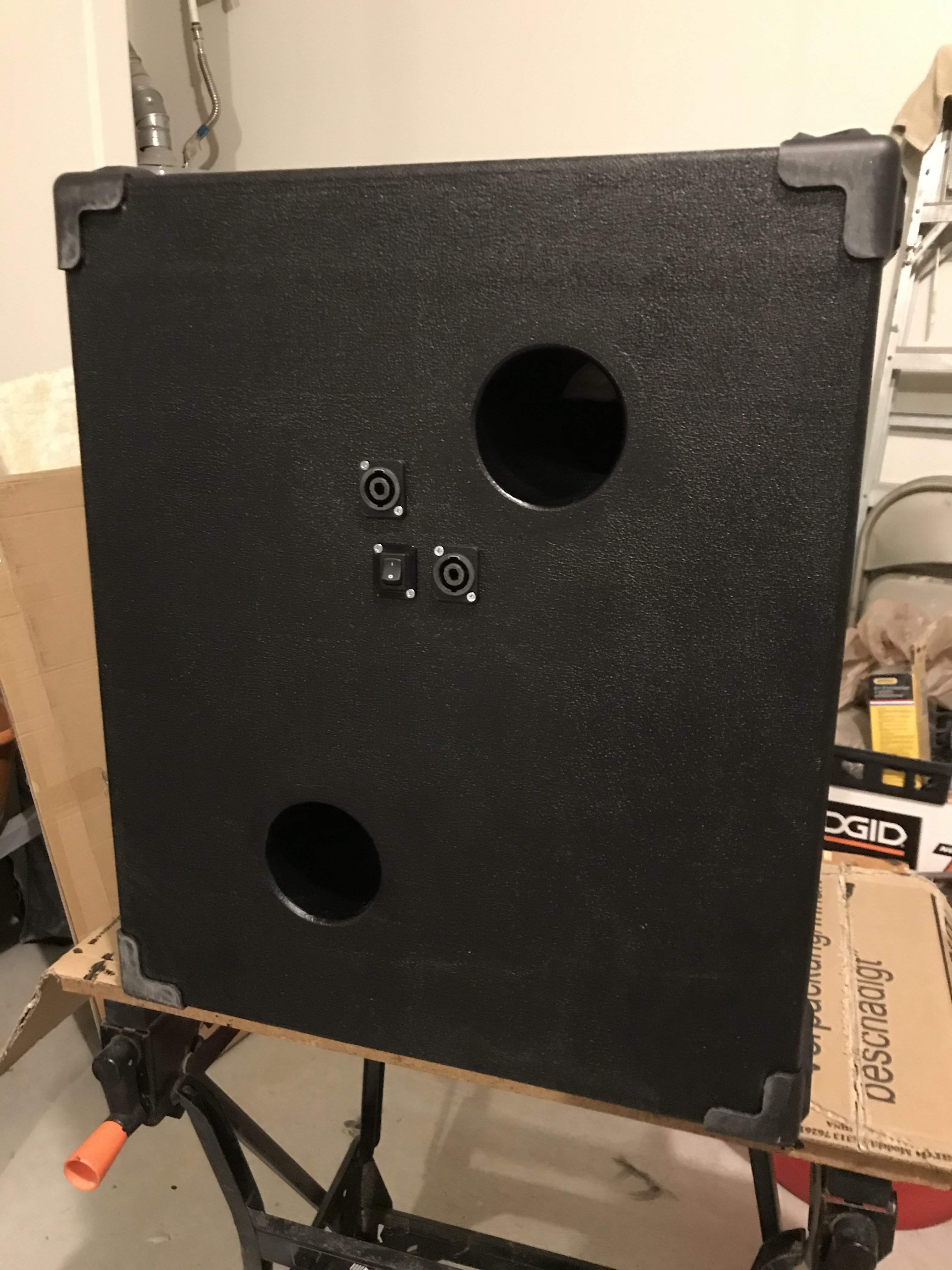
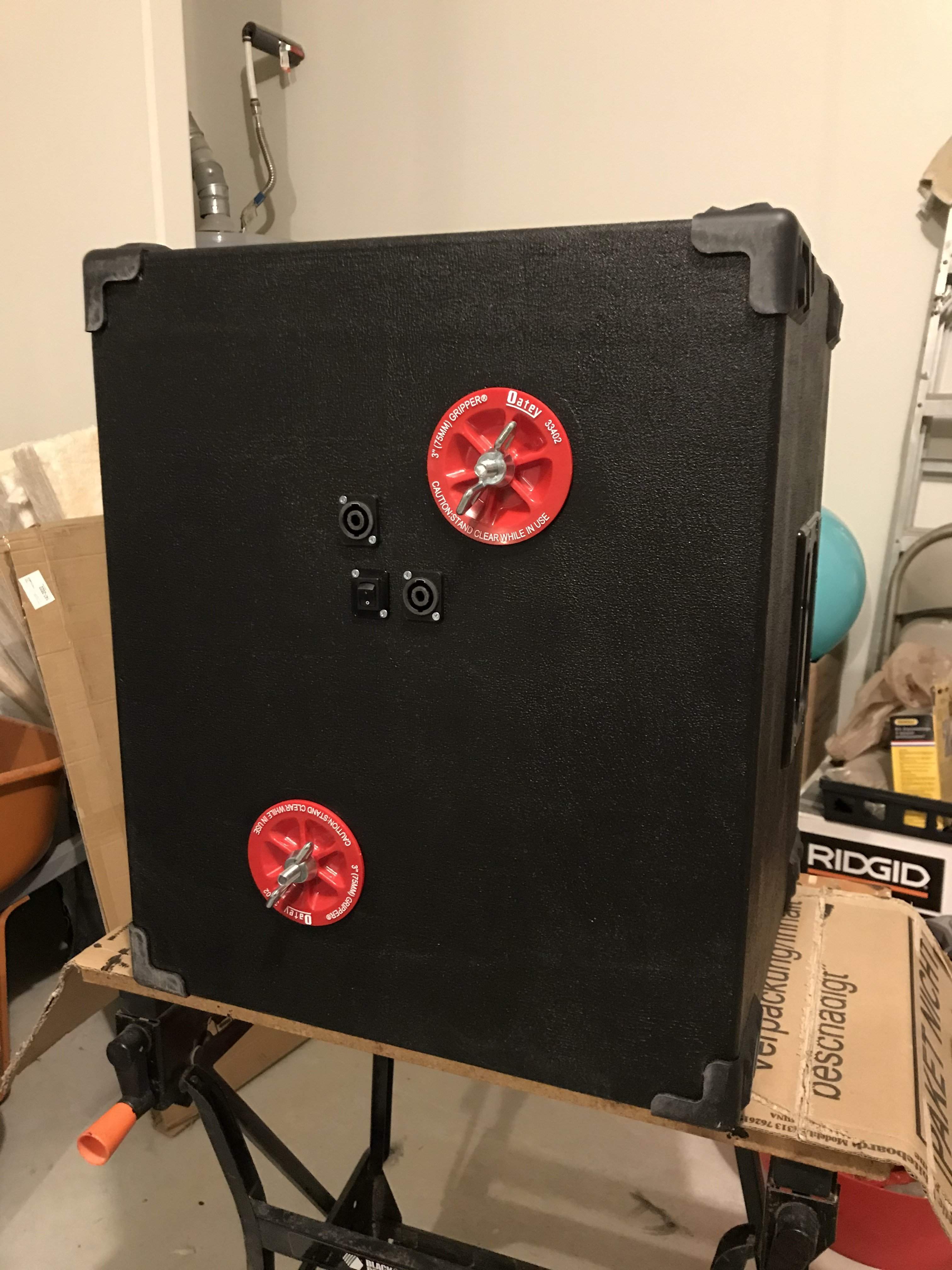
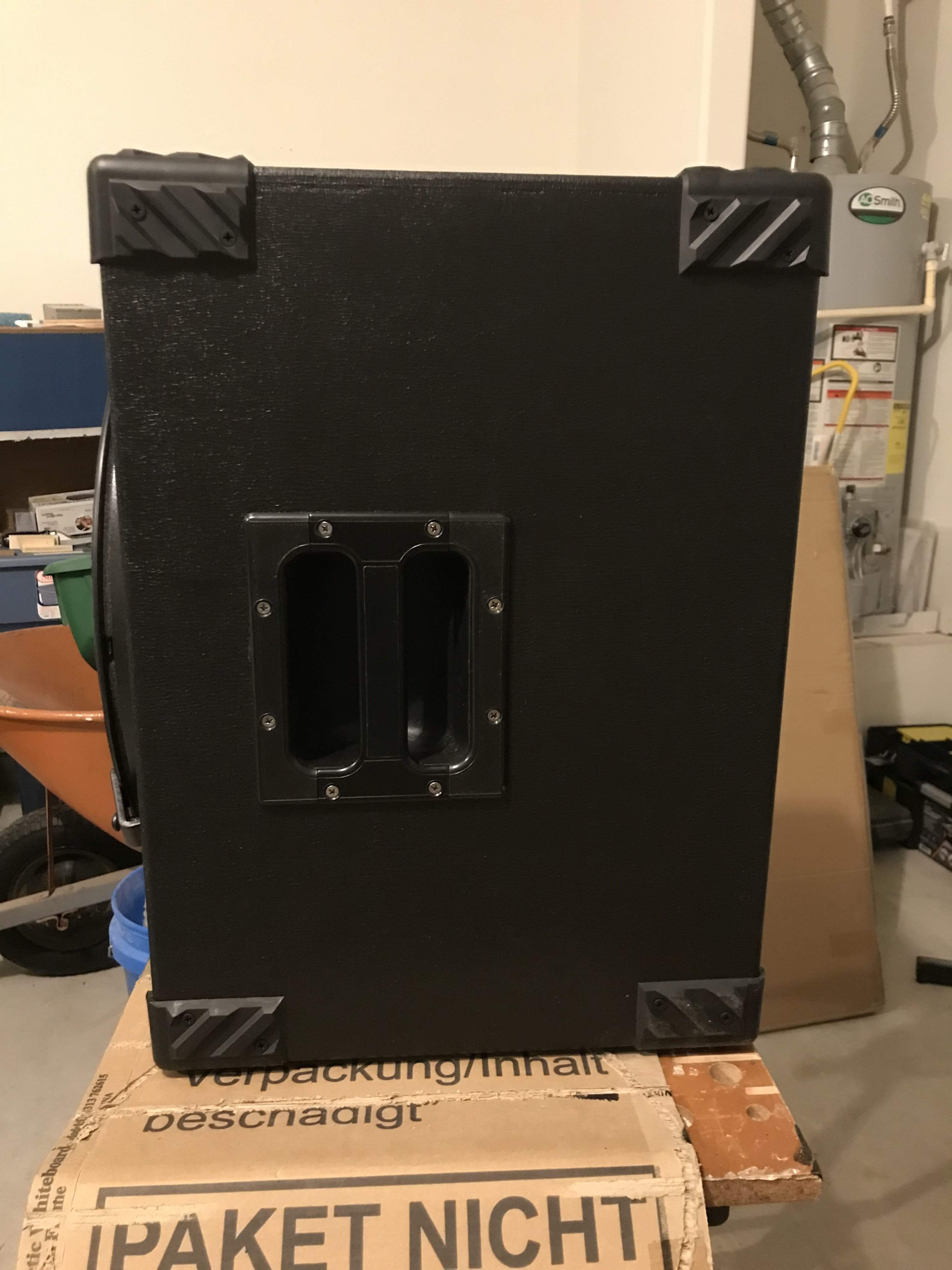
Here are front, side and two back pics of the finished cab. One back is ports open with crossover switch on, the other is ports sealed with crossover off (bypassed). Final weight is 34.6 lbs. The initial checkout was through my Noble preamp into the Mesa WD800. Mesa controls were pretty much at noon with HPF off and the Noble bass at 11:00, treble at 10:00, and HPF on. The no-tweeter, sealed cab configuration did not disappoint! It is thick, solid, and punchy with good upper mids. This full range woofer really puts out 90% of what you hear from the bass guitar, is well voiced, and sounds very good as is. Removing the plugs and playing it ported increased the low end depth as expected but it was still well controlled. I dialed the bass down to flat on the Noble because this driver has enough upper bass it doesn't need any boost there. Next, I turned off the Noble's -6dB HPF at 90 Hz and was gobsmacked by the amount of bass on tap. This driver has a volume displacement (Vd) of 770 cu-cm and can really move some air. A pair of these would be massive for Reggae. I have to play this more and break it in but those were some initial thoughts. Thank you agedhorse for the HPF suggestion, I'll try that out.
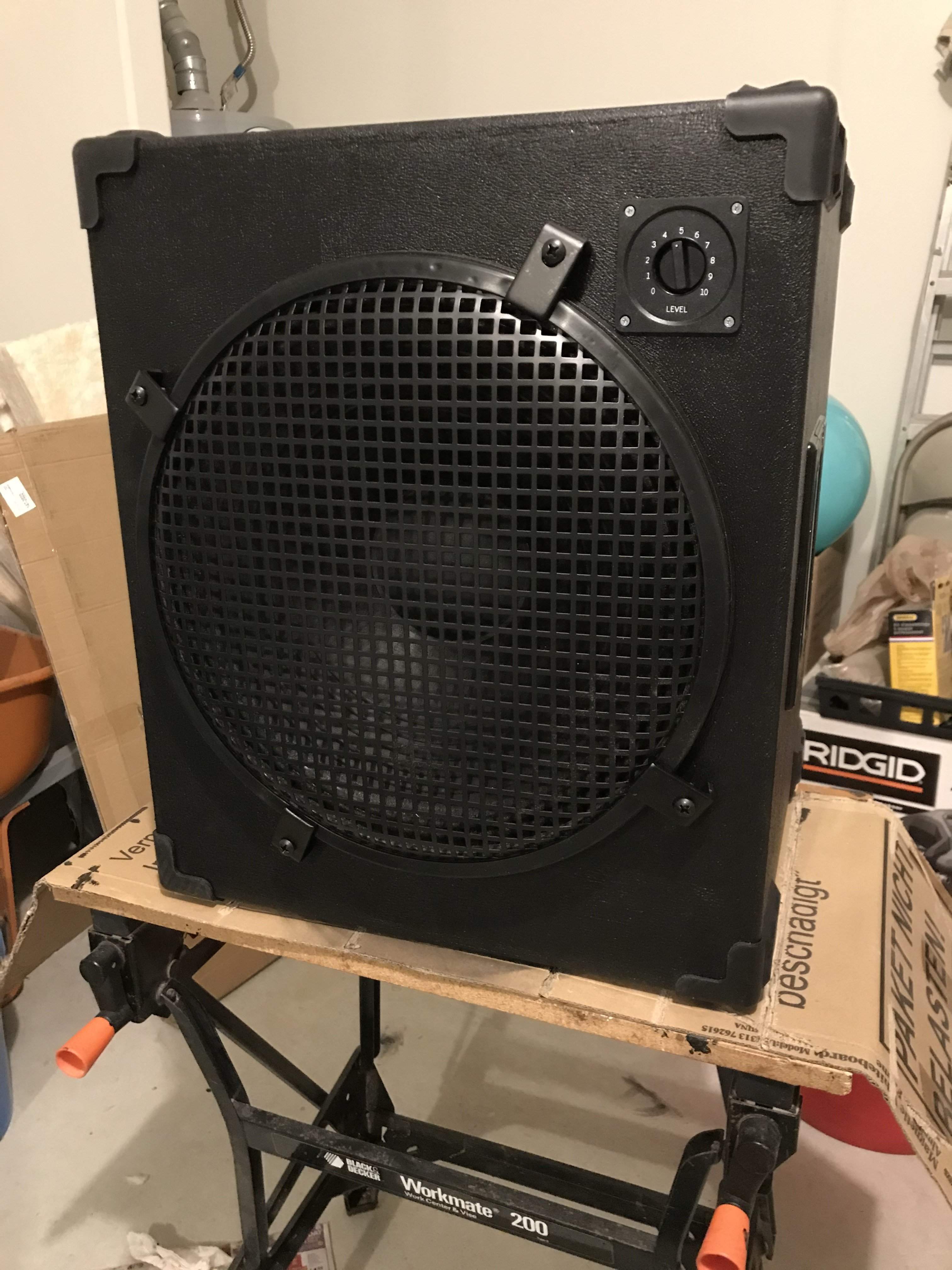
KL3015CX Cab Finished Front.jpg

KL3015CX Cab Finished Side.jpg

KL3015CX Cab Finished Back Ported.jpg

KL3015CX Cab Finished Back Sealed.jpg
 
Last edited:
Here are front, side and two back pics of the finished cab. One back is ports open with crossover switch on, the other is ports sealed with crossover off (bypassed). Final weight is 34.6 lbs. The initial checkout was through my Noble preamp into the Mesa WD800. Mesa controls were pretty much at noon with HPF off and the Noble bass at 11:00, treble at 10:00, and HPF on. The no-tweeter, sealed cab configuration did not disappoint! It is thick, solid, and punchy with good upper mids. This full range woofer really puts out 90% of what you hear from the bass guitar, is well voiced, and sounds very good as is. Removing the plugs and playing it ported increased the low end depth as expected but it was still well controlled. I dialed the bass down to flat on the Noble because this driver has enough upper bass it doesn't need any boost there. Next, I turned off the Noble's -6dB HPF at 90 Hz and was gobsmacked by the amount of bass on tap. This driver has a volume displacement (Vd) of 770 cu-cm and can really move some air. A pair of these would be massive for Reggae. I have to play this more and break it in but those were some initial thoughts. Thank you agedhorse for the HPF suggestion, I'll try that out.
View attachment 3727099
View attachment 3727100
View attachment 3727101
View attachment 3727102
Awesome work as usual! Very interested in your thoughts on the CX15 vs your CX212 cab.
 
What exactly are you trying to achieve with the switch. It looks a LOT more complicated than necessary.

My hunch is that it will sound a lot better without the iron core inductor used as a 1st order LPF, simply short across its terminals. I don't think that woofer needs it, or benefits from it.
I ran a 14 gauge jumper from IN+ to W+ on the crossover to bypass the iron core inductor and turn this into a 2nd order HPF to the tweeter. It restored some of that low treble that had been rolled off and does sound better. Thank you. In this configuration the switch is not even needed, just turn the attenuator to zero to dial out the tweeter.

Since the HPF's inductor is on parallel with the L-pad after the series cap, and there's no attempt at impedance correcting Zobel type networks (a good thing IMO) it's going to be simpler to just switch the + lead to the tweeter. Leave the L-pad fully up, doesn't matter.

I would suggest just using the HPF section with that woofer. By the time you get 30 degrees off axis there will be some rolloff of the 2.5-3kHz response already.
I left the L-pad in place for the time being but will try going direct to the T+ lead after I've had some more time with it. Using the 2.6 kHz HPF with this woofer was my original intent because of the off-axis rolloff. This crossover had it but sounds better without the 1st order LPF. It still seemed like there was a hole in the sound so I ran white noise through the cabinet and used the RTA app on my phone to take a screen shot:

KL3015CX_OutPhase RTA.PNG
 
Last edited:
I ran a 14 gauge jumper from IN+ to W+ on the crossover to bypass the iron core inductor and turn this into a 2nd order HPF to the tweeter. It restored some of that low treble that had been rolled off and does sound better. Thank you. In this configuration the switch is not even needed, just turn the attenuator to zero to dial out the tweeter.
Exactly, simpler just ends up being better in this case.
 
  • Like
Reactions: Jeff Scott
Yes, simpler does end up being better but with a DIY prototype sometimes adjustments have to be made. Looking at that 5.0k frequency hole, I swapped leads on the tweeter which audibly filled in the hole. I took another RTA capture and you can see the difference.
KL3015CX_InPhase RTA.PNG
 
  • Like
Reactions: agedhorse
There's something wrong with your relative sensitivities.

By any chance was there auto-sensitivity scaling enabkex in the software?

No way is the Deltalite and Kappalite drivers 7 or 8 dB less sensitive than the co-ax.
 
  • Like
Reactions: BassikBrad
There's something wrong with your relative sensitivities.

By any chance was there auto-sensitivity scaling enabkex in the software?

No way is the Deltalite and Kappalite drivers 7 or 8 dB less sensitive than the co-ax.
I wasn't using my own charts, but Eminences'. The first too I looked at went to 110, then the coaxials was a different size, so I was too distracted by resizes to notice my blunder. I knew I'd learn something by posting, but not that :laugh:

Well I've adjusted, but realised that the impedance scale won't align, so that part of the comparison is out the window.

Neo Comparison1.jpg
 
There's a difference in voicing, but the co-ax pays a sensitivity penalty for the "flatter" response (if that's even what you are going after).
 
Yeah I was puzzled once I started getting it right, that the CX although flatter wasn't above the rest. I thought I'd made another mistake in aligning and kept rechecking.

There's a difference in voicing, but the co-ax pays a sensitivity penalty for the "flatter" response (if that's even what you are going after).

Is there much of a difference in ideal box sizes or are they all similar requirements?