Someone in my local area is selling a lawsuit P bass for super cheap ($250). It is a late 60's/early 70's Matao. This brand was made in the Hoshini factory. Anyone have experience with these old lawsuit basses? The idea of a vintage P for that cheap is extremely tempting.

Enjoy the benefits of a premium membership!
Upgrade Account
-
TalkBass has been independent since 1998. Add your voice.
Create a free account to reply to discussions, view embedded media, and browse with fewer display ads.
Join free Log in
Want zero display ads or expanded classifieds tools? Compare plans.
You are using an out of date browser. It may not display this or other websites correctly.
You should upgrade or use an alternative browser.
You should upgrade or use an alternative browser.
Lawsuit P bass
- Thread starter lordofsea
- Start date
More options
Who Replied?
I'm not very familiar with Hoshini built basses, but the quality of MIJ "lawsuit" basses tends to vary quite a bit. The hardware and/or electronics tend to be of a lesser quality than Fender, they can also sport plywood bodies. This should be a pretty damn good bass for $250, that's toward the upper-end of what these types of basses generally sell for. As usual, some pics will probably bring some more educated opinions.

$250 will buy you nice a MIM P or J if you watch for a while. A Japanese knock-off is NOT a vintage P...it's a clone with limited value, and the quality varies quite a bit.
Here is the craigslist post:
[Invalid or Expired Link Removed]
I am out on the road, so I'm having a buddy check it out.
[Invalid or Expired Link Removed]
I am out on the road, so I'm having a buddy check it out.

$250 will buy you nice a MIM P or J if you watch for a while. A Japanese knock-off is NOT a vintage P...it's a clone with limited value, and the quality varies quite a bit.
Exactly this. IMO, not worth that kind of scratch.

$250 will buy you nice a MIM P or J if you watch for a while. A Japanese knock-off is NOT a vintage P...it's a clone with limited value, and the quality varies quite a bit.
Some of those early 70s MIJ lawsuit models have pretty high values these days. You priced a Greco or Tokai from that period lately? $500-$800 isn't unusual.
Many would argue that some of the MIJ clones from that era were as good or better than some of the MIA Fender stuff from the same period.
It is true that with a lot of these "brands" (often dozens of differently branded basses made at the same factory, Fujigen and Matsumoku being chief among them) the resale value might not hold as much as something with "Fender" on the headstock however.
Hoshini was the same place that sold early lawsuit Ibanez clones. Matao-branded instruments were on par with those early Ibanez models. Matao, as I understand it, was a brand made specifically for some Seattle-based chain of music stores.
I've only played one of them at a guitar shop here in Portland. I thought it was decent, but I've played Grecos, Tokais, Memphis and other brands that I thought were higher in quality than the one I played, though it may have just needed some fresh strings and a decent setup.
I just looked at the ad. Pretty sweet-looking bass IMO.
I am no expert on lawsuit-era instruments, but I've done a good bit of research on them.
I honestly don't think $250 is all that much IF this particular bass is in the same league of quality as some of the Aria or Greco or Tokai lawsuit models from that era, or the Yamaha "Pulser" bass, which was that company's lawsuit P model, but I would certainly try to play it before plunking down $250.
I am no expert on lawsuit-era instruments, but I've done a good bit of research on them.
I honestly don't think $250 is all that much IF this particular bass is in the same league of quality as some of the Aria or Greco or Tokai lawsuit models from that era, or the Yamaha "Pulser" bass, which was that company's lawsuit P model, but I would certainly try to play it before plunking down $250.
it would be nice to see a shot of the back of the headstock to see what the tuners look like. it would also be nice to see the neck plate. it looks better than I thought it was going to, looks great actually and pretty accurate. I have serious doubts about it being a 60's bass though. for some reason it looks more 70's possibly even 80's to me. if it's ash or alder body, is an act replica, plays great and sounds great, it's worth all of $250.00 and possibly more imo.
The fact that it's somewhat obscure probably brings the value down somewhat, not to say that it's not a great bass! I have an 8 lb MIA P-copy from the late 60's or 70's with 30+yr old flats and worn frets that plays really strong, to me it's easily worth $250 but it would be a challenge to get that much for it.
My bass buddy reported back, it is an alder body with a full maple neck. The tuners are the old school style with exposed gears and he thinks it's mid 70's or 80's. Bridge is a tad rusted, but he said it plays just as well as our other buddy's 72 fender. He sent me some sound clips and whatnot, sounded great, so I pulled the trigger. I will update some more in a couple weeks when I get home from tour and check it out. If anyone has any serial number dating info, I would love to see it.
I guess this brand was manufactured specifically for some music stores in Seattle and Portland. Gotta love the NW specific love.
I guess this brand was manufactured specifically for some music stores in Seattle and Portland. Gotta love the NW specific love.
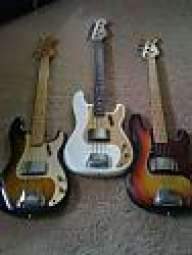
I have a 77 Greco that looks a lot like that picture that you could never buy from me for 250.00. I would have been all over that one. good call


Most likely the Mataos were made in the Matsumoku or Fujigen factories right alongside the 70s-era Aria, Ibanez, Greco, Yamaha and Tokai (and other brand name) lawsuit copies.
I would think you are coming into a fine example of an MIJ lawsuit model. Grecos and Tokais in particular often go for pretty high dollar and I've seen a few Yamaha Pulser bass (P-copies) sell for $350-$400 this year.
For the most part, these were all made in the same places to the same specs and with the same equipment (Matsumoku was one of the first plants anywhere to use CNC machines for instruments, though their guitars and basses were 60% hand finished) but just had different names on the headstock.
I just scored a 70s MIJ "Memphis" branded P-copy and it is every bit the equal of some Grecos and Tokais I've played; in fact it's pretty much indistinguishable from them. It's also a better instrument (IMO) than a lot of the later 70s Fenders.
Please report back. I passed up on a Matao P-copy a few months back that was also $250.
I would think you are coming into a fine example of an MIJ lawsuit model. Grecos and Tokais in particular often go for pretty high dollar and I've seen a few Yamaha Pulser bass (P-copies) sell for $350-$400 this year.
For the most part, these were all made in the same places to the same specs and with the same equipment (Matsumoku was one of the first plants anywhere to use CNC machines for instruments, though their guitars and basses were 60% hand finished) but just had different names on the headstock.
I just scored a 70s MIJ "Memphis" branded P-copy and it is every bit the equal of some Grecos and Tokais I've played; in fact it's pretty much indistinguishable from them. It's also a better instrument (IMO) than a lot of the later 70s Fenders.
Please report back. I passed up on a Matao P-copy a few months back that was also $250.
I will be back home around when September starts, and I'll follow up with some pictures and some sound clips and more info. Thanks for the replies.
The term "lawsuit guitar" has achieved urban myth status. In reality, there was ONE lawsuit against Ibanez for copying the Gibson headstock. There were not zillions of lawsuits with the various guitars or basses.
WHAT IS UP WITH THAT LAWSUIT? debunks the myth. Don't fall for the "lawsuit" BS used in advertisements.
Having said that much, though, "Uncle Mat" made an awful lot of very good instruments. I have an Electra guitar from that time frame, it's pretty decent.
WHAT IS UP WITH THAT LAWSUIT? debunks the myth. Don't fall for the "lawsuit" BS used in advertisements.
Having said that much, though, "Uncle Mat" made an awful lot of very good instruments. I have an Electra guitar from that time frame, it's pretty decent.
Hey, good luck with it! You did get a nice report on it, so the chances are that you'll get your money's worth.
And yes, the Greco and Tokai basses have appreciated nicely - but this isn't one of those brands.
And yes, the Greco and Tokai basses have appreciated nicely - but this isn't one of those brands.
And yes, the Greco and Tokai basses have appreciated nicely - but this isn't one of those brands.
True, but the fact is that those Japanese factories churned out tons of great basses with the same materials and specs and finish work under all kinds of "brand names."
Companies/distributors paid the factories to put certain names on headstocks in order to sell for different markets.
In other words, you can find identically made instruments of the exact same quality even made in the same week with a dozen different "brand names" though there is often no discernable difference (aside from the name on the headstock) between a Greco, Tokai, Aria, Ibanez, Memphis, Mann, etc.
Where it gets confusing is that the same factories also churned out some cheaper "lawsuit" instruments at the same time, sometimes with the same brand names.
More daunting is that fact that many of these brand names were later sold and produced in Korea and China and were generally of low quality.
For example, the Memphis-branded instruments MIJ during the 70s "lawsuit" era are excellent instruments. Later Matsumoku sold the Memphis name and most of the Memphis-branded guitars and basses made in the 80s (MIK and MIC) are among the most poorly-constructed pieces of **** you can imagine, which tends to degrade the perceived worth of anything with the Memphis name on the headstock.
For reasons I certainly don't know, this didn't happen with "brands" like Greco and Tokai. I've never seen a cpmpletely crap Greco or Tokai; they all seem to be really well made clones.

Hoshini was the same place that sold early lawsuit Ibanez clones. Matao-branded instruments were on par with those early Ibanez models. Matao, as I understand it, was a brand made specifically for some Seattle-based chain of music stores.
My first bass was a 72 or 73 Ibanez jazz I bought second hand in 78. Still got it, though it's been modified a bit. It shares the stage with my other more expensive instruments quite happily.
If your P bass is of the same quality it will serve you well, though you may choose to upgrade some of the components.
fingerbun said:My first bass was a 72 or 73 Ibanez jazz I bought second hand in 78. Still got it, though it's been modified a bit. It shares the stage with my other more expensive instruments quite happily.
If your P bass is of the same quality it will serve you well, though you may choose to upgrade some of the components.
Yeah, because I was expecting to spend quite a bit more tracking down a P, I have some extra cash for tuners and a bridge if need be. I am thinking of throwing a Badass bridge on it just because. Shoot, I might even splurge on a new pickup.


