Now that the cat is out of the bag, so to speak, I thought I'd start a new thread for my next build. My working title for this project is the "leafenbacker", though that's not set in stone at this point. First, a little background.
My favorite bass of all time, before I finished the Reformer, was my mid 70's Mapleglo Rickenbacker 4001. I had it for a few years, and did much of my gigging with it. For some reason I can't remember, I traded it for a Fireglo Ric, which I subsequently traded for some kind of an effects box. Ah, the follies of youth. Anyway, I really miss it, and knew some day I'd replace it. That time has come.
While working on the Reformer, I came across a set of templates for a 4001. So I ordered it, and it arrived in about 2 weeks.
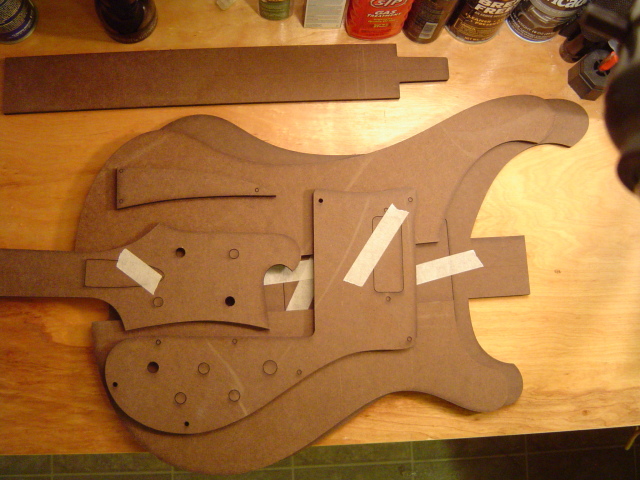
The templates sat around for a month or two while I made some decisions about the build. Since I like the Carvin neck I used in the Reformer so well, I'm going to order another for this build. Same as before, 24 frets, and a maple fret board, fixing 2 of the main issues I have with Rickenbackers in general. I've amassed a bit of maple wood, which I'm using for the body wings. I also picked up a piece of mahogany.
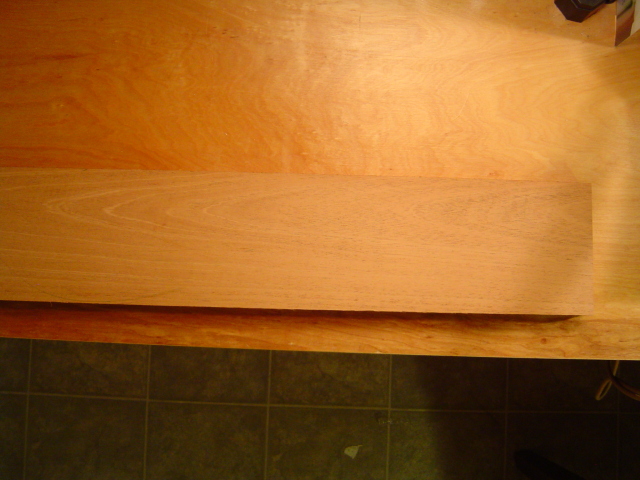
I'll use that for the headstock wings and as a strip of contrast between the neck through and body wings.
Searching around the net, I came across a picture of Lemmy's Ric.
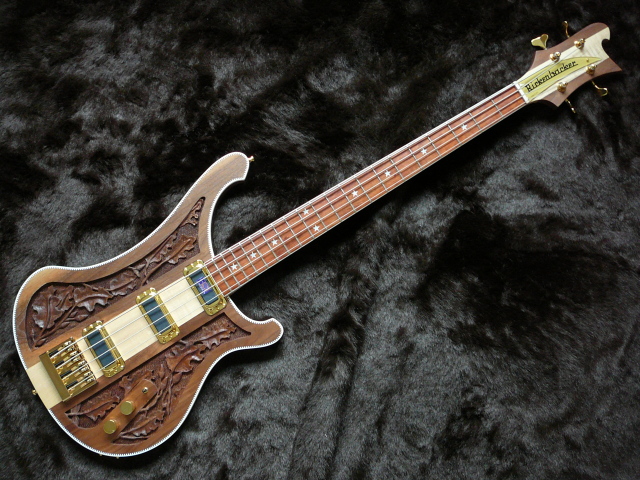
What a work of art! I'm not really familiar with Lemmy, or his band, but I really love the bass. In a real sense, it's quite radical with carved inlays and three pickups. So armed with the template and the pictures, I went to work. First, I made a template for the body wings.
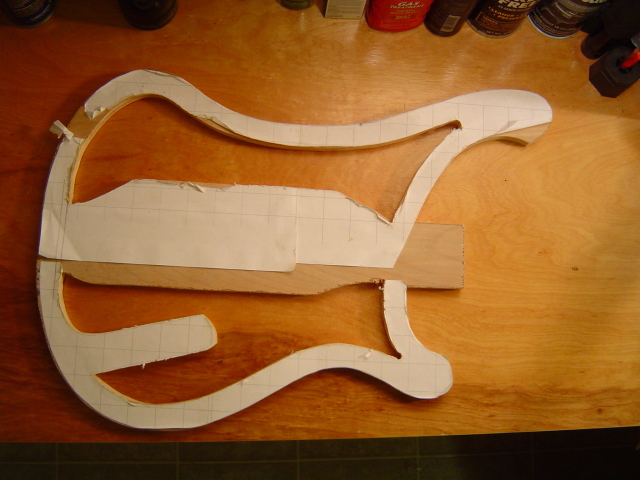
I've subsequently decided to cut off the control panel from the template, and add that on after, as I'd like to use neither a pick guard or a rear control cavity cover. I'd like to make the control cover front mounted, for a cleaner look front and back. I may have to be creative with the pickup wiring routing.
Since I don't know that I can carve oak leaves or acorns, I searched the net for something pre-made, and came across these:
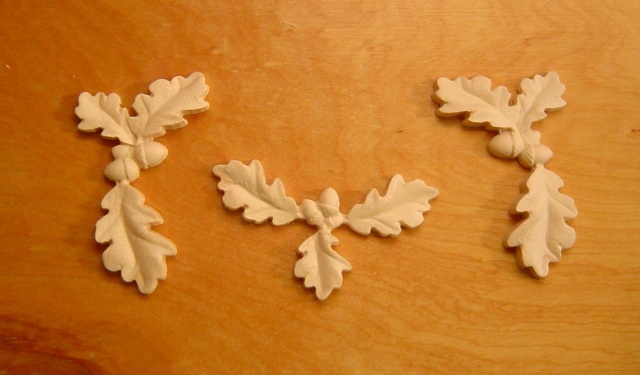
They're a little pricy at $20.00 each (so that's $60.00 of onlay), but I ordered a set to see how they might work. I'm thinking I'll need 2 more sets of three to complete the look.
I cut out the body wings from the maple, and sanded them to shape.
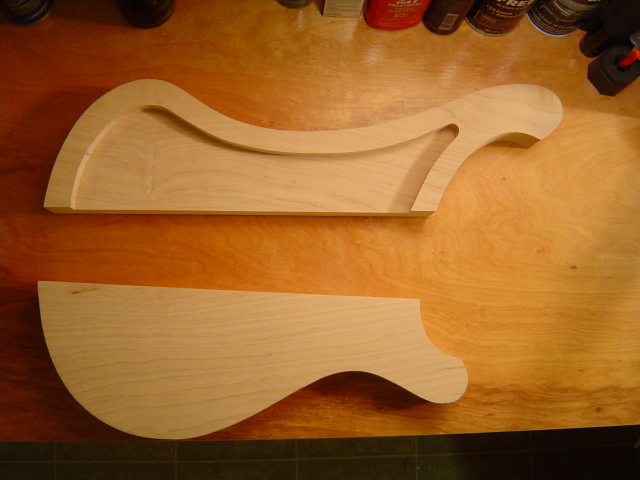
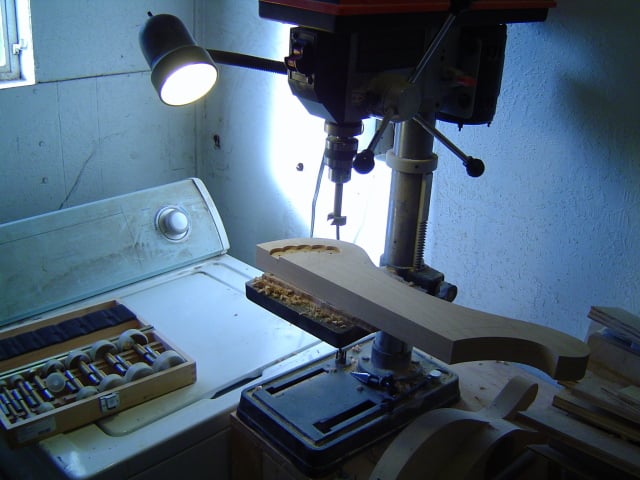
I had to route in the onlay locations, so I started by marking it out, and doing some work with a forstner bit.
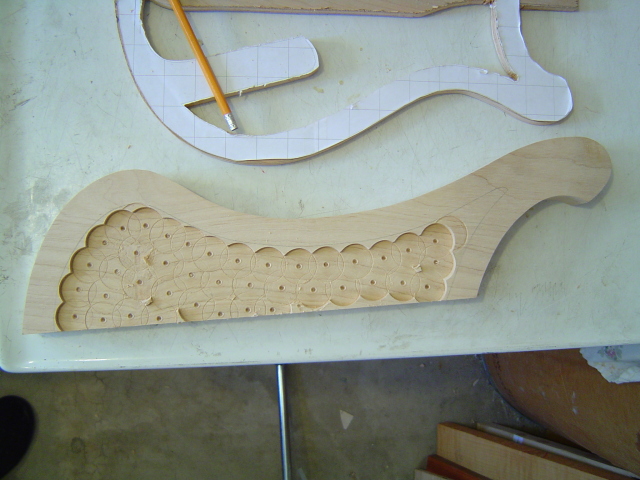
After routing it, I laid in the onlays.
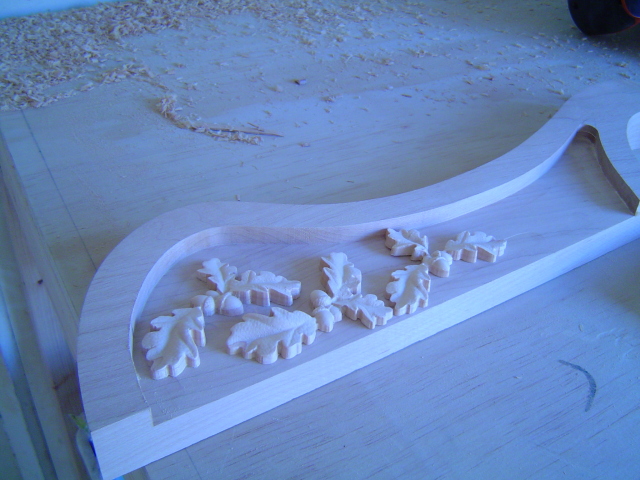
So that's where I am now. I'm going to have to pay down the credit card after my Reformer build and the holidays before I can order the neck and more onlays.
I'm thinking of going with 3 Classic Amplification pickups, wired to 3 volume controls - no tone controls or pickup selection switch. I may look at the humbucker Rick pickups, but the availability seems to be spotty.
Oh, and for the bridge, I'm thinking of using one of the Kahler Tremolo bridges - I think it matches the radical nature of the bass. There's a few issues that I'll have to work out before that's set in stone.
I still have to route out the other body wing, and cut the mahogany strips, but short of that, I'll have to wait for fund availability before moving forward again.
My favorite bass of all time, before I finished the Reformer, was my mid 70's Mapleglo Rickenbacker 4001. I had it for a few years, and did much of my gigging with it. For some reason I can't remember, I traded it for a Fireglo Ric, which I subsequently traded for some kind of an effects box. Ah, the follies of youth. Anyway, I really miss it, and knew some day I'd replace it. That time has come.
While working on the Reformer, I came across a set of templates for a 4001. So I ordered it, and it arrived in about 2 weeks.
The templates sat around for a month or two while I made some decisions about the build. Since I like the Carvin neck I used in the Reformer so well, I'm going to order another for this build. Same as before, 24 frets, and a maple fret board, fixing 2 of the main issues I have with Rickenbackers in general. I've amassed a bit of maple wood, which I'm using for the body wings. I also picked up a piece of mahogany.
I'll use that for the headstock wings and as a strip of contrast between the neck through and body wings.
Searching around the net, I came across a picture of Lemmy's Ric.
What a work of art! I'm not really familiar with Lemmy, or his band, but I really love the bass. In a real sense, it's quite radical with carved inlays and three pickups. So armed with the template and the pictures, I went to work. First, I made a template for the body wings.
I've subsequently decided to cut off the control panel from the template, and add that on after, as I'd like to use neither a pick guard or a rear control cavity cover. I'd like to make the control cover front mounted, for a cleaner look front and back. I may have to be creative with the pickup wiring routing.
Since I don't know that I can carve oak leaves or acorns, I searched the net for something pre-made, and came across these:
They're a little pricy at $20.00 each (so that's $60.00 of onlay), but I ordered a set to see how they might work. I'm thinking I'll need 2 more sets of three to complete the look.
I cut out the body wings from the maple, and sanded them to shape.
I had to route in the onlay locations, so I started by marking it out, and doing some work with a forstner bit.
After routing it, I laid in the onlays.
So that's where I am now. I'm going to have to pay down the credit card after my Reformer build and the holidays before I can order the neck and more onlays.
I'm thinking of going with 3 Classic Amplification pickups, wired to 3 volume controls - no tone controls or pickup selection switch. I may look at the humbucker Rick pickups, but the availability seems to be spotty.
Oh, and for the bridge, I'm thinking of using one of the Kahler Tremolo bridges - I think it matches the radical nature of the bass. There's a few issues that I'll have to work out before that's set in stone.
I still have to route out the other body wing, and cut the mahogany strips, but short of that, I'll have to wait for fund availability before moving forward again.

 Subscribed!!