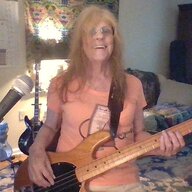
Lets say your 40, you work a day job and you are tired when you get home, so you want the most efficient way to learn how to read music at a high level.
My suggested method is to break the process down into sequential, smaller easier components:
1) LEARN TO READ JUST THE NOTE DURATIONS.
Youtube has a ton of great videos. Search on "Rhythm Reading". Practice 15min/day until it feels natural.
2) LEARN THE NOTES ON THE BASS CLEFF STAFF
When you are comfortable with rhythm notation, start this step.
Put away your bass. You want to be able to recognize the note value on sight. Make your mental link to the note value, not a location on a bass neck.
On bass clef, the lines are GBDFA, the spaces are ACEG ("A Cow Eats Grass").
Get some bass music from the internet and read out the notes. Sing in time when you get better. Practice 15 min a day, every day. Simandl is helpful here.
Learn from low E to high G three lines above stave.
NOTE, YOU WANT TO THINK NOTES, NOT FINGER POSITIONS ON THE NECK !
3) LEARN THE NOTES ON YOUR BASS
Pick a random note and find every place on the bass where it is.
Jaco said it, I believe it.
4) START READING BASS CLEF SHEET MUSIC ON YOUR INSTRUMENT.
Start out with easy material and practice perfectly.
When I started reading Big Band Charts for group rehearsals, I found I played most material in the lower end of the neck and only went up the neck to grab the higher notes. Its better to learn how to play sheet music comfortably in multiple positions around the neck.
5) FIVE AND SIX STRINGERS.
Learn the additional notes on those strings. Repeat steps 3 and 4. NBD
6) TREBLE CLEF (Optional)
I find this very useful as I play guitar and piano and routinely read treble parts on the bass. I often go weeks reading only treble clef.
Repeat Step 2 for the Treble Clef.
7) TREBLE CLEF, Eb TRANSPOSED FOR ALTO AND BARI SAX
Wanna play along with Charlie Parker and Leo P on the youtube videos?
Playing Eb instrument sheet music is ridiculously easy if you know "THE TRICK".
Imagine the sheet music is bass clef and add 3 flats to the key signature. Voila!!!
If the key is C or a flat key, this is straight forward. For F, think 1 1/2 steps up =Ab, and Bb is Db. Eb is of course C.
If the Key is a sharp key, subtract three sharps. So A on an alto chart is C in Concert, E is G, etc.
F is Ab
8) TREBLE CLEF, Bb TRANSPOSED FOR TENOR OR SOPRANO SAX OR TRUMPET/CORNET
I cheat here and just move my hand down two frets. One of these days, I will do step 2 for Bb.
My suggested method is to break the process down into sequential, smaller easier components:
1) LEARN TO READ JUST THE NOTE DURATIONS.
Youtube has a ton of great videos. Search on "Rhythm Reading". Practice 15min/day until it feels natural.
2) LEARN THE NOTES ON THE BASS CLEFF STAFF
When you are comfortable with rhythm notation, start this step.
Put away your bass. You want to be able to recognize the note value on sight. Make your mental link to the note value, not a location on a bass neck.
On bass clef, the lines are GBDFA, the spaces are ACEG ("A Cow Eats Grass").
Get some bass music from the internet and read out the notes. Sing in time when you get better. Practice 15 min a day, every day. Simandl is helpful here.
Learn from low E to high G three lines above stave.
NOTE, YOU WANT TO THINK NOTES, NOT FINGER POSITIONS ON THE NECK !
3) LEARN THE NOTES ON YOUR BASS
Pick a random note and find every place on the bass where it is.
Jaco said it, I believe it.
4) START READING BASS CLEF SHEET MUSIC ON YOUR INSTRUMENT.
Start out with easy material and practice perfectly.
When I started reading Big Band Charts for group rehearsals, I found I played most material in the lower end of the neck and only went up the neck to grab the higher notes. Its better to learn how to play sheet music comfortably in multiple positions around the neck.
5) FIVE AND SIX STRINGERS.
Learn the additional notes on those strings. Repeat steps 3 and 4. NBD
6) TREBLE CLEF (Optional)
I find this very useful as I play guitar and piano and routinely read treble parts on the bass. I often go weeks reading only treble clef.
Repeat Step 2 for the Treble Clef.
7) TREBLE CLEF, Eb TRANSPOSED FOR ALTO AND BARI SAX
Wanna play along with Charlie Parker and Leo P on the youtube videos?
Playing Eb instrument sheet music is ridiculously easy if you know "THE TRICK".
Imagine the sheet music is bass clef and add 3 flats to the key signature. Voila!!!
If the key is C or a flat key, this is straight forward. For F, think 1 1/2 steps up =Ab, and Bb is Db. Eb is of course C.
If the Key is a sharp key, subtract three sharps. So A on an alto chart is C in Concert, E is G, etc.
F is Ab
8) TREBLE CLEF, Bb TRANSPOSED FOR TENOR OR SOPRANO SAX OR TRUMPET/CORNET
I cheat here and just move my hand down two frets. One of these days, I will do step 2 for Bb.
Last edited: