Dude! I am also a trumpet player, and to be honest, I kind of gave up working on reading BC to concentrate more on just learning to play. I've got to say though - to me, if you got that down in one night you are killing it! So how about if we turn it around and I ask you - any advice for someone who might now want to follow in your footsteps?

Enjoy the benefits of a premium membership!
Upgrade Account
-
TalkBass has been independent since 1998. Add your voice.
Create a free account to reply to discussions, view embedded media, and browse with fewer display ads.
Join free Log in
Want zero display ads or expanded classifieds tools? Compare plans.
You are using an out of date browser. It may not display this or other websites correctly.
You should upgrade or use an alternative browser.
You should upgrade or use an alternative browser.
Learning to Read...
- Thread starter CallMeAl
- Start date
More options
Who Replied?

For most bass players, reading stuff above the staff is a challenge. Any trombone method would help you develop the skill for reading above-the-staff material.

What do you do to get better at reading?
- Practice reading often—daily if possible.
- Progress from beginner to intermediate to advanced reading materials. You can try to do this yourself, across unrelated sources, or you can get a multi-volume method book. There are some available for bass, but there are plenty available for trombone. They all should start simply and progress through more and more difficult rhythms and keys.
- Don’t sightread materials beyond your reading or performing level. Study the rhythms and keys before you attempt to read them.
- Read it down. Practicing reading is different than practicing technique. Start at performance tempo, and do not slow down or stop. If you make a mistake keep going, do not go back or start over. Imagine you are sightreading with an ensemble, and the conductor starts at the top and continues to the bottom, without stopping or slowing down.
- When you are done, don’t try the piece again—that’s not sightreading. Flip the page and read the next one down.
One of my (musical) New Years resolutions is to work on my reading, and specifically my jazz bass playing. I’m a long-time trumpet player- so I’m a pretty strong treble clef reader. But as a self-taught bassist my bass clef is very slow going...
So I got some books!
View attachment 3682461 View attachment 3682462 View attachment 3682464
I try to practice 30-60 minutes a day, so I’ll do 10-15 minutes on these reading exercises each session. Sometimes it can be really hard to crack that book open and start dead cold on a piece I’ve never seen. But it’s so satisfying to go from “I got a rough idea what this sounds like” to “I can play this up to tempo” to “memorized!”
here’s my exercise for this week, from the Aebersold blues book:
View attachment 3682460
this chart is 6 choruses of the blues, but it’s tough enough for me, I’m just focusing on one chorus this week!
I’ve just started this one last night, and I’ve already got a good handle on it. Very exciting!
So- anyone else in my shoes? How’s it going? What do you do to get better at reading?


Definitely in the same boat, I played Sax in school, 7 yrs, it's been awhile since I read but I'm fine in treble clef, can't read bass clef. It's on my list of things I want to learn.

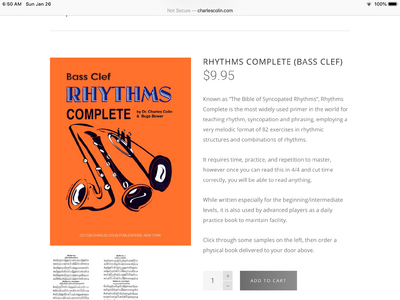
These two books were the best that I found to learn to read.
1) rhythms compete made reading easy with simple explanations that built knowledge and confidence that allowed you to internalize the hardest part of reading notation
2) Bach was great music with a fingering system that connected the notes to your hand to the written page. Tablature in this book really unlocks the “ where do I place my fingers” question that slows people down.
1) rhythms compete made reading easy with simple explanations that built knowledge and confidence that allowed you to internalize the hardest part of reading notation
2) Bach was great music with a fingering system that connected the notes to your hand to the written page. Tablature in this book really unlocks the “ where do I place my fingers” question that slows people down.
Attachments

Dude! I am also a trumpet player, and to be honest, I kind of gave up working on reading BC to concentrate more on just learning to play. I've got to say though - to me, if you got that down in one night you are killing it! So how about if we turn it around and I ask you - any advice for someone who might now want to follow in your footsteps?
I highly recommend that Jay Hungerford book. It’s proven very easy and helpful as I’ve gotten startedDefinitely in the same boat, I played Sax in school, 7 yrs, it's been awhile since I read but I'm fine in treble clef, can't read bass clef. It's on my list of things I want to learn.
Lots of good advice in this thread. The standout was separating the rhythm from the pitch. I can read rhythm fine, but it’s the pitch that slows me down. I’m still “translating” from treble... OK, that’s a B in Treble Clef, which makes it a D in Bass Clef... Not quite that slow but you get the idea... I’ve also learned how to read intervals, something I learned in piano lessons. So I get my bearings on that key, and I’m kinda thinking in terms of distance rather than individual note names.Dude! I am also a trumpet player, and to be honest, I kind of gave up working on reading BC to concentrate more on just learning to play. I've got to say though - to me, if you got that down in one night you are killing it! So how about if we turn it around and I ask you - any advice for someone who might now want to follow in your footsteps?
Another helpful thing is to write lines on paper. get some blank staff paper, Transpose lines or whatever in bass clef. Putting pen to paper really helps lock it in, at least for me...
but above all; practice, practice, practice!


Thank you for pointing out the book. Good luck with your reading. It feels like torture sometimes but the result should be worth it.Thanks, great ideas! Like I said I’m a strong treble reader so rhythm is no issue. But I would definitely benefit from focusing on the notes. I still find I often “translate” to treble clef to know what the note is.
Invalid Link Removed
There are several books of bass line transcriptions from the Aebersold series!

Excellent advice
- Practice reading often—daily if possible.
- Progress from beginner to intermediate to advanced reading materials. You can try to do this yourself, across unrelated sources, or you can get a multi-volume method book. There are some available for bass, but there are plenty available for trombone. They all should start simply and progress through more and more difficult rhythms and keys.
- Don’t sightread materials beyond your reading or performing level. Study the rhythms and keys before you attempt to read them.
- Read it down. Practicing reading is different than practicing technique. Start at performance tempo, and do not slow down or stop. If you make a mistake keep going, do not go back or start over. Imagine you are sightreading with an ensemble, and the conductor starts at the top and continues to the bottom, without stopping or slowing down.
- When you are done, don’t try the piece again—that’s not sightreading. Flip the page and read the next one down.
Just showed up this afternoon, thanx Amazon Prime!I highly recommend that Jay Hungerford book. It’s proven very easy and helpful as I’ve gotten started
Enjoy!Just showed up this afternoon, thanx Amazon Prime!

I am learning to read using Sight Reading Factory. Google it, it's a website based sight reading program that creates a unique page to sight read every time you click for a new exercise and they are musical enough to be interesting to play. It covers a huge amount of skill levels. You can try it free for like 20 exercises and then it's $35 for a year. When you're picking an instrument, bass guitar is under the guitar category. My teacher turned me on to it a few weeks ago and I wasn't able to read at all, now I'm reading a Bach piece in open, 5th and 7th position and I'm pretty proud of myself for the progress I've made thanks to SRF. I suppose I should disclose that SRF is not paying me to tell you this stuff, I'm just a guy who likes using it.
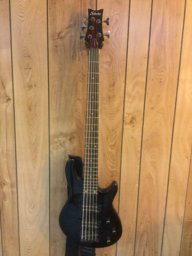
I started with tab because I wanted to make music. Then I penciled in the notes over the musical score reading as I went. After that I began to sight read simple pieces, playing slowly working up to speed. Now I am playing Bach and working on Keith Hartley,s Double Bass Solo #1 sight reading playing on an electric bass. Total time about a year practicing reading music 1/2 to 1 hour most days. Now I can buy any music book and read and play!

This is worth a look...
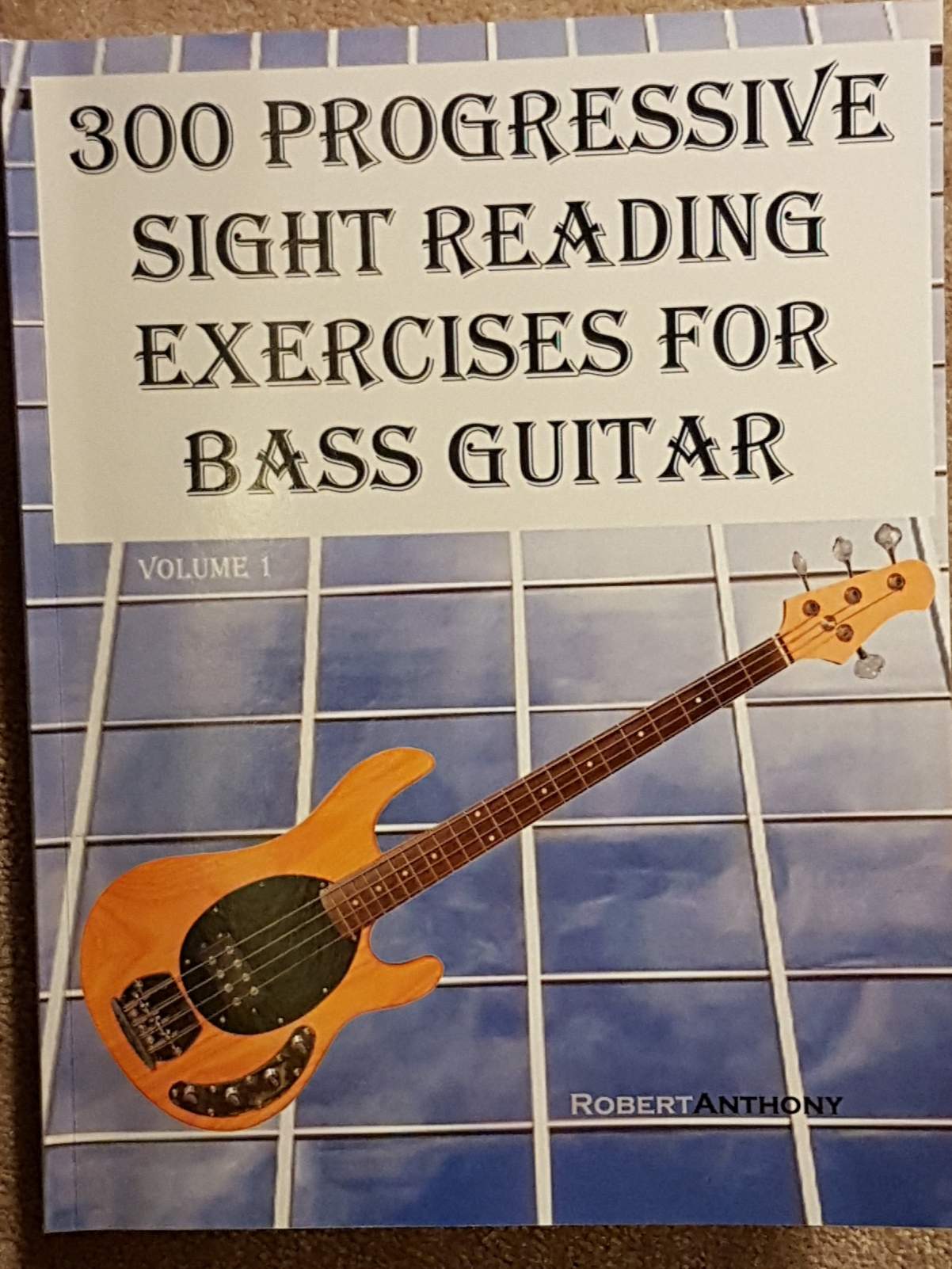
It starts very light...
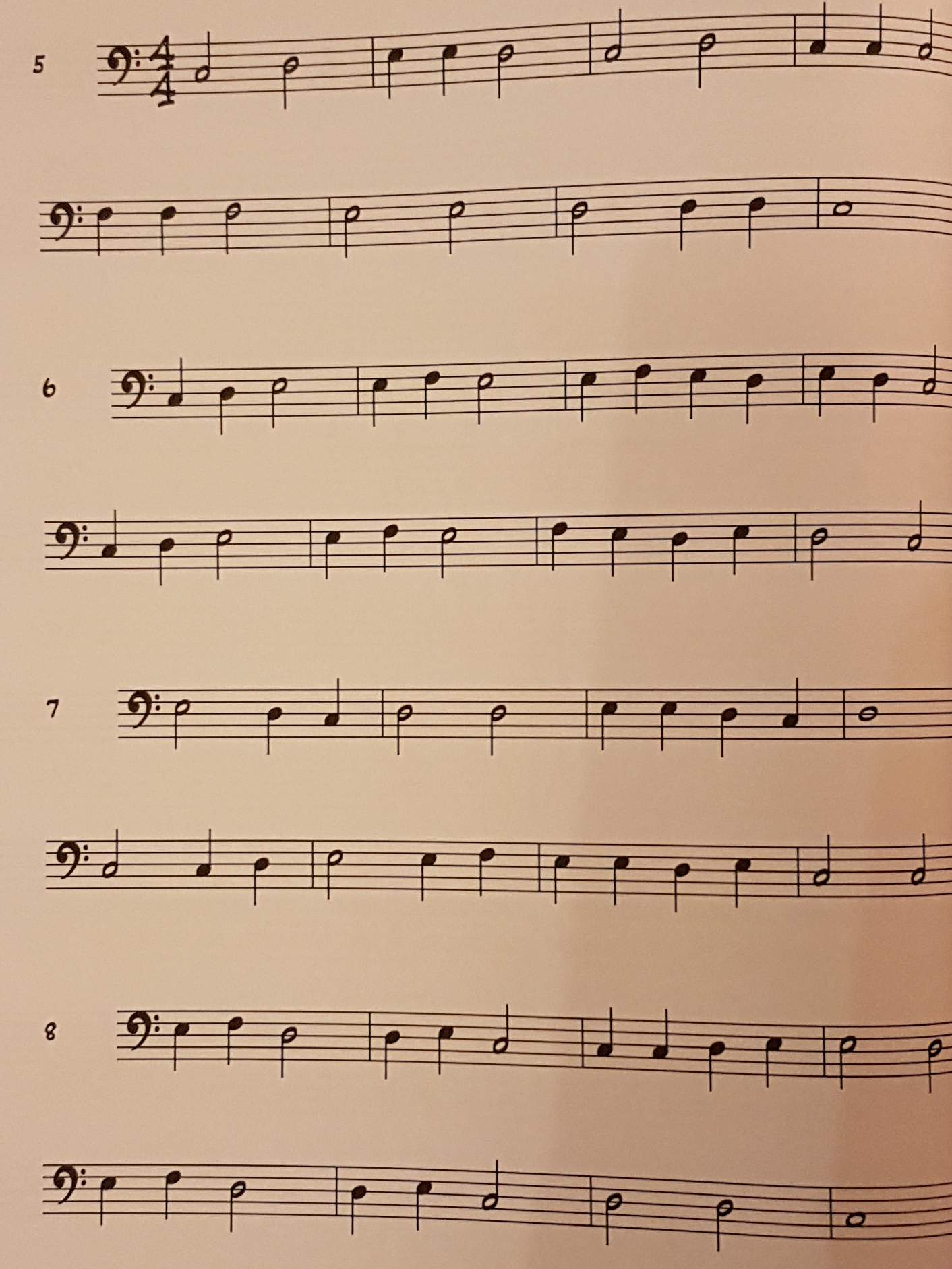
Goes through this...
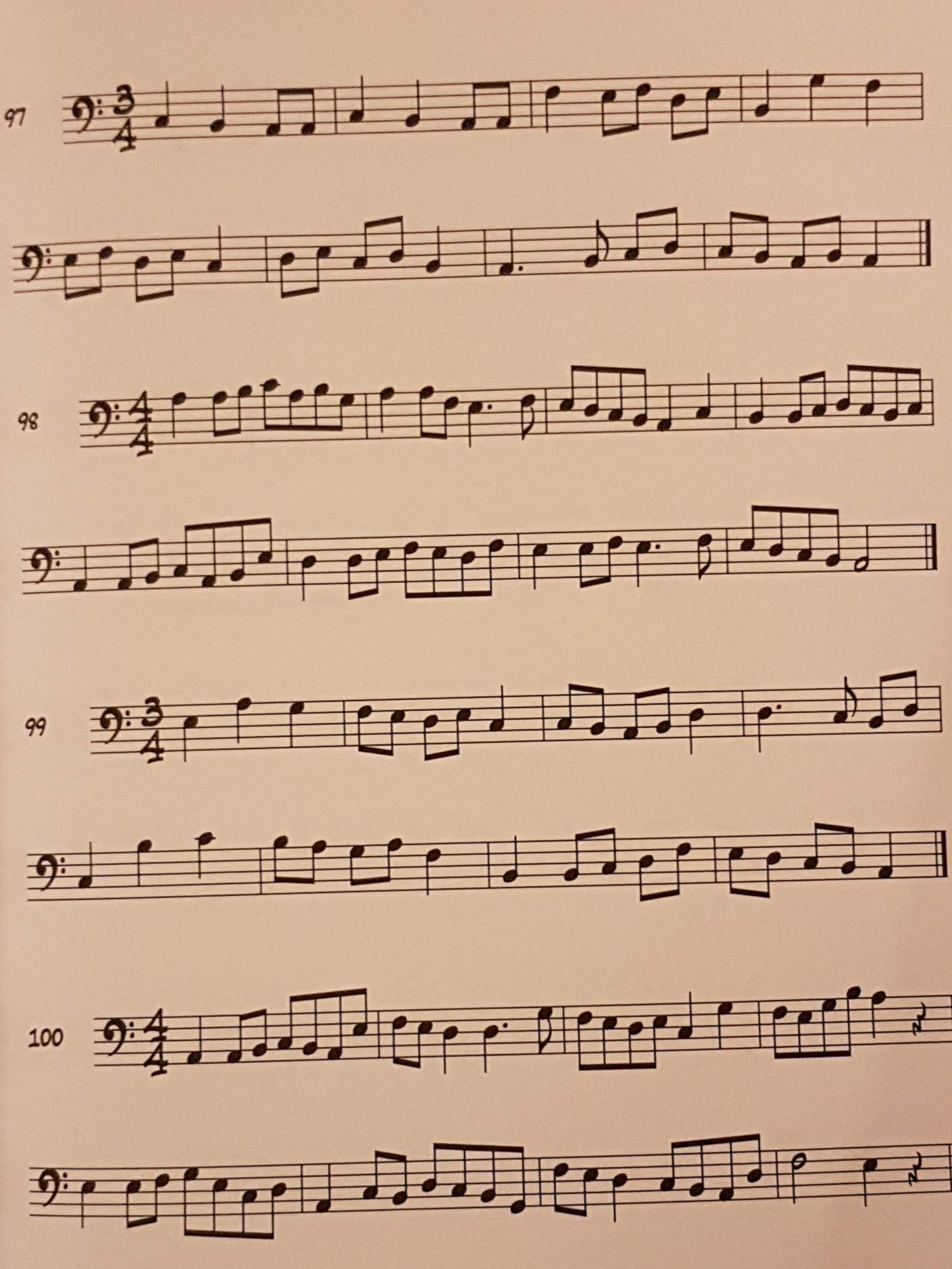
To this type of thing...
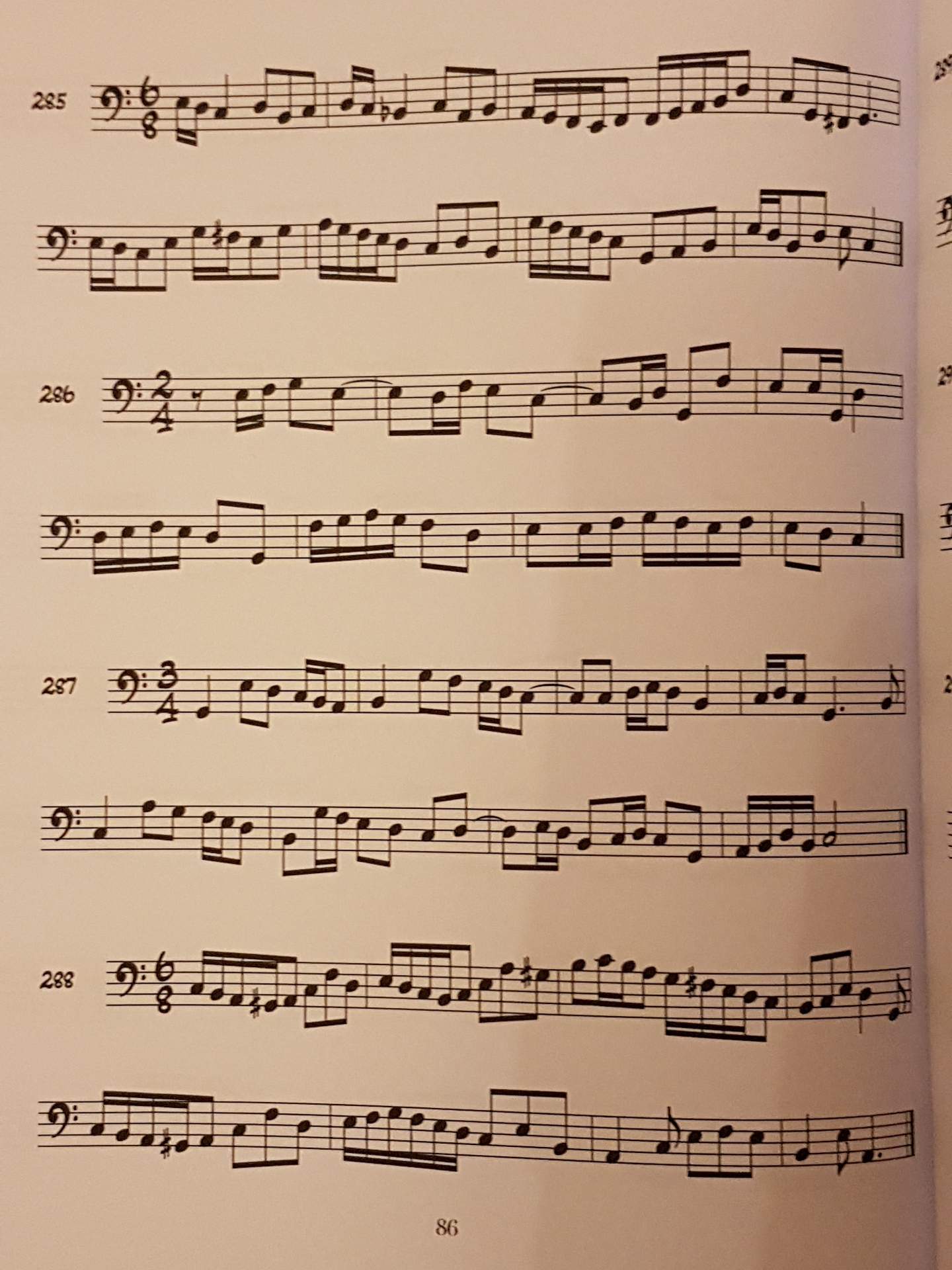
It starts very light...
Goes through this...
To this type of thing...


