I have a similar issue with my favorite bass. Left shoulder pain. Odd, though, not with any other basses. I have found that if I pull the bass so it rests more on my right side it allows my left hand and wrist to be closer to my body. Its a little awkward, but definitely helps. As always, YMMV, etc.

Enjoy the benefits of a premium membership!
Upgrade Account
-
TalkBass has been independent since 1998. Add your voice.
Create a free account to reply to discussions, view embedded media, and browse with fewer display ads.
Join free Log in
Want zero display ads or expanded classifieds tools? Compare plans.
You are using an out of date browser. It may not display this or other websites correctly.
You should upgrade or use an alternative browser.
You should upgrade or use an alternative browser.
Left shoulder feels awkward and unnatural
- Thread starter bassist0981234
- Start date
More options
Who Replied?

Put your back against a wall and reach overhead and back as far as you can and then at different clock positions as you bring both arms down. If you can’t reach back as far with your left arm, you may have “frozen shoulder”. A few trips to PT and doing the exercises they suggested at home took care of it. I’m doing CrossFit and when I started doing back squats I couldn’t hold the bar straight across my shoulder because I couldn’t reach back as far with my left arm. The bar was basically at an angle and the coach was asking, “what’cha doing?”

As with most physical activities it is important to vary positions to rest muscle groups alternately.
Playing live I vary from having the bass near horizontal to tuner tops at shoulder height. Other movement also helps keep tension out, and might look rock and roll too.
Sticking with one “right” posture is definitely not a good plan for joint health
Playing live I vary from having the bass near horizontal to tuner tops at shoulder height. Other movement also helps keep tension out, and might look rock and roll too.
Sticking with one “right” posture is definitely not a good plan for joint health
Yep, variety of motion is key in anything. Otherwise you risk repetitive stress injuries.As with most physical activities it is important to vary positions to rest muscle groups alternately.
Playing live I vary from having the bass near horizontal to tuner tops at shoulder height. Other movement also helps keep tension out, and might look rock and roll too.
Sticking with one “right” posture is definitely not a good plan for joint health
I had "frozen shoulder" once - basically the fascia gets all locked up and pulls things out of whack and gets stuck. I had an ortho doc give me a cortisone shot for it which did absolutely nothing except make it worse after it wore off. One visit to a myofascial release massage therapist and I walked outta there completely cured.Put your back against a wall and reach overhead and back as far as you can and then at different clock positions as you bring both arms down. If you can’t reach back as far with your left arm, you may have “frozen shoulder”. A few trips to PT and doing the exercises they suggested at home took care of it. I’m doing CrossFit and when I started doing back squats I couldn’t hold the bar straight across my shoulder because I couldn’t reach back as far with my left arm. The bar was basically at an angle and the coach was asking, “what’cha doing?”
Nothing wrong with your playing position. Perhaps have a PT specialist evaluate your shoulder. I notice you have a fairly heavy bass too, the Yamaha tends to be a bit on the 9lb+ side. Doubt that is it though. Maybe some inflammation in the shoulder?

Based on the pictures, I don’t see anything obviously “wrong” with your posture or hand positioning. Everyone’s bodies are different, so what’s comfortable for someone else may not be comfortable for you. Pain after a short period of time means that something is not working right for you. Always let comfort be your guide.
Suggestions:
See a doctor and have them evaluate your shoulder function and range of motion. They may recommend physical therapy or some other course of treatment depending on what they find.
Check out 32” scale basses and see if you can play the lower frets without pain. The extra 2” difference between a 32” and a 34” scale may not seem like a lot, but it really is. (I really notice a difference between a 34” and a 35”). If nothing else, playing a 32” without pain would give you more info and indicate a possible long-term solution if you’re just unable to play a 34” without pain.
Good luck.
My initial reaction is similar to what others have said: Are you dealing with an injury? Possibly one that you’ve had for a long time? Reaching the lower frets involves more external rotation of the shoulder. The fact that this brings on pain so quickly indicates you have a range of motion issue.when I play on the lower frets, my left shoulder feels really awkward and I experience discomfort.
Suggestions:
See a doctor and have them evaluate your shoulder function and range of motion. They may recommend physical therapy or some other course of treatment depending on what they find.
Check out 32” scale basses and see if you can play the lower frets without pain. The extra 2” difference between a 32” and a 34” scale may not seem like a lot, but it really is. (I really notice a difference between a 34” and a 35”). If nothing else, playing a 32” without pain would give you more info and indicate a possible long-term solution if you’re just unable to play a 34” without pain.
Good luck.
I also notice some discomfort when playing the bass on the high side (jazz style) so I now use a 3.5" suede leather strap. I also concentrate on relaxing my shoulder when playing below the 3rd fret. Please be patient as finding the right position can take a long time. Good luck.

Strap length is obviously subjective. But there's no way I could play w/ the headstock positioned above my head. It's off the hip for me otherwise anything closer & my arms feel like they are going to go numb. You do you.


Looks fine to me. You may need a wider padded strap. That's the avenue I had to go down when my shoulder started bothering me.

Experiment with how you wear your bass as well as considering a 5 or 6 string bass. I use a 6 string and every note on a 4 string can be played between the 5th and 12th frets without needing to extend your arm.
I too have shoulder/wrist issues and after getting a 6 string and how I wear it, I seldom if ever need to reach for any notes unless it's comfortable to do (because sometimes I'm feeling capable without pain).
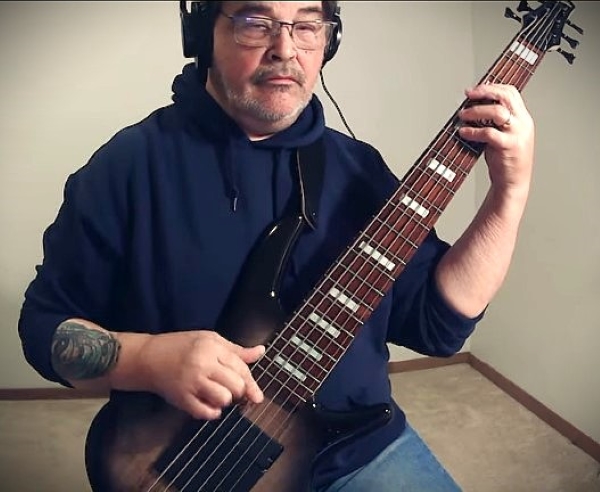
I too have shoulder/wrist issues and after getting a 6 string and how I wear it, I seldom if ever need to reach for any notes unless it's comfortable to do (because sometimes I'm feeling capable without pain).

This is also very important point. For my left shoulder, problem was solved by combination of power weight exercises targeting back muscles, AND octaver pedal.As with most physical activities it is important to vary positions to rest muscle groups alternately.
Playing live I vary from having the bass near horizontal to tuner tops at shoulder height. Other movement also helps keep tension out, and might look rock and roll too.
Sticking with one “right” posture is definitely not a good plan for joint health
Yes, synthy sounding octaver pedal, as it allowed me to play significant part of repertoire octave up (heigher on the neck). When I mix positions, shoulder and arm have chance relax, and no pain after two and a half hour, no pause, gig.
no past injuries, yes i started practicing more daily. the bass is not considered heavy when i let other experienced players try it on. thanks for your answerlooks normal to me...any injuries in the past?......did you just start playing?..how heavy is the bass, adjust the strap or maybe some simple shoulder exercises.
interesting, any tools that I would need for this operation or more of a project for a luthier?extending the top horn with a spacer and longer screw will make the reach shorter.
also I've seen people relocated the back button higher up the edge of the bass, closer to the top of the contour to help with the reach-issue many players encounter.
This was a lower straplock design choice I made to help with the reach.
when i am seated the shoulder discomfort is considerably less, I'm starting to believe because the bass is more to my right leg and not on my stomach like when I am standing.I expect you have already, but try wearing the bass at different angles--every pic you show has it at the same degree of angle. Try wearing the bass at different heights. Try having it positioned differently across your torso - pointing "out" more, vs totally parallel across your chest. There's no one "right" way, every body is different. A really small change to one of these things can make a big difference. Try to loosen up, don't worry so much about a specific thumb position and all that for now. Just play however it feels OK and assess what your body is doing. How is it when you play seated? Work on your overall flexibility--your back, your posture, etc, try to open up your chest and shoulders.
thank you this definitely helped as the bass was way too much in the middle when i was playing standing.It looks to me like you might be shrugging your shoulder a tiny bit, which can get very uncomfortable over time. Early on I had to really focus on keeping my shoulder relaxed and just letting the bass hang on it. Also try holding the bass so the headstock is a little lower and see if that makes a difference. Also try shifting the balance of the bass so your left arm/headstock is a little closer to your body and the bridge is a little farther away from your body can help—basically make it so you don’t have to hold your left arm out so far away from your body when playing those lower frets. Or, shift the bass so the body is more on your hip and the headstock is a little more in front of your body. Try all of these and see if any of them work for you.
Here are my 2 cents:
How long ago the discomfort started?
Does it go away when you stop playing or can you recreate it by moving your arm/wrist?
I'd gather this information and schedule a visit with a Dr. experienced in ergonomics to address your issue.
As reference, here is a Jim Stinnett video playing at similar angle as you do but much higher which keeps a straight arm-wrist line.
discomfort started when i increased my practice sessions. yes goes a couple of minutes when i shift away from the lower frets
thanks for your answer and that video definitely helped with the "shotgun angle" thanks for the input!Some may scoff as Scott but he hit on an important point that really resonated with me with respect to playing posture. Watch this VIDEO and pay attention to when he talks about being in a box and the angle of the bass viewed from above.
In your photos it seems the plane of the bass is the same (read paralell) as that of your torso/chest….I did this and unfortunately still do at times (old habits die hard) but modifying it according to the guidance on the video really helped me.
It does seem that the bass may be a bit high too as others have noted but I’d bet where your elbow is relative to your body and the angle (or lack thereof) of the bass is more of a factor.
Also THIS is a weighty article but gets into some things that are good to consider…scapular dyskinesia is no joke. Good luck and keep us posted!
I was thinking of getting a gruv gear strap would you still recommend it today?My 35” Lakland 55-94 posed a problem for me. I’ve partially solved the issue with the Duo Strap from Gruv Gear. Previously I used a McIntosh Double Comfort strap. My arm length is probably better suited to a 34” scale 5 string. Lakland’s don’t usually come in 34” Scales. When they do they’re pretty rare or quite expensive.
honestly, it does feel like thatNothing wrong with your playing position. Perhaps have a PT specialist evaluate your shoulder. I notice you have a fairly heavy bass too, the Yamaha tends to be a bit on the 9lb+ side. Doubt that is it though. Maybe some inflammation in the shoulder?
That "shotgun angle" like you're in a box holding the bass corner to corner what what I was trying to describe in the last sentence of my post above. I think this may help you a lot.thanks for your answer and that video definitely helped with the "shotgun angle" thanks for the input!


