BassHappy
Supporting Member
Jazz Bass Special PJM-60C from Fender Japan in 1986:
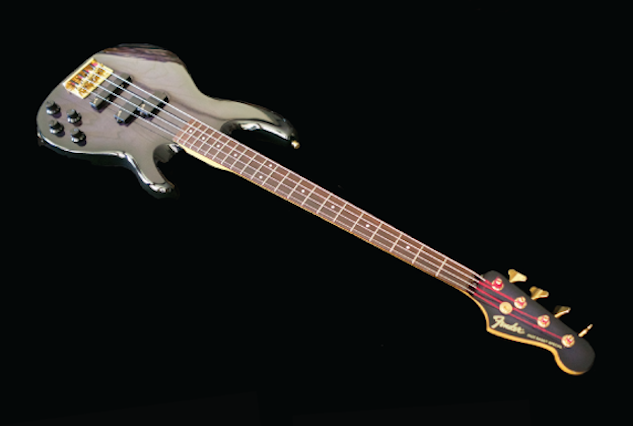
"Fender Japan produced some "not so standard" very special medium and long scale instruments during the mid to late '80s. This Jazz Bass Special is one of the models and there were at least five Jazz Bass Special configurations released. The commonality would be the 21 fret rosewood board and PJ pickup configuration and electronics. Usually, those with hidden pole pieces had active electronics while those with exposed pole pieces had passive electronics. The passive models would generally have three knobs and a pickup selector switch - and the active models had Fender-labeled active pickups - with four knobs and no pickup selector switch. They also have gold plated hardware and sealed tuners. This particular model was only available in Japan - and only a small number of medium scale basses were made."
An excerpt from an article by Invalid Link Removedon the Jazz Bass Special appears here:
"Some folks have requested that I write about the original run of Fender Jazz Bass Specials, and I am happy to oblige. One of these was my first decent bass, and they have remained one of my favorite basses of all time. I have owned bunches of them, making me a pseudo-expert. If you are not familiar with these, Jazz Bass Specials were made famous by Duff McKagan of Guns N Roses, and later of Velvet Revolver. These basses were made by Fender in Japan in the early years that were known for the best MIJ guitars, and were of better quality than the ones produced in the US. They were originally produced from 1985 to 1987 (or so). The ”special” part of the Jazz Bass Special is that it has a Precision Bass body shape with a Jazz Bass profile neck and a P/J pickup configuration. The bodies are probably basswood, as they are light. They have a control cavity routed in the back so there is no pick guard. The necks all have a glossy black head stock, and a rosewood fret board. They were available fretted or fretless. The backs of the maple necks were either clear coated, or painted glossy black. Often times, the knobs were replaced, too. They came with F-logo plastic knobs that had a nubbly rubber grip around the edge. Good luck finding replacements if they are missing, because Fender does not sell them, and I never see them for sale on eBay. I am thinking about re-issuing them myself. Anyway, these are great basses. They sound good, play very well, and generally come in under 9 pounds. I would pick up one of these original Japanese Jazz Bass Specials before considering one of the low-quality newer re-issues."
OK, so I had to do this. I found this 1986-7 Fender Jazz Special for sale in Japan for a very reasonable price and I just had to pull the trigger. There were a few reasons for this. First of all, I don't have a Fender bass with a Precision/Jazz "Active"pickup configuration. Secondly, I don't own a bass with gold hardware. I have never been much of a fan of gold hardware, but somehow on this bass it works for me. And lastly, for a bass over 30 years old, this one was in amazing condition. The most intriguing thing to me is that this bass, even though it looks like black paint from a distance - is actually a transparent black dye - allowing the beautiful grain of the ash that lies beneath to shine through. The standard basswood bodies were all painted solid black. The medium scale model was listed in the 1986 - 87 Fender Japan Catalog as the PJM-65. The swamp ash body with the transparent dye is what classified this bass a custom order - or as they called it in Japan "Order Made" as you can see by the stamp in the neck pocket. It also looks like they called this model the PJM-60C:

It also came with the micro tilt neck function as you can also see in the neck pocket.
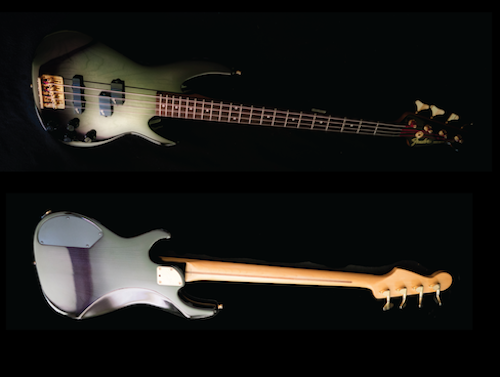
It doesn't really have a greenish tint in the finish, just the camera playing tricks on us. I thought it was cool and unusual, so I use the photos.
"Fender Japan produced some "not so standard" very special medium and long scale instruments during the mid to late '80s. This Jazz Bass Special is one of the models and there were at least five Jazz Bass Special configurations released. The commonality would be the 21 fret rosewood board and PJ pickup configuration and electronics. Usually, those with hidden pole pieces had active electronics while those with exposed pole pieces had passive electronics. The passive models would generally have three knobs and a pickup selector switch - and the active models had Fender-labeled active pickups - with four knobs and no pickup selector switch. They also have gold plated hardware and sealed tuners. This particular model was only available in Japan - and only a small number of medium scale basses were made."
An excerpt from an article by Invalid Link Removedon the Jazz Bass Special appears here:
"Some folks have requested that I write about the original run of Fender Jazz Bass Specials, and I am happy to oblige. One of these was my first decent bass, and they have remained one of my favorite basses of all time. I have owned bunches of them, making me a pseudo-expert. If you are not familiar with these, Jazz Bass Specials were made famous by Duff McKagan of Guns N Roses, and later of Velvet Revolver. These basses were made by Fender in Japan in the early years that were known for the best MIJ guitars, and were of better quality than the ones produced in the US. They were originally produced from 1985 to 1987 (or so). The ”special” part of the Jazz Bass Special is that it has a Precision Bass body shape with a Jazz Bass profile neck and a P/J pickup configuration. The bodies are probably basswood, as they are light. They have a control cavity routed in the back so there is no pick guard. The necks all have a glossy black head stock, and a rosewood fret board. They were available fretted or fretless. The backs of the maple necks were either clear coated, or painted glossy black. Often times, the knobs were replaced, too. They came with F-logo plastic knobs that had a nubbly rubber grip around the edge. Good luck finding replacements if they are missing, because Fender does not sell them, and I never see them for sale on eBay. I am thinking about re-issuing them myself. Anyway, these are great basses. They sound good, play very well, and generally come in under 9 pounds. I would pick up one of these original Japanese Jazz Bass Specials before considering one of the low-quality newer re-issues."
OK, so I had to do this. I found this 1986-7 Fender Jazz Special for sale in Japan for a very reasonable price and I just had to pull the trigger. There were a few reasons for this. First of all, I don't have a Fender bass with a Precision/Jazz "Active"pickup configuration. Secondly, I don't own a bass with gold hardware. I have never been much of a fan of gold hardware, but somehow on this bass it works for me. And lastly, for a bass over 30 years old, this one was in amazing condition. The most intriguing thing to me is that this bass, even though it looks like black paint from a distance - is actually a transparent black dye - allowing the beautiful grain of the ash that lies beneath to shine through. The standard basswood bodies were all painted solid black. The medium scale model was listed in the 1986 - 87 Fender Japan Catalog as the PJM-65. The swamp ash body with the transparent dye is what classified this bass a custom order - or as they called it in Japan "Order Made" as you can see by the stamp in the neck pocket. It also looks like they called this model the PJM-60C:
It also came with the micro tilt neck function as you can also see in the neck pocket.
It doesn't really have a greenish tint in the finish, just the camera playing tricks on us. I thought it was cool and unusual, so I use the photos.