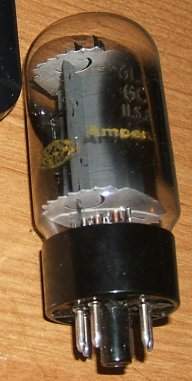
I've had a chance to think about this a little (not my harebrained idea but the thread's original theme: 6SL7 etc).
It seems there's a lot of "boutique" amp manufacturers today. Look closely at their offerings, however, and most of them are merely Fender/Marshall/Vox clones. They might change a few components to some high dollar part (like an expensive transformer) in an attempt to capture some "magic mojo", or perhaps add some mod that has been rumored to yield that extra bit of "magic mojo". However, still they have basically just copied an old design.
Now, I don't claim to be an amp design expert, I'm still learning. There are a few good books out there expressly for guitar/bass builders: Merlin Blencowe's "Designing Tube Preamps for Guitar and Bass" is sitting here by me at the moment. (I've also got KOC's TUT volume 1, but cannot afford the whole series.) One thing is alluded to in both of those: the early circuits are good as a starting point, but there are some quirks to the early circuits, especially for guitar/bass use, that can easily be addressed by someone that applies good circuit design practice. Controlling blocking distortion, appropriate grid-stopper resistors, what frequency response to really use, those details can make the difference betwen a great-sounding amp and an amp that makes folks say..."oh, I remember now why those old Silvertones were such crappy amps." Yep, the original design was copied warts and all.
Again, I'm not claiming to know how to do any of those great design practices. Blencowe points out what to do with the ubiquitous 12AX7 as a preamp tube. But what should be done with a 6SL7? Evidently it had some features that weren't desirable, otherwise the 12AX7 would not have surpassed it so easily. Prone to microphonics, I've read...maybe that's why Ampeg started shock-mounting their chassis? I dunno.