• TalkBass has been independent since 1998. Add your voice.
    Create a free account to reply to discussions, view embedded media, and browse with fewer display ads.
    Join freeLog in
    Want zero display ads or expanded classifieds tools? Compare plans.

Light P Bass, what's the lightest?

I'm looking to build or buy another PJ, but I want it to be as light as poss, what's the lightest wood, and what's the lightest I can expect? My IbanezSR675 5 sting is 7.4 lbs, My self built PJ is 10.14 lbs, and my Nate Mendel signature is 9.8 lbs. I want to build another PJ and want it to be as light as possible. Suggestions?
 
  • Like
Reactions: westrock
Anything below 7 lbs starts to neckdive, depending on the hardware used. Look into ultralight tuners, aluminum bridges, and chambered bodies. Necks with steel stabilizing bars (Warmoth) are heavier than graphite bars or necks without reinforcement. With the right woods, hardware, and pickups I've heard really great P basses all the way down to 7.0 lbs. Roasted pine is usually light and sounds good, Empress (Pawlonia) can sound good when the wood used is the proper density, it can approach balsa in the cheaper grades!
 
G&L LB-100...Empress.
7 lbs or so.
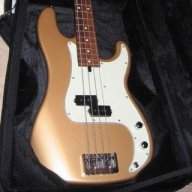
IMG-0477-JPG.jpg
 
Routinely impressed with the array of builds I'm seeing from Maruszczyk. I'm shopping for a lighter replacement for my old Jazz bass - 10.5 lbs., Warmoth neck w/steel rods, etc. - and I could easily have one of their "Elwood" models for myself in another month or two.

Their Elwoods seem to have wider necks (40-41mm at the nut on a 4-string) compared with their "Jake" models. They have a lighter "L" option which includes a chambered body, but even their more standard solid body models routinely list from 8.5 lbs. on down to less than 8.0 lbs. If I'm gigging a bass that's 9 lbs. or less with decent balance on a strap, I'm good to go.

I also respect the craftsmanship that Sandberg has been putting into their instruments. Their "SL" models can come in at under 7 lbs., but my hands don't tolerate narrow necks like a traditional Jazz anymore. Many 4-string Sandbergs have necks with a nut width of 39.5mm - great for some, but possibly not ideal for me.
 
Necks are not often considered but single action truss rod (old school Fender style) can save weight over a dual action one, titanium can save even more though it's uncommon at best. Rock maple is not needed for necks. Maple fingerboards tend to be lighter than rosewood.

Passive saves battery weight. Plastic knobs are much less than metal chrome domes. Mini pots less than full size....

Hipshot's stainless steel vintage bridge is surprisingly light.

There are a handful of areas often overlooked by us gram shavers that can add up to quite a lot. If you're trying to get that last pound off I think you need to go beyond lightweight tuners and chambering. I got a 5 string down under 7 pounds 2 ounces and could have gone farther if I didn't use a double action rod and epoxy block humbuckers.
 
I tried the Sandberg very light basses and sadly found them to sound 'tired' and not very good in comparison with other light instruments.

Still; nice idea and a really good travel bass, perhaps!
 
Last edited:
Nash basses always seem really light. They are wonderful basses, but they are not cheap.

Certainly not a P bass, but if you want to go light, the lightest non-toy basses I have ever tried are the Danelectro models. Not sure what they are made out of, but it's not a solid chunk of wood. They sound great and play great, but the looks are not for everybody.
 
Last edited:
The problem is not going with the soft cheap wood.
As a builder I found that IF you can weigh your bodies or have them weighed.
I have had some Alder be very light and also Swamp Ash.
Those 2 woods are really overall a way to go.
BUT not always the lightest. That's why I said see if you can get bodies weighed first.
Just don't go with a soft wood.
(oh look the screw keeps turning...wow) lol
 
My Glarry J is 7.2lb with all of the original parts. Would go below 7lb with lightweight tuners.
It sounds good too; I give credit to the thick (profile) neck, in contrast to a thin Fender J. This matters a lot to me.
And I actually like the cheap ceramic pickups. Learned a lot from this bass.