I was wondering, I have just got a Fender Precision and was contemplating putting a chrome pickup and bridge cover on it. The pickup cover, no problem. It adds to the aesthetics and is handy for achoring your hand, but the bridge cover?? What were Fender thinking> You need to remove it every time you change strings or want to make tweaks on the action or inntonation. What is the reasoning behing these covers anyway?

Enjoy the benefits of a premium membership!
Upgrade Account
-
TalkBass has been independent since 1998. Add your voice.
Create a free account to reply to discussions, view embedded media, and browse with fewer display ads.
Join free Log in
Want zero display ads or expanded classifieds tools? Compare plans.
You are using an out of date browser. It may not display this or other websites correctly.
You should upgrade or use an alternative browser.
You should upgrade or use an alternative browser.
Logic Behind Fender Bridge Covers
- Thread starter vikingraider1
- Start date
More options
Who Replied?

the bridge pickup is probally actually the more logical of the 2, they used to put a piece of foam underneath to mute the strings giving it a more upright tone. besides they just look sexy
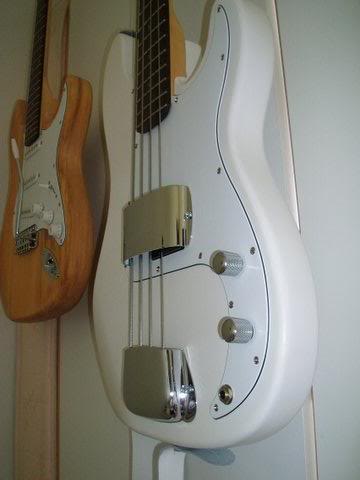
This is being discussed elsewhere here right now, the pickup cover was to reduce electrical interference.
Cosmetics also had smoehting to do, look at car designs of that mid late 50's era.
Cosmetics also had smoehting to do, look at car designs of that mid late 50's era.


The early single-coils were pretty noisy, so the cover helped by providing shielding. The bridge cover contained the mute, which was considered necessary because the punchy attack of the early Ps was hard on speakers.
So Leo killed a couple of birds with 2 chrome-plated stones, and made the bass look that much more like a '52 Studebaker Commander.
So Leo killed a couple of birds with 2 chrome-plated stones, and made the bass look that much more like a '52 Studebaker Commander.

MAJOR METAL said:Some of those early bridge covers had mutes in them right ?
Right. I think some bassists also put felt in the brigde cover, Carol Kaye comes to mind. It give the bass more thump.

Most of the bridge covers from that early time period actually had a strip of felt glued to the underside of the bridge cover. I don't remember any of the bridge covers being more complex than that, but I'm sure there are a lot of Fender-heads here that can give you a 100% certain answer .......MAJOR METAL said:Some of those early bridge covers had mutes in them right ?


According to "The Fender Bass: An Illustrated History", the Pup cover was advertised as a Hand rest. The bridge cover was there to house the Foam Mute, and for asthetics. They did provide some shielding in the earlier years, but with the newer Pup, the shielding was minimal. Many palyers took these off to create a sharper tone. This also created some buzz. This sharp tone and mild buzzing has become known as the Fender Sound.


- Mar 24, 2005
- 1,625
- 44
- 81
- Disclosures
- Seymour Duncan/Basslines SMB-5A Endorsing Artist
IIRC it wasn't felt that was on the bridge cover, it was black rubber(along the front edge). And what CK did was ADD a strip of felt to the rubber for even more muting.
Also, the pickup cover was never grounded (from the factory), so it's use was cosmetic, or as has been said, as a hand rest.
Also, the pickup cover was never grounded (from the factory), so it's use was cosmetic, or as has been said, as a hand rest.

A few years back I put a set of flats on my P and added a bridge cover with some foam rubber in it. Sounded like old Motown. The 1st electric basses were designed as close as was possible in those days to sound like an upright. Flat wounds and a mute gave it that quick decay (sort of) that an upright has. Once bass players took off the (ash tray) and turned up some treble, it all changed and later when round wounds became popular it all changed again. So the electric bass sound started with little sustain and few overtones and has moved to big sustain with lots of overtones. I took out the foam but left the (ash tray) on cause I love the look. The pup cover and finger rest however, just gets in my way too much and had to go.
i've got both covers on my '62 precision. yes, looks damn sexy. i don't think changing strings was much of an issue back then being that they used flatwounds mostly and probably never changed them.
Bridge cover gives also a good handrest when you use a pick.
I do that but a certain Roger Waters stole my idea when I wasn't born yet.
J
I do that but a certain Roger Waters stole my idea when I wasn't born yet.
J
deaf pea said:IIRC it wasn't felt that was on the bridge cover, it was black rubber(along the front edge). And what CK did was ADD a strip of felt to the rubber for even more muting.
Yes, that's what I said, she added felt. When I got my former 75 RI MIA Jazz it came with covers and the rubber mute and instructions on how to place it in the bridge cover. I never used it though.

Mr Venus said:Who else agrees that these covers look horrible?
not me... I dig them