

Enjoy the benefits of a premium membership!
Upgrade Account
-
TalkBass has been independent since 1998. Add your voice.
Create a free account to reply to discussions, view embedded media, and browse with fewer display ads.
Join free Log in
Want zero display ads or expanded classifieds tools? Compare plans.
You are using an out of date browser. It may not display this or other websites correctly.
You should upgrade or use an alternative browser.
You should upgrade or use an alternative browser.
Longevity of a cheap bass.
- Thread starter bigdaddybass12
- Start date
More options
Who Replied?

I guess part of the answer is to look at all the old Fender Musicmasters and Mustangs that are still around. They were DEFINITELY not premium grade instruments! They were cheap entry level instruments with commensurate quality parts and build detail. If they weren't bashed apart they are still playing fine. I would think the same holds true for most modern instruments too. My old Fender shorties were no better than my modern SX shorties except maybe pots, jacks, and a SLIGHT nod to the old Fenders in tuner quality. IMO the SX's play and sound better and will have a service at least as long as the Fenders.
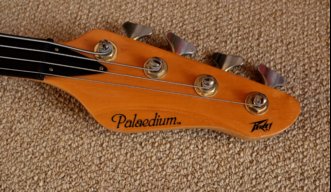
Don’t class any Peavey basses from that era as “cheap” - they were better than anything that Fender, Gibson, etc were producing at that time.My MIM P was my first bass. Almost 30 years old and still going strong though almost everything other than the wood and neck plate have been changed.
Also, I don't know if the Peavey T-40 counts as cheap, but mine is 45 years old and still works perfectly.
Late ‘80s/early ‘90s Peaveys are all I play, apart from a 1982 GR Lasido Z1 fretless.

I haven't read that anywhere, ever.I have read where people ask how long will a cheap or indo made bass last? Here is mine. Still rocking for 23 years. Hot summers, cold winters, I used to play it twice a week, later gig we could actually leave our gear on-site. I do admit in the past 10 years it has been used lightly. I have adjusted the neck twice in 23 years. It does need new strings and maybe a little turn on the truss rod.
Trick to long life for a cheap bass? Treat it like you paid $4000 for it.
this bass will still be rocking long after I am gone.
View attachment 5466463
Play what you like.

It's not about how much money you paid for the bas, it's about how robust the individual parts are. Often, more expensive parts will last longer, but not always. One good example is that the cheap bent bridge plates used on a lot of basses will outlast zinc cast bridge plates (Badass and others) in corrosive environments (like your sweat).

A bass is a bass. The only times a bass doesn't bass if it's so shoddily made that the wood hasn't been cured enough.

Wood is wood and metal is metal. They age at the same rate whether they're parts of a $400 or $4,000 bass.


Cheap doesn't necessarily mean a POS bass! I don't believe any low priced instrument was built to fail.

Don’t class any Peavey basses from that era as “cheap” - they were better than anything that Fender, Gibson, etc were producing at that time.
Late ‘80s/early ‘90s Peaveys are all I play, apart from a 1982 GR Lasido Z1 fretless.
I agree with you on quality, but I was referring to price and I think when sold, a T-40 was around half the cost of a Fender or Gibson.
Actually, Paul played some of those hofners to death. IIRC, some of them didn't hold up very well and actually were comparatively fragile.

JazznFunk
Supporting Member
My cheap plywood upright (Kay) has been going strong since 1938. (What laminated uprights lack in tone, they make up for in durability.) I've got a couple cheap Asian-made electrics (Tribute, Sterling) that will probably outlast me.
The only instance I can think of where 'cheap really doesn't last' is/was DEFINITELY with my awful starter double bass I had in college. It was a Palatino that barely held itself together, and I eventually started 'fixing' it myself by pouring hide glue in the seams that opened up on the top and sides. It worked, for a time, and it was certainly playable and allowed me to progress, but that bass was actively working to blow itself up for several years. I didn't have anyone around to tell me differently, but that's how I learned early on that spending $500 on a double bass essentially means you end up with a pile of firewood at some point.
Oof, yeah, I didn't even consider palatino in my statement about laminated instruments. I guess I've been fortunate to have numerous people steer me clear of palatino.The only instance I can think of where 'cheap really doesn't last' is/was DEFINITELY with my awful starter double bass I had in college. It was a Palatino that barely held itself together, and I eventually started 'fixing' it myself by pouring hide glue in the seams that opened up on the top and sides. It worked, for a time, and it was certainly playable and allowed me to progress, but that bass was actively working to blow itself up for several years. I didn't have anyone around to tell me differently, but that's how I learned early on that spending $500 on a double bass essentially means you end up with a pile of firewood at some point.
JazznFunk
Supporting Member
Oof, yeah, I didn't even consider palatino in my statement about laminated instruments. I guess I've been fortunate to have numerous people steer me clear of palatino.
I learned a lot of lessons from that bass! Looking back, I'm grateful it got me started, but oh man was it a clunker. My current DB is 21 years old and has been amazingly dependable and problem free.

No, he still has and plays his 2 original Hofners.Actually, Paul played some of those hofners to death. IIRC, some of them didn't hold up very well and actually were comparatively fragile.

15 yrs I should say. Although I'm sure Laura's cheap SX will still be going strong in the year 2034
Yeah, and one of his hofners wound up with the pickup held on with celotape. That he can afford a good repair man doesn't mean hofners are particularly sturdy.No, he still has and plays his 2 original Hofners.
IIRC, the Beatles Gear Book expounds a bit on this.

I have a $300 Yamaha BB234 that is simply one of the best deals out there.
Should outlast the pipes in your house!
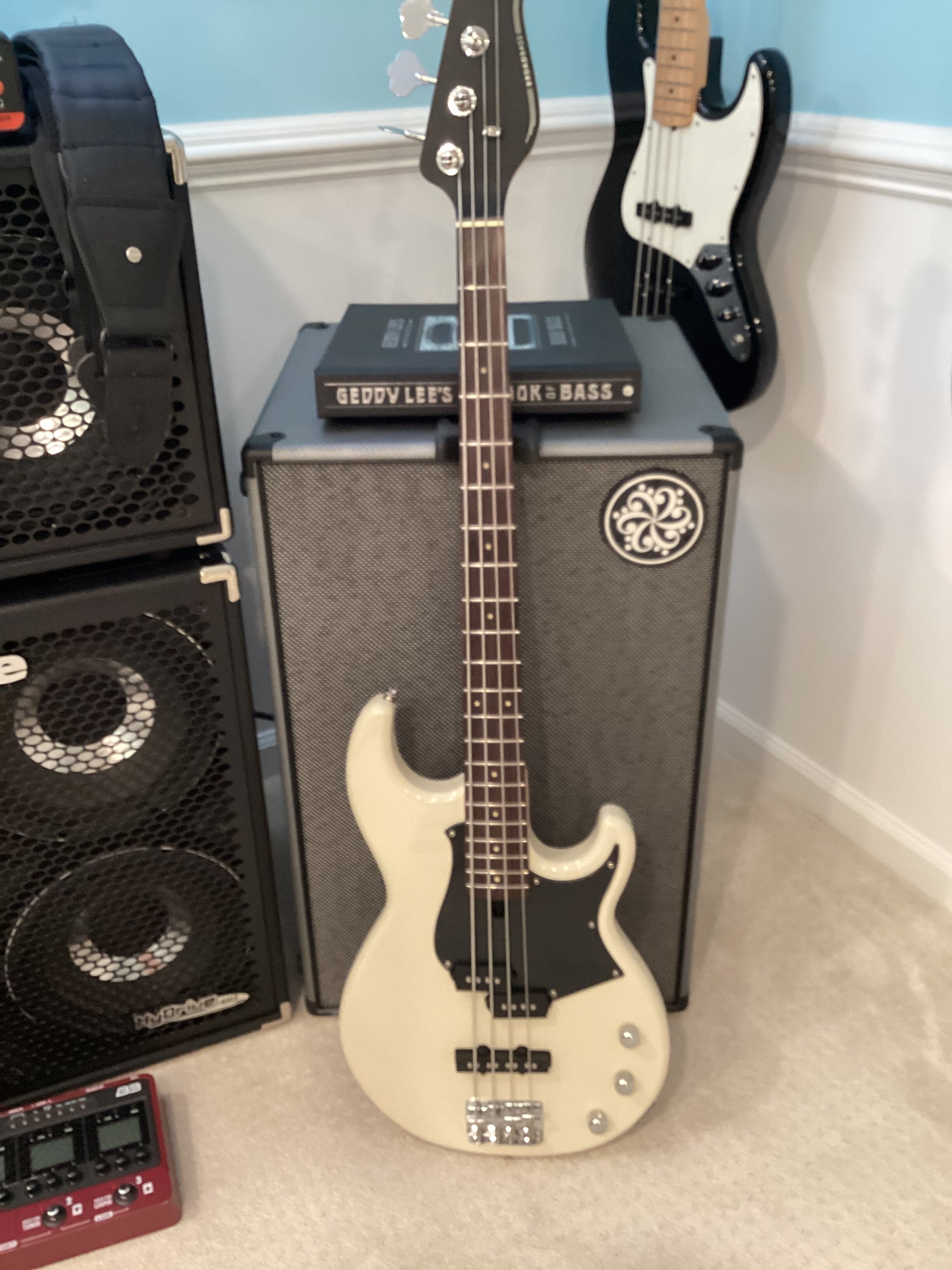
Should outlast the pipes in your house!

My questions are:
Were older bass guitars better built than modern ones - electronics, woods, contruction, etc?
Do we pay more for the same relative sound quality today or is marketing just plugging fancier models that don't offer significantly better instruments?
Are the older iones easier or better to play than new designs?
IOW, should I be looking for an old bass to refurb or go with modern specs, or spend what it takes to get a decent one today?
Were older bass guitars better built than modern ones - electronics, woods, contruction, etc?
Do we pay more for the same relative sound quality today or is marketing just plugging fancier models that don't offer significantly better instruments?
Are the older iones easier or better to play than new designs?
IOW, should I be looking for an old bass to refurb or go with modern specs, or spend what it takes to get a decent one today?


