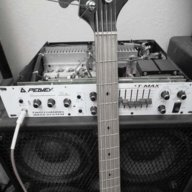
It turns out they were using a small light bulb as the circuit breaker (for some esoteric reason), which was behind the speaker, so it looked like the speakers were glowing, and the only way to change the light bulb when I blew it was to take the speaker out, a somewhat tedious process.
incandescent light bulbs as tweeter protectors aren't all that esoteric - at least within the audio community, the practice is well known. To reproduce high frequencies, tweeters need to have light weight coils, which don't handle much power for any length of time. An incandescent light bulb has low resistance when cold, but if you drive a bunch of current throgh it, it's resistance goes up dramatically - in series with a tweeter, it's a good protection device. It turns down the power to your tweeter if you drive it hard, which means the frequency response changes, but most people find that preferable to blowing tweeters.
We used to use light bulbs in some speakers we made (we're no longer in that market), and to solve the "glow" problem, we painted them black, so the light didn't escape - at least at visible wavelengths.
The fact that you had to change a protection light bulb probably means they probably saved you the cost of changing a tweeter - even if it was a tough thing to do, you saved a bunch of money.