I just finished recording upright bass tracks with an LR Baggs Para Acoustic guitar pre/DI. The engineer at the studio had one and took my Full Circle pickup direct with it. I normally use a Fishman Pro Platinum Bass unit when playing live, and have been using the Fishman for many years because it sounds ok and works fine. The LR Baggs set flat sounds way better to my ears. More natural and clear without sounding thin. I couldn't hear any issues at all. I know it says acoustic guitar in the literature, but it works equally well for upright bass. I immediately ordered a Para Acoustic DI for myself, and will start using it on the jobs I do. I really like that it's phantom or battery, 10-meg input, has a notch filter, and versatile EQ. I read that it has a preset 35hz HPF; sounds great to my ears.

Enjoy the benefits of a premium membership!
Upgrade Account
-
TalkBass has been independent since 1998. Add your voice.
Create a free account to reply to discussions, view embedded media, and browse with fewer display ads.
Join free Log in
Want zero display ads or expanded classifieds tools? Compare plans.
You are using an out of date browser. It may not display this or other websites correctly.
You should upgrade or use an alternative browser.
You should upgrade or use an alternative browser.
Double Bass LR Baggs Para Acoustic DI
- Thread starter littlebun
- Start date
More options
Who Replied?

I used one on the job three times this week. It has been on my pedalboard for around 20 years. Proven, very reliable, and time tested, and extremely versatile. My only complaint is no 9v powerbrick option; only batteries as a factory setup. I rewired mine years ago and never looked back.
I have used one live with acoustic and resonator guitars, as well as banjo and upright bass. Great eq options and for upright I just put a Fdeck in front of it. Still a very small footprint.

I still use my Baggs for going direct to the PA or recording with a pickup, but when using an amp on stage I need a variable high pass filter. My AI combos have one on board, but with my Walter Woods or any borrowed amp I use an fdeck. I suppose I could daisy chain the fdeck into the Baggs, but never had a reason to.
The 9V battery works fine for me, but I'm not using a pedalboard so why fuss with a power supply?
It can be phantom powered and I always use that when possible. In fact if phantom fails, the battery takes over with no glitching.
The 9V battery works fine for me, but I'm not using a pedalboard so why fuss with a power supply?
It can be phantom powered and I always use that when possible. In fact if phantom fails, the battery takes over with no glitching.
I can see advantages to having a pedal board with a couple of smaller individual boxes dedicated to specific tasks.
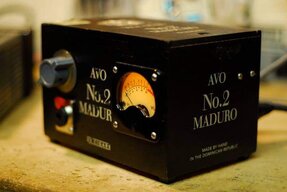
For me what I like about the Headway EDB-2 H.E. it’s a all in one battery powered unit, with EQ, HPF (range switch)
and a notch filter. If wishes were horses, I’d add a separate amp out with it’s own gain control. Different approaches
will work, so the LR Bags Para Acoustic DI is a a more affordable solution along with the FDeck.
For me what I like about the Headway EDB-2 H.E. it’s a all in one battery powered unit, with EQ, HPF (range switch)
and a notch filter. If wishes were horses, I’d add a separate amp out with it’s own gain control. Different approaches
will work, so the LR Bags Para Acoustic DI is a a more affordable solution along with the FDeck.
I really like the features of the Headway, but I find the layout of the features very disorganized- all of that stuff mashed into a small workspace. The logic flow doesn't seem to work well enough for me on a dark stage to want to spend $$$ for it, so I keep trudging along with the Para acoustic DI that was paid for decades ago. I'm always looking at the Tonebones, but they seem a bit minimalist in control options....pedalboard lust is as bad as any other obsessions.....
My main teacher for a long time has always used a LR Braggs venue pre into whatever amp he’s playing that night. He’s been using it for as long as I’ve known him and he’s a pretty heavy touring, lots a big gigs kind of dude. Inspired me recently to pick up an Arkham Oracle, popular for electric but it rocks for my upright too. Did a recording recently where I only had one channel available to me so I just took the DI from the Oracle, not bad at all, especially with a little bass bleeding into the vocal mic, honestly doesn’t sound far off from my usual mic the bass/run a di and blend the two.
Full Disclosure: I have never played through Headway equipment. I am only offering the feedback from what I have and use.
I have a Tone Bone Bass with overdrive for doubling (from when I played in a cover band). It was great for when you needed to have separate eq’s for a soundboard with only one channel allotted for bass. It had 3 fixed HPF levels as well.
I ran the P-bass through a Sans Amp with three pre-sets before the Tone Bone for multiple tones with different material and as it turned out I didn’t need much eq after Sans Amp. Using a board with more channels, I’d probably consider going direct with the Sans Amp for electric bass and direct with the Baggs/Fdeck for the upright since the Baggs Para Acoustic DI has more eq options than the Tone Bone (and I never used the Tone Bone’s overdrive as the Sans Amp covered that).
I have a Tone Bone Bass with overdrive for doubling (from when I played in a cover band). It was great for when you needed to have separate eq’s for a soundboard with only one channel allotted for bass. It had 3 fixed HPF levels as well.
I ran the P-bass through a Sans Amp with three pre-sets before the Tone Bone for multiple tones with different material and as it turned out I didn’t need much eq after Sans Amp. Using a board with more channels, I’d probably consider going direct with the Sans Amp for electric bass and direct with the Baggs/Fdeck for the upright since the Baggs Para Acoustic DI has more eq options than the Tone Bone (and I never used the Tone Bone’s overdrive as the Sans Amp covered that).
Last edited:
I really like the features of the Headway, but I find the layout of the features very disorganized- all of that stuff mashed into a small workspace. The logic flow doesn't seem to work well enough for me on a dark stage to want to spend $$$ for it, so I keep trudging along with the Para acoustic DI that was paid for decades ago. .
I’ll grant you that, Their just isn’t any real estate left on the control surface. It was my first preamp after using Walter Woods for over 20 years,
So I’ve kinda grown up with that box and it’s design, changes and all. I usually mount mine on a music stand, so the controls are easy to locate.
I also bought my last one from Rick Wolf at a substantial discount. (Thanks Rick!) In the end I guess it’s more about about what you already own,
that does what you want it to do. LR Baggs has been building preamps for a good while.
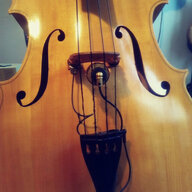
They are both good. There is a little more 'hair' on the tone of the Fishman that can help the bass cut through live. I liked how clear the Baggs sounded, so I'll give it a run. edit: Straight off my Full Circle I first plug into a custom Helmuth Lemme 9-volt 10 meg buffer that has two built-in variable notch filters. The output then goes to my preamp(s). I had Helmuth make the box for me for all the touring I do, which involves playing a different rented upright at each venue; sometimes a dozen basses in a 2 week span. I fix the hotspots of each rented bass with the notch filters.@littlebun I have both preamps. I have similar observations, but after a number of years using the LR Baggs (after replacing the Fishman)- for no good reason, I went back to the old Fishman Pro Platinum Bass. And have the Baggs ready for action.
Last edited:
The touring rider requests an SVT rig, a 3/4 bass in good condition, with low action, and a mounted pickup. 99% of them have some kind of a pickup and very high action, unfortunately, and there is a bridge wing fit pickup with our crew just in case. I don't bring a preamp on the road but I do bring my Lemme buffer/dual notch filter and use it to lower the hot notes in a each venue. I use the backline amp for stage EQ. I don't need EQ for the house because I'm not out in front and able to determine what is needed there. Having a notch is crucial because there are usually a couple of hot notes on the bass. The house mixer for the venue typically won't have time to chase down the booming notes, and will just turn you down, and maybe compress the crap out of the bass. It's up to the player to deal with any bass room problems.Do you use your own pickup or rely on whatever is on the bass?
Last edited:
I feel that the Baggs and Radial brands add a little too much "color" to my tone than I like. I prefer the Felix/Alix, Broughton Messenger brands for upright. Much cleaner tone and the HPFs work much better.
Each venue has its own response. Sometimes it's the G or A on the D string, or the F on the D string. Or even the D note. I find out pretty quickly what notes will set off feedback on the stage amp and cut it just enough and no more, because even though the house will usually reflect the same problem it's best to not over-cut if possible--i don't want to create holes in the house mix. Live upright can be hard to adjust because of the volume needed with drums and guitars. I actually have more problems with tube rigs than solid state because tube rigs fill the air differently and tend to be fuller sounding. The previous bassist specified an SVT with half stack for the backline, but I prefer a solid state rig. I'm usually cutting lows on the stage rig. I don't use a HPF becuase I can just lower the bass control on the amp. For touring I would lean toward having at least a notch filter or parametric because they are the units that can work in each octave and allow note selection to cut. Problem fixing will involve cutting in the upper octave on an upright; to cut a ringing A note you will start lowering a very narrow notch at 110hz and try 220 if that doesn't work, etc..Do you find any notes that are more often problematic or do you find it to be completely arbitrary- venue to venue/bass to bass?
Last edited:
Before we had these wonderful new preamps with HPF's there were less technical ways of dealing with feedback. You can raise the amp off the floor, cut the bass, midrange, or treble, lower the volume, use
the phase reverse switch on a amplifier (my 1980 Walter Woods MI-100-8 had one) etc. That said I don't think any thing is as effective as a variable HPF.
the phase reverse switch on a amplifier (my 1980 Walter Woods MI-100-8 had one) etc. That said I don't think any thing is as effective as a variable HPF.
I’ve used the Para Acoustic DI for years with a wide variety of pickups (for bass and guitar) and it’s never let me down. Great piece of gear.
Interesting discovery today when using the Baggs Para FX effect jack as my main output. The FX jack is TRS, but if you plug-in a mono TS cable it allows you to bypass all the Para functions except gain trim, now sending a pure un-affected signal from the input jack to the FX output jack. The main discovery is the volume balance, string to string, from the Full Circle is a little more even using the FX out with no functions involved. When setting the controls flat and using the regular 1/4 output there are hot spots compared to the un-affected FX output.
Last edited:

