
Enjoy the benefits of a premium membership!
Upgrade Account
-
TalkBass has been independent since 1998. Add your voice.
Create a free account to reply to discussions, view embedded media, and browse with fewer display ads.
Join free Log in
Want zero display ads or expanded classifieds tools? Compare plans.
You are using an out of date browser. It may not display this or other websites correctly.
You should upgrade or use an alternative browser.
You should upgrade or use an alternative browser.
Magnets & Copper Wire: A Pickup Building Thread
- Thread starter Freekmagnet
- Start date
More options
Who Replied?
Wound with 42AWG, 8500 rounds each. Cover, keeper and magnets were grounded after this pic. They sound very nice, I’m trying to upload a clip later tonight.
And here's a clip. Bridge/both/neck pickup.
Maihinnousu - Lataa - MPU - Vmedley
Last edited:

View attachment 3709545
Wound with 42AWG, 8500 rounds each. Cover, keeper and magnets were grounded after this pic. They sound very nice, I’m trying to upload a clip later tonight.
And here's a clip. Bridge/both/neck pickup.
Maihinnousu - Lataa - MPU - Vmedley
Looks great! Nice tight mechanical work, as usual for you.
For our general engineering knowledge, I'm curious why the rod poles extend down so far below the keeper and magnets. Did you do that specifically to shape the magnetic field, to extend it down? I would think that if they were trimmed off even with the bottom of the keeper, that would pack the field into a more dense shape around the strings and coil? Or is there some other reason for this configuration?
They are the way they are because they are the same length as Bisonic poles. I tried to get the amount of steel as close as possible to Bisonic.
They are the way they are because they are the same length as Bisonic poles. I tried to get the amount of steel as close as possible to Bisonic.
Huh. I wonder why they did it? I need to learn more about magnetic field shapes. It's a critical part of pickup design. In my own pickup design, I've kept it simple and worked with basic A5 rods. I really like the experimental stuff you other guys are doing. Like this. There's probably a lot of experimental room to go with the Bisonic configuration.

slowburnaz
Commercial User
View attachment 3709545
Wound with 42AWG, 8500 rounds each. Cover, keeper and magnets were grounded after this pic. They sound very nice, I’m trying to upload a clip later tonight.
And here's a clip. Bridge/both/neck pickup.
Maihinnousu - Lataa - MPU - Vmedley
They sound great, man!
The poles are adjustable on Bisonics and the mechanism needs a bit longer poles.Huh. I wonder why they did it? I need to learn more about magnetic field shapes. It's a critical part of pickup design. In my own pickup design, I've kept it simple and worked with basic A5 rods. I really like the experimental stuff you other guys are doing. Like this. There's probably a lot of experimental room to go with the Bisonic configuration.
Last edited:
slowburnaz
Commercial User
I made a couple single coils to put in the bass I made for myself at the American School of Lutherie about 2 years ago.
They're kinda my slightly more "modern" take on Rick 4003 pickups... meaning they're RWRP and use neo magnets.
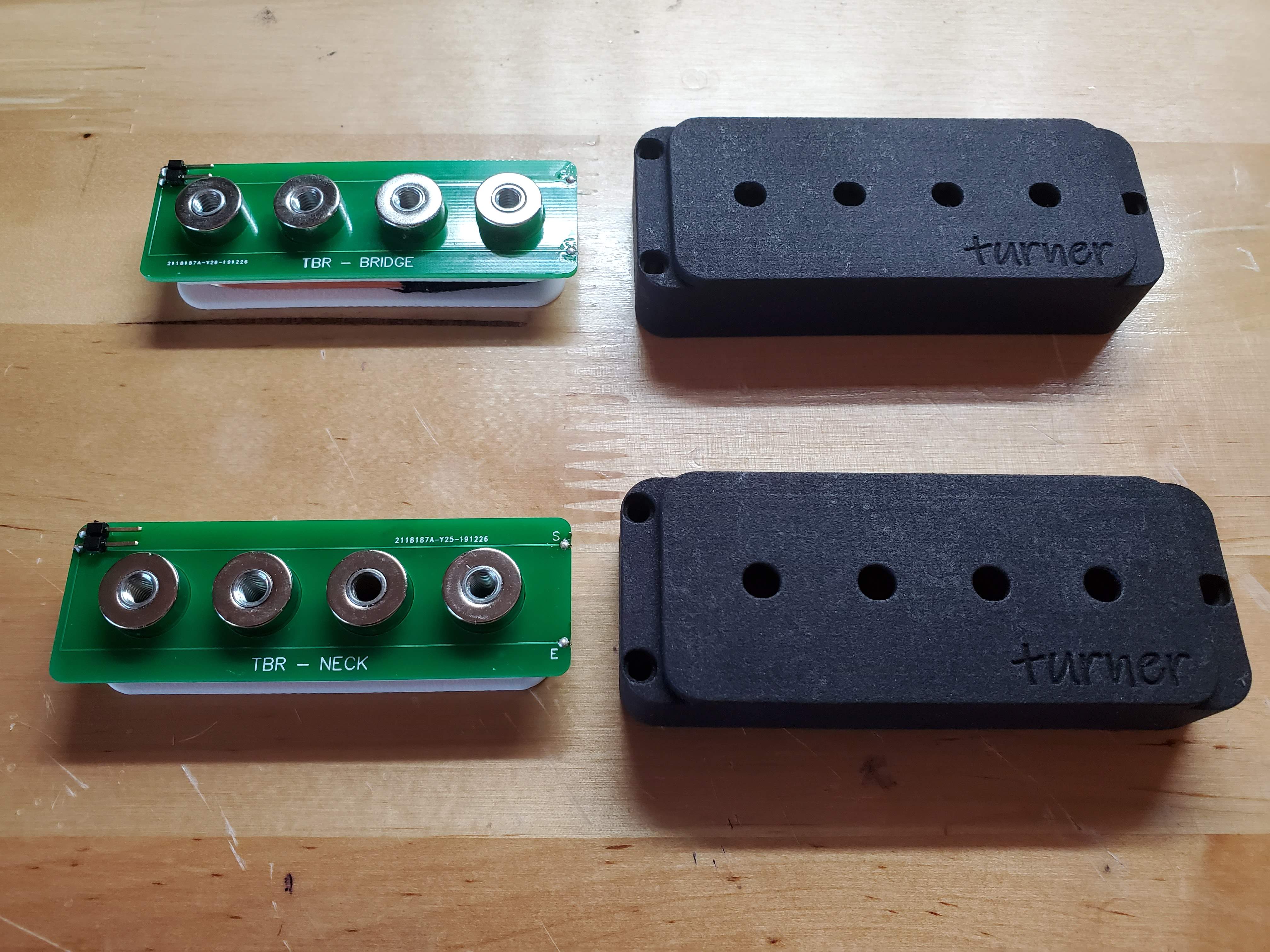

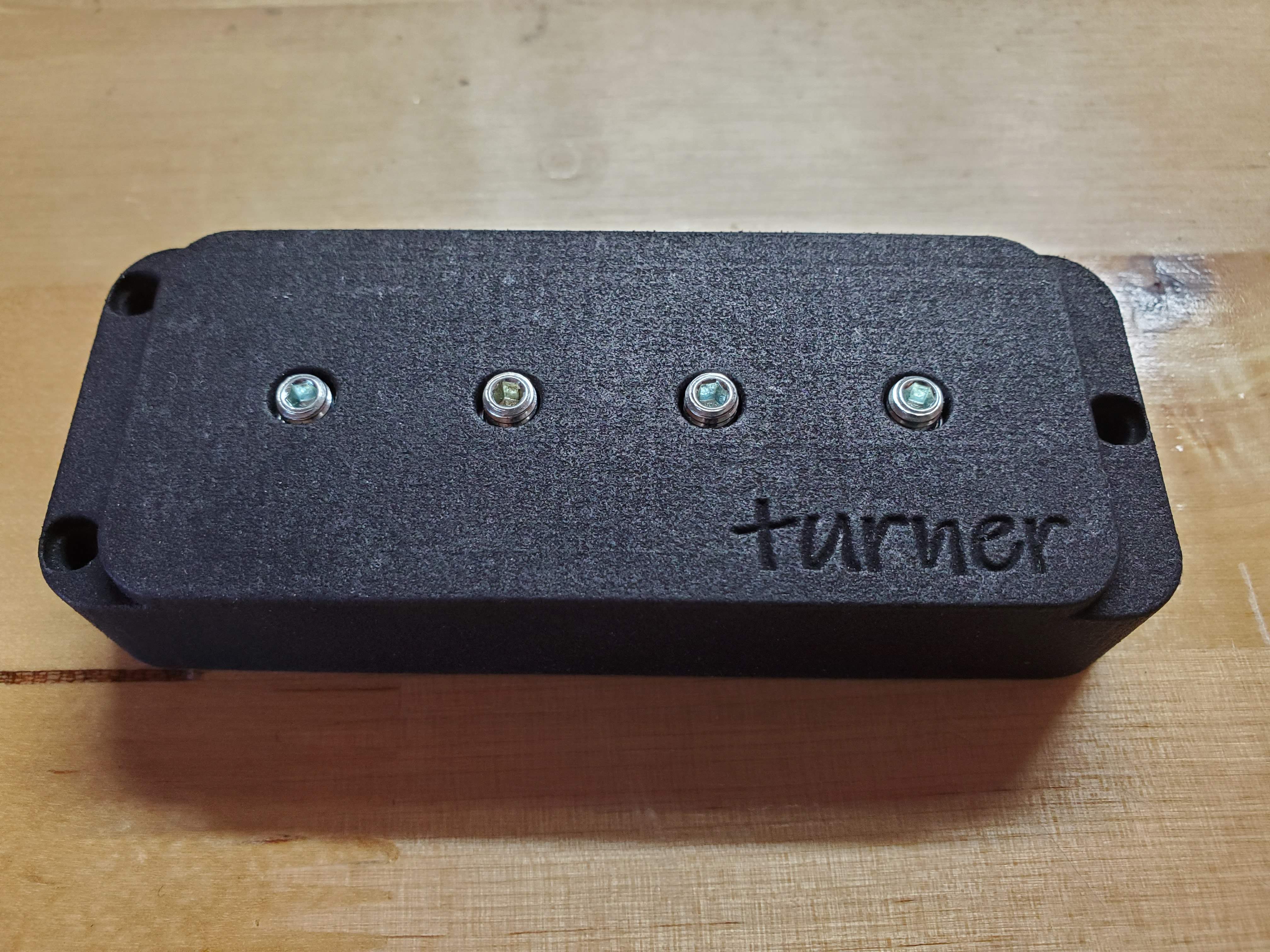
They're kinda my slightly more "modern" take on Rick 4003 pickups... meaning they're RWRP and use neo magnets.
Last edited:
slowburnaz
Commercial User


I made a couple single coils to put in the bass I made for myself at the American School of Lutherie about 2 years ago.
They're kinda my slightly more "modern" take on Rick 4003 pickups... meaning they're RWRP and use neo magnets.
How do you like working with the neos?
I made a couple single coils to put in the bass I made for myself at the American School of Lutherie about 2 years ago.
They're kinda my slightly more "modern" take on Rick 4003 pickups... meaning they're RWRP and use neo magnets.
View attachment 3712708
View attachment 3712713
View attachment 3712714
Nice work, and a really interesting magnet structure. A ring neo magnet at the base of a steel sleeve, with a threaded slug inside. I like it. I wonder if that configuration would work with ring Alnicos?
I'm curious, did you ever try turning your whole coil assembly upside-down under the strings? Put the neo ring on top, right under the string, and the coil down below the ring. I wonder how that would work? If the field lobe on one side of the ring magnet is surrounding the string, and the lobe on the other side is surrounding the coil...??? Would that improve the resolution of the wiggling of the field? Or not? The way you have it now, the back lobe is hanging off in the air under the pickup, doing nothing.
slowburnaz
Commercial User
How do you like working with the neos?
I like neos, for sure. Not in every pickup, of course, but they have their place. IME, they seem to allow putting more winds on a coil before you start losing highs with them.
Nice work, and a really interesting magnet structure. A ring neo magnet at the base of a steel sleeve, with a threaded slug inside. I like it. I wonder if that configuration would work with ring Alnicos?
I bet it would work fine with Alnico rings, too.
I'm curious, did you ever try turning your whole coil assembly upside-down under the strings? Put the neo ring on top, right under the string, and the coil down below the ring. I wonder how that would work? If the field lobe on one side of the ring magnet is surrounding the string, and the lobe on the other side is surrounding the coil...??? Would that improve the resolution of the wiggling of the field? Or not? The way you have it now, the back lobe is hanging off in the air under the pickup, doing nothing.
I haven't tried that... given the strength of these neos, I'd be afraid of having them that close to the strings. I imagine they'd give you that warbling effect due to too strong of a pull. I wonder if there'd be adverse effects from having the coil further away from the strings, too. Might be a good excuse to try Alnico rings instead, though
 .
.
I made a couple single coils to put in the bass I made for myself at the American School of Lutherie about 2 years ago.
They're kinda my slightly more "modern" take on Rick 4003 pickups... meaning they're RWRP and use neo magnets.
View attachment 3712708
View attachment 3712713
View attachment 3712714
Way cool!
I can't say I've done experiments on the effect of 'scatter' winding. As a coil winder of years ago I could comment that neat, side by side winding increases the self-capacitance of the winding. This might cause strange resonances at high frequencies. Scatter, or 'Pie' winding reduces capacitance, hence you will see it in old radios for high frequency work. unfortunately it also causes wires to cross each other with the potential of shorting each other out. You can reduce this by dipping the coil in wax. This stops vibration of wires and the resulting erosion of insulation. Of course it also reduces the number of wires you can get in a given coil size so output might go down. Would love to hear how you get on.Awesome machine Bruce! I keep reading about scatter-wound pickups though, is this possible on your machine? And are they really inherently any better?

This touches on something I’ve been curious about for a while: what would happen if a coil was wound with Litz wire? Fewer winds, but each wind would have multiple strands.Scatter, or 'Pie' winding reduces capacitance, hence you will see it in old radios for high frequency work. unfortunately it also causes wires to cross each other with the potential of shorting each other out.
Good question! I doubt it would have any effect at audio frequencies. Multiple strands would each induce their own multiple currents, but the overall voltage induced would probably be the same. If you had a preamp that sensed current rather than voltage it might be a good combination. Another idea would be cotton-covered wire as used in the good-old radio days. (I wonder if you can still get it?) The cotton covering made sure that the windings were well separated and lowered capacitance. A good thought though. I've never had the equipment to test the self-capacitance of a pick winding so I don't know how much influence it has. There are guys out there with ears good enough to differentiate one tone control capacitor type from another. The theory says it only makes a difference at very high, (super-sonic) frequencies but clearly it can. What you can say is that when you have a humbucker pickup, the coils are anti-phase. This should cancel out the capacitive currents making the pickup more inductive and a sharper tone. Anyway, that is my theory. Any other thoughts out there?
Yep. The antique radio guys are still around ensuring there's a market for it, although the fabric wrap these days is usually synthetic. I don't know what's out there right now, but it was something I was researching a few years ago when I was curious about making a low-resistance low-capacitance earphone cable.Another idea would be cotton-covered wire as used in the good-old radio days. (I wonder if you can still get it?)

Essentially the Lace Alumitones work on the current sense principle; the primary coil is a big chunk of aluminum wrapped around a couple of neo magnets. This 'coil' has a DCR that is on the order of 0.0001 ohms and is the input (well actually the primary coil) to a current sense transformer wound to 5k ohms on the secondary.Good question! I doubt it would have any effect at audio frequencies. Multiple strands would each induce their own multiple currents, but the overall voltage induced would probably be the same. If you had a preamp that sensed current rather than voltage it might be a good combination. Another idea would be cotton-covered wire as used in the good-old radio days. (I wonder if you can still get it?) The cotton covering made sure that the windings were well separated and lowered capacitance. A good thought though. I've never had the equipment to test the self-capacitance of a pick winding so I don't know how much influence it has. There are guys out there with ears good enough to differentiate one tone control capacitor type from another. The theory says it only makes a difference at very high, (super-sonic) frequencies but clearly it can. What you can say is that when you have a humbucker pickup, the coils are anti-phase. This should cancel out the capacitive currents making the pickup more inductive and a sharper tone. Anyway, that is my theory. Any other thoughts out there?


