• TalkBass has been independent since 1998. Add your voice.
    Create a free account to reply to discussions, view embedded media, and browse with fewer display ads.
    Join freeLog in
    Want zero display ads or expanded classifieds tools? Compare plans.

Mahogany identification

adam.beauchene

Commercial User
Dec 31, 2007
1,041
69
Maine
Disclosures
Product Engineer at NS Design
Question for the resident pros: Is there anyone here who is an expert at identifying the different types of mahogany? I have been building a lot of bodies in mahogany over the past few months. Of all the 'mahogany' I've accumulated, there are distinct and obvious differences in how it works, looks, and feels. None of the places from whom I have sourced the lumber, have been consistent in telling me which one is which (reputable wood dealers on the west coast and in New England.) Can anyone help?

Specimen 1:

00d5f0ee.jpg


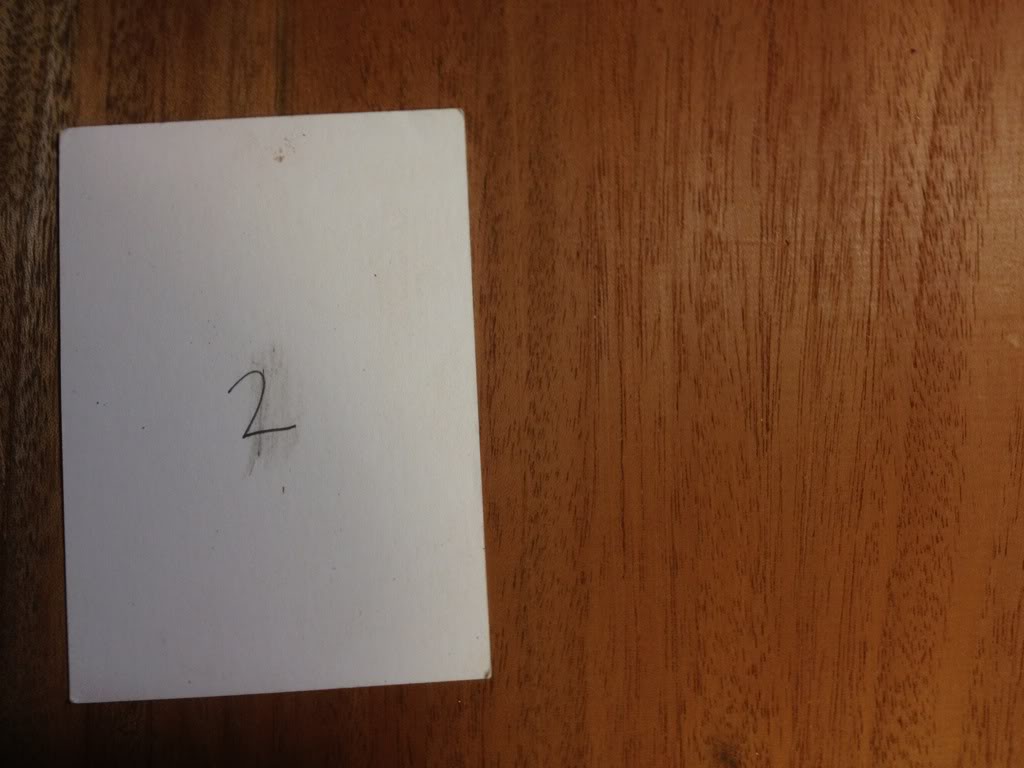
Specimen 2:
3c899695.jpg


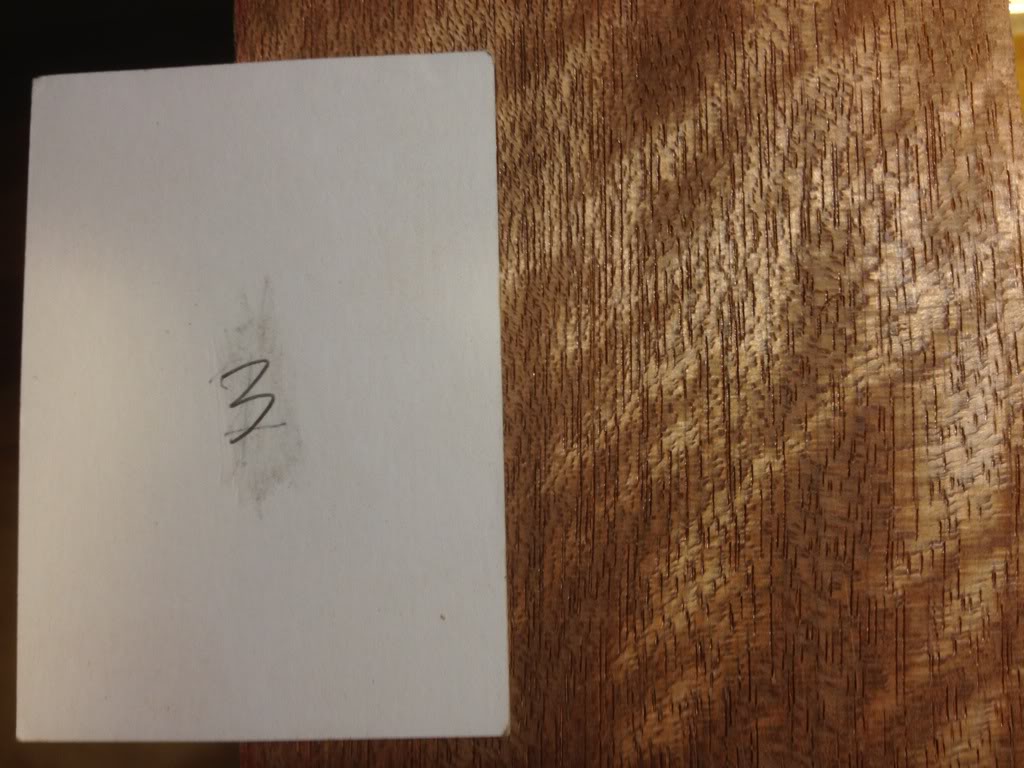
Specimen 3:
cdc32fc5.jpg


Together, 1/2/3 from left to right:
ef22045f.jpg
 
What is the weight/density of each piece?

Most of those businesses don't sale exact species of anytype of wood, especially mahogany. The same goes red oak/white oak/black oak/ live oak.......even though they sell you "red oak" they NEVER tell you the exact species......they don't even keep up with it at most lumber mills or in the forest. The same goes with mahogany, they can usually tell you what country the mill is located..........so many different species in those countries ........even Spanish Cedar gets passed for some types of mahogany......and they can't even know the different types of Spanish Cedar. :-)
 
Octaedro- I looked up Sapele properties, that might be it, it does exhibit interlocked grain. It works very nicely though, no tearout; That particular piece is supposedly over 50 years old, perhaps a half-century of drying out helps with that. This one is my favorite of the three.

Rip Topaz- I agree, I am pretty sure that one is Khaya ivorensis- the grain and color is very uniform through the whole piece. It is very pink, and works very easily. I have a ton of this stuff too- at least enough to make five one-piece slab bodies. It's not very interesting to look at though, I'll probably save this stuff for when I find some cool top woods.

Mr Majestic- I assumed that was the case, and at a few of the places I go to, the guys on the floor didn't seem to be very confident about their guesses. About density- I didn't do a specific measurement, but I've made identical bodies from all three; number two is the lightest, three is the heaviest.

Now to figure out what number three is; it's nice to look at, but the grain is coarser than the other two. When machining it with a router, the edges remain fuzzy, but clean up nicely with a scraper- the number one and two don't need this step.
 
I have a few pieces of genuine/honduran mahogany (Swietenia macrophylla) which are the same color as #3, but are not figured. All of the S. macrophylla I've used became fuzzy when worked with high-speed power tools, but cleaned up will with planes, scrapers, and sanding.
 
HaMMerHeD said:
I have a few pieces of genuine/honduran mahogany (Swietenia macrophylla) which are the same color as #3, but are not figured. All of the S. macrophylla I've used became fuzzy when worked with high-speed power tools, but cleaned up will with planes, scrapers, and sanding.

Huh, so maybe it's swietenia macrophylla with unusual figure? I bought a lot of this stuff, enough for 4 bodies and as many necks- it is neat looking but no so much fun to work.
 
Only the third looks anything like a true mahogany to me; the other two look like far east luan type woods. Any chance of borrowing a copy of Hoadley's "Understanding Wood" from the local library? I lost my copy years ago, unfprtunately, but that book was always helpful with this stuff.
 
Only the third looks anything like a true mahogany to me; the other two look like far east luan type woods. Any chance of borrowing a copy of Hoadley's "Understanding Wood" from the local library? I lost my copy years ago, unfprtunately, but that book was always helpful with this stuff.

Hi Klyph- I have that book; as you probably remember, the wood ID section is based on viewing the end grain with a magnifying glass. The differences between the African varieties and s. macrophylla are subtle, by the description in there. Basically I'm supposed to be looking for white specks, and whether the rays are easily viewed by the naked eye. I'm not sure. I'll try making tome thin slices tomorrow.

While digging that book out, though, I forgot that I have Constantine's 'Know Your Woods,' it has a big section on Mahogany. Book report forthcoming.:hyper:
 
I think
1=Khaya (african mahogany family)
2=Sipo (african mahogany family)
3=honduras mahogany (course grain)

I agree with you on 1 and 3, I wasn't familiar with Sipo so I looked it up; Sipo is Entandrophragma utile, and Sapele is Entandrophragma cylindricum. So I'm pretty confident about the genus now, thanks! It was number 2 I really wanted to know about, I want to find more of it. It's beautiful and easy to work.