• TalkBass has been independent since 1998. Add your voice.
    Create a free account to reply to discussions, view embedded media, and browse with fewer display ads.
    Join freeLog in
    Want zero display ads or expanded classifieds tools? Compare plans.

Making neck blanks - timing

Hey Folks,

I've got a few hard rock maple boards and wondered if I should cut them and level them to neck blank board size and let them sit for a while, or cut them once I'm ready to start working on the actual necks?
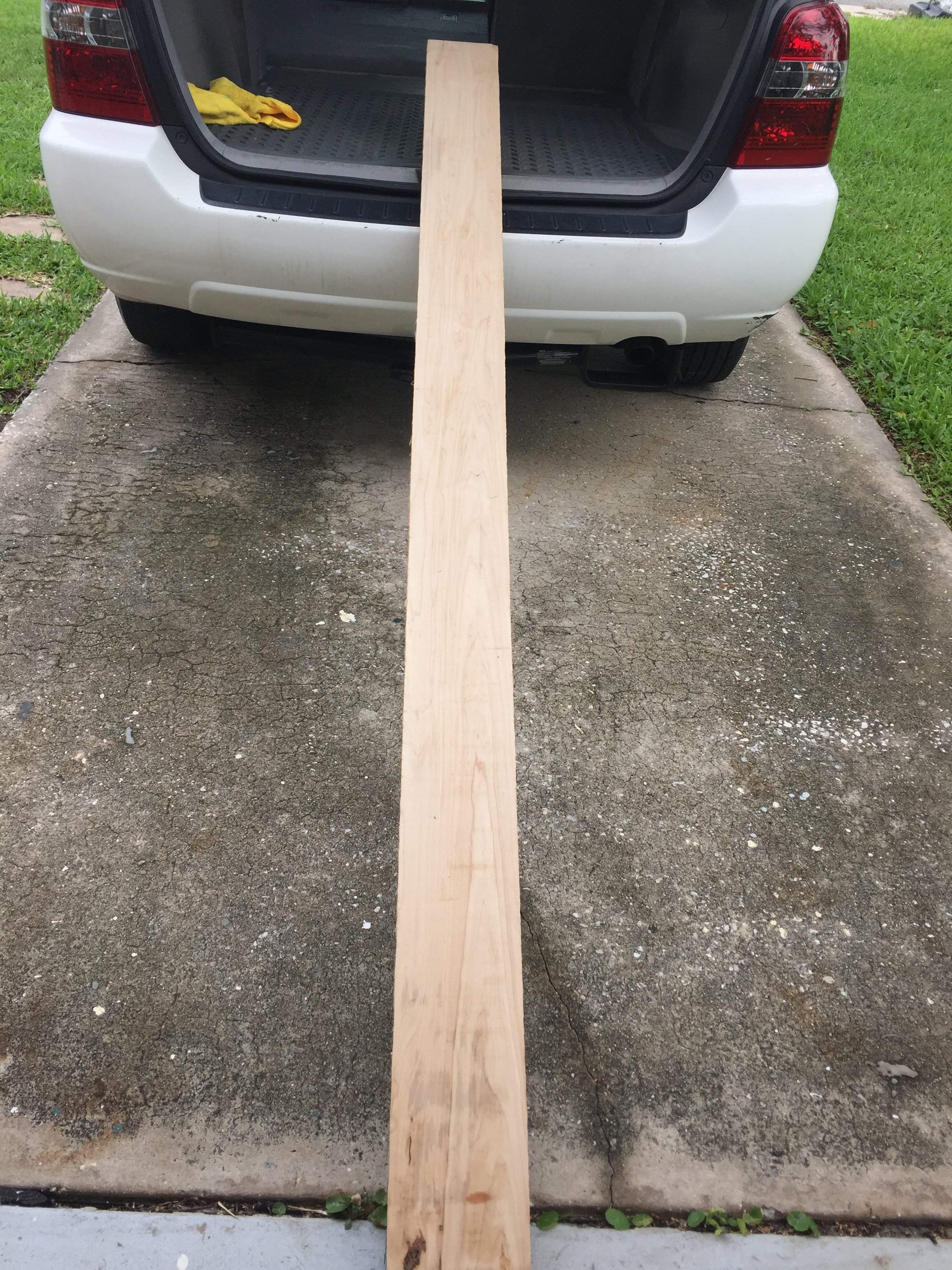
IMG_0199.JPG


Thanks!
 
There are a few different POV from what I've gathered. Many boutique makers I've seen (Crimson Guitars comes to mind) will cut a over sized blank or glue one up, and let it sit for a few weeks to acclimate. Then will carve it and let it sit again before attaching to the body and finishing. I don't know about the second part, but whenever I do a lamination of anything I let it sit for at least a week for full glue cure and to make sure it's stable. Lol. I'm so busy it tends to turns out to be more like 2-3 weeks. :P
 
Folks with a more production-line like atmosphere may go much longer. I think Bruce mentioned parking his rough blanks for a year or more, but that would obviously put a crimp in your style at this stage of your work. He's got volume and product to support that sort of timeline. Cut oversize, not exactly to size, so that there's room to save the ones that are only slightly out of whack, and if any go further out of whack than that, barbecue with them.

In short, if you know where you are going with them, cut them up. If that's not decided, let them be until you know what you are aiming for (bolt-on .vs. neck-through, laminated or solid, etc.) If you are laminating and know what you are laminating, go ahead and do that before setting it aside to rest for a while.

I would not bother planing them until closer to the time you plan to use them.
 
I tend to use boards the following year or more after they've sat in my storage. When I get them, I cut them into fairly close dimensions to what I need and then store them stickered. Sometimes, boards will "settle into a new lifestyle" and be in a slightly different shape months later, despite being kiln dried and seasoned already. :) After it's sat a year or so with me, I'll use it.

I know you're not set up to use rolling stock (yet :)) but I'd recommend prepping up some boards that you'll use next year and get into a similar routine. Having more confidence in the quality of your board really does save headaches related to wood movement in the long run... :D
 
I tend to use boards the following year or more after they've sat in my storage. When I get them, I cut them into fairly close dimensions to what I need and then store them stickered. Sometimes, boards will "settle into a new lifestyle" and be in a slightly different shape months later, despite being kiln dried and seasoned already. :) After it's sat a year or so with me, I'll use it.

I know you're not set up to use rolling stock (yet :)) but I'd recommend prepping up some boards that you'll use next year and get into a similar routine. Having more confidence in the quality of your board really does save headaches related to wood movement in the long run... :D

I agree with Beej, just wish I had more wood storage. I'd say that's exactly why all my necks and to some extent all my bodies have been laminated. Generally speaking lamination (done properly) is more stable then solid pieces of wood. The debate seems to come up when talking about if it effects tone or not.

What I'm doing, being in almost the same situation as you, is to get wood as I can and cut it and sticker it like Beej said. While I'm waiting for it to acclimate I've been doing laminate necks and bodies.
 
  • Like
Reactions: Beej and chinjazz
All great feedback! Thanks!

I'm really looking forward to making a few necks out of this wood. As I look at them, they're whispering to me (please cut me and bring me to life). Hehe
Folks with a more production-line like atmosphere may go much longer. I think Bruce mentioned parking his rough blanks for a year or more, but that would obviously put a crimp in your style at this stage of your work. He's got volume and product to support that sort of timeline. Cut oversize, not exactly to size, so that there's room to save the ones that are only slightly out of whack, and if any go further out of whack than that, barbecue with them.

In short, if you know where you are going with them, cut them up. If that's not decided, let them be until you know what you are aiming for (bolt-on .vs. neck-through, laminated or solid, etc.) If you are laminating and know what you are laminating, go ahead and do that before setting it aside to rest for a while.

I would not bother planing them until closer to the time you plan to use them.

Good deal, I'll definitely wait on planing them. Thanks!
 
were that mine i'd cut that stuff into same sized pieces, but with extra stock left on. seal the ends with shellac, and sticker them. stab a moisture meter like a Sonor or something into them every now and them to keep track of MC and flip-flop them every month or so. park a calibrated hygrometer right next to them too and keep track of it. a year is a decent amount of time for storage but if you gotta build now then do what you gotta do.
 
I don't have much storage either, I'm limited to a 10'x12' shed and a third of that is also household storage. :D I stick a few longer boards up in the "rafters", and then all the shorter pieces (tops, backs, cores) are cut into billets and are laid into a shelf with stickers. I usually only have enough wood for maybe four necks, and about eight bodies at any given time. I just don't have space to stockpile tons! Luckily driftwood can just be stored in logs outdoors, so I usually have one or two rotting further behind the shed as well. :D
 
Assuming I'm starting with a dry piece of wood I've never purposely paused between cutting and gluing, into forming from there. I do this luthiery thing when I can, so there is often a significant amount of time between those steps.

I have always made laminated necks. I've sold a few of these basses, and I assume I would have heard if there were issues, but I've never had a neck move on me other than bowing over due to string tension (and correcting with the truss rod). I realize I might be playing with fire here, but I always mind the growth rings and make sure I set them up so they oppose each other.
 
Assuming I'm starting with a dry piece of wood I've never purposely paused between cutting and gluing, into forming from there. I do this luthiery thing when I can, so there is often a significant amount of time between those steps.

I have always made laminated necks. I've sold a few of these basses, and I assume I would have heard if there were issues, but I've never had a neck move on me other than bowing over due to string tension (and correcting with the truss rod). I realize I might be playing with fire here, but I always mind the growth rings and make sure I set them up so they oppose each other.

Awesome! Thanks!

I'm planning on a few things in the next few months. Make a single piece neck (maybe two - one with a Pau Ferro or Rosewood board, and the other Maple), for the same bass so I can get an idea on what I like better.. Or just keep them both to swap on this bass.

The other thing on my fascination bucket list is to laminate a neck, and possibly a neck thru (all depends on how much I have left, or I can get more).
I do really need to get the details straight on cutting/opposing grain and all that. And of course get my router jointing fence jiggy thing on (sorry had to say it that way). I think these lam necks are so cool!
 
I have purchased basses with single piece necks and I am not a fan. I've seen them move a lot more dramatically due to humidity than my home made lam necks. My advice would be not start with a single piece neck, the possibility of issues is higher, but maybe that's just me. Even if you just make a two piece neck with opposing grain you're going to have a more stable neck.
 
  • Like
Reactions: William Shafer
I have purchased basses with single piece necks and I am not a fan. I've seen them move a lot more dramatically due to humidity than my home made lam necks. My advice would be not start with a single piece neck, the possibility of issues is higher, but maybe that's just me. Even if you just make a two piece neck with opposing grain you're going to have a more stable neck.

I was thinking the same thing a while ago.. While I have you're attention, is this correct in terms of grain orientation on a sample piece I cut?

Neck blank cut questions - Quarter sawn and quality of cut

I got on this subject a while back thinking about how I could make a better Fender Jazz type neck..
Now, really a better than one piece (if done right).

:)
 
Chinjazz, a great way to do a multi=laminate neck and get 1/4 sawn stability would be get a piece as close to flat sawn as possible, cut, then stand on end. As far as the picture in other post... as long as the grain is pointing in opposite directions from each other you're in business. Personally (on the necks I've done) I'd flip the boards so the grain makes an oval pattern when seen on the end grain. The boards would bow out from the middle (if not laminated) instead of the ends, the hope is that the pressure from each piece cancel each other out.
 
  • Like
Reactions: chinjazz
Chinjazz, a great way to do a multi=laminate neck and get 1/4 sawn stability would be get a piece as close to flat sawn as possible, cut, then stand on end. As far as the picture in other post... as long as the grain is pointing in opposite directions from each other you're in business. Personally (on the necks I've done) I'd flip the boards so the grain makes an oval pattern when seen on the end grain. The boards would bow out from the middle (if not laminated) instead of the ends, the hope is that the pressure from each piece cancel each other out.

Thanks William!

I think I'll change my plan on the first two necks. And maybe even throw in a pin stripe down the middle as well :) - I can't explain why that looks so good to me.
 
  • Like
Reactions: William Shafer

Latest posts