Throw Your Lead Cord In The Garbage Today!
Although I have enjoyed reading this old thread that is mostly concerned with tone variations based on using a maple or rosewood neck, I felt compelled to mention that regardless of bass configuration, the critical consideration is signal strength and shape, as we are playing an "electric" instrument.
Before condemning your bass or amp, realize that there are huge losses in signal strength and fidelity in the signal path between the bass jack and the amp jack. If you're using a cheap, poor quality, crushed, lengthy or curly lead cord, don't waste thousands on a good bass! In fact, the next time you shop for a lead cord, try to find out the capacitance of the cord. There are Capacitance Meters if you have an electronic buddy. I say this because there are some very degraded lead cord rip offs on the market.
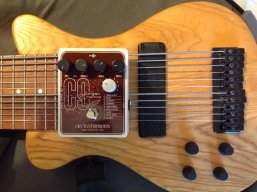
After replacing the long, curly lead cord with a good quality, shorter, un-damaged one and buying a Line Driver, I could not believe the difference in sound. All those years I had been listening to a muffled, dead bass tone without realising it. Now my sound sparkles. Lead cords are plagued with stray capacitance that kills the instrument's signal as it filters out all of your higher frequencies to ground. They should be as short as you can stand it, to prevent signal loss. The Buffer Op-Amp in the Line Driver compensates for most of the line loss. Best money I ever spent.