• TalkBass has been independent since 1998. Add your voice.
    Create a free account to reply to discussions, view embedded media, and browse with fewer display ads.
    Join freeLog in
    Want zero display ads or expanded classifieds tools? Compare plans.

Markbass vs DBX compressor

The Behringer Multicoms were certainly reverse-engineered from dbx and Aphex designs, and maybe a few others, but has Behringer ever made an optical compressor with a tube gain stage?

I really don't think so, although ART does, as did Peavey a number of years ago (the VC-L2).

I don't really get the utility in a tube gain stage if you're just trying to compress something. Neither do I get much out of opto-compressors on bass, as they tend to be too slow to be of any real use for that purpose. For vocals, or for just imparting a certain "vibe" on a room mic or for a board mix, I totally get it. But as a utility "bass compressor," I'm just not feeling it.

And I know this probably shouldn't effect my impressions on something, but it's hard for me to totally buy in to anything that feels the need to display the tube behind an opening. I understand that marketing gimmicks are part of the business of selling units ... but in a way, it's difficult for me to take it seriously when it insults my intelligence.
 
Back to the OP's original question, I hadn't listened to Incubus for a number of years so I went back and listened to some of their stuff. I am not entirely sure what is going on with the tone but at least on the recordings it sounds like there is more going on than just adding a compressor (pedal or rack of any make or model). The tone sounds like it was manufactured through a lot of high end gear. I think where it does sound like an optical compressor is on any of the slides. I don't think that the compressor is used to control transients as is the case with many bass compressor applications and instead as more of an effect.

Bongo I have never messed with any of the optical pedals. While I know they are not going to get this exact tone do any of them operate in a similar manner.
 
the Behringer Multicoms used to be a reverse-engineering of the Demeter compressors, from what I can gather.
me said:
Has Behr ever made an opto comp with a tube gain stage <i.e. like the Demeter>?
I really don't think so.
Then he goes on with...
I don't really get the utility in a tube gain stage if you're just trying to compress something. Neither do I get much out of opto-compressors on bass, as they tend to be too slow to be of any real use for that purpose.
So for example the Urei LA2A... not much good on bass? Not used by countless engineers on countless hit records, specifically on bass? And the Demeter, not so good on bass?
 
So for example the Urei LA2A... not much good on bass? Not used by countless engineers on countless hit records, specifically on bass? And the Demeter, not so good on bass?

Look, I know that you don't need me to explain the difference between a limter (LA2A) and a compressor. :D

And to the end of something being used on "countless hit records," I'm sure you'll find the various dbx 160 varieties on more credits than I could possibly list, while your little markbass thing that you're not endorsing ... meh.
 
Bongo I have never messed with any of the optical pedals. While I know they are not going to get this exact tone do any of them operate in a similar manner.
I have to agree that the little bit I've heard of Incubus bass tones, it doesn't sound like a compressor is a particularly important ingredient of that tone, least of all a specific type of compressor.

That said, many opto comps do have similar action to each other, because many were built around the same (or similar) small opto-isolator component, and often built around the same basic circuit design. Where you get into differences is when the manufacturer built their own custom design of opto component, and/or developed their own unique recipe for the circuit; plus there can be differences in quality of components and construction.

So I don't think a comp is necessary in this case, but I do think you can get reasonably close to the general tone/action of the Demeter rack unit for a lot less money, if that's a direction you'd like to go. Even a BYOC opto comp kit would be a decent-enough start in that direction.

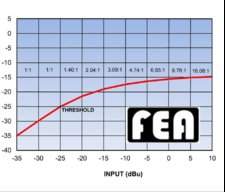
Please note though--if it was me personally wanting an aggressive, articulate tone, I would go in the direction of multi-band compressors like the Rane DC24 or FEA Dual Band, rather than an opto unit.
 
I really don't think so, although ART does, as did Peavey a number of years ago (the VC-L2).

I don't really get the utility in a tube gain stage if you're just trying to compress something. Neither do I get much out of opto-compressors on bass, as they tend to be too slow to be of any real use for that purpose. For vocals, or for just imparting a certain "vibe" on a room mic or for a board mix, I totally get it. But as a utility "bass compressor," I'm just not feeling it.

And I know this probably shouldn't effect my impressions on something, but it's hard for me to totally buy in to anything that feels the need to display the tube behind an opening. I understand that marketing gimmicks are part of the business of selling units ... but in a way, it's difficult for me to take it seriously when it insults my intelligence.

I owned an ART TCS several years ago and the tube circuit was more than just a gain stage. They designed the tube circuit to give that “magic” that many musicians and audiophiles look for. I did an FFT analysis of the compressor to see what was making everything sound so "rich". What it does is add second harmonics to the signal to the point where the harmonic could be just as tall as the fundamental. It added such a beautiful dimension to the tone that I placed it on the main output of the board before the x-overs that fed the amps.

A lot of people like to see the tube. But most of the viewing apertures are necessary for the venting of the tube… they do get hot. So manufactures kill two birds with one stone in this regard… I don’t think they are trying to insult your intelligence.

Optical compression has a history of being slow. Most of the devices of yesteryear that were used were slow, but they are considered very musical. That was then… there have been many advancements of technology for LDR’s over the past few years that has greatly increased their reaction speeds. A lot of these newer optical devices are found in some very prestigious compressors. They still won’t match the speed of VCA circuits, but they are way faster than their older brothers and have given optical compression a new life.

-Frank
 
And I think you're touching on a really important point here Boomer, and you've done it rather eloquently.

Opto compression has historically been more about a particular sound or vibe it imparts, rather than being utilitarian. In particular, it's the non-linearity in how it reacts; it's less precise and more "human," in a sense, compared to the precision you get with a silicon chip.

But these are all the subtle, aesthetic things that I'm not sure users on a bass forum are going to be as concerned with. If I'm looking for a rack compressor to put in a live rig, for example, it's probably because I want more precise control over my dynamics, and less concerned with 2nd order harmonics.
 
I have an optical limiter/compressor circuit sitting in front of me that has a reaction time of <100uS with one of these new optical devices. I know in the world of electronics that this is a very long time, but we are dealing with audio frequencies. A frequency with period of 100uS is 10KHz… in the audio world this has the ability of precisely following a 5KHz envelope (half-wave). Several manufacturers use extensive servo circuits to control or eliminate non-linear responses, so it behaves more like a VCA circuit rather than the “traditional” optical compressor. Thus, these newer opto devices and circuits are capable of precisely controlling dynamics for all but the highest audio frequencies.

I just want everyone to understand that the old rule of thumb about optical compression no longer applies everywhere. There are also VCA comp circuits that are designed to emulate the optical response of some of the old favorites. So, I guess that the VCA rule of thumb isn’t always true either. The compressor that you use should be based upon the end result that you are after.

-Frank
 
I did an FFT analysis of the compressor to see what was making everything sound so "rich". What it does is add second harmonics to the signal to the point where the harmonic could be just as tall as the fundamental.

Interesting. Was this the compression that was lending the added harmonics, or was it the (12AX7) starved plate deal they throw in the path in basically all of their gear?
 
Interesting. Was this the compression that was lending the added harmonics, or was it the (12AX7) starved plate deal they throw in the path in basically all of their gear?

Just so everyone knows… The ART TCS has both optical and VCA compression, with a tube circuit that you can switch into the signal path for “warmth”.

The second harmonic was only present with the tube engaged, so I am fairly sure that it was only the tube circuit creating the harmonic. At the time I suspected that the tube circuit was a starved plate design, because it made the most sense. But I have not seen any documentation to verify if this is true.

I bought it for the compression versatility, but the tube “warmth” was a real nice bonus. This is my only experience with ART gear with a tube, so I can’t say all of their tube gear does the same thing.

-Frank
 
difference between a limter (LA2A)
This is pretty much a first time I've seen somebody describing LA-2A as limiter (original designation was "Leveling Amplifier", and it certainly is not capable of any serious limiting; and I'm pretty sure 9.9 out of 10 people use it like any other low ratio compressor).
BTW while LA-2A is slow (both LDR and that one-of-a-kind EL panel), modern optocomps are based around something from VTL family of opto-resistors. And those can get very fast, with attack below 1ms and release below 10ms.
And dbx is not producing 90% of VCAs today. King of the hill nowdays are devices from That Corp. (that are based on original Blackmer/dbx approach). And there is nothing inherently punchy in VCA topology, either Blackmer class AB VCA or Allison/Valey class A), they both add some second order distortion but not much (certainly not relevant in live bass rig context).

...

boomertech, speed is not only factor. While you can speed-up attack time of optos (by servo or what is simply HF shelf EQ before opto-cell), you are limited in release time (time between completely removing light source and resistive element reaching some Rdark resistance, and this is dependant on type of material LDR is made of). However, bigger issues are static control law of led-ldr combo and dynamic effect (like memory effect and dependence of speed to light level applied). So opto-emulations are still opto-alike, you can't really nail it.

edit: BTW1 all compressors with full wave rectifier detector impose some third (and generally odd order distortion), however I've seen here and there pedal comps that are based around half wave detection, and those have dominantly second/even order distortion. BTW2 starved triodes are much closer to FETs in performance, but half of "toob magick" is in output transformers anyway. BTW3 to boomertech: while I consider 100uS fast enough for any sane compressor duty, if you want "safe" limiting there is this old trick (I think even dbx used it): human ear doesn't perceive clipping as distortion if it appears at less then 1mS transients here and there, so you apply limiting with something like 200-400uS attack rate, and "shave off" any super fast transient with back-2-back zeners afterwards, chosen to clip signal at 3-6dB above "real" limit threshold
 
A limiter is a compressor with a high ratio. PERIOD. That's "the difference". Set the same device with a low threshold and it's a "sustainer". As mentioned, the LA is a Leveling Amplifier, which is another way of saying "a compressor with a gain stage", since in the early days of compressor design it was not assumed that a strong make-up gain stage was inherently part of the design; and as recnsci said, it is not generally used as a limiter at all.

When you advised an unfortunate noob, in another thread, that the MXR M87 "acts more like a limiter", you totally steered him wrong. With a 4:1 ratio, a low input gain setting, and a slow attack, it acts nothing whatsoever like a limiter.

Unless, of course, you are sticking to MXR's hinted claim that it's an 1176 "limiter" in a pedal, which it's not really, and that still would be ignoring the fact that a limiter is a compressor, PERIOD.

Additionally, that earlier weird snipe about the Markbass pedal not being used on so many hit records... of course it hasn't been, and nobody said otherwise. It's only been on the market a short while. Your acclaimed dbx's have been saturating the market for decades. And more to the point, you sadly meant that jab at the MB to distract from your utter ignorance of the nature and function of one of the most revered bass compressors of all time. Weakest straw man you've thrown up yet.
 
bongo&chess: I use word limiter as functional description of device, so limiter = compressor with ratio>20(or 10 IMHO) AND fast enough attack rate to catch transients. First limiters were used before RF power amp in radio broadcast systems because of narrow dynamic range of AM radio system and rather ugly distortion of overmodulation (caused by high signal peaks). Those were actually early opto LDR devices, rather sluggish but they did their job. First device that actually was serious limiter is (nowdays legendary) Fairchild 660/670. Those were designed as limters for record cutting plants. Thing was, while in radio broadcast overloads were nuisance, you could wreck cutting head or groove (and whole record) if head motion exceeds certain limits. 660 is not very high ratio device but it was darn fast (in side chain there is whole power amp section to provide enough current to drive envelope detector for required attack rate). So, for me and in utilitarian sense, limiter = high ratio and fast attack. But, since nowdays dynamic control devices are used for creative purposes even more than for utility duties whole taxonomy goes through the window.

...
some sidenotes:
1)very fast attack rates are not panacea for limiting, as will any guy/girl who designed mastering/DSP limiter tell you. While in digital land you can have attack faster than any sane rate of audio signal, using simply very fast attack rate will result in rather ugly squashing (and while 1176 and similar can go up to fastest rates needed for audio, it will usually sound better with somewhat relaxed attack time.
2) VCAs are not perfectly suited for limiting. All topologies suffer from some control voltage bleed-through which gets worse at higher frequencies. So if you use classical dbx VCA for very fast limiter you can and up with rather ugly clicks on top of fast transients. FETs (as used in 1176 and Distressor) can be more immune to those problems, while optodevices are "cleanest" regarding CV feedthrough.
 
missed this. I was thinking about guitar/bass stuff, and in this realm only iron (in signal path) I've seen are those big step-down transformers on power amp output. And, IMveryHO even in studio gizmos output iron is usually more colorfull (but this is not rule by any means)

I've always found it somewhat ironic that people refer to this magical sound that "iron" supposedly imparts ... while the main point of it, historically, has been the utilitarian function of impedance matching, and to do it transparently.

Seems to me that, with most anything, by the time you're hitting a tranny hard enough to get any sort of character, you are probably clipping something else that will hardly add anything "magical" to the equation. So the only thing I can think of is the slowing of the transient response. Either way, I'm at somewhat of a loss as to what this "magic" is that people talk about ... particularly with the old API and Neve consoles, unless it's just a nostalgia thing.

Any thoughts?
 
A limiter is a compressor with a high ratio. PERIOD. That's "the difference". S

Not if it's attack time is so slow, it lets the initial transient through unmolested.

You have a point that I may have been over-simplifying. But when something has only two attack settings, fast and really fast, it's going to have kind of a choking effect once you get to higher settings.

Oversimplification on my part? Perhaps, but the point is ... it's not a true compressor in the usual sense if your attack time is in the microseconds. It's just more like a choker leash on a rambunctious dog.
 
Westlake Studios uses dbx 160's & I trust their judgment.
I use the Compressore & am pleased with its delivery, and while it may leave a subtle almost secret impression, I certainly miss it when I don't have it. I'll try it through the loop; never thought of that. Thanks for the info. Good thread.