• TalkBass has been independent since 1998. Add your voice.
    Create a free account to reply to discussions, view embedded media, and browse with fewer display ads.
    Join freeLog in
    Want zero display ads or expanded classifieds tools? Compare plans.

Mesa Subway D-350!

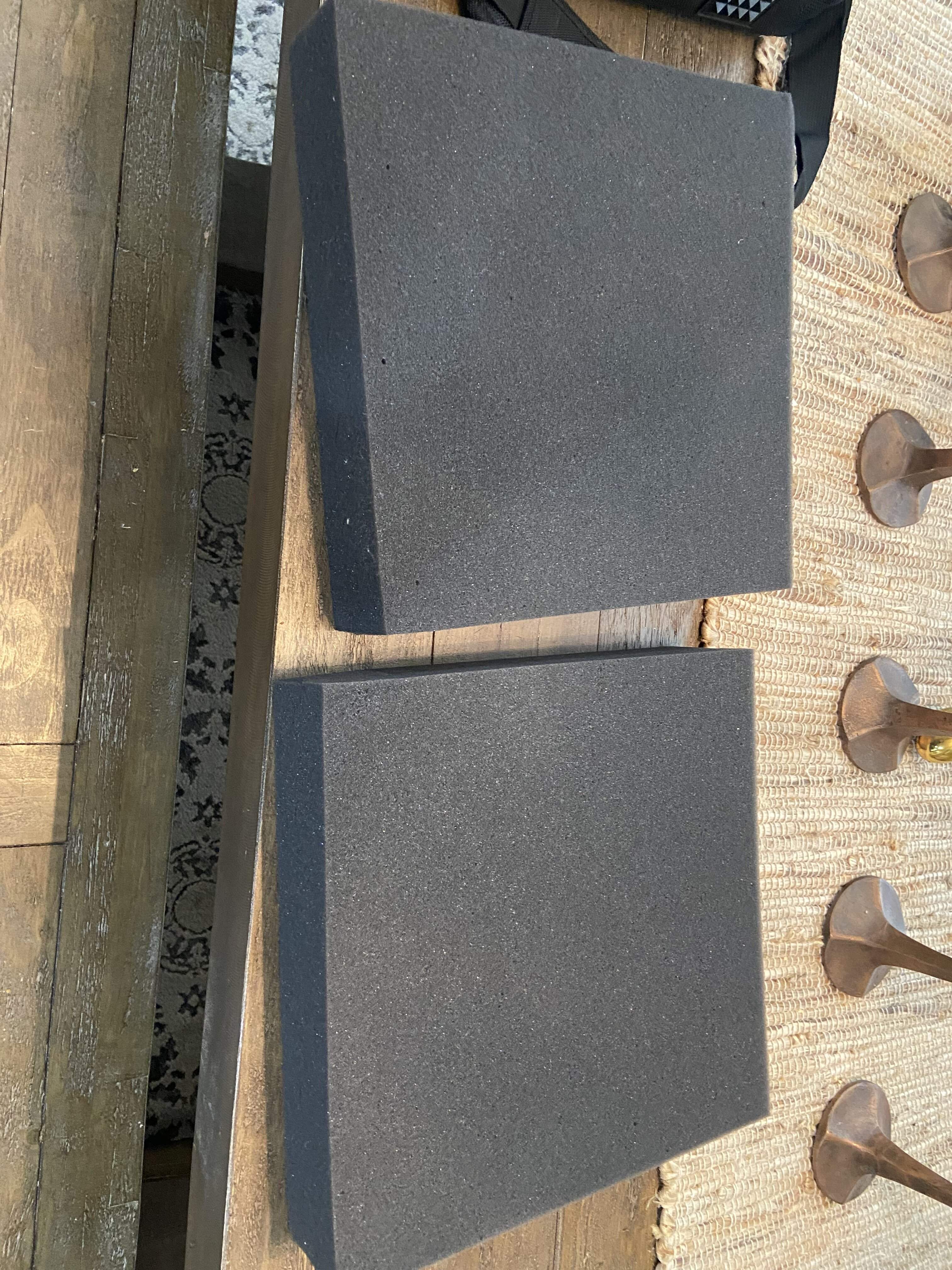
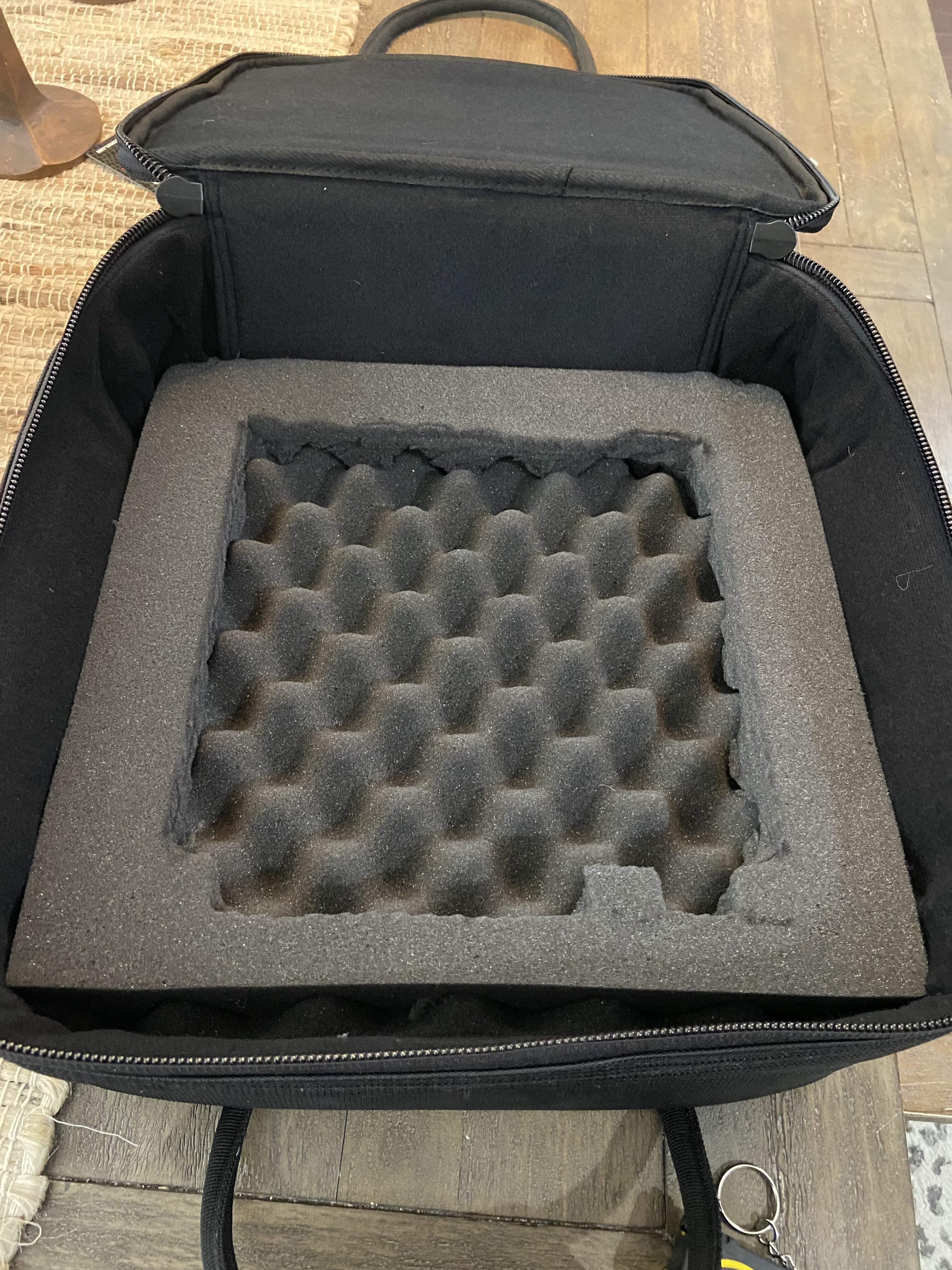
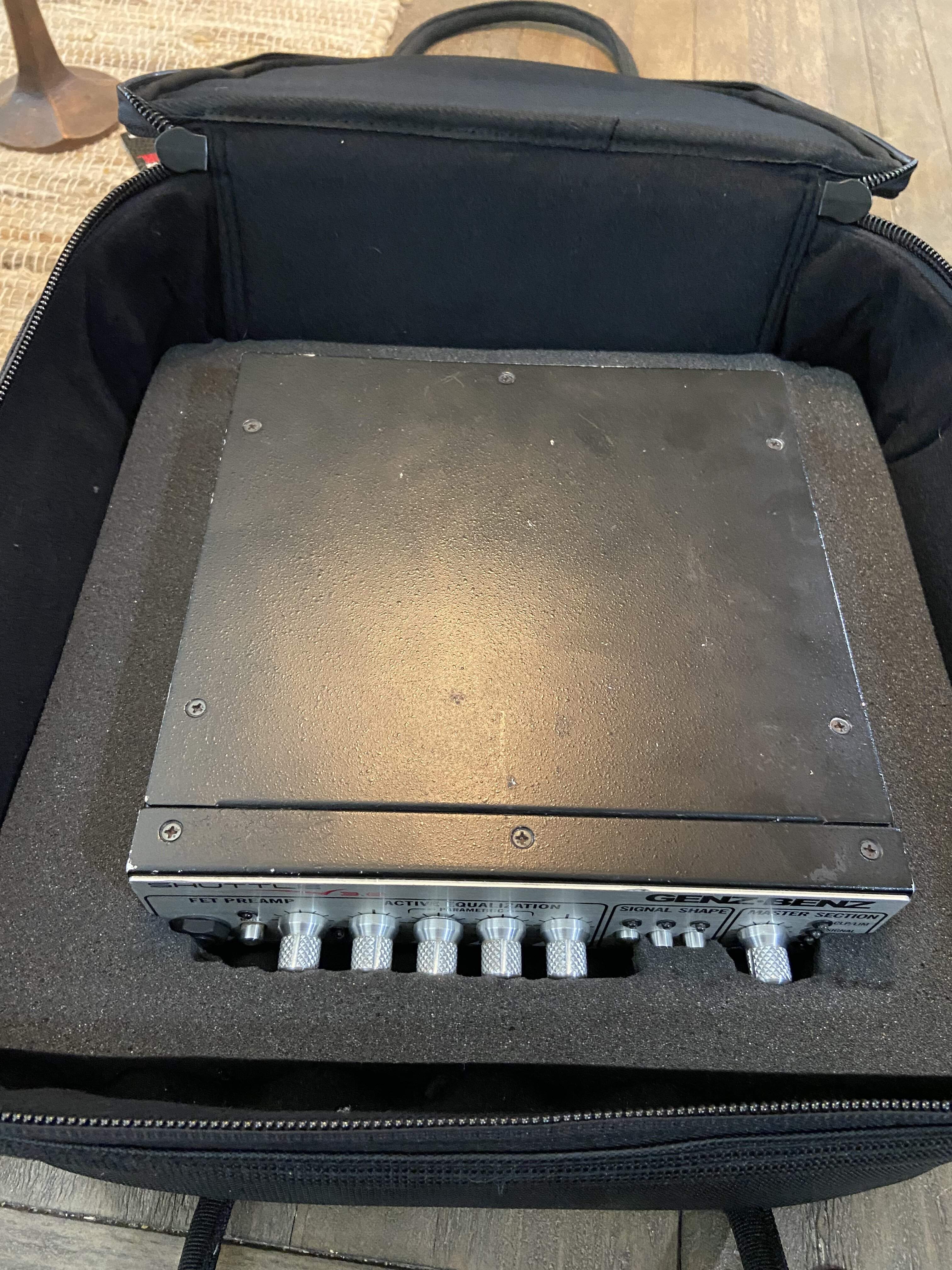
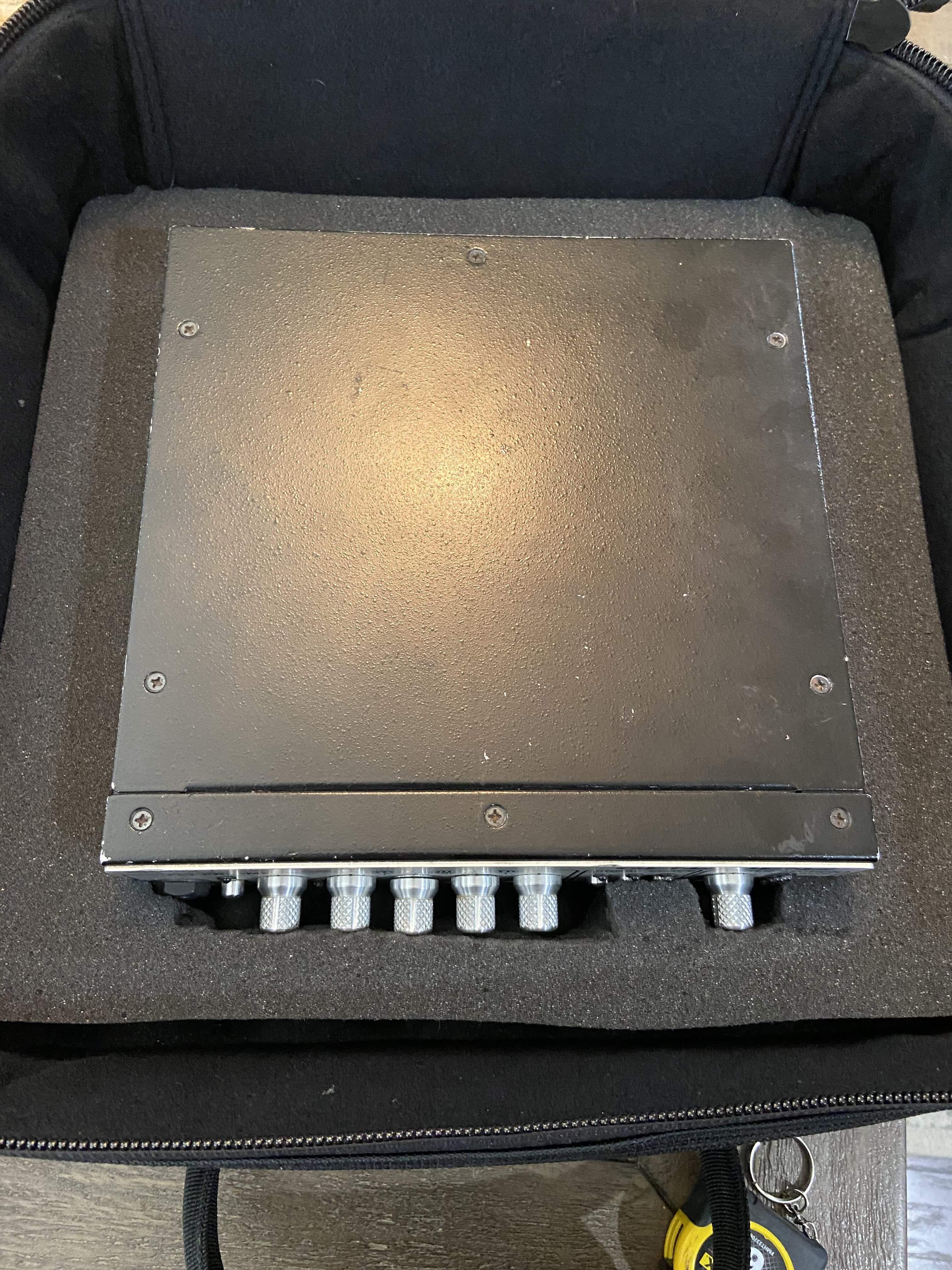
I use a 12”x12” Gator mixing bag for all my small Class D heads (Genz Benz Shuttle 3.0 and Magellan 350). The bag was about 50 bucks, and then I spent another 15 bucks on a 6 pack of 12”x12” acoustic foam tiles. You will only need 3 of the tiles… 1 on bottom, 1 with the shape of your amp cut out, and 1 on top. This leaves just enough space for a few cables. Head doesn’t move, and it’s MUCH more protected than it would be in a regular bag. It’s the equivalent of a Mono gigbag vs a $40 roadrunner gigbag.
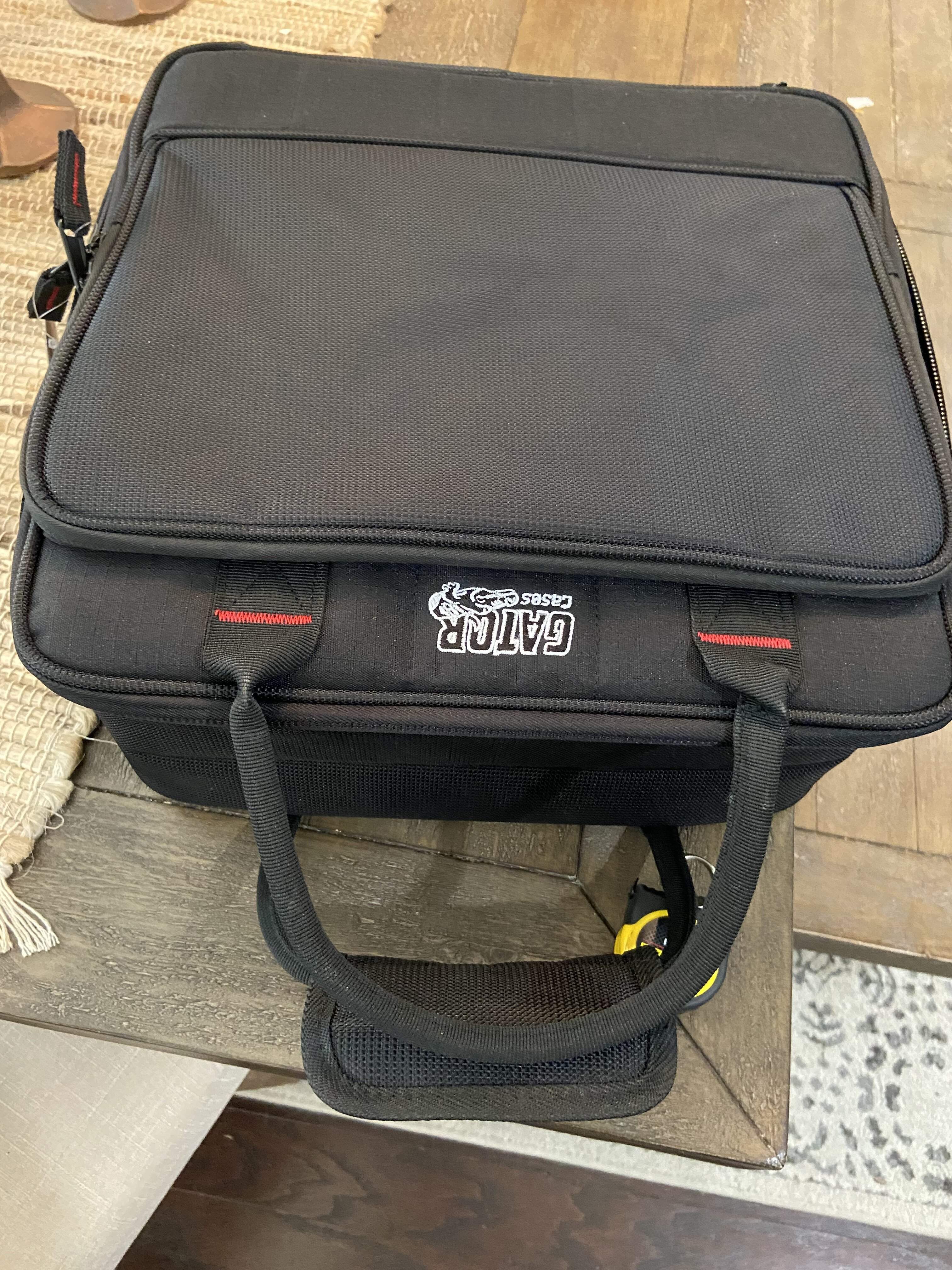
5B0C491F-8ECF-4746-8D47-4CEC64F977F6.jpeg
653AAE95-A578-4304-B2C4-83B28BCBD2F1.jpeg
216CD502-9DE4-461A-B9B8-3B805AA2277F.jpeg
50030D3A-9304-4189-BE6C-AC2759CF7FE5.jpeg
D3005F5B-89FB-49A8-8441-0978544816F8.jpeg

Edit to add, don’t forget the last tile over top of the amp! I didn’t have a picture of that.
 
I picked up a D-350 last week. I'm quite impressed. I have it on top of my two Acme B-1s and it is a perfect match for them, in power, size, and voicing. Acmes don't need a deep switch! I do like the bright switch, it sounds very good with the Acme tweeter.

Many thanks to Humbucker Music in Rossville, Georgia- next door to Warrior. They are good guys to deal with. I bought the head online around 3:15 PM on June 16, and had it in hand by 2 PM the next day. Fast! Brian is as nice a dealer as any I've bought from in the past.
 
Last edited:
Andy- I'd still be interested in hearing about what design and circuitry the D-350 and D-800 have in common. The I/O and controls look to be the same. I'm wondering if the SS preamp is the same in both. Obviously the power section is different.
The preamps are virtually identical aside from the Bright versus Deep switch.
 
I really liked the deep switch on the D800 when I had it, but I wish it had a bright switch. Could the D350 match the depth of what the deep switch does and if so, where would the dials need to be set in comparison?
That's a tough question as the deep switch on the D-800 does two things - "...there is a mild boost in the very low frequency response while also lowering the effective high pass filter frequency". In order for the D-350 to have reasonable operating headroom at higher volume, lowering the HPF while boosting the lows would be counterproductive. So depending on the cabs you were using with your D-800, the style of music you play, and the volume levels you need, just increasing the bass eq setting might get you close. However, huge, high volume, super deep lows were a piece of the performance envelope that needed to be trimmed back in the D-350 to achieve all the other design goals.

I own a D-800 and a D-350. With all the cabs I've used them with (including Bergantino, Eden, Mesa PH and SW, GK NEO, AudioKinesis) I can get a big, fat bass with either. What the D-350 won't do quite like the D-800 with deep switch is that Dub/Reggae sub-low rumble kind of feel at high volume. To be clear though, the D-350 is not bass shy or lacking in volume.

I hope that's helpful.
 
Last edited:
Something I don't understand... if watts are watts, then amps like the D-350 have more power and headroom than an Ampeg SVT, yet the SVT has had an Ultra-Lo switch for over half a century; guessing it has a HPF. An SVT is not generally considered low power.

Valid question. But I wonder, do the relatively pleasing compression characteristics of driven/overdriven tube output stages come into play here vs the solid-state or class D power sections going straight to hard clipping once their clean output threshold is crossed? Could be some of the perceived "tube watts are louder" idea, maybe? (Genuinely looking forward to hearing about this straight from The Horse's mouth!)
 
Something I don't understand... if watts are watts, then amps like the D-350 have more power and headroom than an Ampeg SVT, yet the SVT has had an Ultra-Lo switch for over half a century; guessing it has a HPF. An SVT is not generally considered low power.
Good question, here's a little more accurate explanation of what the feature does and why even then, designers were cautious with large amounts of low frequency extension.

The ultra-lo is a carry over from the first SVT design.

This is a quote from Bill Hughes describing why he added the ultra-lo to the early Ampeg amps:

That ultra low switch notches in the upper frequencies to give the illusion of more bass without causing overload on the low end. It was formulated for certain Gibson basses. The same principle was used in other Ampeg and some Fender amps, as well as the Peavey Probass 1000 preamp.

 
For those of you unable to find the D-350 owner's manual on our website, sorry the correct link got mis-categorized and thus buried.

Here is the correct link: https://mesa-boogie.imgix.net/Subway-D350-manual-220329.pdf

This is the last manual that our friend Chef wrote/edited with us.
Would it be possible to post a graph of the Voicing feature: Counter clockwise is a " flatter " curve, while clockwise is a more " Vintage " curve. I'm trying to visualize what the entire curve actually looks like to begin with.
 
  • Like
Reactions: DJ Bebop
Would it be possible to post a graph of the Voicing feature: Counter clockwise is a " flatter " curve, while clockwise is a more " Vintage " curve. I'm trying to visualize what the entire curve actually looks like to begin with.
The description is probably your best bet regarding what's really happening, because this voicing also interacts with both the eq and the cabinet voicing so the net result may be different than what any numerical plot might suggest.

(from the owner's manual):
This active eq control modifies the amplifier’s response from a more flat like curve (in the counter-clockwise position) to a more vintage curve (in the clockwise position) by modifying and shifting the frequency response in all regions with a simple turn of the knob. As the control is rotated clockwise, the low end and the high end increase while the midrange decreases and shifts upward. Common uses for the more vintage positions are the old school funk and slap tones, and rock tones where a rounder bottom and a little bite are needed. Experimentation is an important part of discovering the potential of this powerful tool. Unlike many simple “mid scoop” knobs, this control has more going on in the circuit to keep things musical and useful in terms of not losing key mids that help define the bass in a mix.
 
Last edited:
"As the control is rotated clockwise, the low end and the high end increase while the midrange decreases and shifts upward."
I wonder if some of the confusion comes from how this is phrased. Would it be clearer to say something like, "...the low end and the high end increase [in volume] while the midrange decreases [in volume] and [its EQ center frequency] shifts upward?"
 
The description is probably your best bet regarding what's really happening, because this voicing also interacts with both the eq and the cabinet voicing so the net result may be different than what any numerical plot might suggest.

I don't know that I understand exactly what that all meant, but I do know that I have played the D-350 with both my very-active Steinberger with rounds, EMG HBCS pickups and BTC tone controls, and with my Ibanez AFB200 passive bass with Chromes. They are pretty much opposite of each other tonally.

I left all four EQs at noon and listened to both basses with the Contour off, 1/4, half, 3/4, and all the ay up. It's a very useful range of tones on both basses, with the EQ slightly adjusted additionally to taste.

It's not a simple "more vintage" control, because those controls on other amps were more of a treble roll-off. That's not what this contour does. It's not really a mid-scoop, either.
 
I wonder if some of the confusion comes from how this is phrased. Would it be clearer to say something like, "...the low end and the high end increase [in volume] while the midrange decreases [in volume] and [its EQ center frequency] shifts upward?"
Maybe?
 
The ultra-lo is a carry over from the first SVT design.

This is a quote from Bill Hughes describing why he added the ultra-lo to the early Ampeg amps:

That ultra low switch notches in the upper frequencies to give the illusion of more bass without causing overload on the low end. It was formulated for certain Gibson basses.
Classic! :smug: