• TalkBass has been independent since 1998. Add your voice.
    Create a free account to reply to discussions, view embedded media, and browse with fewer display ads.
    Join freeLog in
    Want zero display ads or expanded classifieds tools? Compare plans.

middle strings not playable past the 20th fret

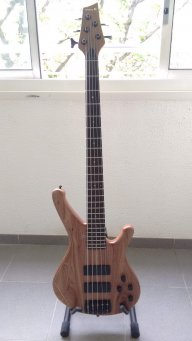
This is a weird issue I've never encountered before. I lowered the action on my Sandberg recently and now the 3 middle strings are flat against the frets past the 20th fret or so. Neck relief is set (roughly credit card thick) and as far as I know that shouldn't have a huge impact anyway since those last few frets are directly at the neck pocket, so that part is bolted down firmly.

The next thing I checked was the frets themselves, none of them seem like they have popped up, no visible gaps, can't slide a piece of paper underneath them. Could the 24th fret (it'd have to be this one I assume since the issue persist to the 23rd fret) be not level/too high? But it'd have to be too high only towards the middle since the G and B string don't have this issue even with the saddle all the way down.

Lastly, if we assume the frets are level, I suppose I'm not compensating enough for the fingerboard radius? It's a fairly flat radius (14'') and it feels like the middle strings are significantly higher than the G or B string if I raise them enough to make the strings playable again.

Everything plays beautifully without any issues up to that point so I can certainly live with it, but can I diagnose this issue from home somehow? I'm glad for any help on how to do this.
 
That sounds like a classic "ski jump" condition. The ski jump condition will often be worse on the center strings. The real test is with a straightedge, along the individual string paths. You'll probably see that frets all make a little ramp up from the 20th to the 24th.

Here's the big thread:
Getting the Facts about Ski Jumps
 
  • Like
Reactions: JGbassman
That sounds like a classic "ski jump" condition. The ski jump condition will often be worse on the center strings. The real test is with a straightedge, along the individual string paths. You'll probably see that frets all make a little ramp up from the 20th to the 24th.

Here's the big thread:
Getting the Facts about Ski Jumps

Thanks for the help, I read that thread and it was really interesting. I wasn't aware that this was an issue honestly. I just now checked with a capo on the 1st fret and pressing down the individual strings behind the 24th fret (how you can usually check neck relief quickly) and the relief looks fairly normal to me, no sudden jumps at the heel or anything like that. Is there a way to use the strings as an improvised straightedge to check this more thoroughly? I don't really have the tools here to test this properly.
 
Huh, I took off the neck (for the first time) and saw a small shim at the bridge side of the neck pocket. It was stacked and obviously angled the entire neck inside the pocket. I removed it and screwed the bass back together, I need to re-do my setup but removing it seems to have helped on first glance. Interesting.
 
Reduce your relief by half and then reset the saddle hieight. That should improve the situation. Try it and report back.
Thanks for the tip, as I wrote above this partial shim was the issue. This angled the neck backwards. I removed it and now I can play on the highest frets without an issue. The only problem is that now the strings are too high in general, so I guess that's why the shim was there in the first place. It's by no means unplayable but I'd like it a bit lower. Can I do that myself or should a luthier fit one properly? I guess reducing neck relief would also bring down the strings a bit, is "creditcard thick" too much, I thought that's what most people were going for?

edit: I should probably add, I'd need to raise the neck at the last fret by about 2mm, from what I just read I'd need a 2mm "flat" shim for that across the whole neck pocket or a very small angled one. Is 2mm very thick, could it become problematic? Or should I try just using the small piece that sandberg used instead of the 2 that it came with for an angled shim?
 

Attachments

  • IMG_20161009_033519094.jpg
    IMG_20161009_033519094.jpg
    321.8 KB · Views: 52
Last edited:
A credit card thickness of relief is too much. It's causing you to lower the saddles too far to get good action mid-neck, resulting in choking past the 20th fret. You may have complicated the problem by removing the shim. Get the bass back to the way it was before you started, then reduce the relief by half and raise the saddles until the strings clear the upper frets.
 
right, "credit card" is way too much gap; it should be more like "business card", or even less if the fretwork is good enough.

get that relief gap to mostly disappear, then raise the saddles until they don't choke out and you should be back in the ballpark at least.
 
I kinda hacked together a thick shim for the entire neck, it seems to work.
I also adjusted the truss rod just now and that lowered the strings while maintaining buzz free playability. So I suppose that was the issue or at least part of it, guess I'll put the original shim on with the adjusted truss rod and see what happens.
I also think I have properly compensated for the fretboard radius now. I suppose if I just turn every screw in every saddle the exact same amount I should be able to lower the entire thing without changing that radius?

Thanks again for the replies, I'm learning so much about about doing a proper setup right now.
 
Aaaand of course you guys were right. Original shim is back in there and it plays like a dream right now, probably better than it ever has. I learned quite a lot in these past few hours, about setups, about being patient and listening to good advice (and not making a crappy shim with a knife at 5am), etc.

Thank you all, I was going crazy for the last week ever since I lowered the action. I should have asked here first and I should have never doubted Sandberg.
 

Latest posts