• TalkBass has been independent since 1998. Add your voice.
    Create a free account to reply to discussions, view embedded media, and browse with fewer display ads.
    Join freeLog in
    Want zero display ads or expanded classifieds tools? Compare plans.

Modulus or Peavey cirrus which help me choose

Find yourself a Peavey B Quad and get the best of both worlds.

Otherwise, I would probably go Modulus.

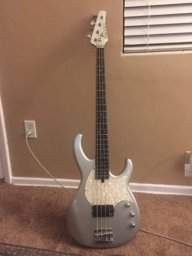
I have all 3 (Modulus, Cirrus and B-Quad). I've owned many of each. I'm going against the masses here, but honestly, IMHO, the Peavey USA Cirrus and B-Quad are on the same level as my Modulus basses. Just as well crafted and dare I say, as well designed and just as much innovation (especially in the electronics department). Again, just my opinion (YMMV)...
 
So here is the part that might help. For my toto cover and the cirrus would be great. And for my Megadeth cover band the modulus as that is what each band used. And I can't afford both. So which would could cover more ground?

Dave Ellefson didn’t use Modulus exclusively and it’s far from what he’s known for. He has a signature Peavey and Jackson. Most of the stuff he’s known for was probably done with a BC Rich though.

Mike Porcaro was definitely a big Cirrus player but I know he also used a Jazz bass and a Stingray at one point.

Moral of the story here is you necessarily need a specific bass to comp what these players are doing and each of these bassist had an arsenal to pull from. Bonus points if you have their gear in a tribute band though.

Both basses you’re looking at are super flexible so you can’t go wrong either way. I prefer the Cirrus out of the two, mostly due to comfort, Modulus necks feel stiff and uncomfortable in my hands.

I highly recommend making a trip to test one or both of them out if that’s possible. Literally have no idea how many basses I’ve purchased blind only to not gel with them and sell them at a loss.
 
  • Like
Reactions: VS and spade2you
Dave Ellefson didn’t use Modulus exclusively and it’s far from what he’s known for. He has a signature Peavey and Jackson. Most of the stuff he’s known for was probably done with a BC Rich though.

Mike Porcaro was definitely a big Cirrus player but I know he also used a Jazz bass and a Stingray at one point.

Moral of the story here is you necessarily need a specific bass to comp what these players are doing and each of these bassist had an arsenal to pull from. Bonus points if you have their gear in a tribute band though.

Both basses you’re looking at are super flexible so you can’t go wrong either way. I prefer the Cirrus out of the two, mostly due to comfort, Modulus necks feel stiff and uncomfortable in my hands.

I highly recommend making a trip to test one or both of them out if that’s possible. Literally have no idea how many basses I’ve purchased blind only to not gel with them and sell them at a loss.
The sound from the youthanasia and cryptic writings were all modulus he said and I love that tone.
 
  • Like
Reactions: Bill Murray
Peavey 5 string tiger eye 2003 and the modulus is a 6 string
Knowing that, I can say that, if I were buying one, it’d still be the Modulus. I play 6-strings exclusively (when that’s all you have, that’s all you play), and I loved the Modulus I owned.

Peavey sixers, aside from the TL-Six, never really felt right, in my hands. A TL-Six started me off on sixers, and it remains my favorite neck, after the Basslab I currently own.

As far as authenticity goes, don’t worry about it. Unless it’s a full-on, period-correct Toto tribute band (a la every Dead tribute known to mortal man), and you have to play the part of Mike Porcaro, as well as the bass lines, you’ll get along just as well with the Modulus as you would the Peavey.
 
The sound from the youthanasia and cryptic writings were all modulus he said and I love that tone.

I believe that some of that was Modulus but that a fair portion of that is a Spector (at least on one of those albums).

I remember Alex Webster saying that Modulus was a budget Spector or something like that haha. Either way you there’s definitely some tonal crossover between the two. Spector seems to be the go to for metal these days though (the ergonomics are way off for me on those though).
 
What I find funny is the terms people use. *** is a “woody” tone?

so much of this is in our heads. You’re playing on a neck that’s not made out of wood so all of the sudden the tone isn’t “woody”. It’s an artificial material so the tone must be “sterile”.

don’t get me wrong, it def is a different sound and nothing wrong with preferring one to the other. Just mean that it’s all subjective.
If all our bass heroes from the 60s and beyond had just had active basses we’d be describing The “sterile” as crisp and clear and the “woody” tone as dull and muffled.

and to reiterate, they are different and I like both. I just don’t agree with the descriptions people use.

Well, like you say, it definitely is a different sound. I wood :smug: describe the difference as woody or not woody. FWIW, I didn't say I wanted a woody sound, I said I wanted to hear the sound of wood, although I don't care for Warwicks. Subtle difference, but I think it is a difference. How wood you describe it? For instance I always thought the Cirrus sounded like a Fusion bass, rather than a groove (maybe roots would be better) bass, but that,s kind of obscure.
Trust me, I loved that bass, loved its tone, and parted with it tearfully. Well okay, I thought about crying :bag: . I never really thought of it as being "sterile", although I thought it lacked warmth, or something. Maybe if I'd had one with Barts. There were people in the area who had a Modulus with Barts that at least had more bottom end, way more booty than mine, but I actually liked the sound of the EMG 40P at the neck. Given the opportunity, for t
Without a doubt, if all the basses from the 60s, we'd have a different opinion, just like today the neck pickup in a Gibson is called a mudbucker, and a Ricky is described as clanky (although that was never my description), roundwounds as bright and flats as dull, or thumpy, depending on what camp someone is in. But to some extent, the past is our reference point. Almost all my influences played Jazz basses. Ergo, after years of going from bass to bass, the Jazz bass was home, although my influences played passive, some with flats, and I, active with rounds.
So we agree they sound different from each other. We just disagree on the description of the difference. It seems to me "woody" or "not woody" is as good a description as any. But to each his own.

Enough of this foolishness and back to the actual subject at hand,
@Bluestar, buy a sunburst Jazz. :cool: Don't forget the tort! :laugh:
 
Last edited:
  • Like
Reactions: funkymonk13
Well, like you say, it definitely is a different sound. I wood :smug: describe the difference as woody or not woody. FWIW, I didn't say I wanted a woody sound, I said I wanted to hear the sound of wood, although I don't care for Warwicks. Subtle difference, but I think it is a difference. How wood you describe it? For instance I always thought the Cirrus sounded like a Fusion bass, rather than a groove (maybe roots would be better) bass, but that,s kind of obscure.
Trust me, I loved that bass, loved its tone, and parted with it tearfully. Well okay, I thought about crying :bag: . I never really thought of it as being "sterile", although I thought it lacked warmth, or something. Maybe if I'd had one with Barts. There were people in the area who had a Modulus with Barts that at least had more bottom end, way more booty than mine, but I actually liked the sound of the EMG 40P at the neck. Given the opportunity, for t
Without a doubt, if all the basses from the 60s, we'd have a different opinion, just like today the neck pickup in a Gibson is called a mudbucker, and a Ricky is described as clanky (although that was never my description), roundwounds as bright and flats as dull, or thumpy, depending on what camp someone is in. But to some extent, the past is our reference point. Almost all my influences played Jazz basses. Ergo, after years of going from bass to bass, the Jazz bass was home, although my influences played passive, some with flats, and I, active with rounds.
So we agree they sound different from each other. We just disagree on the description of the difference. It seems to me "woody" or "not woody" is as good a description as any. But to each his own.

Enough of this foolishness and back to the actual subject at hand,
@Bluestar, buy a sunburst Jazz. :cool: Don't forget the tort! :laugh:
Fair enough. I think what I was getting at is sometimes we get a little crazy searching for that sound that lives in our head.

I think you can kind of get any sound out of most basses, especially if you alter the electronics and strings.

btw, the only bass I currently own is a sunburst jazz bass! With Tort of course!
 
  • Like
Reactions: BrotherRay