• TalkBass has been independent since 1998. Add your voice.
    Create a free account to reply to discussions, view embedded media, and browse with fewer display ads.
    Join freeLog in
    Want zero display ads or expanded classifieds tools? Compare plans.

more basses = less skill?

will only 1 bass make you a better player?

  • Your playing will be the same no matter how many basses you own.

    Votes: 582 94.5%
  • Playing more than one type of bass will hinder your abilities.

    Votes: 27 4.4%
  • if you have more than one bass they should be the same brand so they feel the same.

    Votes: 7 1.1%

  • Total voters
    616
It gets broken down thusly:
You start playing bass. Cheap bass. Cheap amp.
You get pretty good and say "I need better $hit"..you go buy it.
You continue to improve and say "A player like me deserves another bass.."
You go buy it.
6-7 years down the road you get more excited to buy new stuff than to actually play.
Your playing suffers and before you know it, you are wearing Hawiian Shirts and playing blues with tube socks and white tennis shoes on with a $3,000 6 string and $2,500 rig...
And then THIS thread comes along...because of..that.....guy

Don't be him.
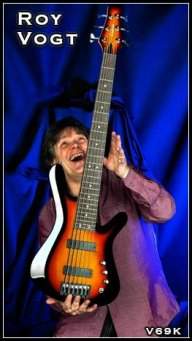

I like this. Sounds like lots o' fun. I might not BE that guy, but I sure as hell KNOW that guy.
 
I do my "Roy" thing on two basses, a fretted Carvin Icon 6 and a fretless Carvin Claro Walnut LB76.
Everything else is for my "sideman/hired gun/session rat" thing where I think the more tones/colors/vibes you can bring to a project the better.
IMHO, it depends on what kind of player you are and what you want to do with it. Jaco was pretty much married to two Jazz Basses, Brian Bromberg basically plays iterations of his personal design, Stanley has his short-scale Alembics, etc. There's a good argument for an Artist to use one bass to create a personal sound and to really get close to.
It's a little different as a session player. A lot of session guys I know will bring several instruments to a recording session (I typically bring at least 3 plus 2 uprights-acoustic and electric) because you never know what will work. At the end of the day I may need to sound like someone who has played Rock, Country, Southern Gospel, Black/Urban Gospel, Bluegrass or Jazz like that's all he has done all his life so I'm not sounding like me anymore. I like what Joe Osborne said about this type of work, he said it's a "service occupation". Of course, it's a little more complicated 50 years later. When he started he just needed his Jazz Bass, a pick, and those really old Labella flats.
 
So I was talking to a few very skilled bassists the other day (one of them records for esperanza spalding!) and they both said you Shouldn't have more than one bass. The exception being if you play a fretless and a fretted.

The logic behind it is if you play more than one bass you'll never be amazing at playing one of them. You should get to be "best friends" per say with your main bass and the better you know it the better you'll play.

I countered this with "But victor wooten playes like a billion different fodera's including 6 strings and fretless" (I know his fretless isn't fodera) the reply was "Yes, but he only does the vic thing on his 4 string"
Another point brought up is people like Justin Raines. He has 2 basses, but there both MTD's and probably setup identically.

So my question is this. Does having more than one bass hinder your playing. If you have 2 basses should they be of the same builder or brand?

I know there are alot of one bass threads, but I couldn't find one like this

You make a good point, but your reasoning is flawed. If you know theory and the fretboard, it wont really matter what bass you play. The people you mentioned all have multiple basses but for shows or gigs, they play the basses and equipment they endorse. Also they play the things they are MOST comfortable with. That doesn't mean that Marcus, Victor,Stanley (or insert name here) couldn't do the same thing on other basses because they can, I've seen them do it. But if you endorse a certain brand, you can have that endorsement yanked if they see you on stage with something else.
 
I have a shedload of basses. I have been playing since 1975. The number of basses is just
nothing to do with my ability. It's all to do with keeping the old ones when I buy new ones.

The idea that knowing one bass inside out makes you play any better is crap. I can pick up
any of my 4-string basses and there is very little difference in how I play any of them.
The exceptions to that are when I pick up a 5-string, a fretless or an 8 or 12 string bass.
 
. But if you endorse a certain brand, you can have that endorsement yanked if they see you on stage with something else.

Admittedly, I have less visibility than those guys, but my endorsements are not of the "exclusive" variety. Everyone I have agreements with know they are not exclusive and they are cool with it.
That being said, I have seen Vic play my 1992 Carvin LB76 and sound just like Vic, so you're right in that regard. I think everyone does tend to go to their comfort zone. I'm playing the Carvins more because they're lighter and seem to have "my sound" in them. I wouldn't be honest if I didn't say that they've been an incredibly supportive company to work with and I try to promote them whenever possible as a way of saying thanks.
 
I do think there's something to familiarity - think of players like Eric Clapton or BB King whose voice is the result of so many years on a single instrument that speaks for them. Basswise, perhaps there's more variety, but Jack Bruce, Jack Casady, Phil Lesh, and a few others come to mind. Of course they've used a variety of instruments over their whole career, but which instrument's tone do people think of when speaking of that artist's "sound"? Usually it's a particular instrument.

Just a small quibble with this. Other than using "Blackie" from about '77 to '87, Clapton's used a ton of different guitars over his career. In fact, some people still resent him using an Eric Clapton Signature Strat for the Cream reunions and feel he should have pretended the intervening 35 years never happened...

B. B. King's used a LOT of different ES-355 until Gibson made his signature Lucille guitars in the '80s. And even at that, he's had a lot of different Lucilles.

John
 
Your friend's argument doesn't justify having just one bass, it justifies having a main bass; which everyone does.
You have hit the NAIL on the HEAD - thats exactly the point, from my perspective. I have lots of gear, but I definately play a MAIN BASS, thats what I'm comfortable with, thats what my fingers naturally work well with, and so thats what I would (Shoud) play as a first "go to" bass.

Well described !

Rob
 
I currently own only 1 bass: a MIM Fender P, which I'm very happy with. Recently I've been thinking of saving to get a Modern Player Jaguar because of the thinner neck. My theory is that my P-Bass would be my main axe, and I would use the Jag for live performances ie: the thinner neck would be faster and easier to play. So in short, practicing on something "difficult" to play, preforming on something "easy" to play.
 
I currently own only 1 bass: a MIM Fender P, which I'm very happy with. Recently I've been thinking of saving to get a Modern Player Jaguar because of the thinner neck. My theory is that my P-Bass would be my main axe, and I would use the Jag for live performances ie: the thinner neck would be faster and easier to play. So in short, practicing on something "difficult" to play, preforming on something "easy" to play.

I said the exact same thing when I got my Jazz. The P Collects dust now.
 
You have hit the NAIL on the HEAD - thats exactly the point, from my perspective. I have lots of gear, but I definately play a MAIN BASS, thats what I'm comfortable with, thats what my fingers naturally work well with, and so thats what I would (Shoud) play as a first "go to" bass.

Well described !

Rob

I do the "main bass" thing too, but the point is *does it make you a better bassist*? From my experience, no, because when I've had to I've played gigs on "other" basses and my playing didn't suffer at all.

So while this may be a natural tendency, it does not seem to me to follow that this is a useful way to get better. Perhaps the opposite is actually true: if we all always stretched our comfort zones playing on many different basses maybe that would make us all better players?
 
I do the "main bass" thing too, but the point is *does it make you a better bassist*? From my experience, no, because when I've had to I've played gigs on "other" basses and my playing didn't suffer at all.

So while this may be a natural tendency, it does not seem to me to follow that this is a useful way to get better. Perhaps the opposite is actually true: if we all always stretched our comfort zones playing on many different basses maybe that would make us all better players?


Absolutely. I played on one great bass (an Alembic Spoiler I got for ridiculously cheap) for years. I got used to the way it felt and the fact that the action was way better and the resonance more even than any Fender. At jams where I picked up somebody else's bass I felt like 80% of my technique was missing. I also notice that different basses inspire me to play differently, especially when improvising.

I now like to alternate between J, P, and modernist type necks, as well as flats, rounds, fingers, pick, etc. It makes me a better and more flexible player.
 
i've played bass since 73 ... piano/keys since 65 ...


different bass for different job/sound ...

5 string tuned B-G active

5 string tuned E-C active

4 string w/flats / passive


plus whatever other bass type sound i might want on keys ..


just depends on what you wanna do ... !
 
My first reaction to the OP was simply "hogwash". But then I thought of a perspective: Skilled woodworkers can produce many beautiful objects, but all are dependent on a unique set of tools to make certain products. Similarly, I don't believe for a minute that a bass player's skill level is determined by the number or even the type of bass played, but the end products can certainly be shaped by their choice of basses & techniques. In that respect the OP's point contains a certain logic: if you only want a set of variations on one musical product, you'll only need one musical tool. As has been pointed out already, more tools make more products possible.
 
IMO its mainly hobby players and anyone frequenting TB mostly collectors, and tinkerers of bass. You need a main bass that you know in your sleep, that the thoughts from your brain are transfered effortlessly without thinking straight to your hands. I player a Fender P (50's style) and Jazz. Two very different necks but I know them all so well. How, to setup, tone, where on the neck or body to play like a wife, you only need one.

Bass players like most people love a little variety in life but usually end up with one,

Most people on this site are searchers and usually the last place they look is inside themselves. My tone comes from me, how I play and adjust my bass and amp. Most of the famous players you know are so for their playing and mostli for one model or type of bass.
 
I do my "Roy" thing on two basses, a fretted Carvin Icon 6 and a fretless Carvin Claro Walnut LB76.
Everything else is for my "sideman/hired gun/session rat" thing where I think the more tones/colors/vibes you can bring to a project the better.
IMHO, it depends on what kind of player you are and what you want to do with it. Jaco was pretty much married to two Jazz Basses, Brian Bromberg basically plays iterations of his personal design, Stanley has his short-scale Alembics, etc. There's a good argument for an Artist to use one bass to create a personal sound and to really get close to.
It's a little different as a session player. A lot of session guys I know will bring several instruments to a recording session (I typically bring at least 3 plus 2 uprights-acoustic and electric) because you never know what will work. At the end of the day I may need to sound like someone who has played Rock, Country, Southern Gospel, Black/Urban Gospel, Bluegrass or Jazz like that's all he has done all his life so I'm not sounding like me anymore. I like what Joe Osborne said about this type of work, he said it's a "service occupation". Of course, it's a little more complicated 50 years later. When he started he just needed his Jazz Bass, a pick, and those really old Labella flats.

Thread. This is far and away the most sensible answer to the question.