• TalkBass has been independent since 1998. Add your voice.
    Create a free account to reply to discussions, view embedded media, and browse with fewer display ads.
    Join freeLog in
    Want zero display ads or expanded classifieds tools? Compare plans.

More important - bass or amp?

Which is more important?

  • The bass

    Votes: 114 33.6%
  • The amp

    Votes: 133 39.2%
  • They are equally important

    Votes: 92 27.1%

  • Total voters
    339
Bass. Amp is useless live on big stages. Any good DI after your own pedalboard does the work. Amp only matters in bar gigs. The sound engineer will make his own equalization in the mix, so being an amp on stage or not, as long as you're plugged in into the DI, it's not making a difference.

As long you have good stage monitors or ear plugs an amp will be utterly useless. Or if you want to be precise, bass cabs will be useless, unless you are miking the cabs, wich NO ONE does in bass. The signal is allways from the DI, so, The BASS and/or youre pedals are a lot more important

Any doubt watch this two videos:


Production of basses are really good these days,, so even a cheap bass tends to be really stable and sound pretty decent.. Most amps today utilize class D technology so you can get a lot of power (+300W) for a low price.. Preamps are often pretty flexible with active 4 band EQ, or 3 band EQ with sweepable mid frequency so you can tailor the sound to a great extent.

So I would actually say that cab matters most,, Crappy build cab, ported with a weird tuning (bad Thiele parameters) creating unbalanced response in the 50Hz-200Hz region. You can get a big boomy peak which is impossible to dial out without an external EQ, as most EQ controls on bass amps seem to be centered at a low 40Hz to 60Hz, with a parametric midrange controls or low mids starting at 220Hz-250Hz..

15" long excursion driver with a piezo horn.. Big hole in the 1.4-3.5kHz region due to lack of dispersion from that "subwoofer" 15". You will not hear those harmonics
 
So I would actually say that cab matters most,, Crappy build cab, ported with a weird tuning (bad Thiele parameters) creating unbalanced response in the 50Hz-200Hz region. You can get a big boomy peak which is impossible to dial out without an external EQ, as most EQ controls on bass amps seem to be centered at a low 40Hz to 60Hz, with a parametric midrange controls or low mids starting at 220Hz-250Hz..

If your signal is going through the DI to the front end of the stage and the sound engineer is goint to make the final mix, no one is going to ear the cab sound, so who cares about that?

That's only important when your miking the cabs, live or recording. If not, you could just plug your bass in the DI, no amp, no cab. If you want to color the signal, use a preamp, Darkglass or MXR.

So, bass, not amp.
 
Let's assume that you're in a gig where you need both a bass and an amp - no going direct or supplied backline. Which is more important? I say the amp, even though I've obsessed over basses for the longest time. I came to the realization that a $300 bass through a $2000 amp is going to sound better than a $2000 bass through a $300 amp. Now, in a perfect world where you can have the best of everything, a $2000 bass through a $2000 amp will sound the best. But when you're starting out, I think it's more important to put the money into the amp if you have a bass that isn't getting in the way of your playing. Maybe this is more of a acknowledgement that cheap basses are infinitely better than 20 years ago.
i agree with all this provided the $300 bass has the right feel. a crappy feeling bass is tough to make sound good. for me.
 
If your signal is going through the DI to the front end of the stage and the sound engineer is goint to make the final mix, no one is going to ear the cab sound, so who cares about that?

That's only important when your miking the cabs, live or recording. If not, you could just plug your bass in the DI, no amp, no cab. If you want to color the signal, use a preamp, Darkglass or MXR.

So, bass, not amp.
You are right for stage use...
But I was more thinking in terms of playing with you band in the rehersal room not using PA for amplifiying any thing else than vocals.. There a bad designed cab can give you a lot of trouble trying to dial in or out frequencies..
 
  • Like
Reactions: rodv66
From my point of view:

- If you are going to play at "big" stages, definitly the bass!

- If you are going to play at home or in small places, the amp!

Although I don´t feel the quality of the amps has increased well over time, I think the quality of basses have increased well.

but hey...just my opinion
 
The eternal question... There is a lot to be said about having an instrument that you are comfortable with. If you're not comfortable playing it, then you won't be comfortable with your playing. The neck and body have to be just so. The weight plays it's role, especially if it effects the on strap balance. How and where it hangs on your strap will also effect how you play. These will all effect your choice of instrument before how it sounds comes into the equation, though it is a big part of the equation.

We've all been on the buying better gear merry-go-round. Buy something better, become unhappy with something else, replace that and then become unhappy with something else, read reviews of the latest gear, etc. etc. etc. Always chasing something the next thing or whatever, succumbing to GAS, constantly chopping & changing equipment, never really working with & refining your sound. Some of us are lucky and can afford multiple instruments, some of us have to make do with one.

As has been said, a relatively inexpensive guitar through a well made amp & cab will sound great, where an expensive guitar through a cheap amp will sound, well, cheap.

It is kind of a moot point these days, however, as you really can gig with a good guitar and a good pre-amp, especially now that modeling technology has moved on in leaps and bounds.

Play what you are comfortable with and what you can comfortably afford.
 
You don't wear the amp do you? The amp isn't what is "out of tune" or out of intonation. You have to understand that the bass is the ERGONOMIC thing. You move the amp only twice, from and to gig. And then you let it go. You don't wear the amp. Would kill your back first time you tried.

I am the only one who thinks that electric bass and amp is an - and one - instrument altogether and is not separated from each other. It's an instrument you play ON as a whole. Just the same as electric guitarists, playing with feedback, and distortion and so on. The electrig guitar/bass can't produce distortion on it's own so to speak. It's just acoustic in nature, and if a solid body, a very very weak acoustic in that case. I tie it all in. One thing is NOT complete without the other. The amp makes no sound of its own. The bass doesn't that too. On its own. You have to PLAY it and actively and physically touch/pluck it so you have movement starting. None of these things makes any sound of their own.

It's one instrument = bass + amp/cab. Just because it's divided with a cable doesn't mean it's a different instrument. They're divided because you won't be able to wear it while playing. It would be extremely cumbersome, totally unergonomic, and you will have a slipped disc in your back in a few seconds. It's ONE instrument. Think of the cable as the "5 th string" provided you have 4 string bass. Or if you have any multistringed bass, it's THE extra string. While you don't have to pluck it, it's crucial for you to have the sound. Some people using wireless, but still. Somewhere along the line is that very short and small cable anyway. The cabs construction, wood contributes to the sound immensely. Crucial even. People gets hung up with that they should be divided and you can use the amp to many different basses, or even different electric instruments (keyboards, guitars, etc). It's an electric instrument. And you have to use electric means to get it heard, whatever that is.

It's one instrument.

A Hammond B3 can't sound at all if not given speakers (need not be rotating Leslie cabs) and power amps to produce any notes. Regardless of built in units, or external amps. It's needed. Without either of them : No sound at all.

I voted equally important. Since you're only as strong as the weakest link in the chain.

And since these days, most bassist goes direct with electronic DI boxes, and rack effects, there's STILL a power amp and or PA at the end of the line. The "amp/cab" so to speak. Still one instrument.
 
  • Like
Reactions: M.R. Ogle
Also there are more people relying on rented back line, requiring this or that. They rely on the brand and amp/cab configuration. Have yet to see anyone rent a bass as part of a backine, and expect it to play good from the get go. Bass is the one that touches your fingers, and you wear it. Amps have no neck dive or dead spots, they only magnify the dead spots.... ;) People brings their basses on tour, but hires backline. "Amp du Jour" as it is called.;)
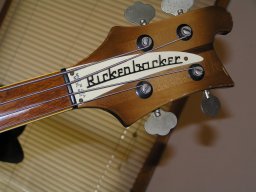
 
I didn't read the circumstances, in that circumstance, of course the amp//rig is much more important, it Must rule, and these days a cheep bass can be excellent. Generally though, as you develop as a bass player your instrument is the whole point, it's what you play. You can always BUY a great amp/speakers (or another bass), but the bass is a musical instrument and the amp aint, it's a machine who's business we don't touch. I prefer bringing the bass to various great amps that are just sitting there already set up, but that isn't always possible.
 
Amp, hands down. With a good amp, you've got all shades of gain, EQ, and other parameters to fix or enhance the sound of the bass. With a $2k amp rig, you should be able to make almost anything sound tolerable. Cheap amp though? You could put a $20k Fodera through a cruddy amp and it is going to sound bad regardless.
 
The most important function an amp has to provide is ample usable power. If it has that, the tone can usually be manipulated into something pleasant enough to carry you through a night's work. Basses must be playable and reliable enough for you to comfortably manage through four hours of classic rock, jazz, country, pop and Mustang Sally. Face it, unless you own a real piece of junk for an amp, you don't even give it a second thought once the curtain goes up. Your bass, however, is right there in your hands all night long. If something isn't working right with that, you can't forget it or ignore it, because you're holding the damn thing. Both are important for a successful show, but the bass is what is the main conduit.