
I like my necks like I like my women. Long, dark with 20 frets and dot inlays.Not sure what this thread is trying to say. Is GC a racist music shop? But then surely they'd have white necks and rednecks?

Enjoy the benefits of a premium membership!
Upgrade Account
-
TalkBass has been independent since 1998. Add your voice.
Create a free account to reply to discussions, view embedded media, and browse with fewer display ads.
Join free Log in
Want zero display ads or expanded classifieds tools? Compare plans.
You are using an out of date browser. It may not display this or other websites correctly.
You should upgrade or use an alternative browser.
You should upgrade or use an alternative browser.
Must be a G.C. thing.
- Thread starter SteffanB
- Start date
More options
Who Replied?
Guess I have freaky maple necks that are darker than toilet bowl white.I remember when the very first "MIM" Fenders came out (early-90s sometime?) that it was striking how white and plain their necks all were. EVERY. SINGLE. ONE...

ok, i played = i googled "albino agreement" --- i got nuthin'....got a link? thanks.It totally is a thing. Guitar Center's purchase agreement with Fender is that they'll buy the least desirable, most bland looking necks Fender produces. It's called the "Albino Agreement". Google it. It's a crazy good deal for Guitar Center cos they get them cheaper, and Fender can offload the less desirable products, rather than destroying them.
He was making a "funny" joke on my post about how maple necks are bleach white.ok, i played = i googled "albino agreement" --- i got nuthin'....got a link? thanks.


IME the rednecks are a regional thing.Not sure what this thread is trying to say. Is GC a racist music shop? But then surely they'd have white necks and rednecks?


I broke my selfie stick riding a bird scooter on the way to a vegan cupcake bakery.
I'm liking this guy, already... for the answer, mainly.
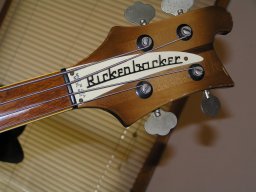
If you put one right next to Larry Graham's Moon it'll look normal. 

GC is very hygienic. They wipe down the necks with bleach each night to remove the day's worth of human debris accumulated by time wasting riff-raff.

It's entirely a result of the lack of knowledge and training at GC. None of them know what color necks are supposed to be. What color are necks supposed to be?
You joke, but I once heard a GC employee ask another GC employee, completely without irony, "Is this maple or rosewood?" He was holding a Strat with, yes, a maple board. The second employee told him it was, indeed, maple.
I've had good experiences at GC, but then my expectations are low.


So, I drove to a store about 40 miles away that had one of these awful looking AO 50’s in stock. After playing the guitar for a few minutes I made my decision. Most of the people whining about the lighter colored neck had never played one of these guitars. Me, I loved how it played and walked out the door with one. That was over a year ago. I never once obsessed over the light colored maple neck.

I have a Performer Precision that I just bought. When I got it, I was pretty surprised at just how lightly colored the neck is, but it plays great and so far the neck seems completely stable. I think it looks lighter in person than this picture, and clearly it didn't come from GC.



I'm liking this guy, already... for the answer, mainly.
He won the internet!

This thread prompted me to check the grain in the neck on some of my basses. Most of them have grain showing that identifies them as not having the desirable straight grain mentioned in this very interesting post (I deeply appreciate the gent who went to so much trouble to post this):Sizing up a Neck - quality evaluation
So most of my basses have the less desirable grain pattern indicating they are not Ideal and yet they are all stable. I own not one unstable neck. I find it interesting that the only production basses I own that have straight grain in the neck are my Peavey Forum (not only straight grain but two pieces of straight grain maple joined together for added stability) and my Ibanez GWB 205 fretless.
While it makes sense that a neck made from straight grain maple will be the most stable and have less tendency to twist, my experience tells me that it is sometimes simply bad luck to get a neck that is unstable. I once ordered a Carvin 6 that had straight grain in the once piece maple neck and it was so unstable that Carvin replaced the bass.
However, with all that said, I played an outside gig Saturday night and live in hot and humid Texas. I played my G.Gould ggi5 not only because it is a great sounding bass but also because I would not have to worry about the graphite neck moving.
So most of my basses have the less desirable grain pattern indicating they are not Ideal and yet they are all stable. I own not one unstable neck. I find it interesting that the only production basses I own that have straight grain in the neck are my Peavey Forum (not only straight grain but two pieces of straight grain maple joined together for added stability) and my Ibanez GWB 205 fretless.
While it makes sense that a neck made from straight grain maple will be the most stable and have less tendency to twist, my experience tells me that it is sometimes simply bad luck to get a neck that is unstable. I once ordered a Carvin 6 that had straight grain in the once piece maple neck and it was so unstable that Carvin replaced the bass.
However, with all that said, I played an outside gig Saturday night and live in hot and humid Texas. I played my G.Gould ggi5 not only because it is a great sounding bass but also because I would not have to worry about the graphite neck moving.



I’ve never been inside a GC but I did buy a bass from them online. The rosewood fretboard was lighter than I expected.

I blame Gibson’s quality control.
Unfair.
None of this would happen if Rickenbacker stopped being mean ******** and offered a $400 budget line made in Taiwan.


