• TalkBass has been independent since 1998. Add your voice.
    Create a free account to reply to discussions, view embedded media, and browse with fewer display ads.
    Join freeLog in
    Want zero display ads or expanded classifieds tools? Compare plans.

Muting 4th string issue

I have been playing for years, mainly oldies. I recently noticed I am not muting the 4th string like I used to. Like I lost the habit or technique of muting. I play a fixed thumb style. Thumb rests on a thumb rest or pickup. Been trying to keep thumb on 4th but I also play 5 string. On it, my thumb rests on the 5th. On a 4 the thumb rest is the “5th” .. What is your technique?
 
I have been playing for years, mainly oldies. I recently noticed I am not muting the 4th string like I used to. Like I lost the habit or technique of muting. I play a fixed thumb style. Thumb rests on a thumb rest or pickup. Been trying to keep thumb on 4th but I also play 5 string. On it, my thumb rests on the 5th. On a 4 the thumb rest is the “5th” .. What is your technique?
My thumb floats. I only have problems with 5 strings. And only when playing the G string
 
Best picture I could get. In this position, I’m playing on the G string my ring finger and pinky help mute the A and E strings and the back of my thumb towards my hand is more or less resting on the B string keeping it quiet. For the most part, my hand stays in this position up or down the strings depending on what string I’m playing. I guess it’s a bit of a hybrid floating thumb muting technique, but it just felt like the comfortable and logical thing to do once I switched to 5s back in ‘99.
9C770EC2-F444-4C36-A82F-316C3DABE31F.jpeg
 
  • Like
Reactions: Mister_argentum
Been working on it. Old habit is hard to break. Any tips? Good YouTube to suggest ?

Not really. I just started doing it organically rather than learning from any given source, defined method or individual player. There was no YouTube back then, and I don't even think it had even been codified as a method or technique. It is unlikely that I follow any modern codification of the technique, and I've never tried to codify or de-construct how I do it - it just happens. Best I can do is offer a few pictures that you might be able to get something from...

1 - Over the Bridge - hand and forearm are free, just touching the face with no pressure, just a tactile reference.
20210725_154620.jpg


2 - Over the Fingerboard - as before, no pressure, just lightest contact.
20210725_154556.jpg


3 - Playing III whilst muting IV
20201030_095132.jpg


4 - Muting II, II and IV, playing IV
20201030_095138.jpg


5 - Forearm resting on the upper cutaway, palm touching the front face
20210725_154439.jpg


6 - A close up, playing II and muting III and IV
20211207_174722.jpg


7 - "The Archaeological Record" (from '88/'89)
20180523_053148.jpg
 
Not really. I just started doing it organically rather than learning from any given source, defined method or individual player. There was no YouTube back then, and I don't even think it had even been codified as a method or technique. It is unlikely that I follow any modern codification of the technique, and I've never tried to codify or de-construct how I do it - it just happens. Best I can do is offer a few pictures that you might be able to get something from...

1 - Over the Bridge - hand and forearm are free, just touching the face with no pressure, just a tactile reference.
View attachment 4796042

2 - Over the Fingerboard - as before, no pressure, just lightest contact.
View attachment 4796041

3 - Playing III whilst muting IV
View attachment 4796043

4 - Muting II, II and IV, playing IV
View attachment 4796044

5 - Forearm resting on the upper cutaway, palm touching the front face
View attachment 4796046

6 - A close up, playing II and muting III and IV
View attachment 4796047

7 - "The Archaeological Record" (from '88/'89)
View attachment 4796048
Dumb question, what is your anchor point or the idea is to play without one?
 
Been working on it. Old habit is hard to break. Any tips? Good YouTube to suggest ?
The best way to break old habits is to replace them with new ones.
Figure out a solo practice song that “requires” you to play floating thumb. Work that into your practice rotation and floating thumb will become part of your technique.
No need to beat yourself up over “old habits.”
We use the tools we use to get the job done. If you want to learn how to use a new tool, just do a job that requires it.
 
  • Like
Reactions: SteveCS
Younger brother visited a week or so back, he never has played a guitar of any kind, had to show him the thumb on the pickup technique for leverage. 4 string short scale bass, I've thought about adding the thumb rest since I'm also a beginner at bass guitar for finger style. I also use a pick enough, that's what keeps me from putting the thumb rest on it.
 
I have been playing for years, mainly oldies. I recently noticed I am not muting the 4th string like I used to. Like I lost the habit or technique of muting. I play a fixed thumb style. Thumb rests on a thumb rest or pickup. Been trying to keep thumb on 4th but I also play 5 string. On it, my thumb rests on the 5th. On a 4 the thumb rest is the “5th” .. What is your technique?
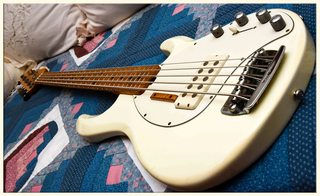
I used to do the same thing, I even had thumb rests made and installed on my MM SR5's.
CuW3cJxm.jpg
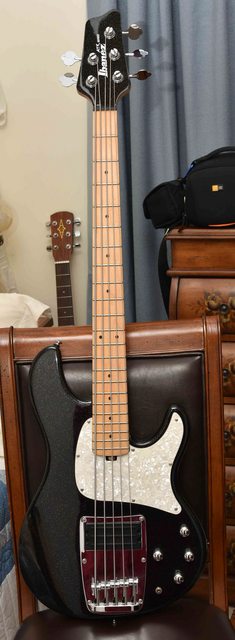
Then on day I played and bought an Ibanez ATK 305.
N22ye2kl.jpg
No place for a thumb rest without really compromising the look of the bass. So I changed to what they call the "floating thumb". With it your thumb lays on all the strings below the one you are plucking. You move your thumb across the lower strings as you play. You are always muting the lower strings. It will feel weird for a while but it is all I do these days and it makes switching basses a little easier.
 
Last edited by a moderator:
  • Like
Reactions: Element Zero
Dumb question, what is your anchor point or the idea is to play without one?
There are three basic finger plucking techniques:
1. The traditional "anchored thumb". You keep your thumb in a fixed position (like on the top of the pup). Requires a lot of fretting hand muting techniques or the use of ring/pinky on plucking hand mute the top strings. It's not the best technique, but it's what I use most.

2. The "movable anchor". As shown in the @Element Zero post.
This takes some getting used to, but is a pretty established technique. I've started working this out for me because I have a couple specific songs that I have trouble muting with my standard.

3. The "floating thumb", As shown by the @SteveCS post.
IMO, this is probably the best technique - but it won't work for everyone. My thumb has too much contour to it mute multiple strings at once. I turns into a floating-movable mute situation for me an is way too complicate for me to manage. This method creates a much softer plucking approach because you don't have the leverage created by the anchor and is a great asset to have.

I'm sure their are variations on each of these basic approaches. I'd advise that you spend some time with each technique and figure you which fits you best. It's good to have them all at your disposal. While you may play 95% of your stuff using your primary technique, you'll find situations where a different technique makes it easier - it you have the technique worked out a bit. Just like everything else, there is no "one size fits all".
 
...
for leverage.
...

Leverage for what? We are playing the bass guitar, not cocking a crossbow or hanging a suspension bridge :) Joking aside, the anchor is for stability and provides a position reference. Whilst it is true that floating thumb encourages a lighter touch (and certainly opens up greater variety in articulation), there is plenty of power on tap once the technique is fully developed.

YMMV
 
  • Like
Reactions: 12BitSlab

Latest posts