I'm a life long sufferer of Ankylosing Spondylitis, the same thing Mick Mars (guitarist from Motley Crue) lives with. I was diagnosed as a teenager. It causes painful inflammation of spinal and hip joints but is generally painful everywhere in the body. I am on some good meds for it, and have led a mostly normal life, but it flares up occasionally and I've had to make some adjustments to keep playing bass. One of the biggest adjustments is the type of basses I play. I've been playing bass since I was 20 and I'm 40 now. Younger than a lot of you by years, but physically similar in a lot of ways.
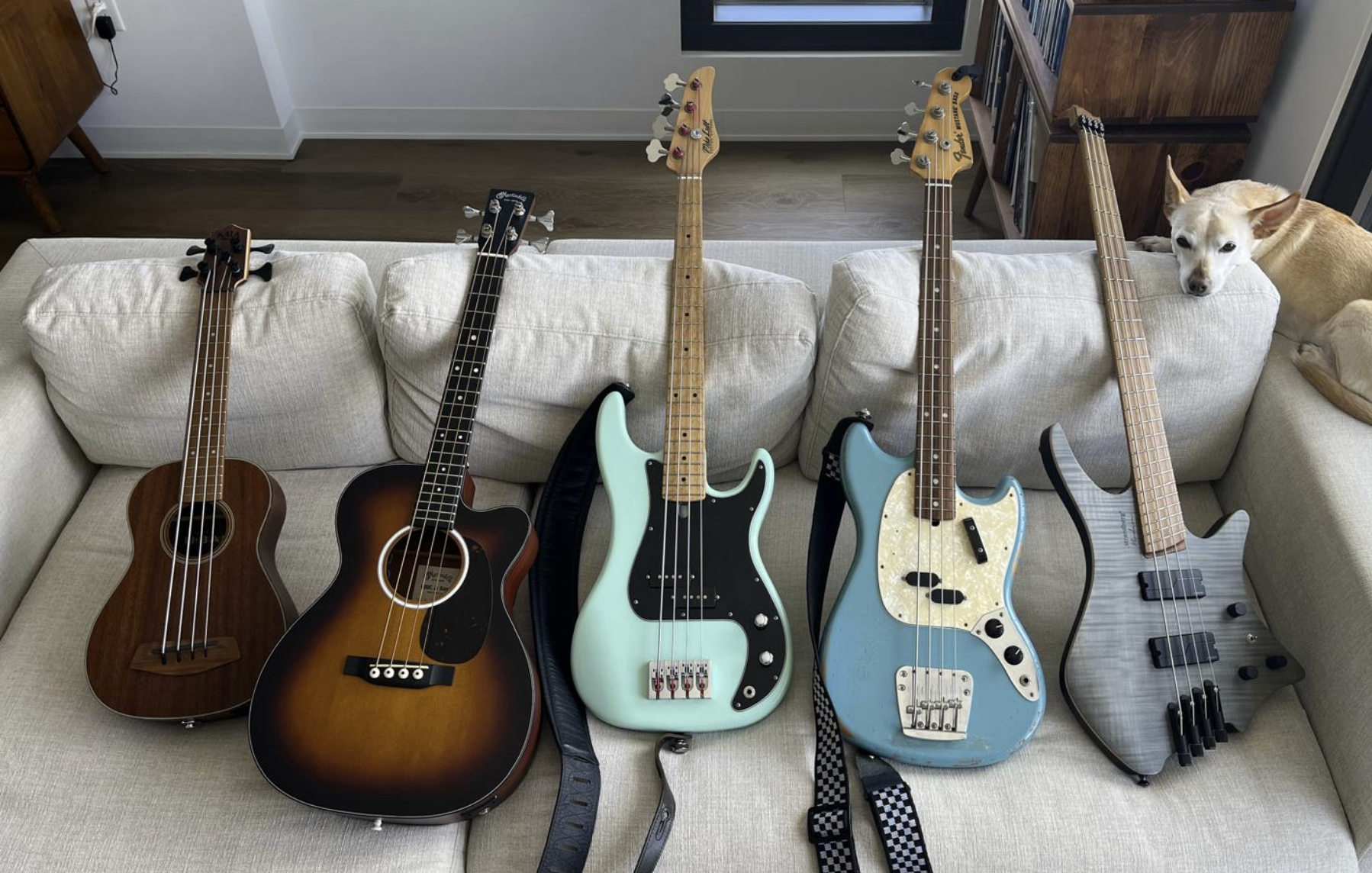
Left to right (year acquired): Kala U-Bass (2018), Martin 000C Jr Bass (2025), Mike Lull P430 (2020), Fender Mustang JMJ (2019), Strandberg Boden (2025) and Ms. Roxy (2015)
Prior to 2019, I played normal long scale basses. I had a passive P and J and it was all I ever needed. I played 3-4 hour bar gigs with a cover band. The only adjustments I made in my 30s was lighter weight cabs.
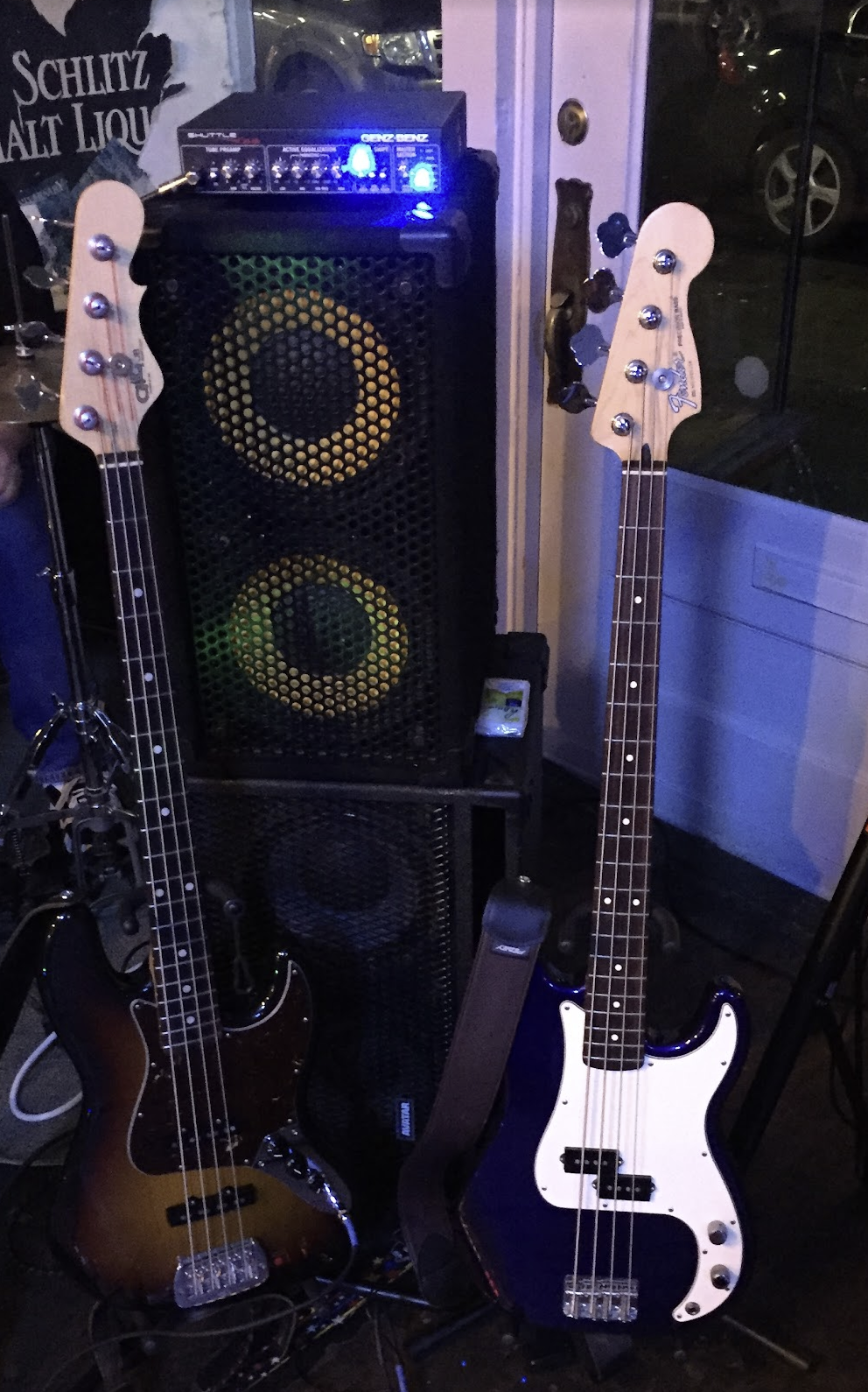
(my G&L JB and Fender P bass at a bar gig - Markbass and Avatar cabinet and Genz Benz Shuttle 9.0 - I still own the Shuttle 9.0, sold the rest)
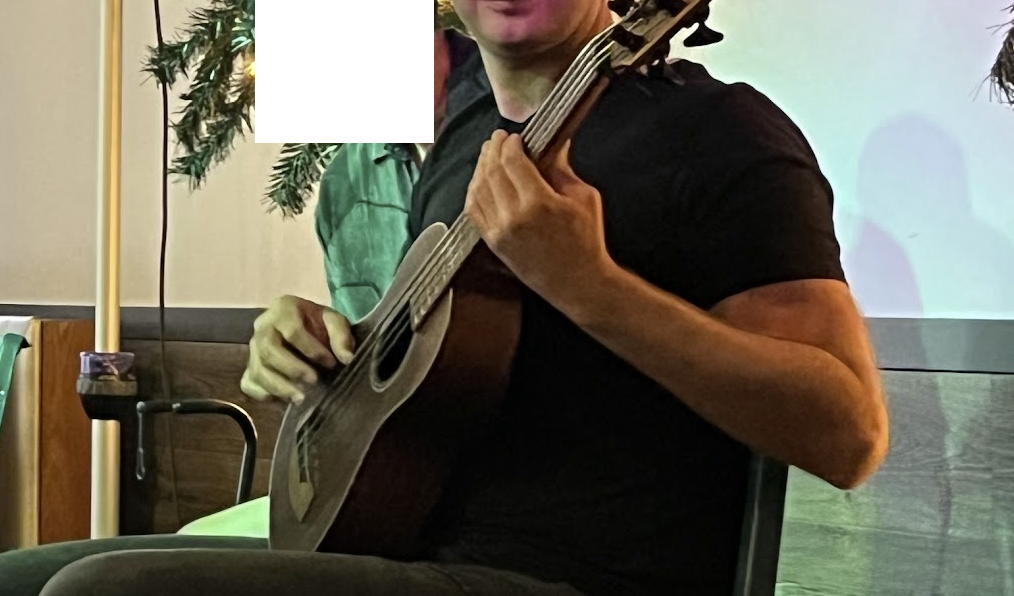
In 2018 I had worsening left wrist pain that wouldn't stop. I got Carpel Tunnel surgery and it helped a lot. In the end, I ended up resigning from my long time cover band because the 3-4 hour gigs were just too much for my body. I got the U-bass as a gift, and it was fun to play while I healed. It's a little too small for long term playing, especially the right hand position, but it got me recovered and playing again.
(a rare seated gig with the U-Bass)
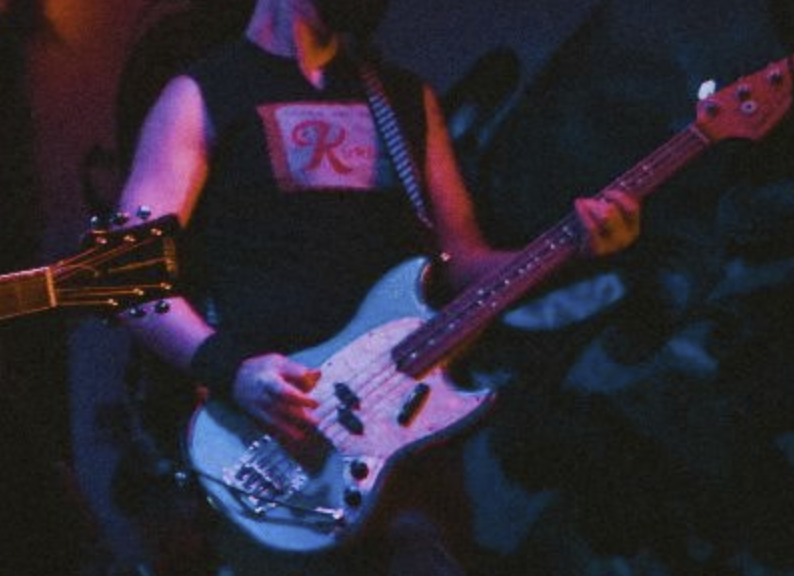
I joined an original group in 2019 that played fast walking bass lines (a ska band!) and had short sets. It was a great setup, but my wrist was still bothering me, especially playing fast runs on the first 4 frets. I decided to try a short scale bass with the JMJ. It was shockingly effective. The relief from not having to reach so far was immediate. The lighter weight kept my body less tense. The only downside was the balance of the instrument. The tiny upper horn and large headstock with heavy tuners meant neck dive. One of the key & crucial parts of my journey to pain-free playing was making sure I was never supporting the neck of my instrument with my left hand. If I'm fretting, I want to make sure the only thing touching the bass is my thumb on the back and fingertips on the fretboard. I always look to make sure I'm not making contact with the palm of my hand underneath the neck. I was able to play the Mustang a little higher up with my right elbow counter balancing the instrument. The short scale bass really saved me. I played a bunch of shows in 2019 with this instrument.
(counter balancing the Mustang at a gig, I used a thick leather strap and would rest my wrist on the body to keep some weight to help counter balance the neck dive)
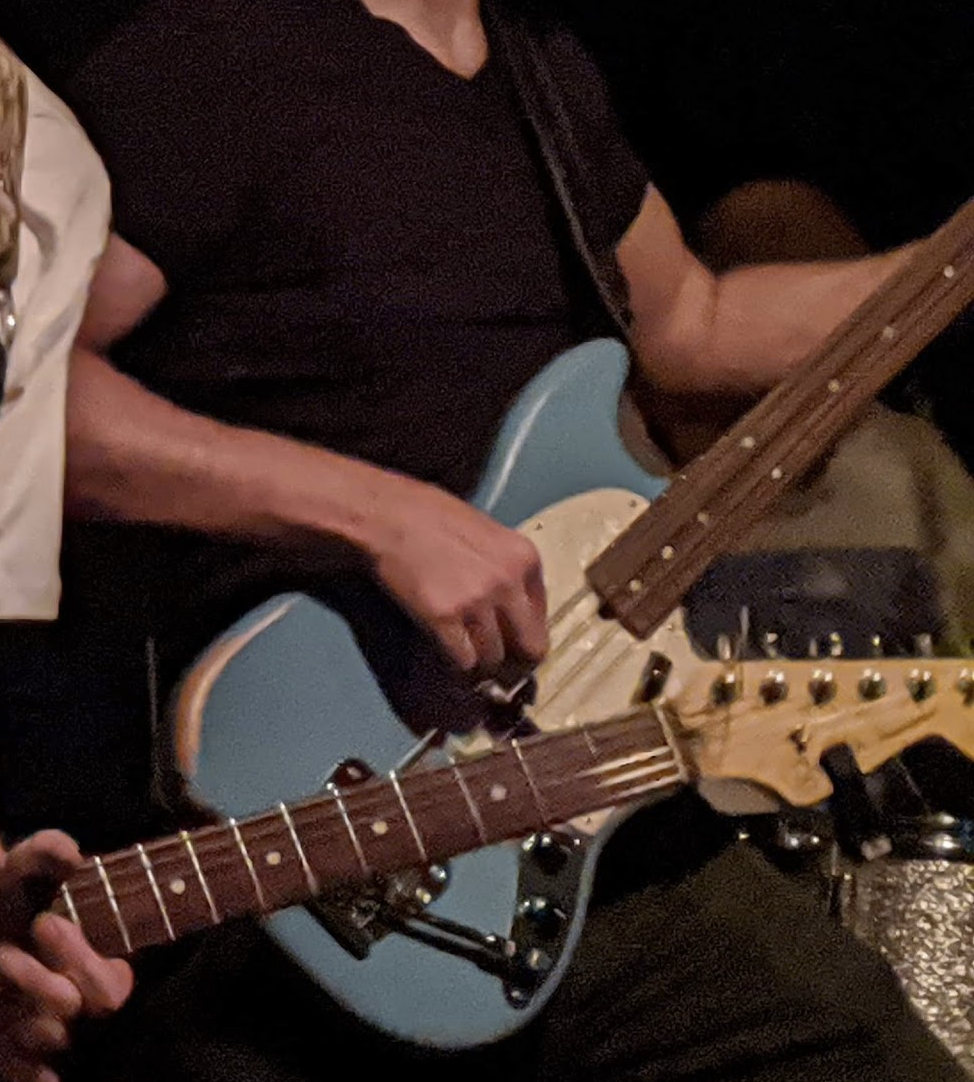
(Recent punk show with the Mustang, I find it balances much better playing with a pick as I'm already anchoring my wrist near the strings)
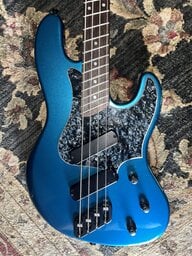
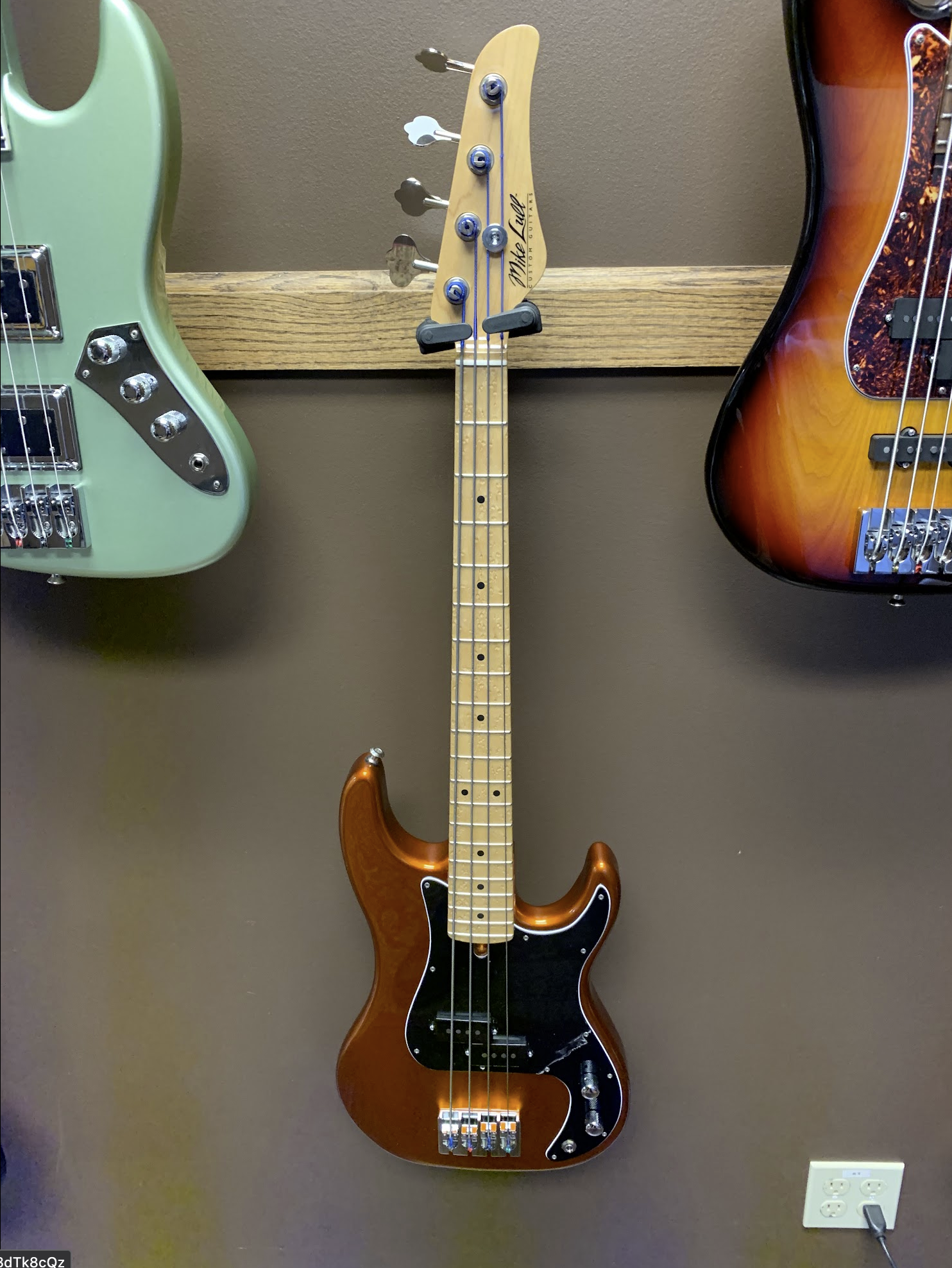
In January 2020, I was in Mike Lull's shop getting the Mustang set up in anticipation for an album release and shows with the originals band. While I was there I was mentioning the balance. Mike pointed me into his show room and encouraged me to pull an orange bass of the wall and try it. It was short scale and perfectly balanced. It felt amazing in my hands. I didn't realize there was a Mike Lull short scale, it was a pretty new addition. My Mike Lull is unique in that the holes in the back are filled in due to being drilled in the wrong location. He gave me a hefty discount for the "defect" and I ended up buying the bass, but asked if they would re-paint it. I paid for the instrument, walked out of Mike's shop. That was the last time I talked with Mike, he passed away Feb 12 2020. I picked up the bass in Surf Green later that July from Spencer Lull who had taken over the shop.
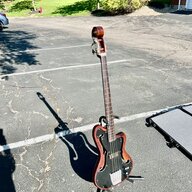
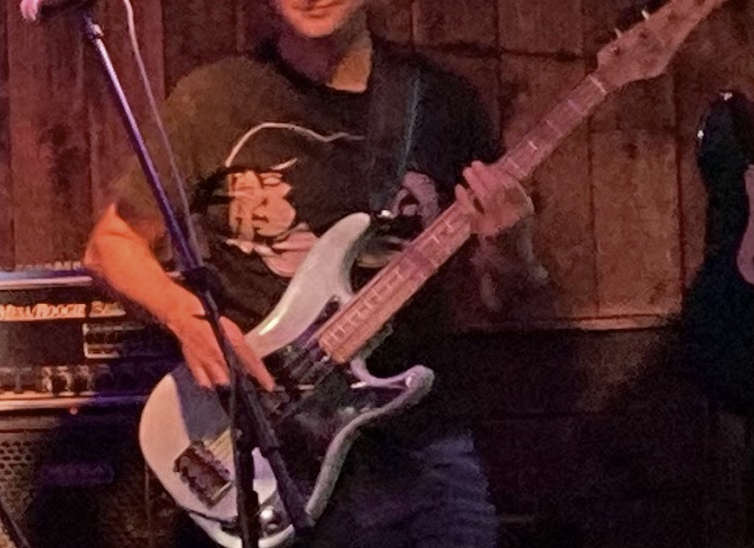
(P430 hanging in Mike's shop, pre paint job)
(P430 perfectly balanced at a show)
I sold my long scale basses a few years later. I kept trying to come back to them but every time I played them it was immediate pain. I actually prefer a longer scale for sound but for playability it just wasn't working out.
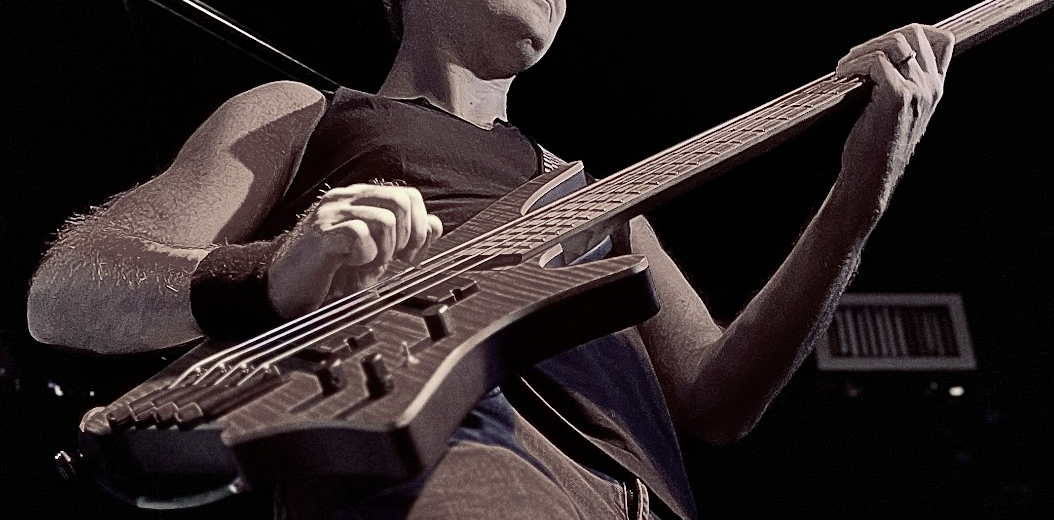
Recently, I've been playing music that doesn't really work with a passive P sound. I learned about the Strandberg Boden basses, they had an offer for a 30 day risk free trial from Reverb for their B stock instruments and thought it was worth a try, even if it's a full scale bass. The Boden has been an absolute winner so far. I don't play it sitting down, the reach to the first position still puts my wrist in a bad position, but standing I'm able to position myself for comfortable playing. The very weird trapezoidal neck is incredibly ergonomic for me. My thumb is always in the correct position. The headless design means zero neck dive. I didn't think I'd play long scale instruments again but the Strandberg has been my #1 since I got it last summer. It's the lightest of my 3 solid body basses and the sounds I can get out of it are incredible. The Mike Lull and Mustang still have their places and genres and I'm looking forward to playing them down the line in future projects.
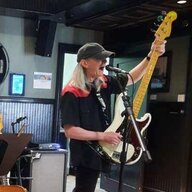
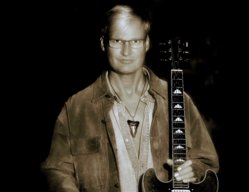
(Gig shot with the flat back of the Strandberg neck visible, my thumb anchored on the back, and yes my profile pic is tattoo'd)
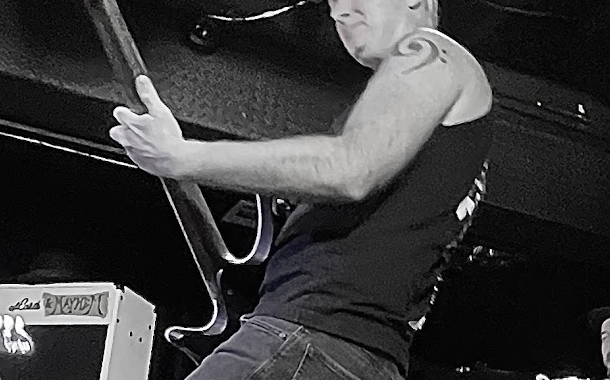
Look, ma! Long scale again!
Another thing I want to talk about is strings. The Mike Lull has TI Jazz Flats, very low tension flatwound strings. The Mustang has Ernie Ball Regular Slinkys which are usually too high tension but I have the bass tuned to D standard. Same with the Boden, I have Super Slinky strings on it tuned to D standard. Reducing the string tension was another "a-ha!" moment for me. I don't notice much difference in tone and it forces me to play with a lighter touch which in turn reduces strain.
The only bass I haven't gigged is the Martin. I hope to someday soon, it's very very comfortable as a short scale instrument. I mostly use it for unplugged solo jamming around the house. Maybe if I get into some lower energy music it'll make sense for a future project.
If you got this far, congrats. If you're suffering from ailments, don't be afraid to give up the 10 lb slab classic bass. There are incredible lightweight options these days. I will occasionally pick up a heavy classic long scale bass and appreciate the feel of a heavy resonant body but it doesn't matter if I can't play with comfort.
Left to right (year acquired): Kala U-Bass (2018), Martin 000C Jr Bass (2025), Mike Lull P430 (2020), Fender Mustang JMJ (2019), Strandberg Boden (2025) and Ms. Roxy (2015)
Prior to 2019, I played normal long scale basses. I had a passive P and J and it was all I ever needed. I played 3-4 hour bar gigs with a cover band. The only adjustments I made in my 30s was lighter weight cabs.
(my G&L JB and Fender P bass at a bar gig - Markbass and Avatar cabinet and Genz Benz Shuttle 9.0 - I still own the Shuttle 9.0, sold the rest)
In 2018 I had worsening left wrist pain that wouldn't stop. I got Carpel Tunnel surgery and it helped a lot. In the end, I ended up resigning from my long time cover band because the 3-4 hour gigs were just too much for my body. I got the U-bass as a gift, and it was fun to play while I healed. It's a little too small for long term playing, especially the right hand position, but it got me recovered and playing again.
(a rare seated gig with the U-Bass)
I joined an original group in 2019 that played fast walking bass lines (a ska band!) and had short sets. It was a great setup, but my wrist was still bothering me, especially playing fast runs on the first 4 frets. I decided to try a short scale bass with the JMJ. It was shockingly effective. The relief from not having to reach so far was immediate. The lighter weight kept my body less tense. The only downside was the balance of the instrument. The tiny upper horn and large headstock with heavy tuners meant neck dive. One of the key & crucial parts of my journey to pain-free playing was making sure I was never supporting the neck of my instrument with my left hand. If I'm fretting, I want to make sure the only thing touching the bass is my thumb on the back and fingertips on the fretboard. I always look to make sure I'm not making contact with the palm of my hand underneath the neck. I was able to play the Mustang a little higher up with my right elbow counter balancing the instrument. The short scale bass really saved me. I played a bunch of shows in 2019 with this instrument.
(counter balancing the Mustang at a gig, I used a thick leather strap and would rest my wrist on the body to keep some weight to help counter balance the neck dive)
(Recent punk show with the Mustang, I find it balances much better playing with a pick as I'm already anchoring my wrist near the strings)
In January 2020, I was in Mike Lull's shop getting the Mustang set up in anticipation for an album release and shows with the originals band. While I was there I was mentioning the balance. Mike pointed me into his show room and encouraged me to pull an orange bass of the wall and try it. It was short scale and perfectly balanced. It felt amazing in my hands. I didn't realize there was a Mike Lull short scale, it was a pretty new addition. My Mike Lull is unique in that the holes in the back are filled in due to being drilled in the wrong location. He gave me a hefty discount for the "defect" and I ended up buying the bass, but asked if they would re-paint it. I paid for the instrument, walked out of Mike's shop. That was the last time I talked with Mike, he passed away Feb 12 2020. I picked up the bass in Surf Green later that July from Spencer Lull who had taken over the shop.
(P430 hanging in Mike's shop, pre paint job)
(P430 perfectly balanced at a show)
I sold my long scale basses a few years later. I kept trying to come back to them but every time I played them it was immediate pain. I actually prefer a longer scale for sound but for playability it just wasn't working out.
Recently, I've been playing music that doesn't really work with a passive P sound. I learned about the Strandberg Boden basses, they had an offer for a 30 day risk free trial from Reverb for their B stock instruments and thought it was worth a try, even if it's a full scale bass. The Boden has been an absolute winner so far. I don't play it sitting down, the reach to the first position still puts my wrist in a bad position, but standing I'm able to position myself for comfortable playing. The very weird trapezoidal neck is incredibly ergonomic for me. My thumb is always in the correct position. The headless design means zero neck dive. I didn't think I'd play long scale instruments again but the Strandberg has been my #1 since I got it last summer. It's the lightest of my 3 solid body basses and the sounds I can get out of it are incredible. The Mike Lull and Mustang still have their places and genres and I'm looking forward to playing them down the line in future projects.
(Gig shot with the flat back of the Strandberg neck visible, my thumb anchored on the back, and yes my profile pic is tattoo'd)
Look, ma! Long scale again!
Another thing I want to talk about is strings. The Mike Lull has TI Jazz Flats, very low tension flatwound strings. The Mustang has Ernie Ball Regular Slinkys which are usually too high tension but I have the bass tuned to D standard. Same with the Boden, I have Super Slinky strings on it tuned to D standard. Reducing the string tension was another "a-ha!" moment for me. I don't notice much difference in tone and it forces me to play with a lighter touch which in turn reduces strain.
The only bass I haven't gigged is the Martin. I hope to someday soon, it's very very comfortable as a short scale instrument. I mostly use it for unplugged solo jamming around the house. Maybe if I get into some lower energy music it'll make sense for a future project.
If you got this far, congrats. If you're suffering from ailments, don't be afraid to give up the 10 lb slab classic bass. There are incredible lightweight options these days. I will occasionally pick up a heavy classic long scale bass and appreciate the feel of a heavy resonant body but it doesn't matter if I can't play with comfort.