Hi everybody.
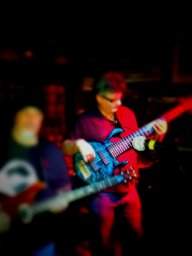
Well, words aren't enough to express my happiness (my face in the pictures doesn't reflect it but trust me: I'm incredibly happy now). After thinking so much about the right decision for a portable and powerful amp (after selling my previous, big rig), I chose the terrific MoMark concept from MarkBass. The setup? 800W frame, T1M-HE high quality tube preamp, EQ44S-HE high quality four band semi-parametric EQ and MVVL master module.



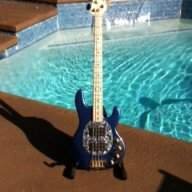
I've just assembled it and plugged my fretted Bongo in it. I'm still stunned by the power and versatility of this little amp. Of course I still need to spend more time with it, but so far here are my favorite settings for my HHP Bongo with lo-mids flat and lows, hi-mids and highs at about +1. Both piezos and magnets full (not favoring any particular pickup):

I also can say that so far I don't think I will ever use the VPF and VLE filters. From what I can hear, they do exactly what I don't like to do: Cut highs and mids. But of course, time will tell.
I'm leaving home right now and that's why this is sort of a rushed post, but anyway I couldn't wait to share my happiness with the TalkBass family. Talk to you later!
Well, words aren't enough to express my happiness (my face in the pictures doesn't reflect it but trust me: I'm incredibly happy now). After thinking so much about the right decision for a portable and powerful amp (after selling my previous, big rig), I chose the terrific MoMark concept from MarkBass. The setup? 800W frame, T1M-HE high quality tube preamp, EQ44S-HE high quality four band semi-parametric EQ and MVVL master module.
I've just assembled it and plugged my fretted Bongo in it. I'm still stunned by the power and versatility of this little amp. Of course I still need to spend more time with it, but so far here are my favorite settings for my HHP Bongo with lo-mids flat and lows, hi-mids and highs at about +1. Both piezos and magnets full (not favoring any particular pickup):
I also can say that so far I don't think I will ever use the VPF and VLE filters. From what I can hear, they do exactly what I don't like to do: Cut highs and mids. But of course, time will tell.
I'm leaving home right now and that's why this is sort of a rushed post, but anyway I couldn't wait to share my happiness with the TalkBass family. Talk to you later!