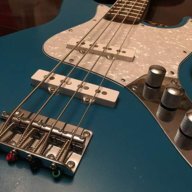
They’d better be for a more than 50% price increase over the already premium Hercules option. They do look cool though.

TalkBass has been independent since 1998. Add your voice.
Create a free account to reply to discussions, view embedded media, and browse with fewer display ads.
Join free Log in
Want zero display ads or expanded classifieds tools? Compare plans.
They’d better be for a more than 50% price increase over the already premium Hercules option. They do look cool though.

Hercules hangers are a good choice. All my stands are from them.
Somehow, your image of them reminds me of this.
View attachment 3284233
That and the fact that they lock without needing a separate band to keep them in the cradle. Those D&A hangers offer this functionality on one of their models as well.Hercules yes as they are solid and the foam doesn’t mess with nitro.

I love owls.
I don’t really get expensive stands. Hercules yes as they are solid and the foam doesn’t mess with nitro. And fancy “ornamentle” stands if you have cash to throw around... but the only way you get to beat the market now is to make something as sturdy as a Hercules but cheaper with a similar profit margin.
FWIW I’ve used nothing but Hercules for years and have never had this issue.That’s a lie, Hercules stand definitely left a huge black mark on my 69 fender jazz. I got rid of it, I use the ones that are plastic now by guitar swing I think it’s called. The black foam Hercules uses bled out.


Are you measuring the room with a reference mic?Got the monitor placement dialed in. Still a little wider than equilateral, but the convergence point is now further back. Shooting to a point 14” behind my head rather than at the back of my head (like yesterday) in the mix position was the winner. The stereo image is still very wide, but unlike the previous angle I don’t get a volume dip at phantom center. This is with a compensated -3db pan law setting in Logic. Automating a slow pan sweep of pink noise from hard left to hard right and then back resulted in an imperceptible drop or rise in response at phantom center relative to either monitor solo, which is exactly what you want.
EDIT: To be truly equilateral I would need to widen the toe angle to a point that the convergence point was an additional 20” back, making the height of the triangle 86” as opposed to the current 66”. For reference, the height of an equilateral triangle is the measurement from any angle point perpendicular to the side opposite it. Doing this made the phantom center level drop a bit, even with a 0db pan law setting, and the bass response in the room didn’t seem to change, so there was no reason to go with equilateral as an angle reference.
View attachment 3284568
Ultimately I will with my calibrated electret mic and REW. For now while I’m still setting up the room and haven’t yet got my new desk, sub, hung all the instruments, brought in the keyboard, stools, etc. I’m just using a frequency analyzer on my phone and trusting my ears. No point in going all-in with a calibrated mic at this point, but it will happen soon enough.Are you measuring the room with a reference mic?
It tickles my engineering pickle when you bring geometry and math into the conversationGot the monitor placement dialed in. Still a little wider than equilateral, but the convergence point is now further back. Shooting to a point 14” behind my head rather than at the back of my head (like yesterday) in the mix position was the winner. The stereo image is still very wide, but unlike the previous angle I don’t get a volume dip at phantom center. This is with a compensated -3db pan law setting in Logic. Automating a slow pan sweep of pink noise from hard left to hard right and then back resulted in an imperceptible drop or rise in response at phantom center relative to either monitor solo, which is exactly what you want.
EDIT: To be truly equilateral I would need to widen the toe angle to a point that the convergence point was an additional 20” back, making the height of the triangle 86” as opposed to the current 66”. For reference, the height of an equilateral triangle is the measurement from any angle point perpendicular to the side opposite it. Doing this made the phantom center level drop a bit, even with a 0db pan law setting, and the bass response in the room didn’t seem to change, so there was no reason to go with equilateral as an angle reference.
View attachment 3284568

I math all day as an environmental engineer, then I math all night in the studio. I'm pretty sure by the weekend I'll be incapable of adding 2+2. I'm pretty sure it's 5...It tickles my engineering pickle when you bring geometry and math into the conversation

Hence the north end being lower than the south....I math all day as an environmental engineer, then I math all night in the studio. I'm pretty sure by the weekend I'll be incapable of adding 2+2. I'm pretty sure it's 5...

Very astute.Hence the north end being lower than the south....
It’s roughly 19 1/2”, although I’d have to run out there with a tape measure to confirm. I evenly divided the gaps between panels based on the clear space between the corner traps along the wall after accounting for four 23” wide panels.Incidentally... how much space did you leave between panels for your guitars?