• TalkBass has been independent since 1998. Add your voice.
    Create a free account to reply to discussions, view embedded media, and browse with fewer display ads.
    Join freeLog in
    Want zero display ads or expanded classifieds tools? Compare plans.

NAD Fender PA 100 content

I've let a few of those PA 100 amps slip through my grasp over the years. That's a fab modding platform, IMHO.

I saw one in a shop a few years ago and almost bought it but ended finding a cheap traynor YVM-1 online instead. Similar idea, four channels using a single triode each, clean power amp, but a james stack, 7027A power amp, and no reverb. Made it into a nice clean/dirty guitar amp with an added cathode follower driving the tone stack. It was fun for a few minutes but I sold it to a guitarist who would actually get some use from it.
 
  • Like
Reactions: Passinwind
So I pulled the amp out of the case today.


As suspected, the added terminal strip is connected right off the speaker outputs. I'll probably remove it. And I'll change the power cord - I'll have to stop by the store and pick one up.

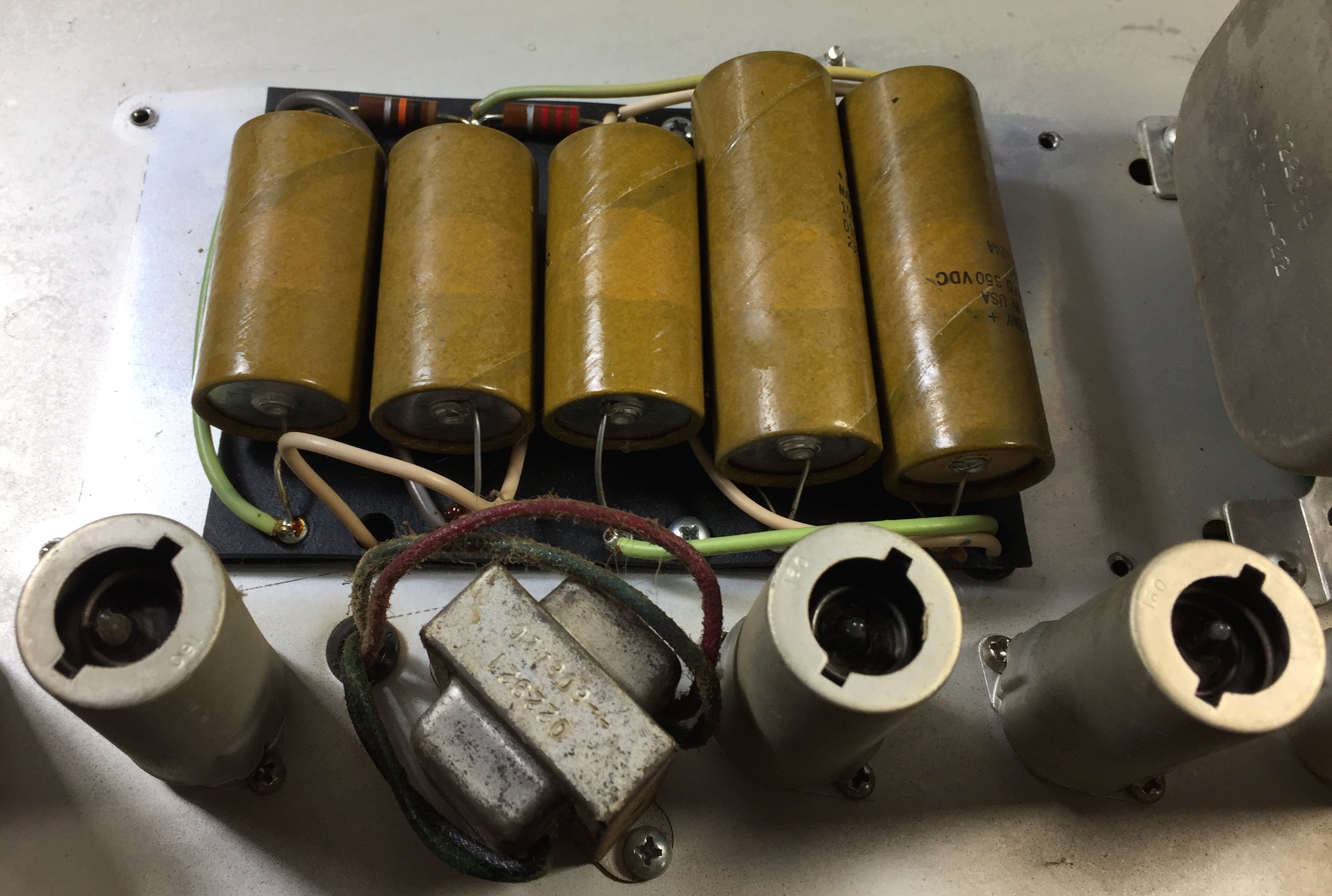
I built a simple stand to hold the amp while I'm working on the guts. I think there's a bunch of caps under that metal panel on top. I'll pull that off at some point and take a look - make sure they're not leaking.


I'll also check for microphonics while the reverb is disconnected, after I change out the power cord.
 
The capacitor cover on the top of the chassis is called a dog house. Often those caps are in need of changing.

The chassis is pretty clean, some are covered in rust. All you have is some dust. The components look all original.

Nice to have a cradle. I built a general purpose one that I find helpful. For a heavy amp, the type that you built is perfect.


IMG_2044.JPG
 
If you are going to the trouble of opening it up to look at the caps,
you may as well replace them.
They are cheap enough and it's worth the peace of mind.
You have the option of going to a higher value when you do.
Some feel that it gives it a little stronger, more robust bottom end.
Others think it makes it sound too hifi.

I'm sure you can get plenty of opinions on that here. :laugh:
 
I pulled out the hacked additional speaker connection terminal strip, and replaced the power cord.


Since the reverb is disconnected, I did the "tap" test again, and there's definitely some microphonics going on.


This tube is particularly bad. Perhaps when I tap the other tubes, it's causing this one to rattle. I'll see about replacing it and try again.

In the mean time, I think I'll refinish the case. The tolex is starting to ripple. The same dry heat that help prevented the chassis from rusting likely caused the glue on the tolex to let go.
 
Question for the tube experts: is it ok to just change out this one tube, or should I get a set? Any specific recommendations for brand or type? I see prices from about $10.00 to well over $100.00. I like the $10.00 ones...

It also appears that the 12ax7a offers better noise, hum, and microphonic resistance than the 12ax7. Interesting that this amp uses both.
 
Question for the tube experts: is it ok to just change out this one tube, or should I get a set? Any specific recommendations for brand or type? I see prices from about $10.00 to well over $100.00. I like the $10.00 ones...

It also appears that the 12ax7a offers better noise, hum, and microphonic resistance than the 12ax7. Interesting that this amp uses both.

It's fine to change one preamp level tube at a time. And yep, Fender have pretty much always been happy to save a dime wherever possible without too greatly impacting product quality.
 
  • Like
Reactions: mapleglo
The 7025 is a low noise, low hum 12AX7. They used it because it's in the first stage where the signal is weakest and any tube noise contribution is amplified at each stage down the line. So for a quiet amp, a low noise tube in the first stage is a good idea.

In terms of the circuit, you can use 12AX7A tubes in place of the 7025's. Resellers offter low noise 12AX7A's but many current production tubes are pretty quiet and perform as well as the old 7025's.

A $100+ small signal tube tends to be reserved for hi-fi applications. People like new old stock RCA, Telefunken, etc and are willing to pay a premium. You can use them but they are not necessary in a musical instrument amp.
 
  • Like
Reactions: mapleglo
Thanks! I'll order an inexpensive tube and go from there.

In the mean time, I took off the dog house. The caps look OK to me.


Frankly, I'm not sure I want to dig that deep into this amp to replace these anyway, but I'll keep my eye on them.

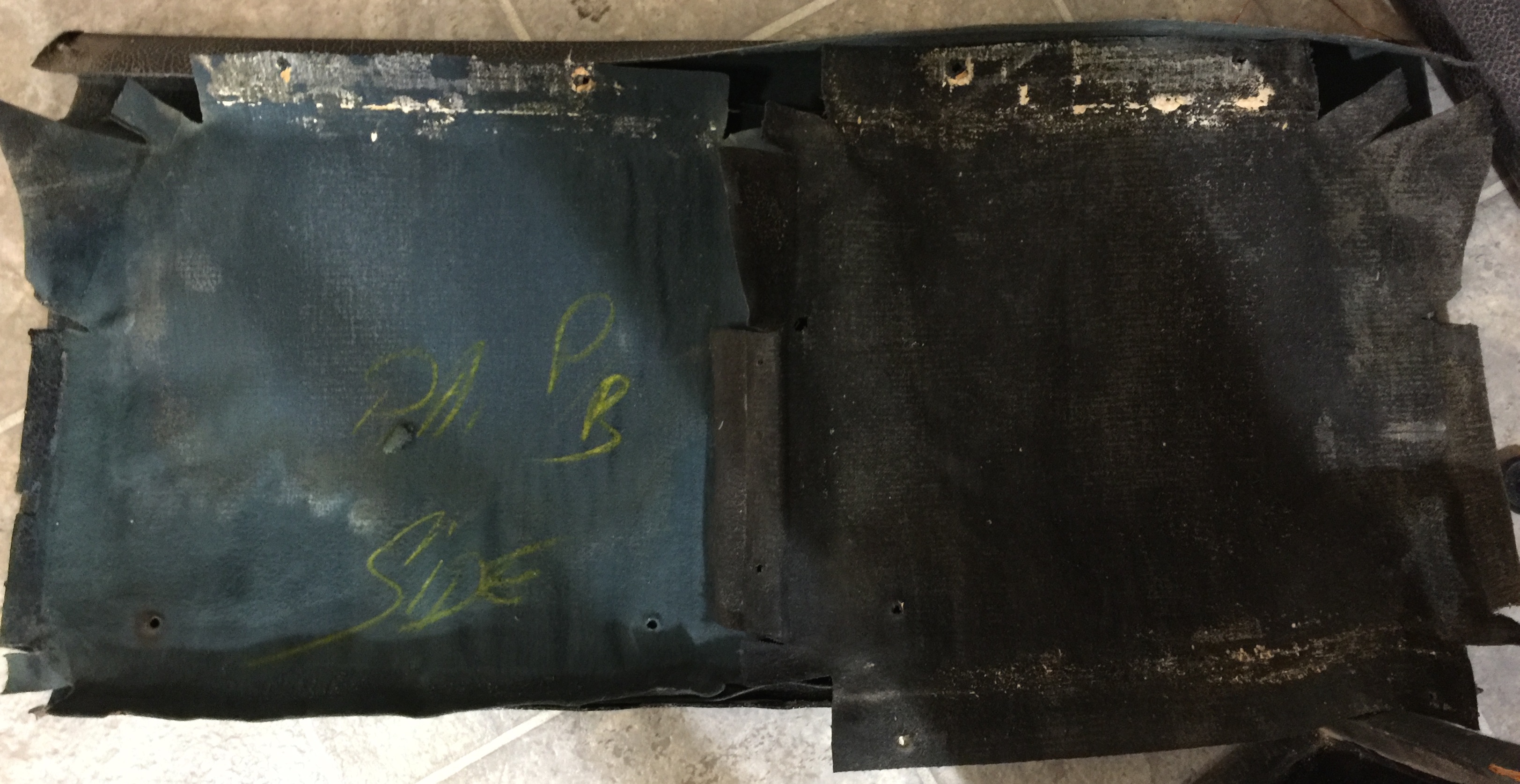
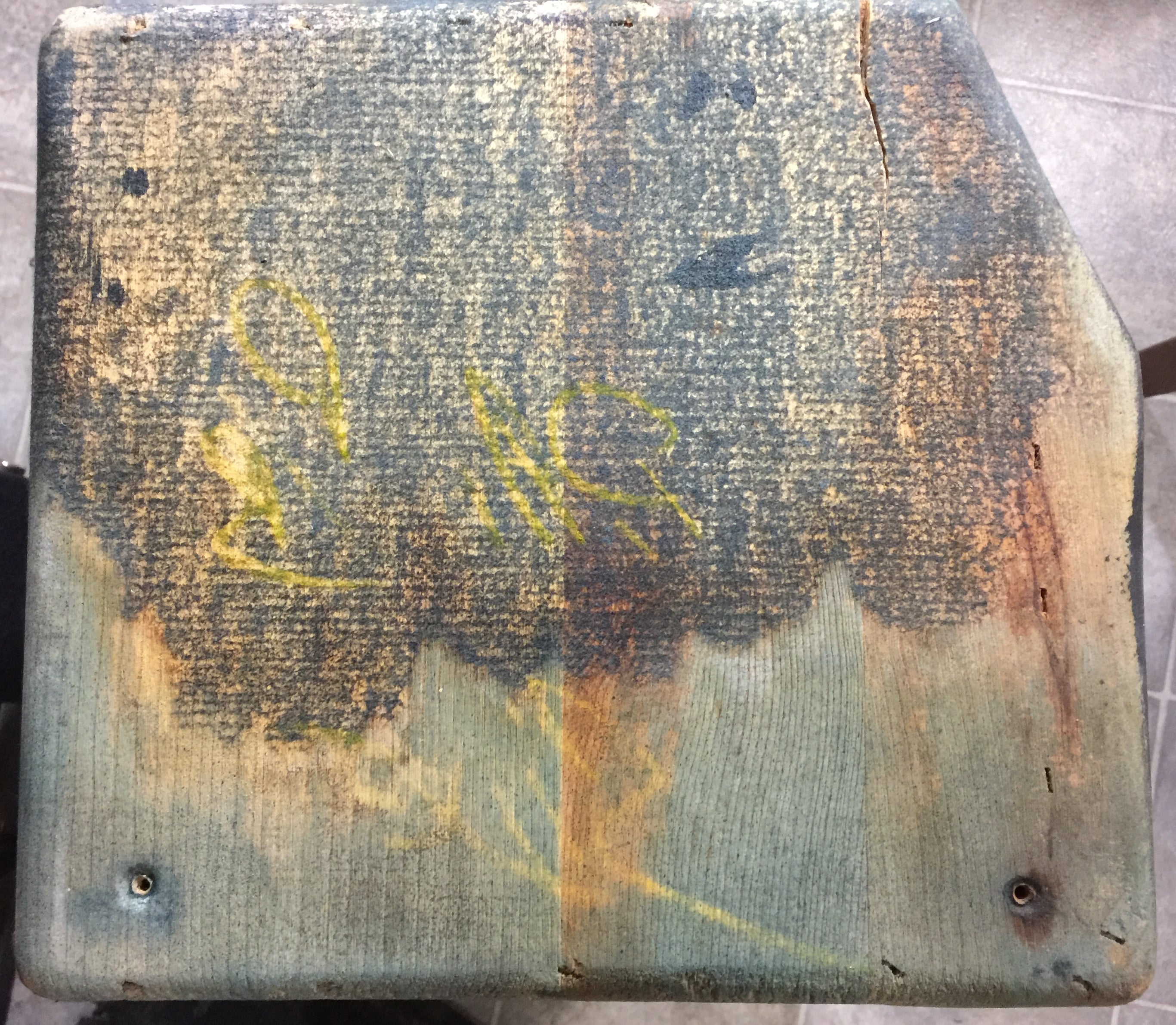
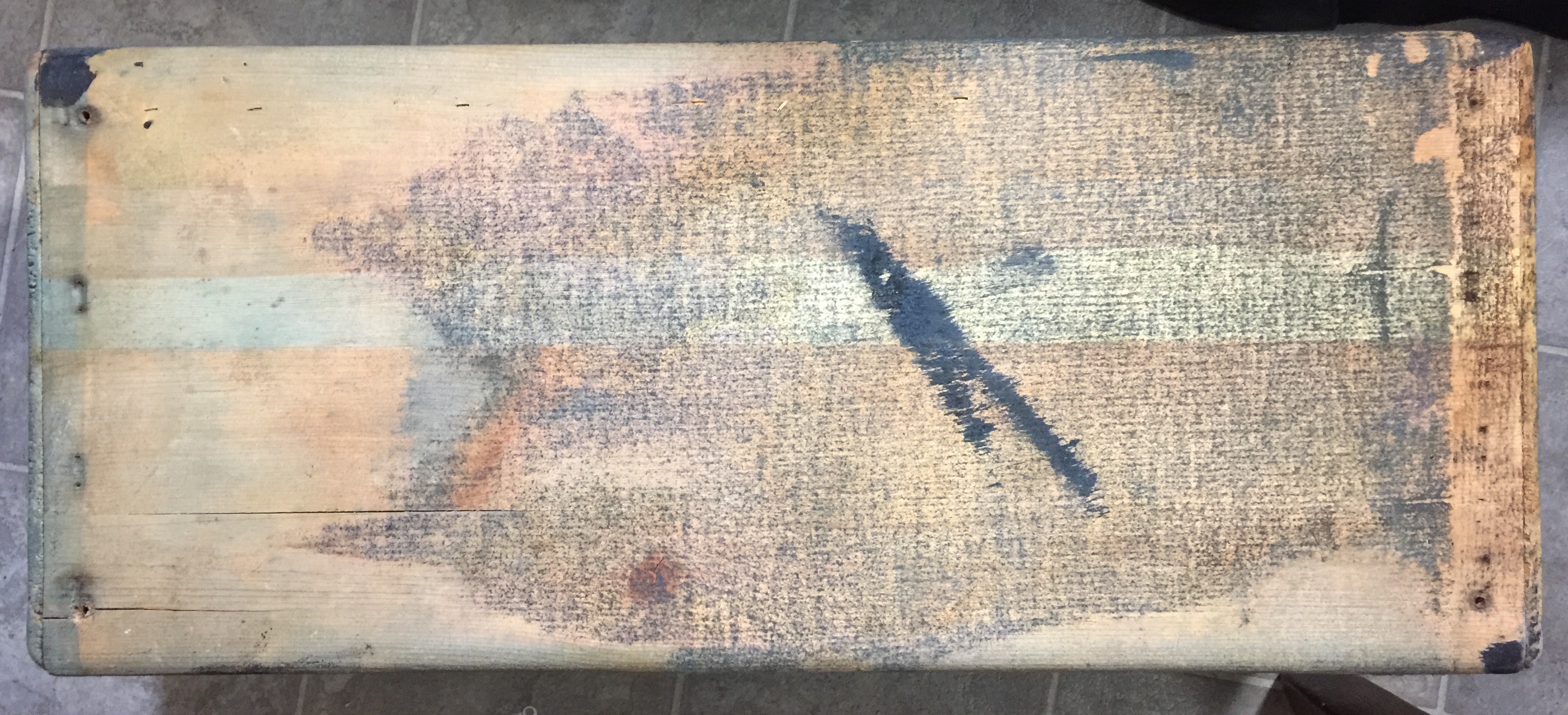
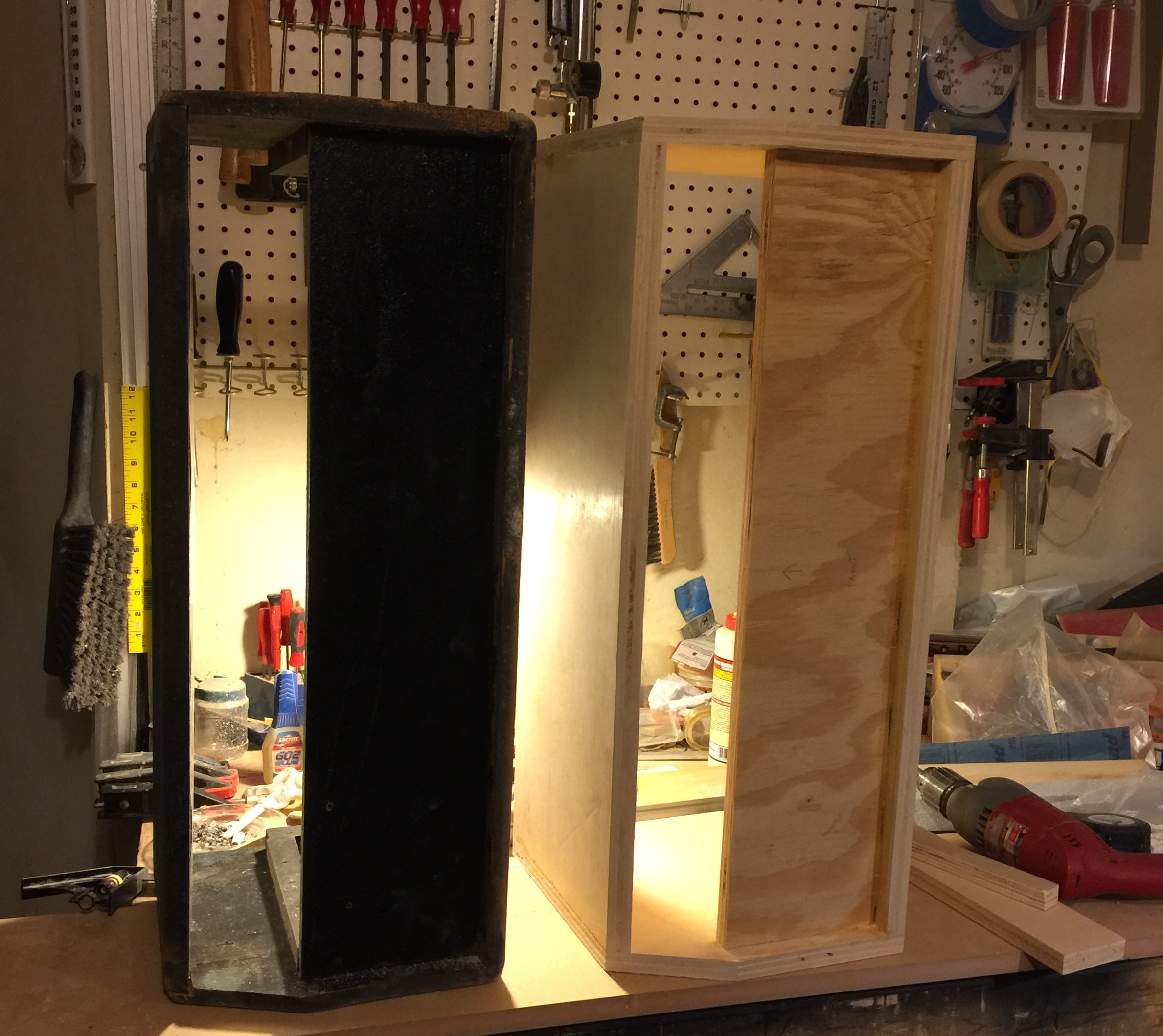
I pulled off the tolex from the case.


That revealed a pine box that is split and cracked in a few places.


I'm now thinking I'll throw together a new plywood case, instead of trying to save this one. The structural integrity has been compromised, and I'm not sure even Titebond will hold it back together. The wood is pretty warped where the cracks are.
 
  • Like
Reactions: beans-on-toast
Another cool thing about the PA 100 is that you can jump from one channel to another to increase gain. Plug into a channel. Run a short jumper.from the other 1/4" on that channel to an input on another channel.

I actually modded mine for higher gain on some channels (swapped out input resistors).

Then run it speaker level DI to the board and enjoy!

You will get some funny looks the first time you take the head to a gig. But once they hear it....no more funny looks.
 
Those are the original Mallory electrolytic capacitors. The paper shell covers an aluminum body. When they expire, the paste inside expands and the end is pushed off, spewing the contents. Those caps tend to last about 15-20 years. As they go, the amp will loose headroom and you'll hear a power line level hum that get louder as the caps age.

Worst case.
IMG_2045.JPG
 
  • Like
Reactions: mapleglo
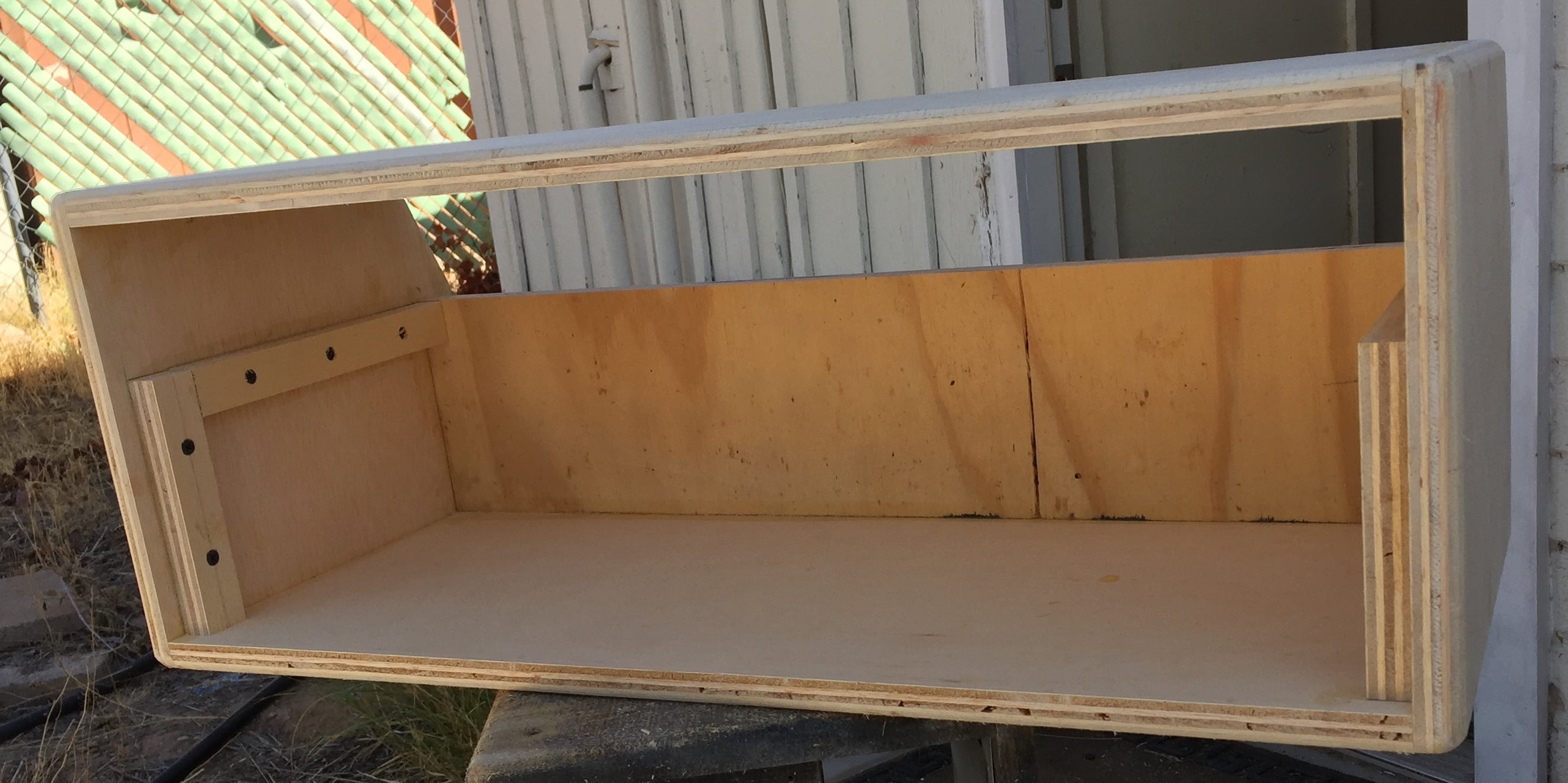
Finished up the inside support brackets and mounting holes, and routed a roundover on the edges.


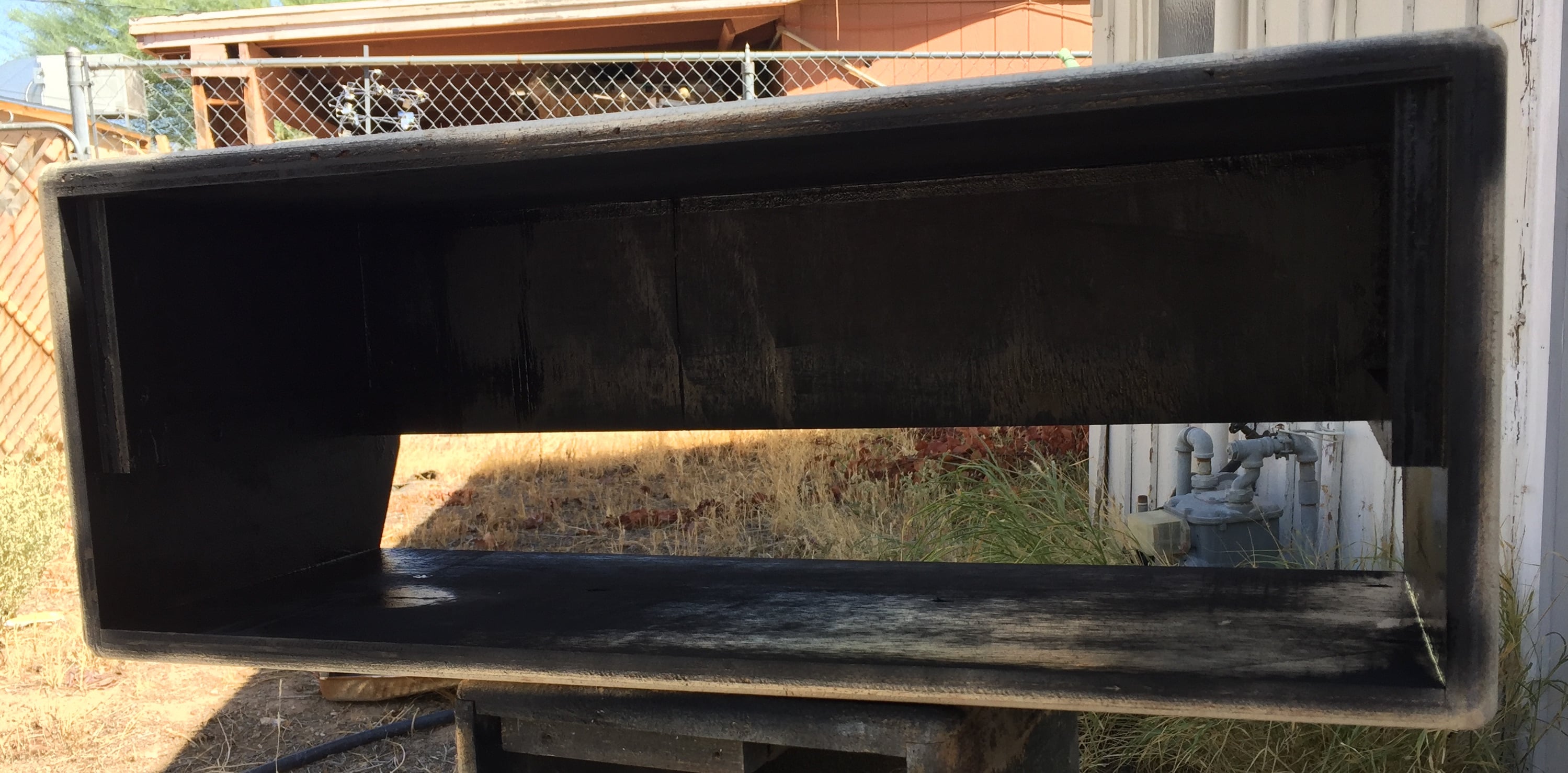
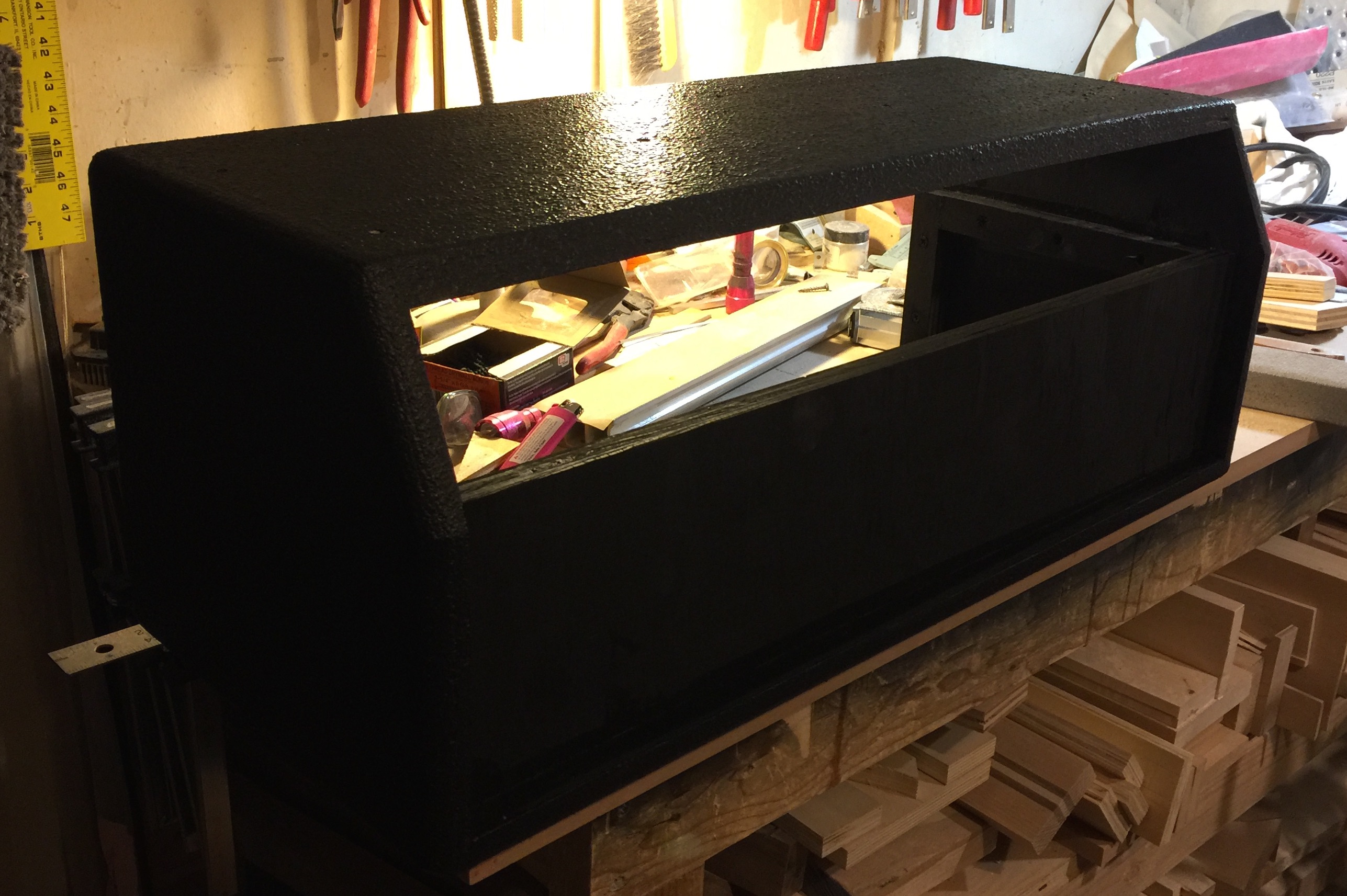
Then spray painted the inside with flat black per the original. Once that dries, I'll start with a coat or two of Duratex.

 
I'm surprised that there is not a grille frame in the front to help with ventilation.

I thought the same. The reverb tank was mounted directly to the front. In many other Fender amps, they mounted the reverb tank on the floor. Perhaps I'll take a closer look at the other PA-100 amps on the internet. It's possible that this reverb tank location was changed.
 

Latest posts