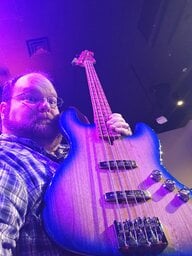
I played a D-Bird at Summer NAMM a couple years ago, and since then, I knew I'd eventually end up with one. On July 4th weekend, I gave Grasshopper at Bass Central a call and finally placed an order. I ordered a Black Burst D-Bird. As time progressed, the D-Bird was discontinued in favor of the D-Roc. The Black Burst was discontinued in favor of Matte Metallic Black. I couldn't be happier with both changes. The final change was a welcome surprise, too – my bass arrived a month ahead of schedule!
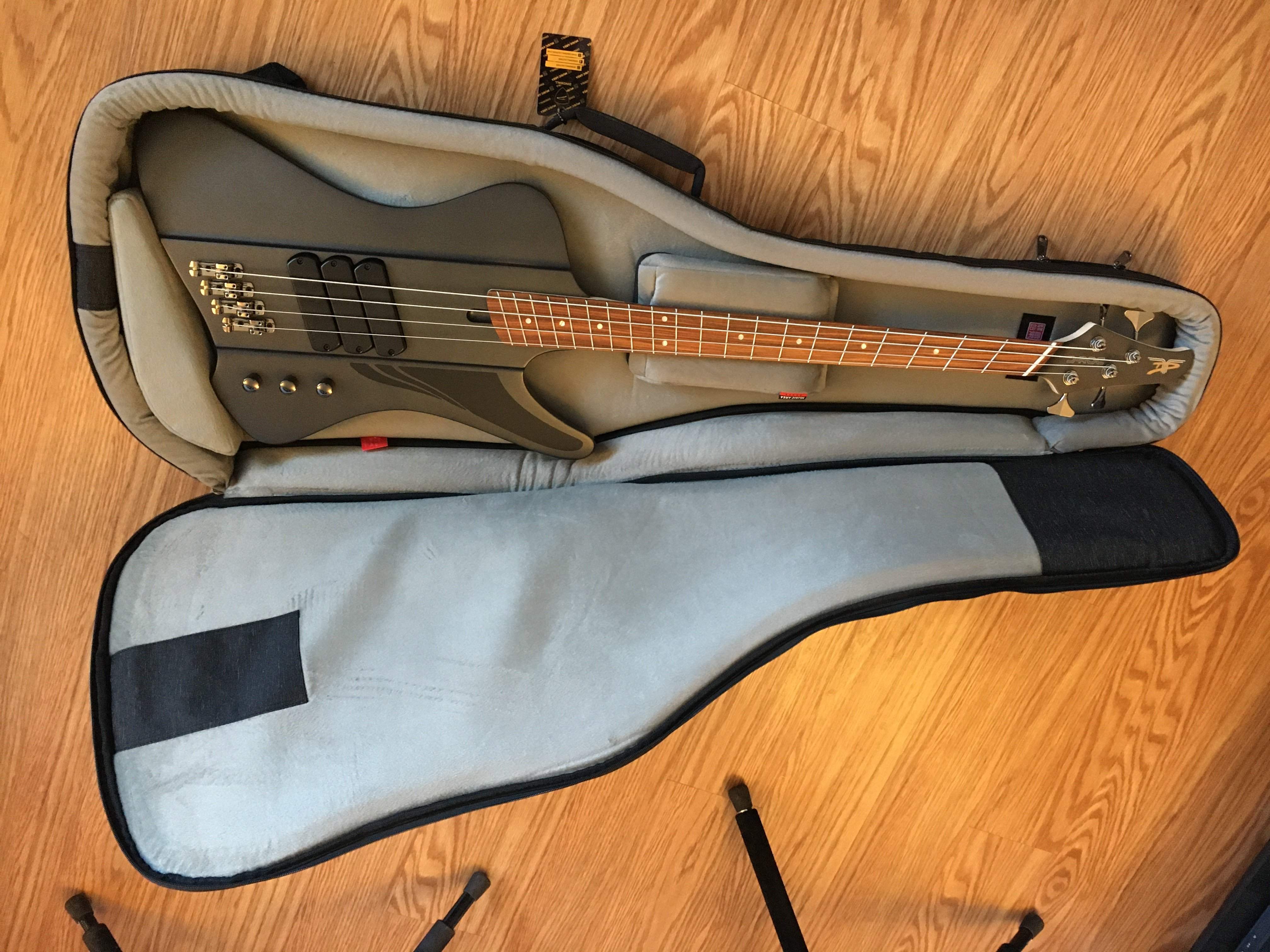
My D-Roc arrived in a Music Area Wind20 gig bag. I like this bag well enough that I ordered another one from Amazon.
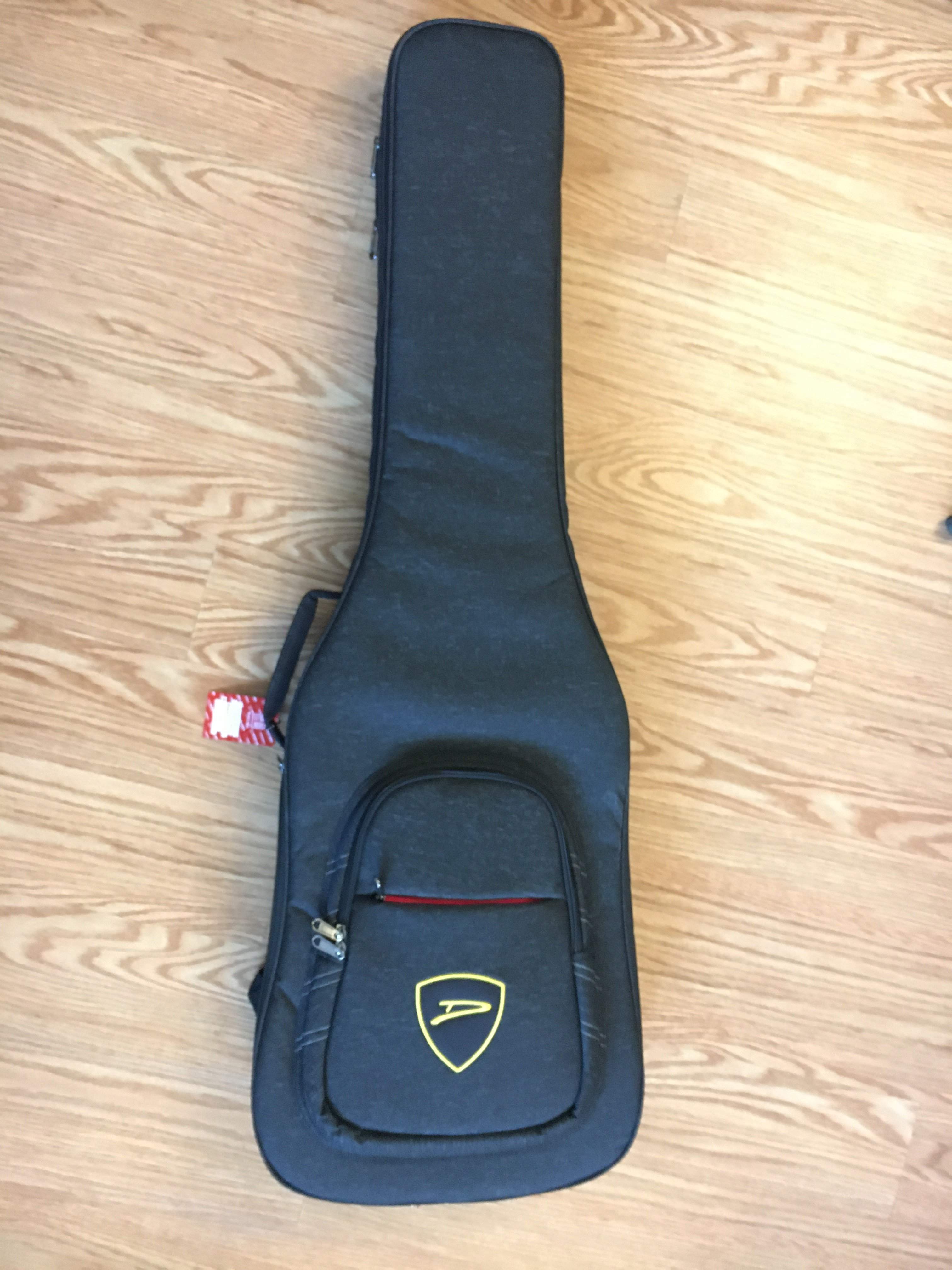
It is well padded, sturdy, and light, but it is a little lean on storage space. That isn't a big deal to me, as I typically only keep a strap in the bag.
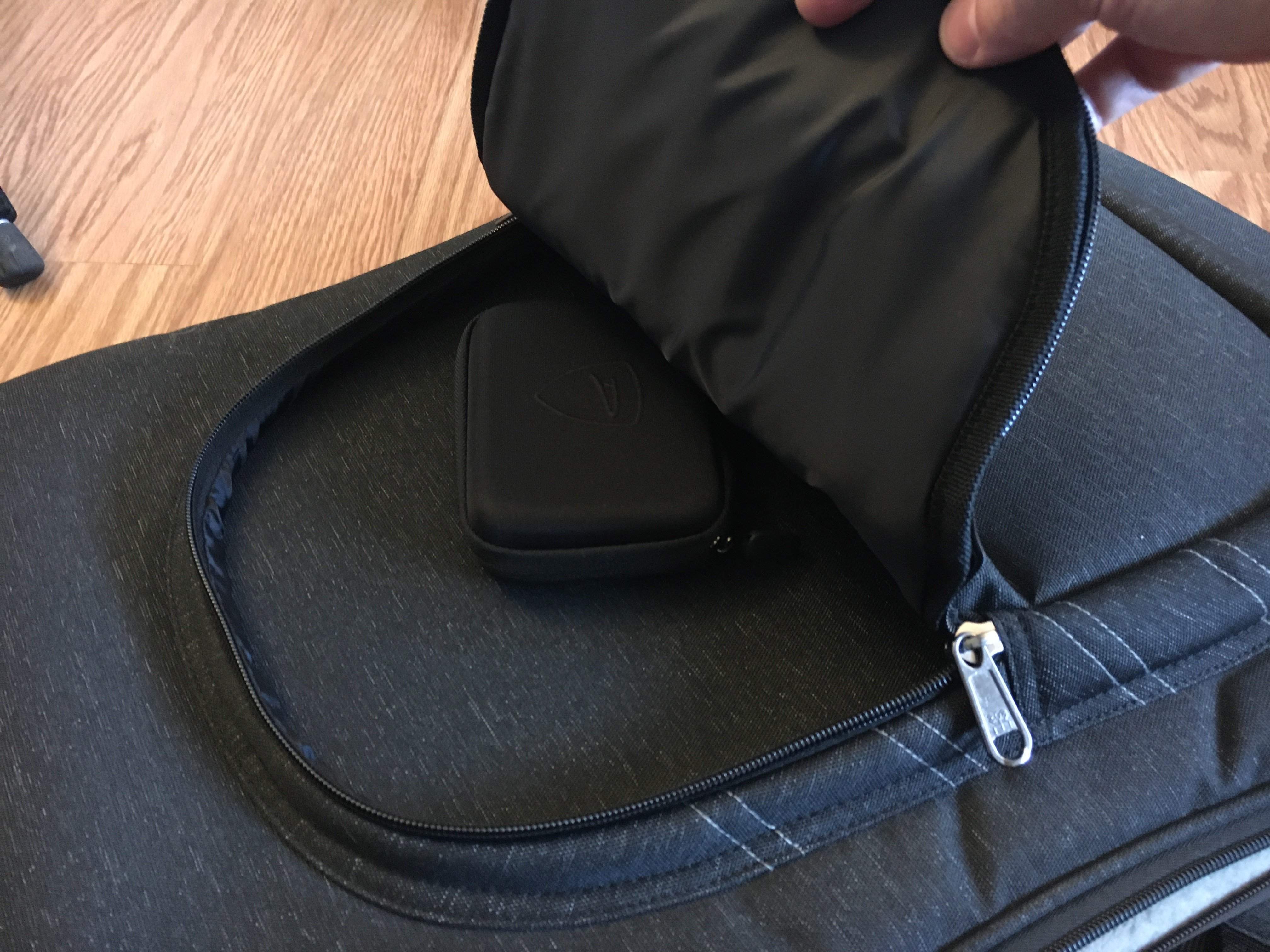
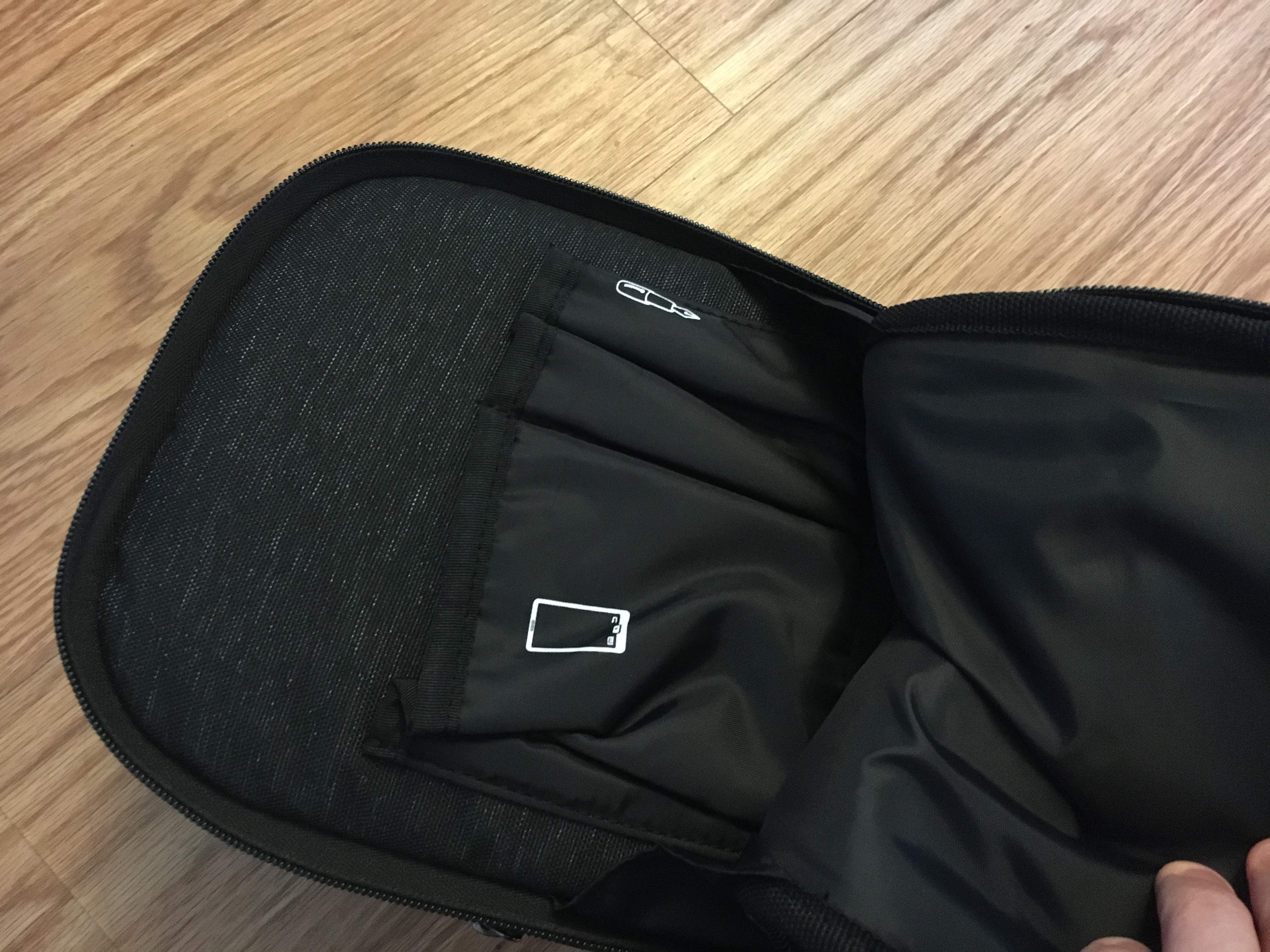
It also has a cell phone pouch and a hole for headphones – these are fairly useless to me, but they are there if I even need them.
The case isn't Thunderbird-shaped, but they added a bottom pad and the D-Roc fits inside nicely.
The bass itself is like a sculpture. Photos only give a partial impression of all the angles and curves this bass has – it is every bit as sculpted as my Czech Spector.
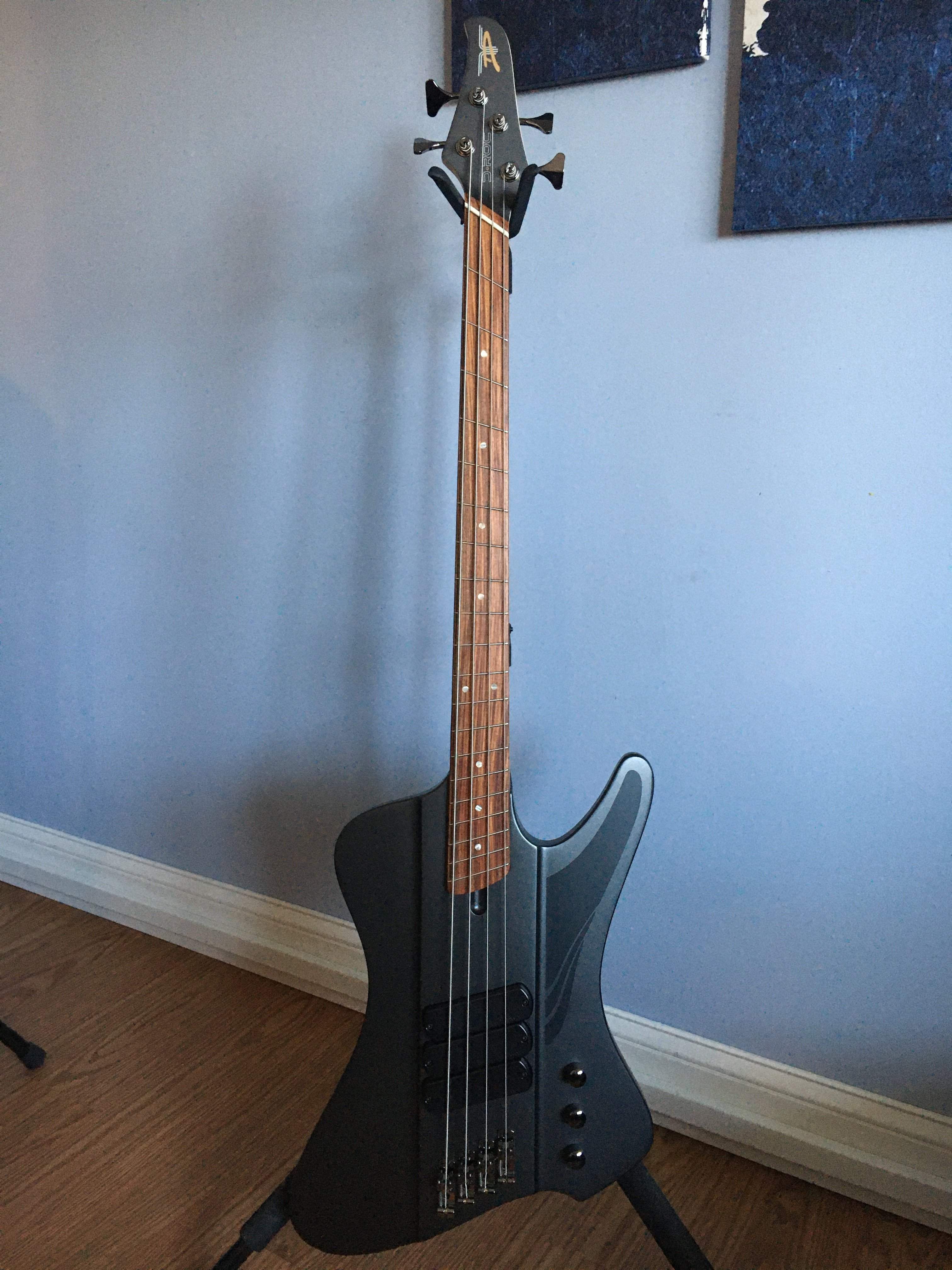
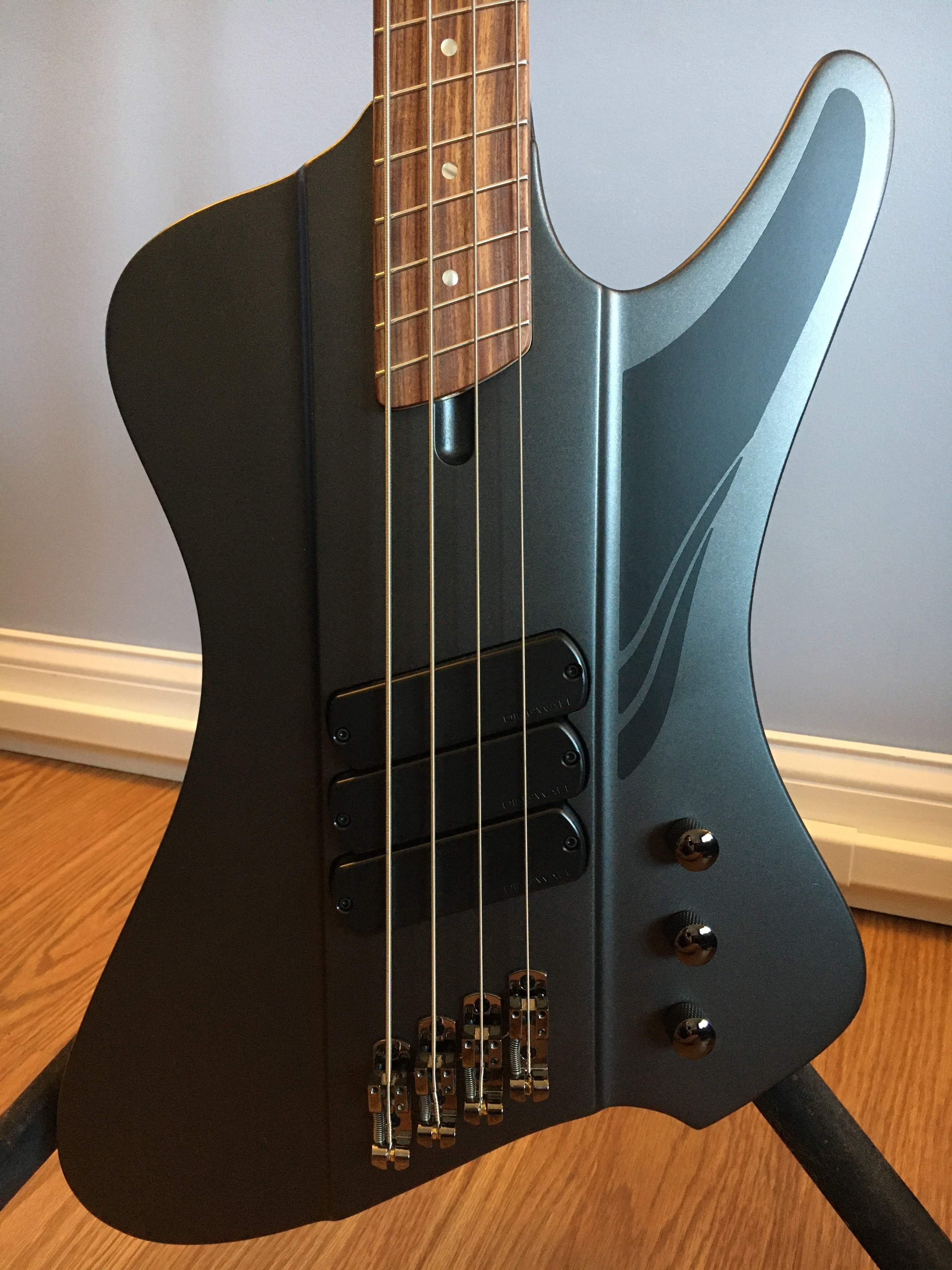
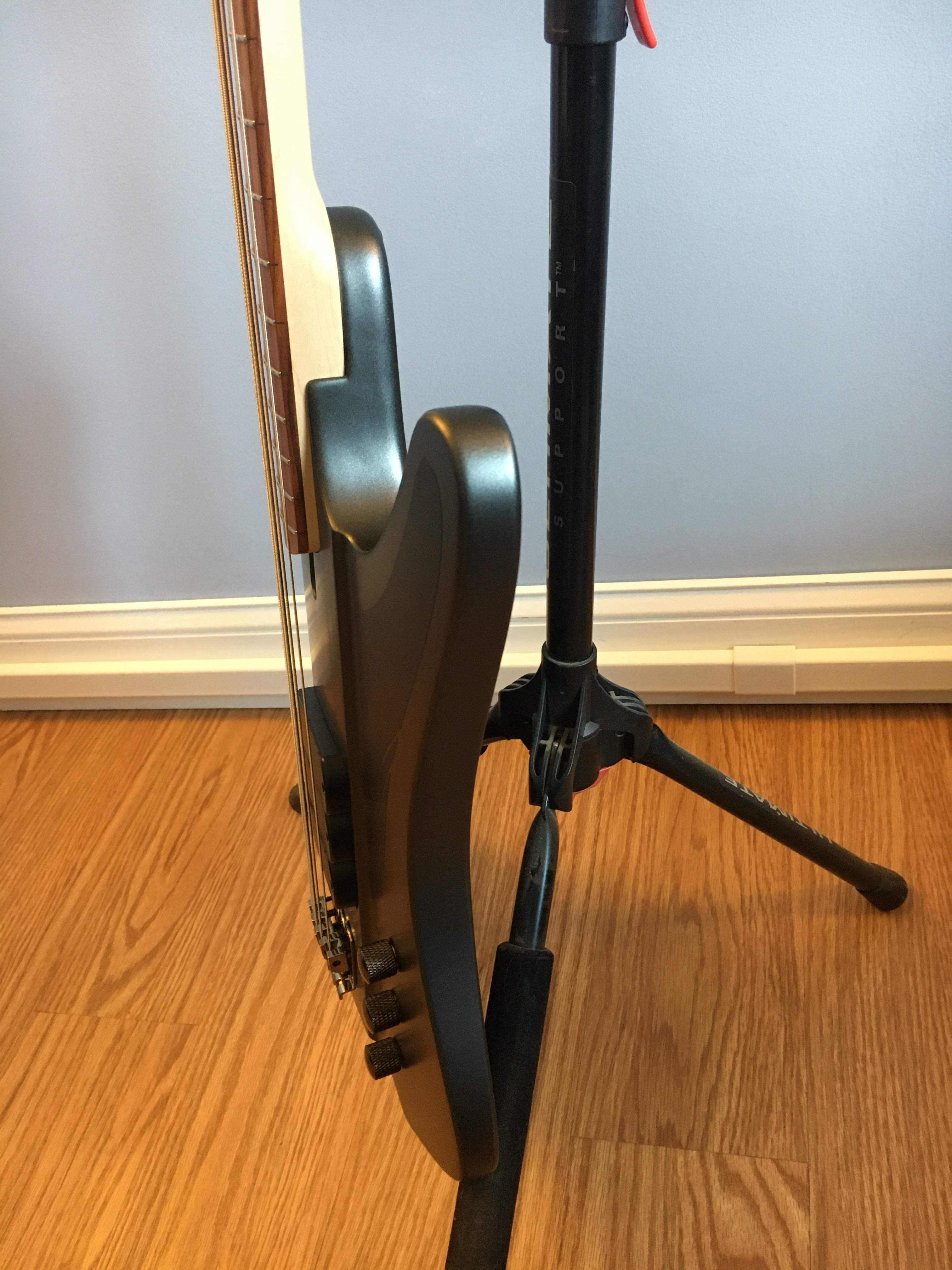
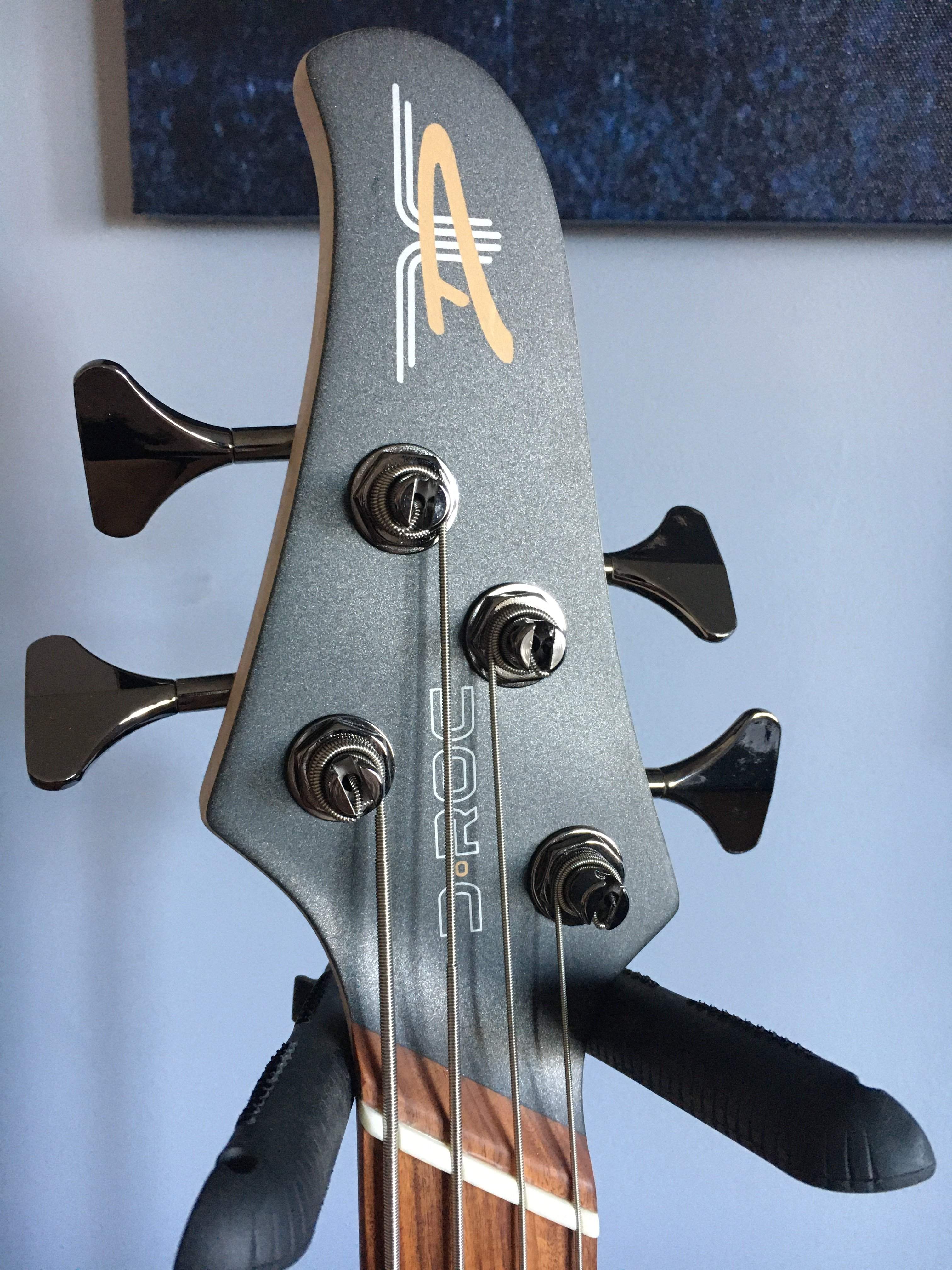

With the D-Roc, Sheldon "fixed" a lot of what many consider to be wrong with the Thunderbird. By moving the strap pins around, the first fret isn't a mile away from your body. The back has an angled belly cut that is positioned perfectly for where the bass hangs. With a combination of moving the strap pins, shortening the headstock (this bass isn't a mile long like most 'birds), and paying attention to the weight distribution, this bass balances on a strap and doesn't want to face-plant.

The D-Roc is pretty thin towards the edges of the body. No doubt this is a big factor in it tipping the scales at a mild 7.6 lbs.
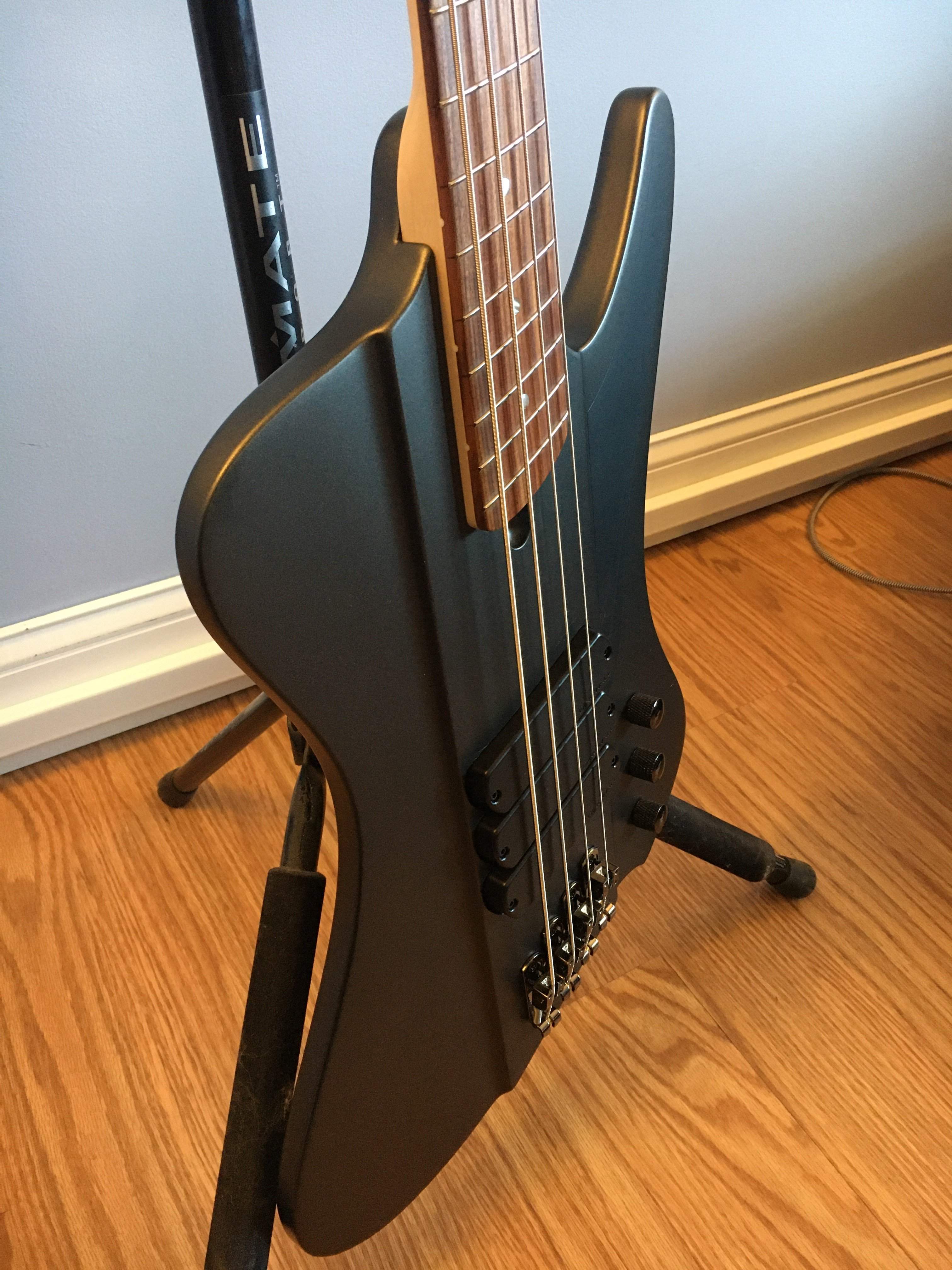
The neck is of multi-piece maple construction just like my Canadian Dingwalls.
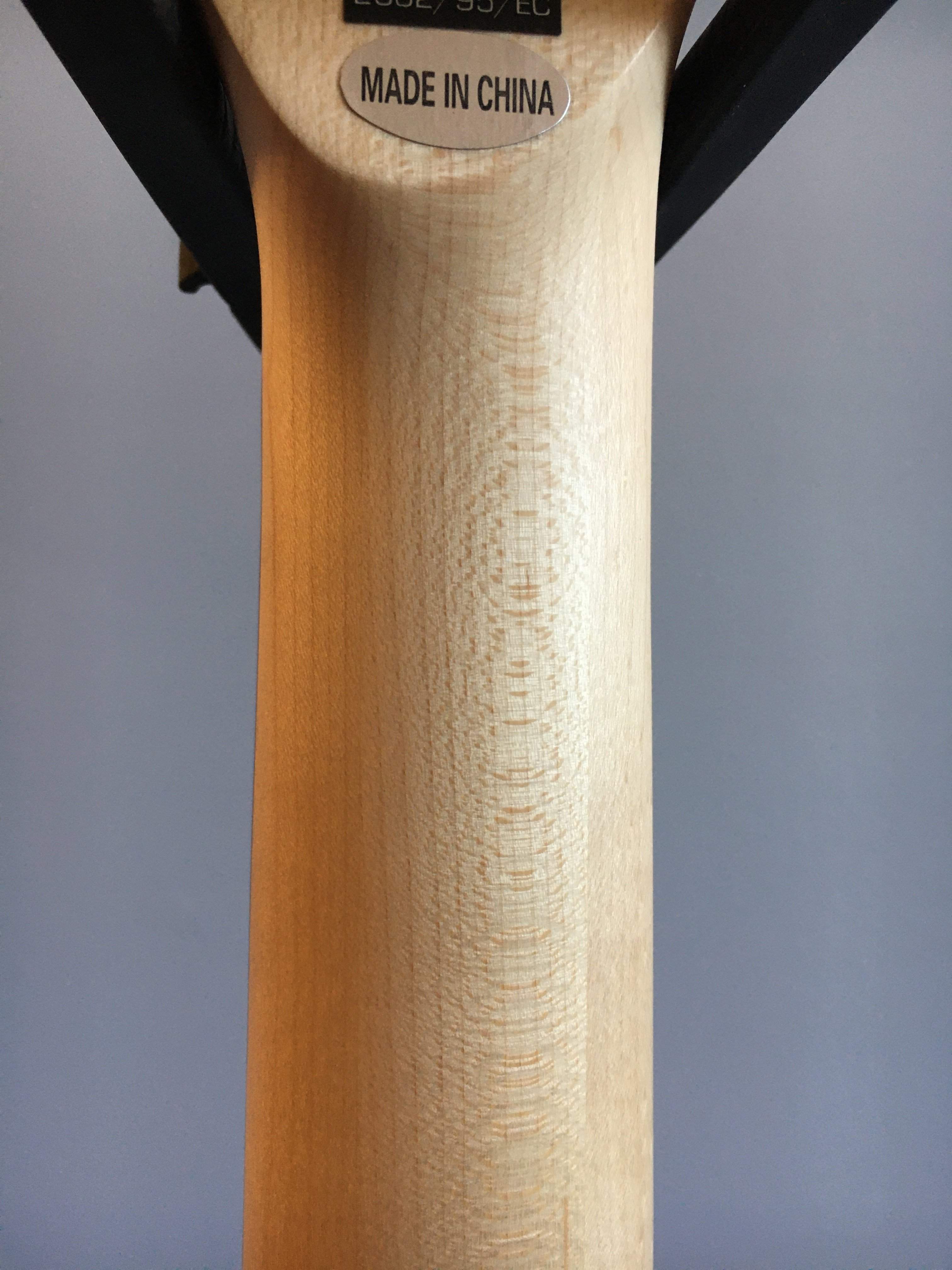
There are a few trade-offs with respect to the design choices. The bass requires Dunlop strap locks, which are included. It works best if you reverse-mount the lock that goes behind the neck, so I won't be using the same strap on my Fender-style basses. Also, the strap and heel combination make upper fret access a little tricky. The upper frets are definitely reachable though, and I'm already adjusting to this.
Another strange design choice is that the back plate is not recessed into the body. It is surface-mounted. I have seen some grumbling on TB (in the Spector thread, maybe) about surface-mounted back plates. I don't really care on way or the other, and my Spector also has a surface-mounted plate, but this struck me as an odd choice for Dingwall.
One slight oddity…I noticed that the fan is a little different than my other Dingwalls. Both my Afterburner I and my Super P have the 7th fret as the perpendicular fret where the angle reverses. On the D-Roc, this point is at the 9th fret. I suspect this is a tweak to help reduce the reach to the first fret, but I'm not really sure.
While it doesn't nail T-bird tone, it really sounds great. The pickup selector is well-thought-out. Really, it is more of a tone selector than a pickup selector; each position progressively thickens the tone by adding lows and low mids. It definitely sounds like a passive Dingwall. It has the characteristic, almost active-sounding low end, the balanced midrange, and the upper clarity that all my Dingwalls have. If you don't know, a passive Dingwall can sound so massive that it will leave you thinking you are playing an active bass. It has pick tone that rivals my Spector and outdoes it in terms of low end warmth. The pick tone is made to grind, and it loves the "Obsidian 7000" model on my HX Stomp - this bass sounds angry!
It came set up perfectly, and the fret work is excellent. The neck is stiff and stable enough that I didn't have to make any adjustments when tuning the bass to Eb. It is a great player, and it likes to be slung low like a 'bird should be.
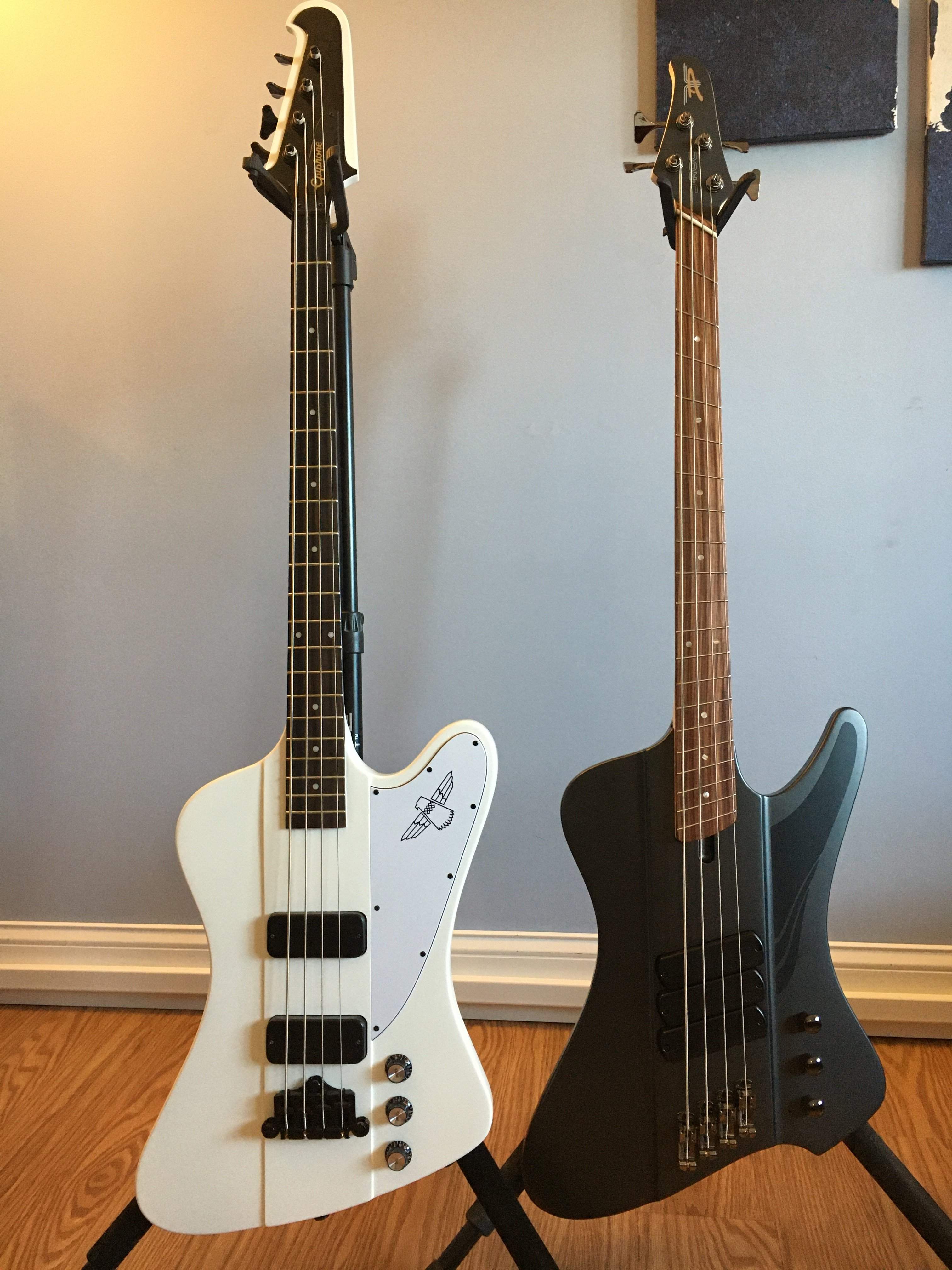
Here is a picture of the D-Roc sitting next to an Epiphone Thunderbird, so you can see how they compare in size.
Here is a picture of my little Dingwall family.
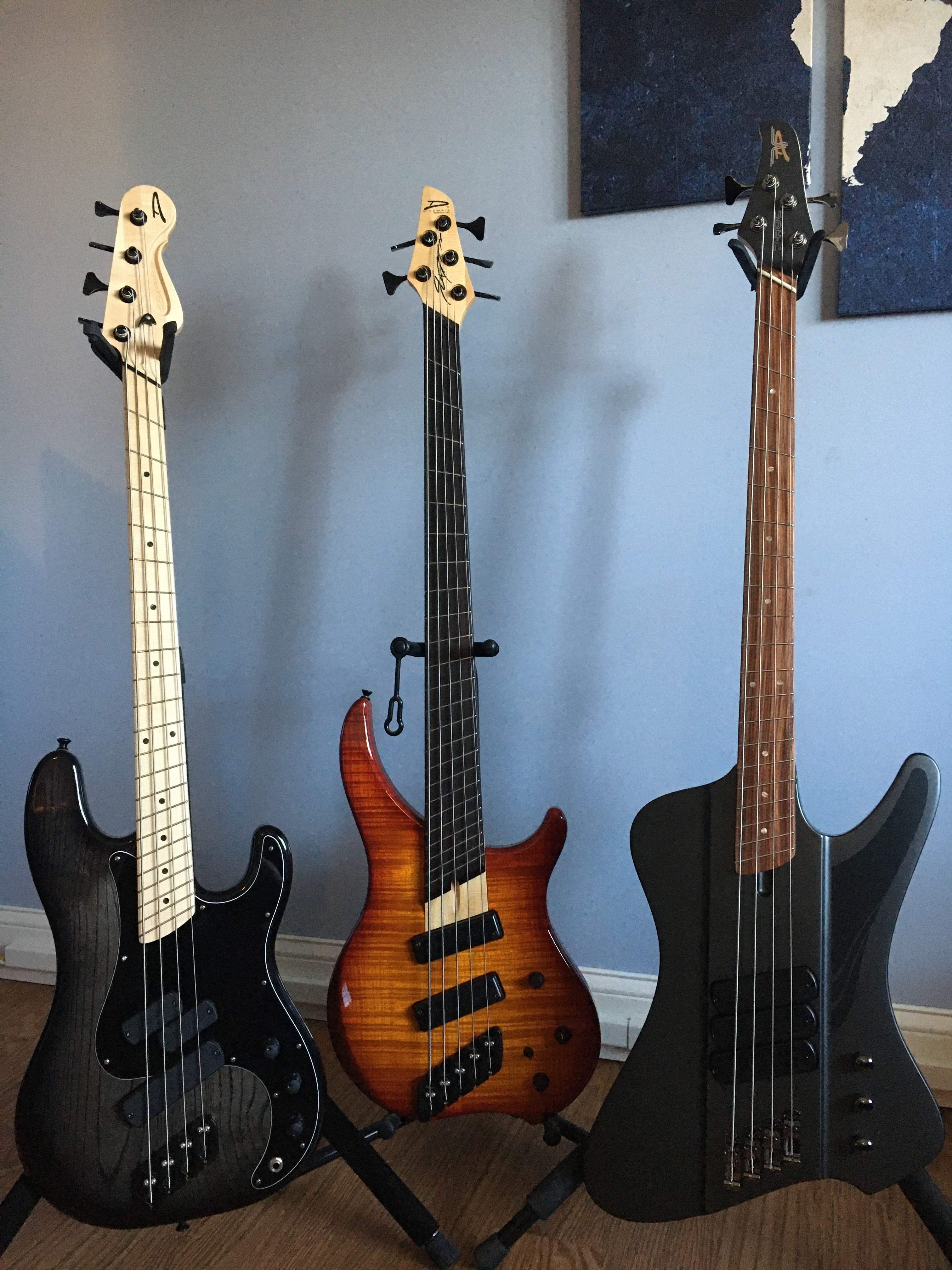
Finally, I want to say thanks to Bass Central. I'm not really a regular customer, but I bought two of my Dingwalls from them, and they were friendly and easy to work with both times. If you see stock photos on Reverb of a black D-Roc listed by Bass Central…those "stock photos" are pictures of my bass!
My D-Roc arrived in a Music Area Wind20 gig bag. I like this bag well enough that I ordered another one from Amazon.
It is well padded, sturdy, and light, but it is a little lean on storage space. That isn't a big deal to me, as I typically only keep a strap in the bag.
It also has a cell phone pouch and a hole for headphones – these are fairly useless to me, but they are there if I even need them.
The case isn't Thunderbird-shaped, but they added a bottom pad and the D-Roc fits inside nicely.
The bass itself is like a sculpture. Photos only give a partial impression of all the angles and curves this bass has – it is every bit as sculpted as my Czech Spector.
With the D-Roc, Sheldon "fixed" a lot of what many consider to be wrong with the Thunderbird. By moving the strap pins around, the first fret isn't a mile away from your body. The back has an angled belly cut that is positioned perfectly for where the bass hangs. With a combination of moving the strap pins, shortening the headstock (this bass isn't a mile long like most 'birds), and paying attention to the weight distribution, this bass balances on a strap and doesn't want to face-plant.
The D-Roc is pretty thin towards the edges of the body. No doubt this is a big factor in it tipping the scales at a mild 7.6 lbs.
The neck is of multi-piece maple construction just like my Canadian Dingwalls.
There are a few trade-offs with respect to the design choices. The bass requires Dunlop strap locks, which are included. It works best if you reverse-mount the lock that goes behind the neck, so I won't be using the same strap on my Fender-style basses. Also, the strap and heel combination make upper fret access a little tricky. The upper frets are definitely reachable though, and I'm already adjusting to this.
Another strange design choice is that the back plate is not recessed into the body. It is surface-mounted. I have seen some grumbling on TB (in the Spector thread, maybe) about surface-mounted back plates. I don't really care on way or the other, and my Spector also has a surface-mounted plate, but this struck me as an odd choice for Dingwall.
One slight oddity…I noticed that the fan is a little different than my other Dingwalls. Both my Afterburner I and my Super P have the 7th fret as the perpendicular fret where the angle reverses. On the D-Roc, this point is at the 9th fret. I suspect this is a tweak to help reduce the reach to the first fret, but I'm not really sure.
While it doesn't nail T-bird tone, it really sounds great. The pickup selector is well-thought-out. Really, it is more of a tone selector than a pickup selector; each position progressively thickens the tone by adding lows and low mids. It definitely sounds like a passive Dingwall. It has the characteristic, almost active-sounding low end, the balanced midrange, and the upper clarity that all my Dingwalls have. If you don't know, a passive Dingwall can sound so massive that it will leave you thinking you are playing an active bass. It has pick tone that rivals my Spector and outdoes it in terms of low end warmth. The pick tone is made to grind, and it loves the "Obsidian 7000" model on my HX Stomp - this bass sounds angry!
It came set up perfectly, and the fret work is excellent. The neck is stiff and stable enough that I didn't have to make any adjustments when tuning the bass to Eb. It is a great player, and it likes to be slung low like a 'bird should be.
Here is a picture of the D-Roc sitting next to an Epiphone Thunderbird, so you can see how they compare in size.
Here is a picture of my little Dingwall family.
Finally, I want to say thanks to Bass Central. I'm not really a regular customer, but I bought two of my Dingwalls from them, and they were friendly and easy to work with both times. If you see stock photos on Reverb of a black D-Roc listed by Bass Central…those "stock photos" are pictures of my bass!