Sometimes you get lucky.
I first played this Korean ICB200 at my favorite Pawn Shop back in March:

Was seriously impressed by the unplugged tone--thud + meat + growl + bite + zing--it had it all. No strings dominated or sounded wimpy.
When I inspected it closer in June, nothing seemed jacked and the way it felt stuck in my mind. Very even string response and a solid build. Tons of sustain and unplugged volume—the light mahogany body was very resonant.
In August the price dropped.
Last week I bought it.
As I scrubbed off all the crud, the surprises kept coming.
Protective film was still on the knobs and control cavity cover.
No pitting on the gold plated hardware.
Nut and bridge grooves show zero wear.
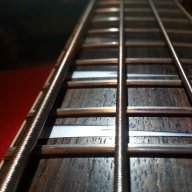
Frets have minor discoloration under the strings (not actual wear) but only between the nut and fifth. From there on up the frets look brand new and untouched.
No buckle rash.

The previous owner must have bought it, experienced the legendary Iceman neck-dive, gotten distracted, and decided to pawn it 8 years later without playing.
I have a big show this weekend so spent my Sunday whipping this Iceman into shape.
Bought some new gold speed knobs so the bass more closely matches my 1977 Ibanez Artist guitar that sports the same finish, and you can’t deny that they look better.
Tightened all screws and pots, and adjusted the trussrod, action, pickup height and intonation.
Then I fixed the neck-dive.
Bought a bunch of lead fishing weights in 1 oz and 4 oz sizes at Academy for about $5 and broke out a big hot-glue gun.
I lined the control cavity with some thick plastic film, pushing it down between the pots and the bottom edge and squirted a bunch of glue in there. Added lead and glue until I had two big slugs that totaled 12 oz. Pried them out, trimmed the plastic and touched-up the glue, then stuck ‘em back in place with 2-sided foam tape.
Very sturdy install—no chance of them coming loose, rattling, or shorting anything out.
Then I added straplocks, which made a big difference in balance because as shown I left the original button in place and added the lock mount a couple inches closer to the neck.
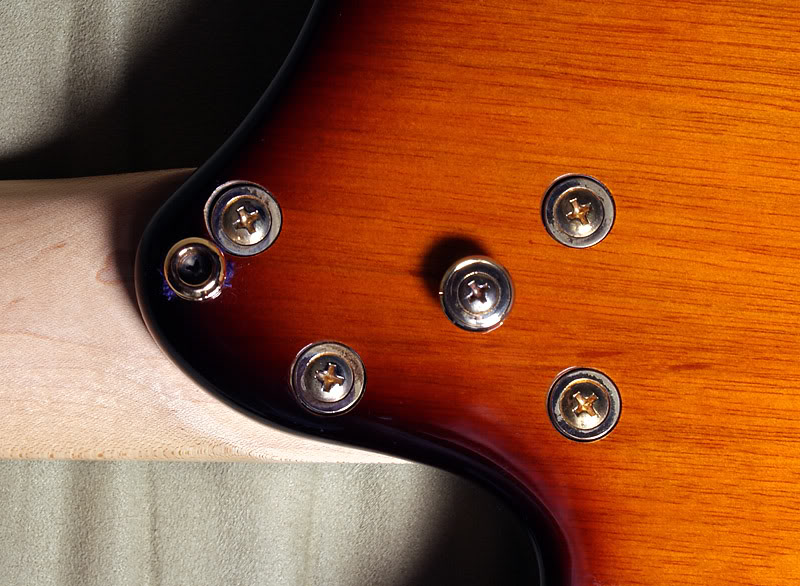
Put masking tape over the hole’s location before heading to the drill-press, to keep the finish from flaking.
My Iceman was only around 7 pounds, so adding a bunch of lead was no big deal. At this point it almost balances, and was very comfortable at a long rehearsal last night.
Played through a 200w 1x15” Peavey combo the rest of my band (Televators) was floored by the monster tone and of course it’s good looks, and it’s been decided that this is our new main recording and gigging bass—replacing a very sweet MIK SR500.
In fact, I’ve stopped gassing for a nicer SR, at least for the near future.
But I have to admit that for all their good points, an Iceman will never be as comfortable to play as a Soundgear.
Last bit of good luck was that it fit into my spare gig bag so I won’t have to buy a case.
I first played this Korean ICB200 at my favorite Pawn Shop back in March:
Was seriously impressed by the unplugged tone--thud + meat + growl + bite + zing--it had it all. No strings dominated or sounded wimpy.
When I inspected it closer in June, nothing seemed jacked and the way it felt stuck in my mind. Very even string response and a solid build. Tons of sustain and unplugged volume—the light mahogany body was very resonant.
In August the price dropped.
Last week I bought it.
As I scrubbed off all the crud, the surprises kept coming.
Protective film was still on the knobs and control cavity cover.
No pitting on the gold plated hardware.
Nut and bridge grooves show zero wear.
Frets have minor discoloration under the strings (not actual wear) but only between the nut and fifth. From there on up the frets look brand new and untouched.
No buckle rash.
The previous owner must have bought it, experienced the legendary Iceman neck-dive, gotten distracted, and decided to pawn it 8 years later without playing.
I have a big show this weekend so spent my Sunday whipping this Iceman into shape.
Bought some new gold speed knobs so the bass more closely matches my 1977 Ibanez Artist guitar that sports the same finish, and you can’t deny that they look better.
Tightened all screws and pots, and adjusted the trussrod, action, pickup height and intonation.
Then I fixed the neck-dive.
Bought a bunch of lead fishing weights in 1 oz and 4 oz sizes at Academy for about $5 and broke out a big hot-glue gun.
I lined the control cavity with some thick plastic film, pushing it down between the pots and the bottom edge and squirted a bunch of glue in there. Added lead and glue until I had two big slugs that totaled 12 oz. Pried them out, trimmed the plastic and touched-up the glue, then stuck ‘em back in place with 2-sided foam tape.
Very sturdy install—no chance of them coming loose, rattling, or shorting anything out.
Then I added straplocks, which made a big difference in balance because as shown I left the original button in place and added the lock mount a couple inches closer to the neck.
Put masking tape over the hole’s location before heading to the drill-press, to keep the finish from flaking.
My Iceman was only around 7 pounds, so adding a bunch of lead was no big deal. At this point it almost balances, and was very comfortable at a long rehearsal last night.
Played through a 200w 1x15” Peavey combo the rest of my band (Televators) was floored by the monster tone and of course it’s good looks, and it’s been decided that this is our new main recording and gigging bass—replacing a very sweet MIK SR500.
In fact, I’ve stopped gassing for a nicer SR, at least for the near future.
But I have to admit that for all their good points, an Iceman will never be as comfortable to play as a Soundgear.
Last bit of good luck was that it fit into my spare gig bag so I won’t have to buy a case.