
First off, I really think that no two basses are exactly alike. Even two basses of the exact same make, model and spec can vary wildly - there are just so many variables. That's part of what makes them interesting, and why I take any description of a bass I haven't played with a big grain of salt.
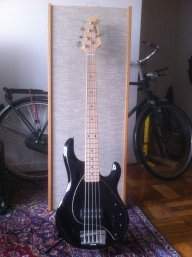
I know this has been discussed, but I just traded my black/rosewood SBMM Ray35 for a black/maple EBMM Stingray 5, and the bottom line is this: Those SBMM basses are a crazy good value.
Differences between the two instruments:
The Stingray I got happens maybe a pound lighter, at 10 lbs to what was probably an 11-pound Ray35 (but other Stingray 5's I've tried were much heavier).
It will hold its resale better, and I happen to have got this one at a steal - not much more than a Ray35.
It has a compensated nut which I can take or leave - both basses intonate just great.
Nifty battery compartment on the Stingray, which will save me maybe 20 seconds a year.
The pots on the Stingray feel just a tad smoother, but were nothing to complain about on the Ray35.
Aesthetics - I dig the black/maple look and Stingrays have more color choices.
Construction - top-notch on both instruments, but whereas the Ray35 had a perfectly snug neck pocket, the Stingray has just enough of a gap to slide in a sheet of paper (not enough for a business card).
Neck - Both basses take a super-low, buzz-free setup. That was a real surprise on the Ray35, which played like butter compared to the Lakland 55-01 I had before it. I do prefer the feel of the finish on the back of the Stingray neck.
Tone - For the month I had that Ray35 I could not put it down, it just sounded so punchy and powerful. Played it at rehearsals, did some recording with it and it totally nails the Stingray mojo. I can't honestly say that the Stingray5 sounds significantly better. I suspect the maple fretboard makes as much difference as any other component.
That's it. Like I say I'm sure the quality of both basses varies, but my experience with a SBMM Ray35 was stellar, easily rivaling the EBMM Stingray 5 that replaced it.

I know this has been discussed, but I just traded my black/rosewood SBMM Ray35 for a black/maple EBMM Stingray 5, and the bottom line is this: Those SBMM basses are a crazy good value.
Differences between the two instruments:
The Stingray I got happens maybe a pound lighter, at 10 lbs to what was probably an 11-pound Ray35 (but other Stingray 5's I've tried were much heavier).
It will hold its resale better, and I happen to have got this one at a steal - not much more than a Ray35.
It has a compensated nut which I can take or leave - both basses intonate just great.
Nifty battery compartment on the Stingray, which will save me maybe 20 seconds a year.
The pots on the Stingray feel just a tad smoother, but were nothing to complain about on the Ray35.
Aesthetics - I dig the black/maple look and Stingrays have more color choices.
Construction - top-notch on both instruments, but whereas the Ray35 had a perfectly snug neck pocket, the Stingray has just enough of a gap to slide in a sheet of paper (not enough for a business card).
Neck - Both basses take a super-low, buzz-free setup. That was a real surprise on the Ray35, which played like butter compared to the Lakland 55-01 I had before it. I do prefer the feel of the finish on the back of the Stingray neck.
Tone - For the month I had that Ray35 I could not put it down, it just sounded so punchy and powerful. Played it at rehearsals, did some recording with it and it totally nails the Stingray mojo. I can't honestly say that the Stingray5 sounds significantly better. I suspect the maple fretboard makes as much difference as any other component.
That's it. Like I say I'm sure the quality of both basses varies, but my experience with a SBMM Ray35 was stellar, easily rivaling the EBMM Stingray 5 that replaced it.


