NBD - Sire Marcus Miller V7 Alder-4 AWH
Short clip of the bass played with a drum track. Recorded with all tone circuit controls set flat through an Edirol UA5 Audio Interface (24-bit/96kHz) into FL Studio 11. No FX or processing on the bass apart from light compression. Apologies for my meandering jam... it's only a minute or so, but hopefully you'll get some idea of the sound.
Now read on... This is ostensibly a low-cost bass which has been deliberately inserted into the market at a point of fierce competition - mostly from Fender/Squier and their derivatives, copyists and detractors. However, the only thing 'budget' about the V7 is the price. I was expecting a high level of fit and finish out of the box - this already being the received wisdom on the subject - but I was still very surprised at just how high a level. It's a lovely-looking thing and close inspection revealed not one dink, ding or imperfection. Attention was obviously paid to the bass before it left the factory - the action has been set low and with no fret buzz. The intonation was very close to correct. It was even very nearly in tune... It ships with D'Addario XL rounds as stock, which are certainly more than good enough to be going on with, but this example is fitted with my current favourite rounds, D'Addario EXL 170BT Balanced Tension 45-60-80-107.
Plug in, turn on. First impressions: Great neck! And the 18V Heritage-3 tone circuit is excellent. Powerful, very versatile and with a sweepable mid that gives you cut and boost between 200Hz and 1kHz. The bass boost/cut is well hefty and you have to be careful with it as it's a real floor-shaker and window-rattler. Treble offers presence and air without being harsh or strident.
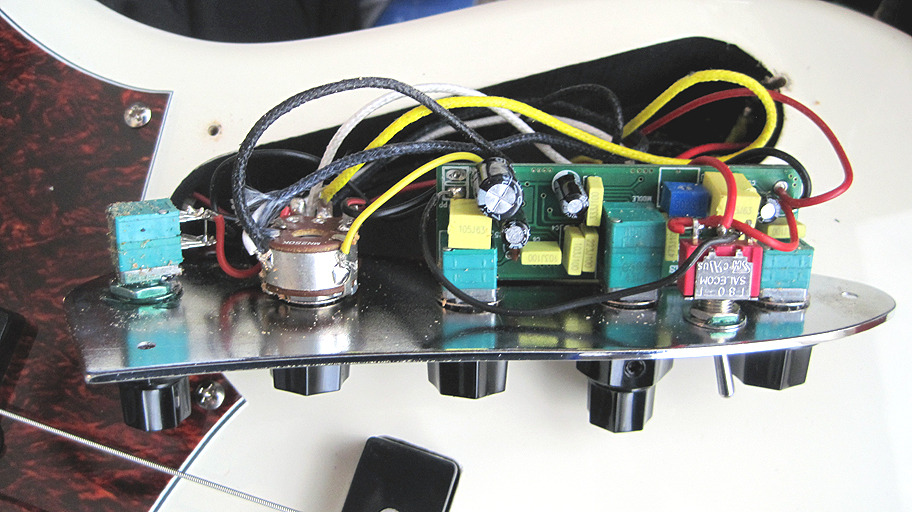
The only other circuit I've used with this sort of power on tap is Spector's TonePump. But that is a 2-band and this is a 3, and is much more intuitive in operation. Like the TonePump, very small adjustments to the controls can make huge and profound differences to your output. There is also a master volume/tone stack and a pickup blend control which still operate when the bass is in passive mode. The Treble, Mid Controls and Bass kick in when the switch is set to Active mode. There is an internal trim adjuster should you want to match passive and active output levels. All controls are smooth and positive in operation.

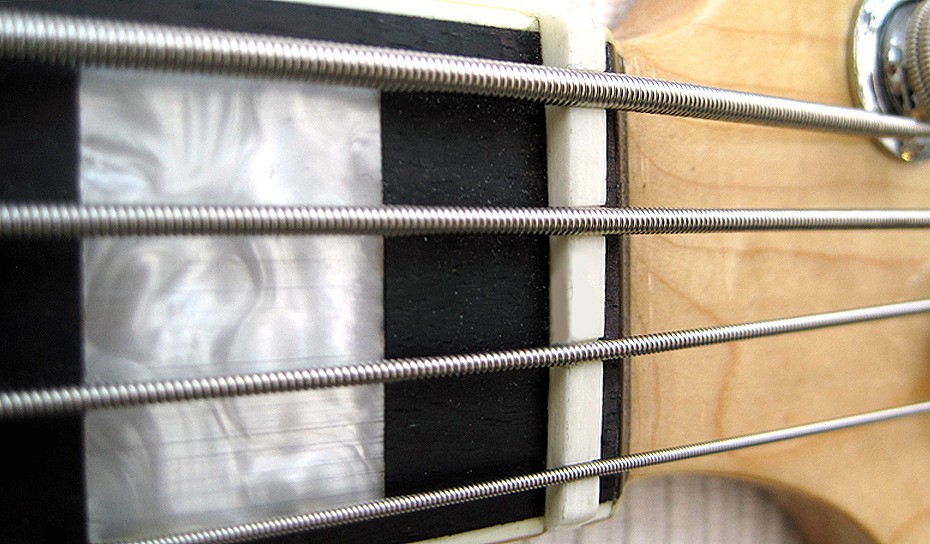
The neck is superb *cough* Lakland! *cough*. It's a slightly chunkier handful than a standard Jazz (closer to my Spector Euro), though still Jazz-narrow at the nut, with pearloid blocks and lush, creamy binding with black side-markers, all finished to a very high standard. It is lovely and straight and is a joy to play. The inlays are finished better than those on my Euro. The frets are not 'vintage'-thin, but narrower than the usual 'jumbo' type. There is no evidence of sharp or poorly-finished fret-ends. The nut is genuine bone. In short, it comes over like a neck from a bass that cost at least three times the price of this one, and then some.
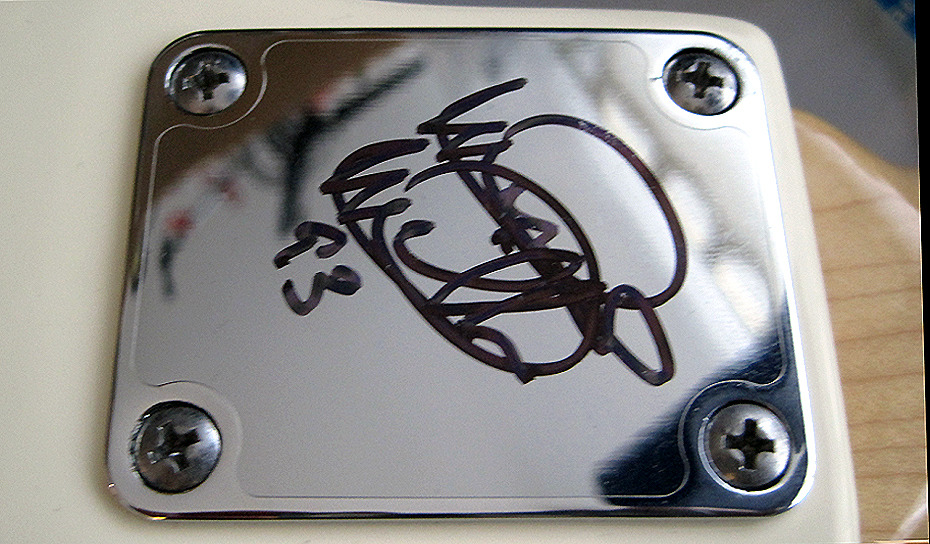
Weirdly, the bass does indeed have something of Marcus about it. I found it harder than usual to pacify the toppy, trebly tone that a Jazz with rounds can sometimes have and I'm left wondering if Marcus had more to do with the spec of the circuit and pickup choice than your average 'sig name' generally does, i.e. not much. I don't think Marcus's contribution was limited to merely signing the neck plates, which does validate his claimed contribution somewhat and makes him a good guy in my book. But no worries - I'm not fanatical about MM's sound or music and given the versatility of the circuit you can get pretty much any tone you want, which in my case is fairly hefty. But there is still an underlying muscular 'twang' in the mix, which I like a lot. Maybe I'm noticing this more because I've been playing flats for the last few months? The tone is tight, punchy, growly and harmonically rich with sustain until next Tuesday. If you like sustain, that is. I found I needed a Fretwrap when playing fingerstyle...
The pickups are strong and seem to have high output. The spec states Alnico 5 magnets and USA heavy Formvar wire and they are fitted per 1960s Jazz spacing. You won't need to upgrade these pups - you'd be unlikely to hear much improvement without spending a significant percentage of the purchase price of the bass, and probably not even then. It's a big, open tone that can ring like a piano and it sounds good in passive mode too, a bonus for those who want a slightly more Old Skool option... there is a mini active/passive switch, a bit of insurance for those who fear battery failure on stage... though in practice this is unlikely.
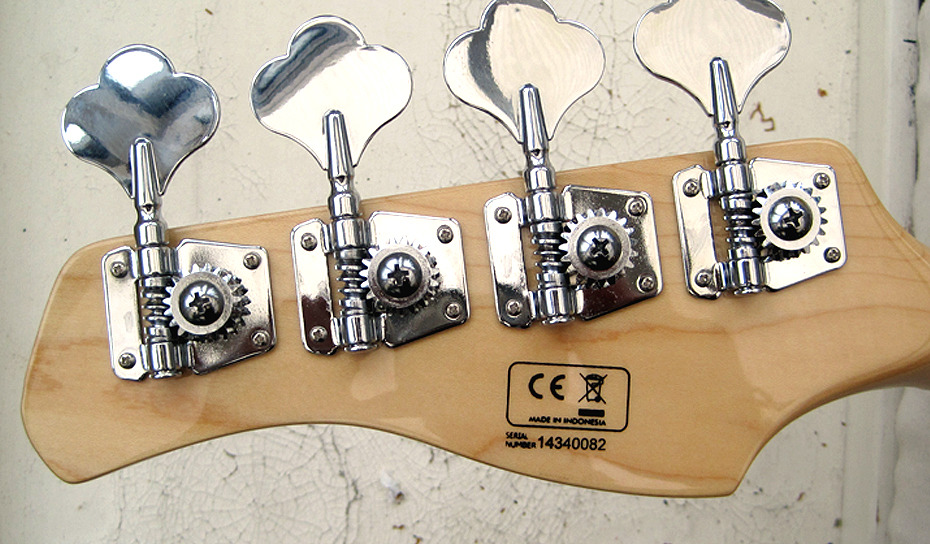
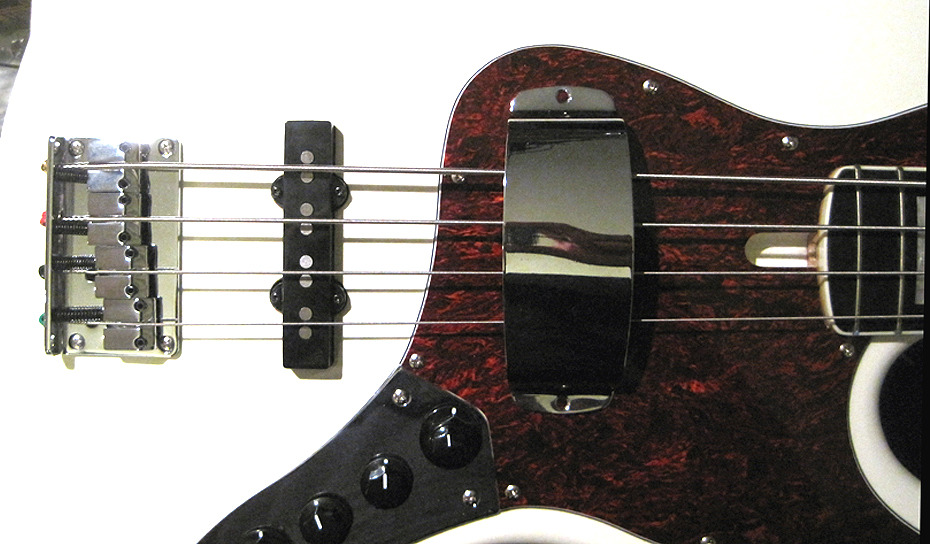
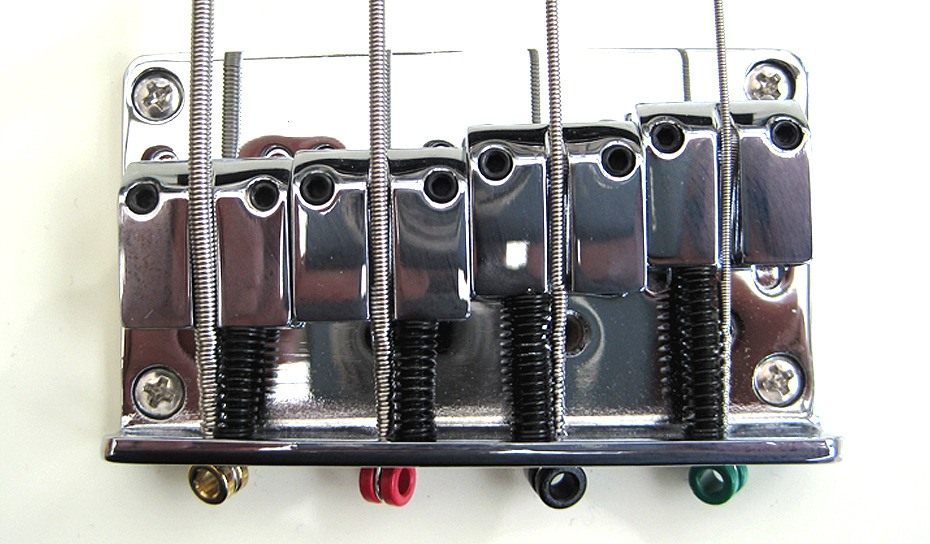
So are there any negatives? In my opinion the bass is let down just a little by the tuners, which seem a bit 'MIM'. But they look the part (from the front), work well enough and hold tune perfectly adequately. Also the bridge doesn't really fulfill its promise - it has very nice wide, flat saddles, but the rest of it is just standard bent-steel stuff. Not that there's anything wrong with it functionally, it works well and has a through-body option. There is a gap between the flanges of the control knobs and the bell plate, which seems contrary to the careful thought and planning evident elsewhere... and as the pickups are single-coil, any blend other than close to 50-50 will generate some buzz if you're anywhere near your amp. I didn't find this particularly irritating - it's the nature of single coils, after all. If you've ever played a Jazz with singles you'll already know if this is going to be a problem for you or not. The stacked vol/tone and mid controls are a bit tall and I wonder how many will be bent or otherwise damaged out in the real world. They could have been lower-profile, in my opinion. But then there isn't a lot of room on the bell plate for all those controls... perhaps a Marcus-style auxiliary guard/control plate would have been a possible solution, but this would have increased production costs. Chrome knobs are now available but any improvement remains to be seen.
The access slot for the heel-end truss rod adjuster is painted but not finished, so it seems a bit rough. A non-issue for me, as is the headstock shape and the wisdom of having it bear the legend 'Marcus Miller'. I don't much care for it, but it took me as long as it takes to get the bass out of its box and play it for five minutes to genuinely not be in the least bothered about it. One final point... The bass is quite long - it only just fits in a Hiscox Liteflite and pushes the boundaries of my Ritter gigbag... but please do note that not one of the above criticisms makes the slightest difference to the sound or playability of this bass, and any perceived issues can be easily remedied if they bother you that much. Everything truly important is good.
A chrome neck pickup cover is also supplied... there have been niggles about the fact that it hampers the strings when fitted, even with a low action. Another non-issue... if you carefully bend the thing into a gentle arch so that both screw-holes are flat to the pickguard, there is plenty of clearance. Presumably there's a reason why it arrived in a flattened-out state... I have no clue. There are no screw holes for it anyway and I won't be drilling any. Ashtrays look good but are impractical, in my opinion.
So in conclusion... this bass is a game-changer and if Fender/Squier et al don't sit up and take notice then they'll be making a big mistake. Even if you're not a dyed-in-the-wool Jazz bass fan, you can now afford to keep a quality Jazz in your armoury, should you wish. If you are a Jazz Bass fan then there is nothing left to do but choose your flavour and order one. In my opinion there is, at the heart of this bass, a Jazz that could well be as good as anything currently available at three or four times the price, and perhaps even at any price.
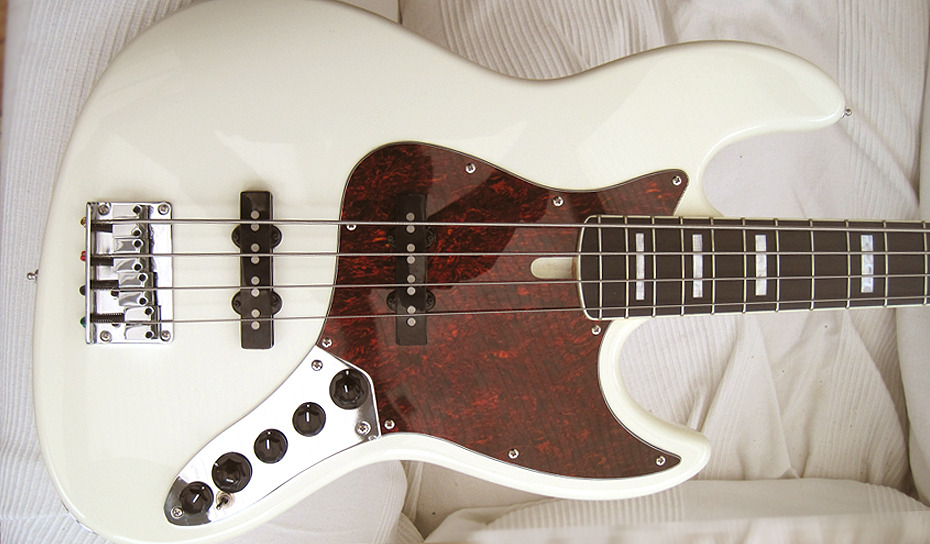
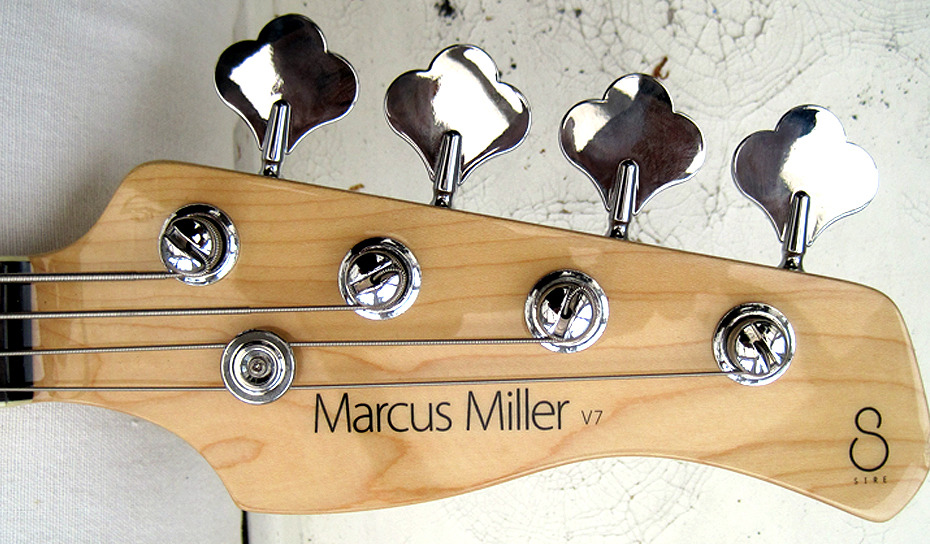

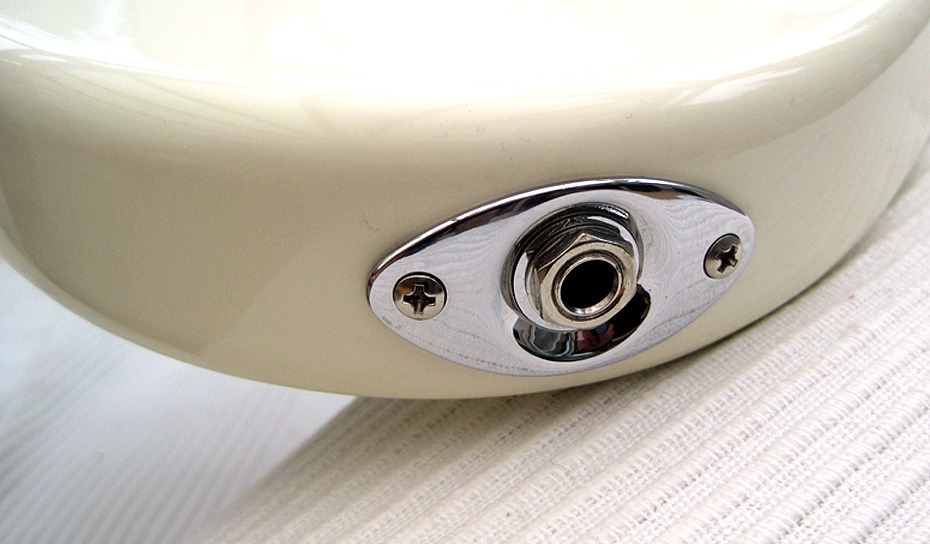



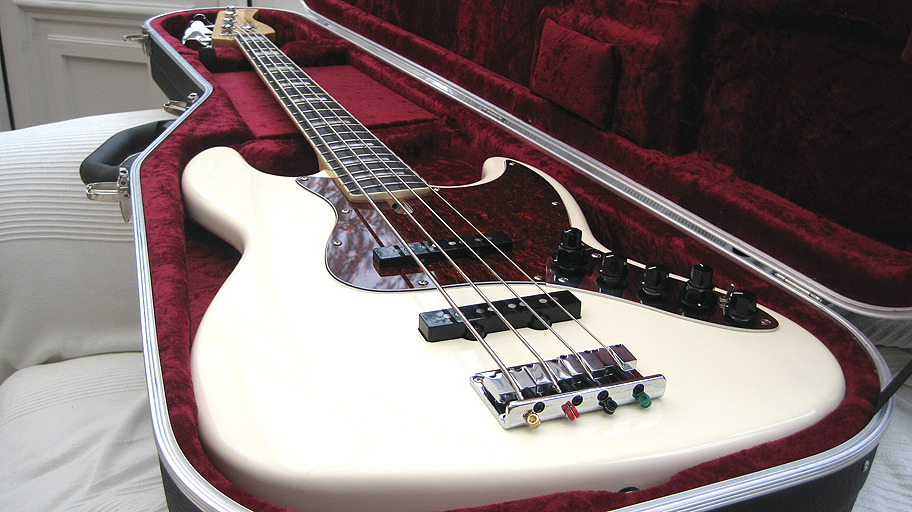
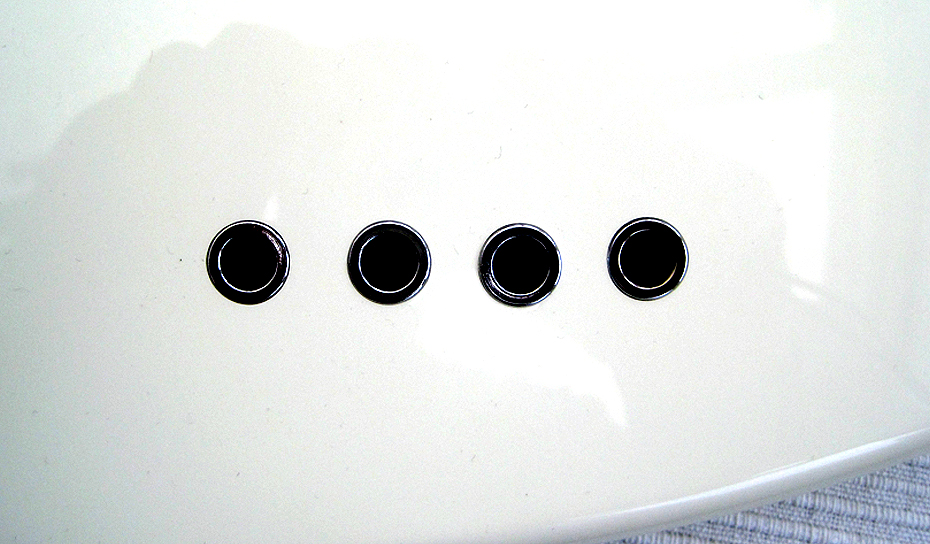
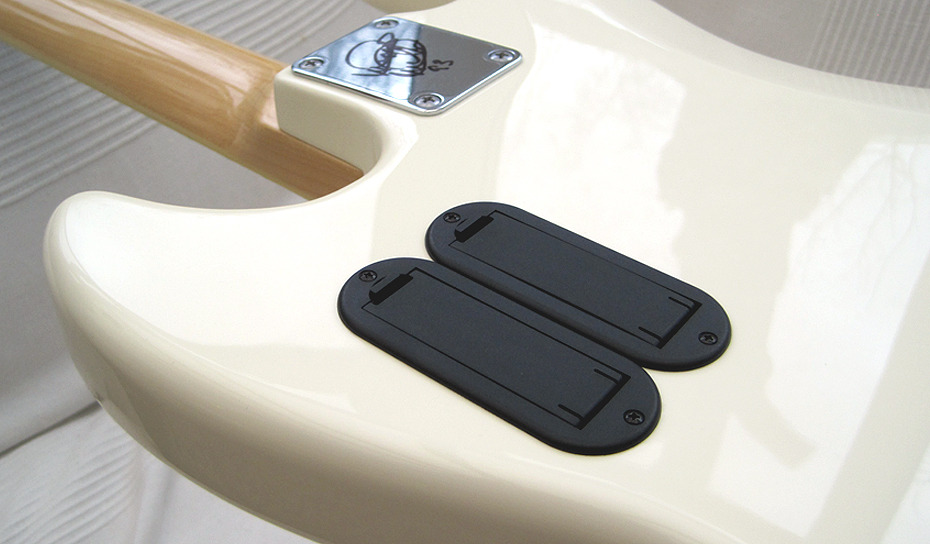
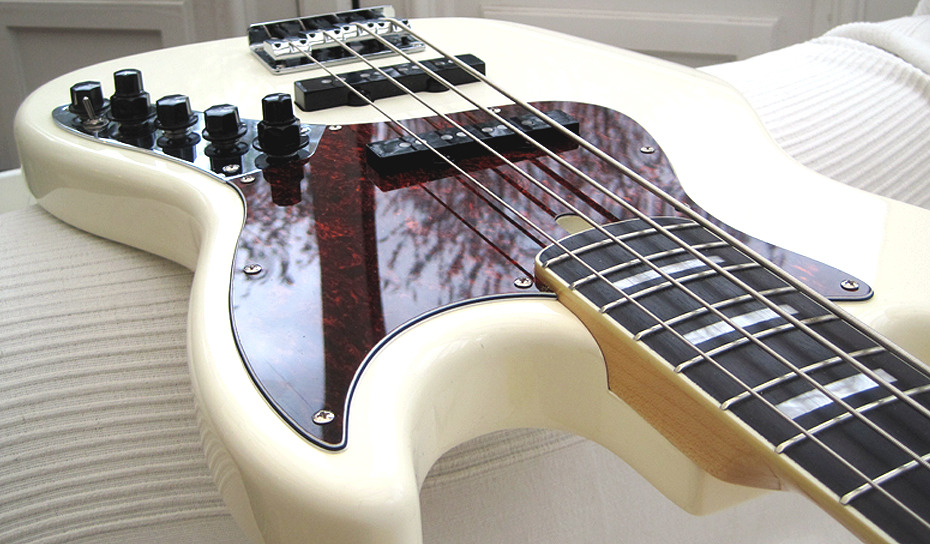

- Body: North American alder, vintage white, 3-ply tortoiseshell guard, cat's-eye jack socket.
- Neck: 4-bolt 1-piece hard maple, rosewood board with binding and pearloid block inlays, natural bone nut.
- Neck Spec: C-Shape, 34" scale, 7.25" radius, 38mm nut, 20 medium/small frets, truss rod adjustment at heel.
- Pickups: Marcus Super Jazz Alnico 5, USA heavy Formvar wire, 60s spacing.
- Tone Circuit: 18V Heritage-3. Vol/tone stack, blend, treble, mid sweep/freq stack, bass, active/passive switch.
- Bridge: Marcus Big-Mass 1, through bridge/through body, string spacing 20mm.
- Weight: 9.5lb.
- Price Paid: £268.00 ($399) including delivery.
Short clip of the bass played with a drum track. Recorded with all tone circuit controls set flat through an Edirol UA5 Audio Interface (24-bit/96kHz) into FL Studio 11. No FX or processing on the bass apart from light compression. Apologies for my meandering jam... it's only a minute or so, but hopefully you'll get some idea of the sound.
Now read on... This is ostensibly a low-cost bass which has been deliberately inserted into the market at a point of fierce competition - mostly from Fender/Squier and their derivatives, copyists and detractors. However, the only thing 'budget' about the V7 is the price. I was expecting a high level of fit and finish out of the box - this already being the received wisdom on the subject - but I was still very surprised at just how high a level. It's a lovely-looking thing and close inspection revealed not one dink, ding or imperfection. Attention was obviously paid to the bass before it left the factory - the action has been set low and with no fret buzz. The intonation was very close to correct. It was even very nearly in tune... It ships with D'Addario XL rounds as stock, which are certainly more than good enough to be going on with, but this example is fitted with my current favourite rounds, D'Addario EXL 170BT Balanced Tension 45-60-80-107.
Plug in, turn on. First impressions: Great neck! And the 18V Heritage-3 tone circuit is excellent. Powerful, very versatile and with a sweepable mid that gives you cut and boost between 200Hz and 1kHz. The bass boost/cut is well hefty and you have to be careful with it as it's a real floor-shaker and window-rattler. Treble offers presence and air without being harsh or strident.
The only other circuit I've used with this sort of power on tap is Spector's TonePump. But that is a 2-band and this is a 3, and is much more intuitive in operation. Like the TonePump, very small adjustments to the controls can make huge and profound differences to your output. There is also a master volume/tone stack and a pickup blend control which still operate when the bass is in passive mode. The Treble, Mid Controls and Bass kick in when the switch is set to Active mode. There is an internal trim adjuster should you want to match passive and active output levels. All controls are smooth and positive in operation.
The neck is superb *cough* Lakland! *cough*. It's a slightly chunkier handful than a standard Jazz (closer to my Spector Euro), though still Jazz-narrow at the nut, with pearloid blocks and lush, creamy binding with black side-markers, all finished to a very high standard. It is lovely and straight and is a joy to play. The inlays are finished better than those on my Euro. The frets are not 'vintage'-thin, but narrower than the usual 'jumbo' type. There is no evidence of sharp or poorly-finished fret-ends. The nut is genuine bone. In short, it comes over like a neck from a bass that cost at least three times the price of this one, and then some.
Weirdly, the bass does indeed have something of Marcus about it. I found it harder than usual to pacify the toppy, trebly tone that a Jazz with rounds can sometimes have and I'm left wondering if Marcus had more to do with the spec of the circuit and pickup choice than your average 'sig name' generally does, i.e. not much. I don't think Marcus's contribution was limited to merely signing the neck plates, which does validate his claimed contribution somewhat and makes him a good guy in my book. But no worries - I'm not fanatical about MM's sound or music and given the versatility of the circuit you can get pretty much any tone you want, which in my case is fairly hefty. But there is still an underlying muscular 'twang' in the mix, which I like a lot. Maybe I'm noticing this more because I've been playing flats for the last few months? The tone is tight, punchy, growly and harmonically rich with sustain until next Tuesday. If you like sustain, that is. I found I needed a Fretwrap when playing fingerstyle...
The pickups are strong and seem to have high output. The spec states Alnico 5 magnets and USA heavy Formvar wire and they are fitted per 1960s Jazz spacing. You won't need to upgrade these pups - you'd be unlikely to hear much improvement without spending a significant percentage of the purchase price of the bass, and probably not even then. It's a big, open tone that can ring like a piano and it sounds good in passive mode too, a bonus for those who want a slightly more Old Skool option... there is a mini active/passive switch, a bit of insurance for those who fear battery failure on stage... though in practice this is unlikely.
So are there any negatives? In my opinion the bass is let down just a little by the tuners, which seem a bit 'MIM'. But they look the part (from the front), work well enough and hold tune perfectly adequately. Also the bridge doesn't really fulfill its promise - it has very nice wide, flat saddles, but the rest of it is just standard bent-steel stuff. Not that there's anything wrong with it functionally, it works well and has a through-body option. There is a gap between the flanges of the control knobs and the bell plate, which seems contrary to the careful thought and planning evident elsewhere... and as the pickups are single-coil, any blend other than close to 50-50 will generate some buzz if you're anywhere near your amp. I didn't find this particularly irritating - it's the nature of single coils, after all. If you've ever played a Jazz with singles you'll already know if this is going to be a problem for you or not. The stacked vol/tone and mid controls are a bit tall and I wonder how many will be bent or otherwise damaged out in the real world. They could have been lower-profile, in my opinion. But then there isn't a lot of room on the bell plate for all those controls... perhaps a Marcus-style auxiliary guard/control plate would have been a possible solution, but this would have increased production costs. Chrome knobs are now available but any improvement remains to be seen.
The access slot for the heel-end truss rod adjuster is painted but not finished, so it seems a bit rough. A non-issue for me, as is the headstock shape and the wisdom of having it bear the legend 'Marcus Miller'. I don't much care for it, but it took me as long as it takes to get the bass out of its box and play it for five minutes to genuinely not be in the least bothered about it. One final point... The bass is quite long - it only just fits in a Hiscox Liteflite and pushes the boundaries of my Ritter gigbag... but please do note that not one of the above criticisms makes the slightest difference to the sound or playability of this bass, and any perceived issues can be easily remedied if they bother you that much. Everything truly important is good.
A chrome neck pickup cover is also supplied... there have been niggles about the fact that it hampers the strings when fitted, even with a low action. Another non-issue... if you carefully bend the thing into a gentle arch so that both screw-holes are flat to the pickguard, there is plenty of clearance. Presumably there's a reason why it arrived in a flattened-out state... I have no clue. There are no screw holes for it anyway and I won't be drilling any. Ashtrays look good but are impractical, in my opinion.
So in conclusion... this bass is a game-changer and if Fender/Squier et al don't sit up and take notice then they'll be making a big mistake. Even if you're not a dyed-in-the-wool Jazz bass fan, you can now afford to keep a quality Jazz in your armoury, should you wish. If you are a Jazz Bass fan then there is nothing left to do but choose your flavour and order one. In my opinion there is, at the heart of this bass, a Jazz that could well be as good as anything currently available at three or four times the price, and perhaps even at any price.
Last edited:





 Jim
Jim