• TalkBass has been independent since 1998. Add your voice.
    Create a free account to reply to discussions, view embedded media, and browse with fewer display ads.
    Join freeLog in
    Want zero display ads or expanded classifieds tools? Compare plans.

Need Some Info - Bassman 50

So, I've been offered a Bassman 50 on a very very very extended loan :) ... I've read the threads on TB about the Bassman 50 and gather that it has good tone but it just isn't loud. That's fine. I don't plan on playing out with it. Just thought I couldn't pass it up for the deal and it may end up being a nice recording amp.

I haven't seen it in person yet, so, I have a couple questions:

1. I never play tube amps. Is there anything I need to know or check out before firing up a tube amp that hasn't been turned on after 15 years?

2. Any idea what is in the cabinet?

3. Anything else I should know about this amp?

Here she is:
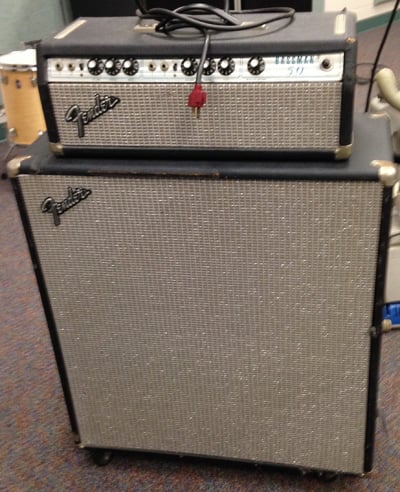
vnjrio.jpg
 
  • Like
Reactions: Linnin
Sweet score! One quick thing to remember is make sure to have the speaker plugged in while the amp is on.

It would be a good idea to have the amp gone through, it will likely need cleaning and probably some cap work.....make sure to save the old parts for posterity. If you end up trying it out and it sounds good and seems stable(no strange noises/smells, etc) and you're just using it at home you can probably enjoy it as is for a while.... but it will need servicing eventually if not right away.
 
  • Like
Reactions: Linnin
Make sure the cable from amp to cab is connected to main speaker out which must be used at all times. There is extra speaker out when running two 8 ohm cabs and what lowphatbass as advised. I own a bassman 70 with that cab and really like owning something that was made very good. CONGRATS hope you enjoy it.
 
If you don't it will burn the amp up it always has to have a load it always needs a load out of main speaker out. the back of the amp says 4 ohms but you can run one or two 8 ohm cabs and it will be fine. nothing lower than 4 ohms
 
You may already know the turn on and off procedure but I will tell you just to make sure. Turn the power switch on first and let it warm up a couple of minutes then hit the bypass switch and your ready to play, When turning the amp off hit bypass switch first wait a minute and turn power off this is a very good practice to use on any tube amp.
 
You don't even need to wait a few minutes for heater warm up. 30-60 seconds you are more than fine, most tube filaments are fine at 10 secs or less. Standby switch just allows the tube filaments to start coming up to temperature before hitting the tube plates with full B+ voltage. Lotsa mixed feelings about the need of standby at all in amp building circles, proper designs don't actually need them.

I would make sure that you have a safe and reliable 3 prong cord installed and the proper fuse is installed before even trying to turn it on. I would also have all tubes checked out in a tube tester to make sure the filaments are fine, there are no shorts, and the tubes still provide gain, before turning amp on. Also pull the chassis and inspect all electrolytic capacitors. If the caps are more than 10 years old, just replace all of them for safety and piece of mind. Make sure the output tubes are biased properly after that, and that thing should last a lifetime if both transformers are good.
 
It should be a fantastic recording amp, I heard they are very "woody" sounding. Not sure if they can get aggressive or not, I guess you'll have to find out!

Also, tube amps like to be cranked and can get some great sounding tones when you start to push them. That old bassman cab might be a weak link, not sure of the power handling on it.
 
You don't even need to wait a few minutes for heater warm up. 30-60 seconds you are more than fine, most tube filaments are fine at 10 secs or less. Standby switch just allows the tube filaments to start coming up to temperature before hitting the tube plates with full B+ voltage. Lotsa mixed feelings about the need of standby at all in amp building circles, proper designs don't actually need them.

I would make sure that you have a safe and reliable 3 prong cord installed and the proper fuse is installed before even trying to turn it on. I would also have all tubes checked out in a tube tester to make sure the filaments are fine, there are no shorts, and the tubes still provide gain, before turning amp on. Also pull the chassis and inspect all electrolytic capacitors. If the caps are more than 10 years old, just replace all of them for safety and piece of mind. Make sure the output tubes are biased properly after that, and that thing should last a lifetime if both transformers are good.

Hmm, a lot of things to consider. Based on the pic, it looks like it has the 3 prong cord. I have an email out to a local tube amp repair guy to see how much it would run just for him to give the amp a once over. I really don't want to dump a bunch of money into it because, honestly, I probably won't use it much. But, it'll definitely be cool to have if it is affordable to get working.
 
It will have resale value, so that is something to consider. That one looks like it is in pretty decent cosmetic shape, I've seen some real bad ones before. I originally bought my bassman to use as a guitar amp, works great for that purpose, they are always in demand by guitarists especially in unmodified form. A total recap and going through would cost I'm guessing over a hundred (assuming no blown tubes, that will be more), any competent tech can handle the job no problem. You should be able to make any money invested back if you decide to sell it off eventually. Can't hurt to get an estimate.
 
Hmm, so I started emailing a few local shops and have gotten a variety of responses to me asking "How much would it cost just to give it a once over to see if it is safe to turn on and maybe an estimate on repairs". The responses I've gotten are:

1. Someone just replied with their hourly rate.
2. Someone replied with a fair diagnostic fee and said "If it worked the last time, it is probably ok". Hmm, that was 15 years ago.
3. Last guy, I found on craigslist, seemed the most knowledgeable. Was honest and said its hard to tell without seeing but said, after being off for that long, the amp needs to be turned on slowly with variac. Reason is because, after that long, capacitors in the power supply dry out. Just flipping it on can do anything from just blowing a fuse to smoking up the house and causing more damage. He said he'd be happy to look at it.

#3 sounds pretty legit, right?
 
It's not a tough job for any respectable tech to do, so probably won't matter too much who you use. I would ask some local players if you can, see if anyone has a bad reputation or anything. Other than that, I'd go with anyone who is fender certified and not charging outrageous labor. If the tubes and transformers are good, it shouldn't be too expensive.
 
There's a Bassman 50 here waiting to be rebuilt for the 3rd time in 20+ years. IMO, the power supply should be given close attention by the tech you bring it to and possibly ask them a price to rebuild the power supply section(usually involves replacing all of the capacitors and verifying voltages) EVEN IF IT IS WORKING NOW. If it's not possible due to $$$, use the working amp and save to get that done.

Other than replacing bad tubes, the actual repairs I've done on noisy and/or failed SVT's, Fender Twins, Marshalls, and this Bassman involved the power supply or some component directly linked to it.
 
Hi.

Hmm, so I started emailing a few local shops and have gotten a variety of responses to me asking "How much would it cost just to give it a once over to see if it is safe to turn on and maybe an estimate on repairs". The responses I've gotten are:

1. Someone just replied with their hourly rate.
2. Someone replied with a fair diagnostic fee and said "If it worked the last time, it is probably ok". Hmm, that was 15 years ago.
3. Last guy, I found on craigslist, seemed the most knowledgeable. Was honest and said its hard to tell without seeing but said, after being off for that long, the amp needs to be turned on slowly with variac. Reason is because, after that long, capacitors in the power supply dry out. Just flipping it on can do anything from just blowing a fuse to smoking up the house and causing more damage. He said he'd be happy to look at it.

#3 sounds pretty legit, right?

Out of those three, the #3 sounds the most honest one.
If an old el apliance with old electrolytic capacitors sits more than a couple of years, it's always good practice to slowly bring up the voltage.

There's no harm in doing so, even if the dry caps do not flash over.

Exploding el caps make an unbelievable mess, even though they usually do not take other components with them.

The #1 is most likely OK as well, that's a standard procedure when an amp of an unknown condition is brought in.
They just didn't feel like going any deeper than to tell their hourly rate.

I'd avoid #2.


For me "Fender Warranty Authorized" wouldn't mean a squat, but things may be better on Your side of the pond ;).

Regards
Sam
 
Hi.


Out of those three, the #3 sounds the most honest one.
If an old el apliance with old electrolytic capacitors sits more than a couple of years, it's always good practice to slowly bring up the voltage.

There's no harm in doing so, even if the dry caps do not flash over.

Exploding el caps make an unbelievable mess, even though they usually do not take other components with them.

The #1 is most likely OK as well, that's a standard procedure when an amp of an unknown condition is brought in.
They just didn't feel like going any deeper than to tell their hourly rate.

I'd avoid #2.


For me "Fender Warranty Authorized" wouldn't mean a squat, but things may be better on Your side of the pond ;).

Regards
Sam


This^^

I was going to say go with #3. I also wouldn't even turn it on, just take it to him.

Very nice amps though, one of the classics, and if you end up wanting to resell it some day, you'll get your money back out of it and then some from a guitar player.
 
Authorized or not shouldn't matter, just a personal preference. A certified tech will more than likely have worked on one of these before. Straightforward circuit and all, anyone can fix it really, but experience IMO is never a bad thing. Price and local reputation should decide, for all we know guy #3 is some teenager who re-tubed his dual rectifier once and read some articles on the internet. Unfortunately, if no one local can give you any real opinions on any of them, it's kinda a crapshoot.
 

Latest posts