• TalkBass has been independent since 1998. Add your voice.
    Create a free account to reply to discussions, view embedded media, and browse with fewer display ads.
    Join freeLog in
    Want zero display ads or expanded classifieds tools? Compare plans.

New bass help short arms

Hi guys new to this forum,
I've played six string guitar since I was about 13 and played bass for a couple of years in a band maybe four years ago, I've always played bass a bit to overdub onto my own stuff etc but looking like I might be starting a second band where I play bass and I wanna advance my skills and upgrade from the bass I got free that ive been playing for years.

I have a couple of questions, when I played live bass in a metal band I always found the angle of my wrist could sometimes hurt and some hand cramping issues. I have kinda short arms and was wondering if a short scale bass might be a better fit for me? is this right or am I barking up the wrong tree here?

Originally I was looking at five string varients as I'm into jazz and the next band I want to start would be a fusion/ prog band. Now I'm jus worried that bigger neck would worsen my original problem or is this a technique issue coming from playing lead guitar? My hands aren't massive and I have short ish arms but I'm not sure.

Can someone guide me here, I know pastorious n even claypool now uses four string so I know it can be a crazy technical instrument either way but do you think I'll miss out without that low b of a five string? And am I losing anything sound or fret count wise by buying a short scale bass?

Thanks in advance for your help, Josh
 
  • Like
Reactions: bearfoot
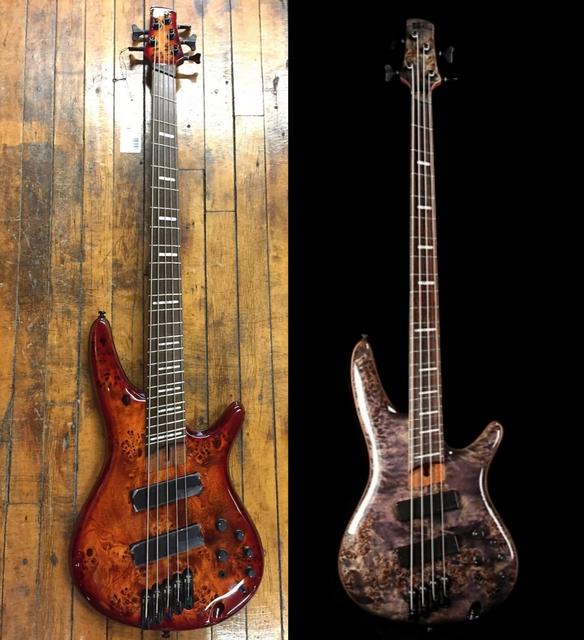
The ergonomics of a fanned-fret bass might help, too.
Wow never actually seen this, very cool would love to try one. I have seen some great short scale basses online and have been tempted to take the plunge but the five string thing does stay in the back of my mind i will have to try a five string out though i feel like I'd have to get used to the muting the b string for a while to really decide if I liked it. The few guitar shops around here don't have any short scale basses but I imagine as a guitarist I would like the feel, cheers for the reply
 
How short are short arms ?
My music teacher back in school had short arms. He was not able to get his hands into his jeans pockets while standing up straight. When he let his arms hang, his palms ended around the belt line.
That was short. He needed a shortscale bass because he literally could not reach up all the way to the top of a longscale.

When your arms are longer than that, you can play any scale length you like. Just make sure your technique is not ruining your joints.
 
Here is an easy experiment you can try: Tune your bass down a whole step to DGCF. Put a capo at the 2nd fret. Try playing your favorite riffs, licks, and bass lines in this tuning. If you like the results of this experiment then you might be a good candidate for a 30" short scale bass. :)

If you post a video or some "hand selfies" then we can give you advice how to improve your technique. Playing the bass should never cause any pain, cramping, numbness, tingling, or discomfort!
 
Wow never actually seen this, very cool would love to try one. I have seen some great short scale basses online and have been tempted to take the plunge but the five string thing does stay in the back of my mind i will have to try a five string out though i feel like I'd have to get used to the muting the b string for a while to really decide if I liked it. The few guitar shops around here don't have any short scale basses but I imagine as a guitarist I would like the feel, cheers for the reply
I played one of these and the feeling is complete natural, very comfortable...and after playing for five minutes or so I forgot I was playing one and thought I'd grabbed the wrong Ibanez.
How short are short arms ?
My music teacher back in school had short arms. He was not able to get his hands into his jeans pockets while standing up straight. When he let his arms hang, his palms ended around the belt line.
That was short. He needed a shortscale bass because he literally could not reach up all the way to the top of a longscale.

When your arms are longer than that, you can play any scale length you like. Just make sure your technique is not ruining your joints.
Short girl, short arms, small hands. She serms to manage, though.
 
I’m hearing two different things:
  • Short arms making it difficult to reach the end of a long neck, and
  • Small hands making it difficult to span a wide neck
For the first, I’d echo the recommendations for a shorter scale (I actually prefer “medium scale” of 32 or 33 inches) or even one of the shorter multiscale (31 to 34 inches, for instance) instruments.

For the second, I’d (rather obviously) recommend narrow string-to-string spacing. Basses come in a pretty wide variety of string spacing these days. Some folk prefer lots of room between strings, and others like them close together. Coming from a guitar background, you may prefer narrow. Also, I’ve heard anecdotally that pick players have an easier time with narrow spacing than slappers.

Small hands can also have difficulty with long scales down near the nut, where the fret-to-fret distance is greatest, which makes medium or short scales beneficial here as well.

Also, the recommendation to string a four-string with lower pitches (such as B E A D or D G C F) is a good one; this would give you a narrower neck with the low-pitch range you’re looking for.
 
  • Like
Reactions: Salmankushdi
How short are short arms ?
if they don't extend all the way to the fingertips = they're too short. :D

OP: getting out to play a bunch of different instruments could be helpful in making the decisions you want to make! play as many as you can. each experience will tell you something about your quest! good luck! :thumbsup:
 
  • Like
Reactions: Alex Bass
How short are short arms ?
My music teacher back in school had short arms. He was not able to get his hands into his jeans pockets while standing up straight. When he let his arms hang, his palms ended around the belt line.
That was short. He needed a shortscale bass because he literally could not reach up all the way to the top of a longscale.

When your arms are longer than that, you can play any scale length you like. Just make sure your technique is not ruining your joints.

Cheers for the replies, Ahh right wow I defo don't mean that short I'm about 5'8 n only slightly shorter arms than average for my height probably, I guess just playing stuff around first frett position going from first too fourth frett feels a bit uncomfortable. I haven't played tonnes of bass until recently since I played in the band for a couple years but perhaps it is a technique thing. I haven't had too many issues with it lately and I was new to bass back then I just remember live playing being a bit of a pain. It is still a bit weird on my wrist in that first frett position tho.
 
I’m hearing two different things:
  • Short arms making it difficult to reach the end of a long neck, and
  • Small hands making it difficult to span a wide neck
For the first, I’d echo the recommendations for a shorter scale (I actually prefer “medium scale” of 32 or 33 inches) or even one of the shorter multiscale (31 to 34 inches, for instance) instruments.

For the second, I’d (rather obviously) recommend narrow string-to-string spacing. Basses come in a pretty wide variety of string spacing these days. Some folk prefer lots of room between strings, and others like them close together. Coming from a guitar background, you may prefer narrow. Also, I’ve heard anecdotally that pick players have an easier time with narrow spacing than slappers.

Small hands can also have difficulty with long scales down near the nut, where the fret-to-fret distance is greatest, which makes medium or short scales beneficial here as well.

Also, the recommendation to string a four-string with lower pitches (such as B E A D or D G C F) is a good one; this would give you a narrower neck with the low-pitch range you’re looking for.

There’s a third option - the geometry of a longer stretch can change hand and wrist angle to an uncomfortable extent. On good days I can play first position on a 34” or even 35” scale, on bad days the fifth fret is about as far as I can do without pain.
 
In
I’m hearing two different things:
  • Short arms making it difficult to reach the end of a long neck, and
  • Small hands making it difficult to span a wide neck
For the first, I’d echo the recommendations for a shorter scale (I actually prefer “medium scale” of 32 or 33 inches) or even one of the shorter multiscale (31 to 34 inches, for instance) instruments.

For the second, I’d (rather obviously) recommend narrow string-to-string spacing. Basses come in a pretty wide variety of string spacing these days. Some folk prefer lots of room between strings, and others like them close together. Coming from a guitar background, you may prefer narrow. Also, I’ve heard anecdotally that pick players have an easier time with narrow spacing than slappers.

Small hands can also have difficulty with long scales down near the nut, where the fret-to-fret distance is greatest, which makes medium or short scales beneficial here as well.

Also, the recommendation to string a four-string with lower pitches (such as B E A D or D G C F) is a good one; this would give you a narrower neck with the low-pitch range you’re looking for.

Hi thanks for such a detailed response this is helpful, I do feel the scale might be easier for me to switch from guitar into it. fender jazz type basses have this narrower string spacing right? And this isnt too much of a problem with slapping either? Cheers again for the help
 
I guess just playing stuff around first frett position going from first too fourth frett feels a bit uncomfortable. I haven't played tonnes of bass until recently since I played in the band for a couple years but perhaps it is a technique thing. I haven't had too many issues with it lately and I was new to bass back then I just remember live playing being a bit of a pain. It is still a bit weird on my wrist in that first frett position tho.

Try putting your 1st finger on the 1st fret and your 4th finger on the 3rd fret. Then if you need to play a note at the 4th fret, shift your entire hand 1 fret. Shift, don't stretch! :)
 
Does a fanned-fret, five-string shortscale exist?

Try putting your 1st finger on the 1st fret and your 4th finger on the 3rd fret. Then if you need to play a note at the 4th fret, shift your entire hand 1 fret. Shift, don't stretch! :)

I agree. Find ways to play what you want that require the least amount of tendon stretching. Economy of motion is the best policy. Remember, bass guitars were designed to be played by average people when people were smaller than they are now; it's not some monster that only certain body types can handle. I have long arms and large hands, but it doesn't make me a better player (I do however use it as an excuse for my crap guitar playing).
 

Latest posts