• TalkBass has been independent since 1998. Add your voice.
    Create a free account to reply to discussions, view embedded media, and browse with fewer display ads.
    Join freeLog in
    Want zero display ads or expanded classifieds tools? Compare plans.

New book on Walking: Tabs or no Tabs?

Walking bass method: Tabs or no Tabs

  • Yes

    Votes: 18 42.9%
  • No

    Votes: 24 57.1%

  • Total voters
    42
From the purely business side, having tab will greatly increase the number of people who will buy your book.

Exactly. That's the Business 101 aspect that a lot of musicians just don't get. Which is why a lot of them starve...

Even established musicians make stupid business decisions all the time.

Take Gary Willis and his "Groove a Day" app. It seems an interesting concept, but he ONLY released it for the iPhone. Well it turns out that the Android ios holds 87% of the smartphone/table market share. Why would you market an app for just 13% of a market??? Especially when that market is already a niche to begin with...

Just dumb... The man can play some bass, but he obviously flunked Business 101...

So you leave out Tabs and you immediately alienate 75% of your market. Being elitist in delivering what I assume will be a basic instructional book. People looking for a basic book to learn walking bass, just want to learn walking bass. They "generally" don't want to be forced into a whole different line of study (reading) at the same time... And so you, the author, will starve in the meantime. Just provide both tab and standard notation. Everybody's happy.

The fact is that the few people who aspires to play in musicals or do big bands, already realize they need to read. They don't have to be forced into it. The other 10.7 million bass owners just want to play in a band down the street. If they even want to do that much... And tabs helps them do that. If your book fills that market, you can be successful with it.
 
Last edited:
I'm a no. I use tab, but I almost never agree with the fret selection or finger position (mostly because since I learned on upright bass, I make heavy use of open strings.)

Musical notes on the staff don't vary. They are fixed and require no interpretation. Tab inherently gives you the person's opinion as to how to play it in terms of which string and fret to use. Most of the time, I have to de-construct tab back to the music note and then find my own fingerings to play those notes. It's a huge pain.

If you're gonna walk, you can walk using the notes on the staff. There is no need to translate someone else's opinion about fret position into the notes.

If you want to include both, fine. But priority goes to the notes on the staff.
 
Going way out in left field. I would rather have scale degree numbers than tab, i.e. R-3-5-8. Some of Ed's books will show standard notation, tab and scale degree number. I found that helpful. I transpose most of my sheet music over to Nashville numbers --- so scale degree numbers fit into what I do. Need a 5th, it's down a string same fret or up a string and over two frets.

I do believe you would sell more books with tab, but I would love to see more scale degree numbers in instructional material... I believe scale degree numbers for generic repetitive licks, runs, etc. could add value.

My two cents for what it is worth.
 
Last edited:
That's a good point about scale degrees. It really helps to know how a particular note functions in a line in order to help the reader get to the point of understanding why certain lines work better than others.

Anyway, I think a combination of tab and music would be good, especially for a walking bass book. The non-reader may even find him/herself learning to read through osmosis because with basic four to the bar walking lines there is no complicated rhythms to deal with.
 
  • Like
Reactions: Groove Master
One of the most amazing things I have learned from TB is that most folks playing BG do not have a traditional music instruction background (scales, basic theory, notation reading, metronome use, etc.). I hope i said that in a polite way.

If you are writing a book, I guess you really need to be aware of your potential audience and their learning style. Which is way different from what I looked for several decades ago when i was learning walking bass.

And being cynical, including tab means you only have to provide half the material and save the rest for Volume II.

Make sure the book is printed in a format that makes it difficult to photocopy and never release a pdf copy.

And for Spin Doctor, I have to replace my 1994 Real Book with new, improved Hal Leonard 6th edition so I can be consistent with the mistakes my classmates are reading.

Now..back to the Russian Technical Regimen for fortepiano.
+1. Sure, I held down the low end in 6th and 7th grade band on the ol' tuba, but man, that was way last millennium. I picked up guitar as an adult, and tablature allowed me to reach deeper and become "that" rockstar that I always fantasized about, without the months and months of scales and theory that would've indubitably bored me out of my mind, and completely disinterested me from guitar. Bass is the same for me; I don't actually own any sort of bass hardware, as I tend to just plug the USB cord into my PS3 or laptop for Rocksmith (done in tablature notation). And, being a grown-ass adult, spare time is scarce as it is; I'd much rather have the tab laid out in front of me, in such a manner that I can just bust out my ol' guit-fiddle for a half hour or 45 minutes of playing whenever I can.
 
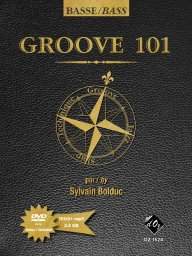
My experience with tabs was in the making of Groove 101 when I used Finale to write my exercices and give the files to my editor.

Then I realized that the software was using the easiest way to show the notes in the same position without much logic to it. That is why I decided to edit all the tabs from my point of view and give an extra tip at where to play the basslines more precisely without having to "finger" everything.

So my question for those who use mainly tabs:

Do you take for granted what the tabs tell you or once you learn the line you change your fingerings?
 
  • Like
Reactions: IamGroot
My experience with tabs was in the making of Groove 101 when I used Finale to write my exercices and give the files to my editor.

Then I realized that the software was using the easiest way to show the notes in the same position without much logic to it. That is why I decided to edit all the tabs from my point of view and give an extra tip at where to play the basslines more precisely without having to "finger" everything.

So my question for those who use mainly tabs:

Do you take for granted what the tabs tell you or once you learn the line you change your fingerings?

Some people seem to feel tabs are etched in stone. Nothing could be further from the truth. This is music. Everything is subjective and you can change anything to whatever you want. Rigid thinking is the thief of creativity. I've never met so many rigid thinkers as I have at Talkbass. It's fascinating, really.

Anyway, I'd say to create the tabs yourself since you are an accomplished musician and have a good idea of where the notes should be played to either have the best sound or easiest execution or both. If someone wants to make it something different, they are free to do so.
 
Last edited:
I think there is an expectation that the writer of the piece has tabbed out the best note location. Usually there is a play along file and the first goal is to make my performance match that of the teachers. I assume there is a lesson to be learned in doing it the way it is written. Sometimes there is a caveat from the writer to "experiment with different fingerings/positions to find out what works best for you" type of thing.

But mostly I'm just happy to get it down and move to the next example. This could encourage laziness, I don't know.

I do know that I am starting the Latin Bass Book (all notation) and as we speak I am working out the best positions since none are indicated. Lots of octave jumps which on my four string has taken me up the neck where I'm not as comfortable, but I am forced to learn it, which is a good thing in the long run.

Still, would like to know just where Oscar Stagnaro played it for my own information. (i.e. Does he play that Eb chord at the 11th fret or drop down to the 6th? Same notes, different timbre. Neither "wrong". But as I say, by the same token I'm learning the fret board because I have to make these decisions.
 
I don'r mind tabs per se, but in my experience a huge majority of people who rely on that form of learning have a strong tendency to take them as a sole option, thus having difficulty for the potential transposition or playing the same material in another position of the neck.
Yet, some times it comes in nicely, if done properly, i.e. edited personally by the author.
Regarding the scale degrees numbered... I see the value in in it, but that is exactly why I like to do the analysis and figuring out the note functions myself.
However, the addition of tabs also tends to increase the price of teh book, which is a minus point for me.
 
  • Like
Reactions: Groove Master
We are getting somewhere here and I like the discussion about learning material with notation and/or tabs. I am a trained musician that couldn't never understand all the fuss about tabs because it is so incomplete but at the same time it tells you where the note are played but not necessarily where it should be played while a trained musician will have usually some basics about scales and arpeggios and written material while tabs players usually don't have formal training I believe.

From an educator point of view I like the discussion so far :-)
 
  • Like
Reactions: Whousedtoplay
As far as rigid fingering goes, I try to work in lower frets as much as possible. So, I see 5 on E string, I think; Can I use open A there? 7 on A, I think 2 on D, it's become automatic.
 
Last edited:
Consider using tab to show multiple/alternate fingerings for the same passage. Maybe use tab to show alternate fingerings for intervals. I have not seen anyone use tab for this purpose, you might distinguish yourself from the rest of the pack.
 
Last edited:
  • Like
Reactions: knuckleduster
Including tabs will probably sell more books. I'm kinda over being loudly anti-tab and happy enough just to ignore it....when I can. I don't buy many bass books but I certainly would not buy one that had tab on the same page as the stave. It's distracting and annoying and means less music per page. If you have to include tab do it on pages separate from the standard notation. I've heard the argument that tab on the same page as the standard notation could help someone transition from tab to notation. But in fact no one who thinks tab is a great thing is ever likely to learn standard notation. They just don't see the need too.
 
  • Like
Reactions: IamGroot
Still, would like to know just where Oscar Stagnaro played it for my own information. (i.e. Does he play that Eb chord at the 11th fret or drop down to the 6th? Same notes, different timbre. Neither "wrong". But as I say, by the same token I'm learning the fret board because I have to make these decisions.

I wondered about this too when I got the Stagnaro book a long time ago.

The answer (for me): Learn all the fingering options (usually just two).

Edit: You will notice that Oscar's lines require a lot of movement up and down the neck(I.e G on the E and G on the G string two octaves up when playing in C). Hence the reason to explore your options. Becoming proficient in Latin bass requires being able to move around the neck. It is important to master the Latin bass "concept" rather than focus on a particular fingering.
 
Last edited:
  • Like
Reactions: consectaneus
I wondered about this too when I got the Stagnaro book a long time ago.

The answer (for me): Learn all the fingering options (usually just two).

Edit: You will notice that Oscar's lines require a lot of movement up and down the neck(I.e G on the E and G on the G string two octaves up when playing in C). Hence the reason to explore your options. Becoming proficient in Latin bass requires being able to move around the neck. It is important to master the Latin bass "concept" rather than focus on a particular fingering.
From my own experience with cuban music and studies with Oscar's book also, the way to play those basslines is more up the neck then you think for sound purposes and fingerings. If you play in D minor and you have the high F in the pattern there is a good chance that you should play this on the 10th fret not the 5th or open D.
 
From my own experience with cuban music and studies with Oscar's book also, the way to play those basslines is more up the neck then you think for sound purposes and fingerings. If you play in D minor and you have the high F in the pattern there is a good chance that you should play this on the 10th fret not the 5th or open D.
And if you have the low A (5th) below the root in the pattern, you would play at the 5th fret.

So you should be comfortable with a pattern both high and low on the neck.
 
I wondered about this too when I got the Stagnaro book a long time ago.

The answer (for me): Learn all the fingering options (usually just two).

Edit: You will notice that Oscar's lines require a lot of movement up and down the neck(I.e G on the E and G on the G string two octaves up when playing in C). Hence the reason to explore your options. Becoming proficient in Latin bass requires being able to move around the neck. It is important to master the Latin bass "concept" rather than focus on a particular fingering.

Al this talk about Oscar's book made me pull out my copy. I'd been playing this fake (Read: wrong) Tumbao rhythm over the bridge of Michael Jackson's "Can't Help it" and I need to just get it right...
 

Latest posts