• TalkBass has been independent since 1998. Add your voice.
    Create a free account to reply to discussions, view embedded media, and browse with fewer display ads.
    Join freeLog in
    Want zero display ads or expanded classifieds tools? Compare plans.

New book on Walking: Tabs or no Tabs?

Walking bass method: Tabs or no Tabs

  • Yes

    Votes: 18 42.9%
  • No

    Votes: 24 57.1%

  • Total voters
    42

Groove Master

Commercial User
Apr 22, 2011
1,808
1,291
Montreal
howtopracticebass.com
Disclosures
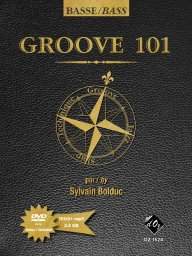
Author of Groove 101, Slap 101 and Technique 101
Hi there,

I would like to know if there are some bass players willing to learn some walking bass techniques with tabs. I know that trained bassists will read a book on walking bass without tabs but I'm curious to see if bass players that don't really know how to read would be interested in such a book.

I should mention that some of my books have tabs that actually help readers to understand how to play some of the exercices more precisely with my edited tabs versions.

Thanks
 
I can read, but I don't think tabs are as evil as people try to make them. If it helps, what difference does it make? The anti-tab thing mostly feels like misplaced elitism to me. Granted, tabs done by amateurs are wrong a lot of the time, but so is The Real Book...

Once you learn to play a walking line, and have figured out how to construct them, you're not gonna read it anyway.
 
Without wishing to fall off the fence, my daughter is an orchestral cellist. Although the music is standard notation, it is very common to see the string players annotate their own scores with position, fingerings, bowing and so on. However, its also not uncommon to see these notes and annotations crammed into so little space that they become difficult to read. I believe that scores should provide as much information as possible, and there are some things that TAB is, arguably, more adept at... Another question - do you TAB for 4 or 5 strings?

Al that said, there is something to be said for working fingerings and the like out for yourself, finding what works and writing your own notes - personally I find this approach makes the decisions made more memorable.

Maybe the answer is to leave sufficient space in the layout for users of the book to annotate as they see fit. Maybe limit to 4 bars per line with enough space between lines to add their own snippets of TAB if that is their preference...
 
  • Like
Reactions: Groove Master
....it is very common to see the string players annotate their own scores with position, fingerings, bowing and so on......
Al that said, there is something to be said for working fingerings and the like out for yourself, finding what works and writing your own notes - personally I find this approach makes the decisions made more memorable.

I've been reading musicals and big band charts for nearly 40 years and have never seen any tab. But SteveCS is correct, marking positions and fingerings is common. But not every note. Usually just the start of a phrase, or notating some shift if necessary. If this kind of notation by the player was something that everyone would use (its not, its a personal choice) why wouldn't it be published? BTW, some orchestral conductors, or section principals will request that the whole section play a part in a certain position or fingering so the tone color matches within the section. Same thing for EB, although almost always personal. If I wanted to change a part and play it higher on the neck with lower strings, why should I have to trip over Tab to do that?
 
Bass Chuck and SteveCS. Absolutely agree on marking fingering positions instead of tab. I have been doing this for years except I use fret number instead of Simandl position. My copy of Modern Technique is marked up like this.

I may be wrong on this, but in orchestral, they want strings synchronizing up and down bow, so the fingers generally should mesh in every instrument.
 
...

I may be wrong on this, but in orchestral, they want strings synchronizing up and down bow, so the fingers generally should mesh in every instrument.

Generally speaking, yes, but at times, no. For example the opening of Shostakovich 10th the strings have several bars of tied dotted minims, where free bowing is essential to create the sustained pulse-free pad.
 
Without wishing to fall off the fence, my daughter is an orchestral cellist. Although the music is standard notation, it is very common to see the string players annotate their own scores with position, fingerings, bowing and so on. However, its also not uncommon to see these notes and annotations crammed into so little space that they become difficult to read. I believe that scores should provide as much information as possible, and there are some things that TAB is, arguably, more adept at... Another question - do you TAB for 4 or 5 strings?

Al that said, there is something to be said for working fingerings and the like out for yourself, finding what works and writing your own notes - personally I find this approach makes the decisions made more memorable.

Maybe the answer is to leave sufficient space in the layout for users of the book to annotate as they see fit. Maybe limit to 4 bars per line with enough space between lines to add their own snippets of TAB if that is their preference...
Thanks for the reply.

The main reason I consider including tabs in a walking bass method is to make this technic and language available for everyone because once you learn the vocabulary you can transpose it in any styles after.

Also there will be a section dedicated to fingerings because it is a big part of a good sounding AND swinging bassline. I plan to do it only for 4 strings because to me a too low walking bass is not suitable for beginners.
 
Fingering yes, TAB no. TAB, to me, is like communicating via emoji. Sure, it can get the information across but it is a poor substitute for the more formal option. :D ( <---- deliberate use of emoji).

One thing I would definitely make sure of is that the book has comb binding. I find music books that are bound with glue to be thoroughly useless in a playing context and I just won't buy them anymore.
 
  • Like
Reactions: Groove Master
Fingering yes, TAB no. TAB, to me, is like communicating via emoji. Sure, it can get the information across but it is a poor substitute for the more formal option. :D ( <---- deliberate use of emoji).

One thing I would definitely make sure of is that the book has comb binding. I find music books that are bound with glue to be thoroughly useless in a playing context and I just won't buy them anymore.
Yeah I hear you. That was my first thought but I consider this option also. As for comb binding, my 3 other books have it ;-)
 
  • Like
Reactions: bass12
Yeah I hear you. That was my first thought but I consider this option also. As for comb binding, my 3 other books have it ;-)
Good to know for your other books as I was considering picking one up. For TAB, it's definitely true that you open the door to a potentially wider readership if you include it (I'm sure there are many publishers who would insist on the inclusion of TAB).
 
  • Like
Reactions: Groove Master
Good to know for your other books as I was considering picking one up. For TAB, it's definitely true that you open the door to a potentially wider readership if you include it (I'm sure there are many publishers who would insist on the inclusion of TAB).
My publisher don't mind, I do whatever I want. Groove 101 has edited tabs and Technique 101 doesn't have any.
 
  • Like
Reactions: bass12
One of the most amazing things I have learned from TB is that most folks playing BG do not have a traditional music instruction background (scales, basic theory, notation reading, metronome use, etc.). I hope i said that in a polite way.

If you are writing a book, I guess you really need to be aware of your potential audience and their learning style. Which is way different from what I looked for several decades ago when i was learning walking bass.

And being cynical, including tab means you only have to provide half the material and save the rest for Volume II.

Make sure the book is printed in a format that makes it difficult to photocopy and never release a pdf copy.

And for Spin Doctor, I have to replace my 1994 Real Book with new, improved Hal Leonard 6th edition so I can be consistent with the mistakes my classmates are reading.

Now..back to the Russian Technical Regimen for fortepiano.
 
  • Like
Reactions: Groove Master