• TalkBass has been independent since 1998. Add your voice.
    Create a free account to reply to discussions, view embedded media, and browse with fewer display ads.
    Join freeLog in
    Want zero display ads or expanded classifieds tools? Compare plans.

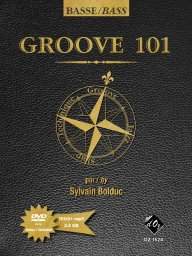
New book on Walking: Tabs or no Tabs?

Walking bass method: Tabs or no Tabs

  • Yes

    Votes: 18 42.9%
  • No

    Votes: 24 57.1%

  • Total voters
    42
And if you have the low A (5th) below the root in the pattern, you would play at the 5th fret.

So you should be comfortable with a pattern both high and low on the neck.
What I meant is that the bass in cuban music sounds more like a conga and the best way to get that tone is higher on the neck because of the attack and the decay of the notes. Of course it depends on the range of the written baseline but suggest you listen for Oscar's sound in the examples and try to figure out where he plays on the neck from the tone.
 
  • Like
Reactions: Jeff Bonny
What made me think of it was an Anthony Jackson interview where he said he wouldn't accept being unable to sound like a Baby Bass on his bass guitar. He never said how he got the sound and I've always speculated on that.
AJ has an amazing muted sound on his monster bass. He plays a 36" scale so I think he wouldn't mind playing upper neck :-)
 
I am a bit torn. NOW I would not EXCLUSIVELY use the tabs, but this is because I have studied enough to understand some pretty basic notation. and in that study I know that an "A" note can be played open, or closed in few spots on various strings. and depending on the subsequent notes is how I judge when/where/which position to play in.

but when I first started: TAB was a good tool to get a sense where to put my fingers.

So, like a few on here, I feel like you can reach a broader audience if you include it.
Now I just tape some paper over it cause I find it to be a distraction of sorts, but again I took time to learn notation.

so I voted Yes in the survey.

I have some tools in my bucket (house hold tool bucket) that I rarely use, but they are nice to have if I need them. same for TABs. they are not evil, but just a tool. if one uses it exclusively however it can become a crutch, and can be linear. but as always YMMV.:bassist:
good luck Groove!
 
  • Like
Reactions: Groove Master
AJ has an amazing muted sound on his monster bass. He plays a 36" scale so I think he wouldn't mind playing upper neck :)

aj.PNG


aj2.PNG

 
What I meant is that the bass in cuban music sounds more like a conga and the best way to get that tone is higher on the neck because of the attack and the decay of the notes. Of course it depends on the range of the written baseline but suggest you listen for Oscar's sound in the examples and try to figure out where he plays on the neck from the tone.
I own two copies of the book, so perhaps I have listened to Oscars playing a few times. And true, most times playing higher up the neck is desirable to get "that sound" which i describe as a warmer thuddier upright sound.

But usually Oscar will throw a few bars in low towards the end to mix it up. You dont want to get locked into one position.

Whoever mentioned 10th position for d minor. Yes, i agree , but you may want to swing up to 12 position to pick up that f if you are grabbing a pattern with a m7b5 in it.

Class time. Cheers
 
  • Like
Reactions: Groove Master
My problem with tab is, I use it all the time to quickly learn the melody of a cover song. Once I got it down I eventually, end up playing the cover tune note for note, but with my own style and fingering. As well as adding in a few notes. So Tabs would work for me. It's a format that leaves a lot open for interpretation and freedom to work with. And makes learning songs fast and easy.
 
I'd go for no tabs because I don't see the point in tabs in a walking bass book. Tabs make me think like "this fret on this string" and not note-scale-degree etc. There are several ways to play the same note on the fretboard yet it results in different tab positions.
But no tabs can hinder sales, presumably.