• TalkBass has been independent since 1998. Add your voice.
    Create a free account to reply to discussions, view embedded media, and browse with fewer display ads.
    Join freeLog in
    Want zero display ads or expanded classifieds tools? Compare plans.

New bridge with wider intonation range

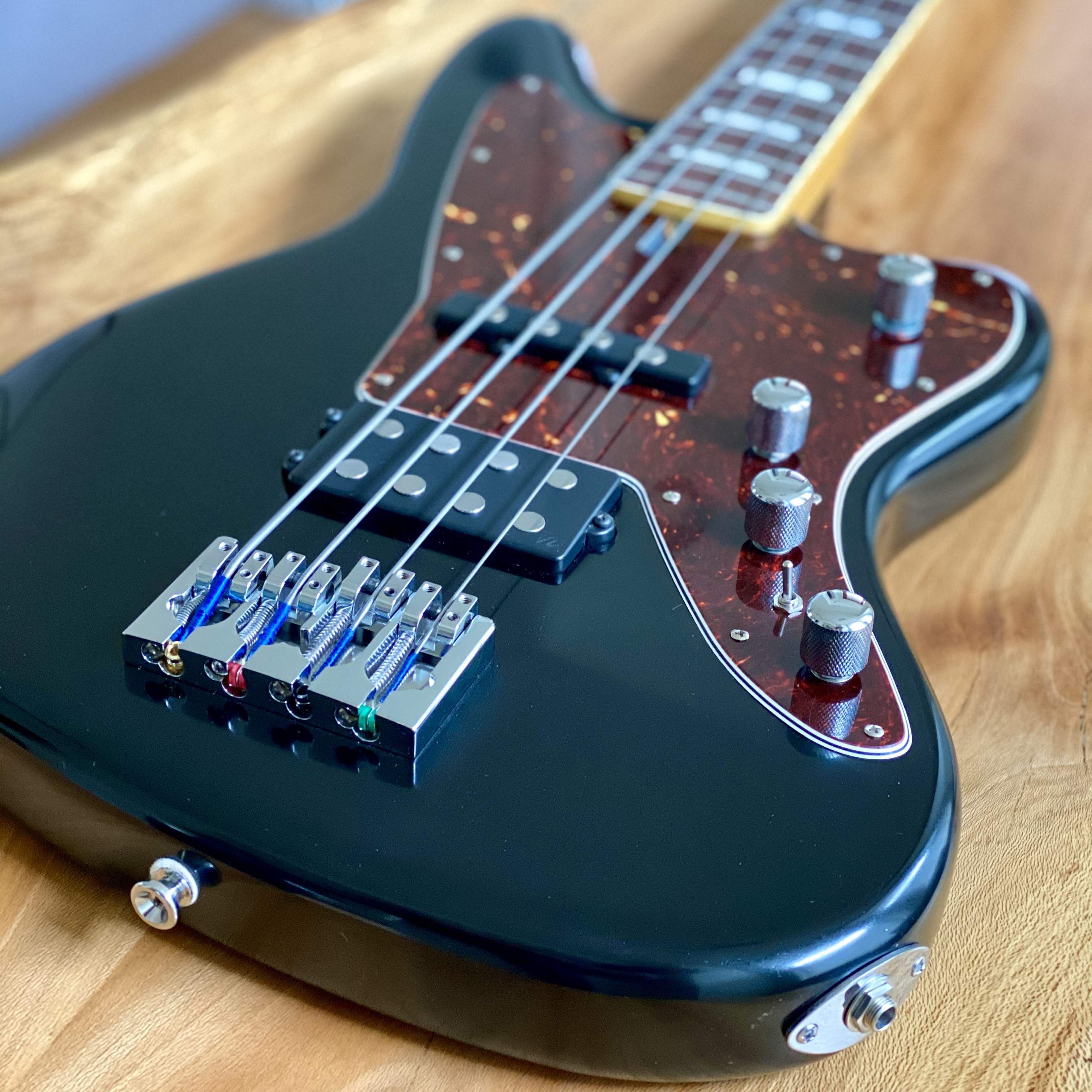
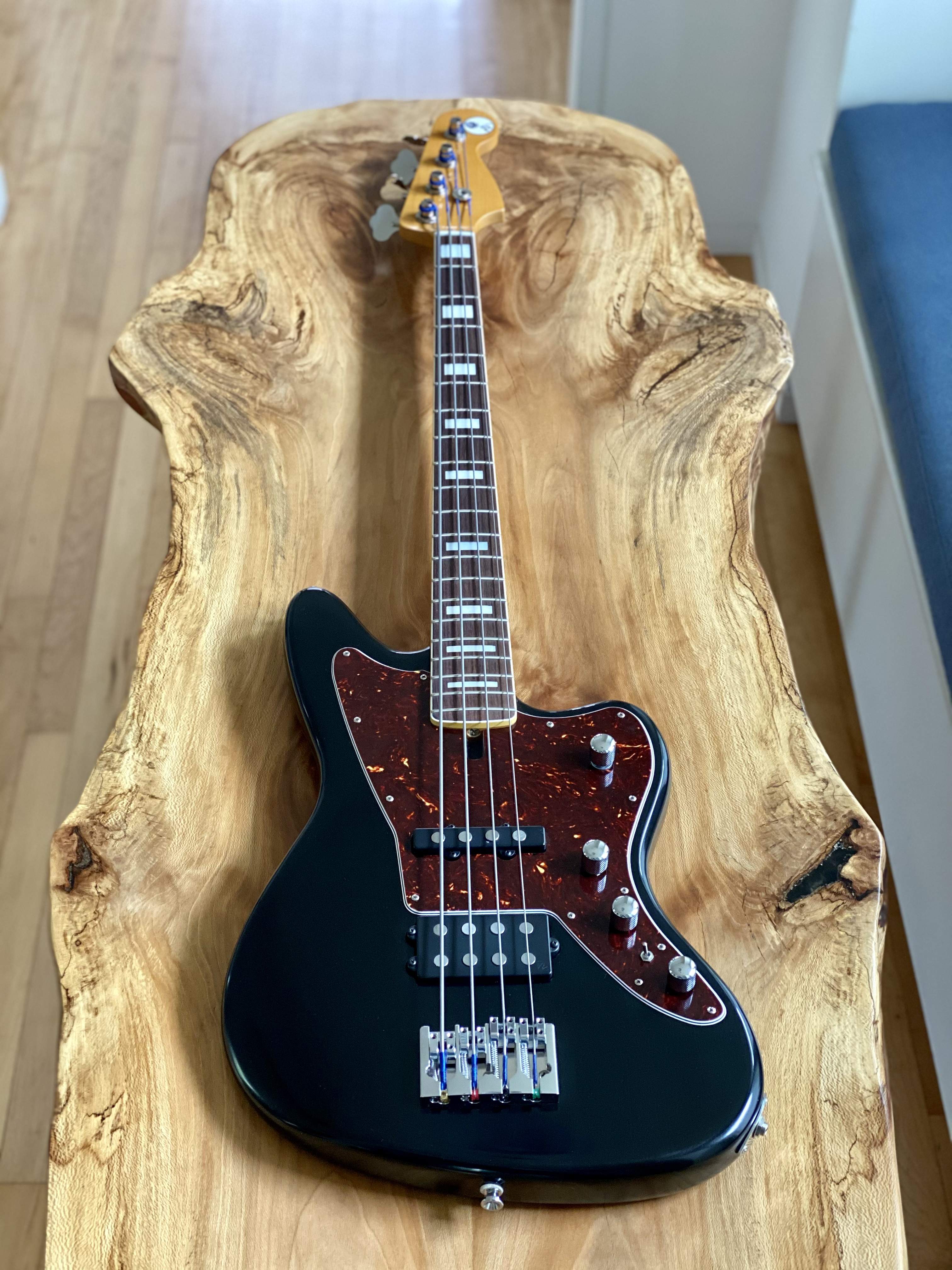
Partsmaster bass question. I refinished a loaded Warmoth body, acquired via the TB classifieds, and added an Allparts neck. Bass plays and sounds great. But the A-type Hipshot bridge doesn’t quite give me enough intonation adjustment range for the G string.

  • One solution, would be to move the bridge 3/16” close to the nut.
    • Looking at the picture and recollecting the setup, it's entirely possible that if I move the bridge forward, the E string no longer intonates. :bored:
  • Alternatively, I could drop in a different bridge.
    • Title edited to reflect the fact that this is likely the best path forward.

Visually, I like the current bridge. The drop in stringing is rad. But it does have a sharp corner that I feel when palm muting.

Anyone with a keen eye and experience with multiple bridges have a recommendation?

Alternatively, are there any other adjustments that I should look at?

Here’s the bass:
4EDF25F4-A82F-430A-8CDA-1C7E036C01E2.jpeg
763B5331-C879-4D6A-9D16-CA5F1EC270B5.jpeg
56D87115-6E3E-4A8F-B7A3-9A383B72EBDF.jpeg
 
Last edited:
The A Style bridge is a fantastic (as the Brits like to say) piece of kit. Move it forward to the proper location, as it was not installed where it is supposed to be. Did you install the bridge? If Warmoth had, perhaps the Allparts neck is not to spec?
 
  • Like
Reactions: DC in ATX
The A Style bridge is a fantastic (as the Brits like to say) piece of kit. Move it forward to the proper location, as it was not installed where it is supposed to be. Did you install the bridge? If Warmoth had, perhaps the Allparts neck is not to spec?

Right. The bridge is installed at the factory location, so to speak, as drilled by Warmoth.

But the parts are from two different aftermarket manufacturers. Different manufacturing tolerances could account for the fact that I can't quite get the G-string to intonate. It's close enough that I tried increasing string diameter as a fix. That didn't quite close the gap.
 
Partsmaster bass question. I refinished a loaded Warmoth body, acquired via the TB classifieds, and added an Allparts neck. Bass plays and sounds great. But the A-type Hipshot bridge doesn’t quite give me enough intonation adjustment range for the G string.

  • One solution, would be to move the bridge 3/16” close to the nut.
    • Looking at the picture and recollecting the setup, it's entirely possible that if I move the bridge forward, the E string no longer intonates. :bored:
  • Alternatively, I could drop in a different bridge.
    • Title edited to reflect the fact that this is likely the best path forward.

Visually, I like the current bridge. The drop in stringing is rad. But it does have a sharp corner that I feel when palm muting.

Anyone with a keen eye and experience with multiple bridges have a recommendation?

Alternatively, are there any other adjustments that I should look at?

Here’s the bass:View attachment 4297632View attachment 4297633 View attachment 4297638

I'll assume the G 12th fretted is flat when compared to the 12th harmonic. Can you advance the G saddle so it's even with the D saddle?

Riis
 
I'll assume the G 12th fretted is flat when compared to the 12th harmonic. Can you advance the G saddle so it's even with the D saddle?

Riis

If I advance the G saddle any further, it falls off the screw.

The D string intonates, but it's at the bleeding edge of the bridge. The G string is advanced as far as I can adjust it.

If it appears otherwise in the photos, that may reflect the difference in saddle height rather than the adjustment distance, so to speak. I've also made adjustments since I tool these assembly photos.
 
  • Like
Reactions: Zooberwerx
If I advance the G saddle any further, it falls off the screw.

The D string intonates, but it's at the bleeding edge of the bridge. The G string is advanced as far as I can adjust it.

If it appears otherwise in the photos, that may reflect the difference in saddle height rather than the adjustment distance, so to speak. I've also made adjustments since I tool these assembly photos.

Standard line of questioning:

*Set your witness points?

*What strings are you using?

*How flat are we talking?

Riis
 
Standard line of questioning:

*Set your witness points?

*What strings are you using?

*How flat are we talking?

Riis


Yes, good idea to start with the basics. Thank you for talking me through it.

WITNESS POINTS. The nut is shaped properly. I shaped that from a bone blank. So, I know it is good. The saddle insert is as shipped from the OEM. I should double check that it's not turned around backwards or something silly. Maybe sharpening that witness point, so to speak, would fix the problem. These are roller saddles. So nothing to adjust here.

STRINGS. Pyramid Gold Flatwound. These strings were properly crimped prior to installation and are properly wound. I had a fair amount of anxiety about that. So, I did my homework and adhered to the best practices.

HOW FLAT? By about a gnat's ass. Maybe not more than 1/16". Definitely not more than 1/8". To my ear, the intonation falls off around the 12th fret. The bass sounds great as long as I am playing on frets 0 through 12; it starts to sound flat above 12.
 
Last edited:
Yes, good idea to start with the basics. Thank you for talking me through it.

WITNESS POINTS. The nut is shaped properly. I shaped that from a bone blank. So, I know it is good. The saddle insert is as shipped from the OEM. I should double check that it's not turned around backwards or something silly. Maybe sharpening that witness point, so to speak, would fix the problem. These are roller saddles. So nothing to adjust here.

STRINGS. Pyramid Gold Flatwound. These strings were properly crimped prior to installation and are properly wound. I had a fair amount of anxiety about that. So, I did my homework and adhered to the best practices.

HOW FLAT? By about a gnat's ass. Maybe not more than 1/16". Definitely not more than 1/8". To my ear, the intonation falls off around the 12th fret. The bass sounds great as long as I am playing on frets 0 through 12; it starts to sound flat above 12.

*Set your witness points by firmly mashing down the string on the fretboard side of the nut and saddle.

*Nice strings!

*Are you using a tuner?

*Grab your tape measure. The distance from the front of the nut to the 12th fret should be 17" (...if 34" scale)...17" from 12th fret to top-center of G saddle.

Riis
 
  • Like
Reactions: DC in ATX
*Set your witness points by firmly mashing down the string on the fretboard side of the nut and saddle.

*Nice strings!

*Are you using a tuner?

*Grab your tape measure. The distance from the front of the nut to the 12th fret should be 17" (...if 34" scale)...17" from 12th fret to top-center of G saddle.

Riis

Thanks, Riis. This is news you can use.

  • Witness points are fully seated (I’ll double check the angle at the nut in the morning for good measure)
  • Tuner is a Sonic Research ST300 strobe tuner (I can double check the settings, but the cure settings work on all of my other basses.)
  • The 17” measurements off of the 12th fret check out per my wife’s aluminum yardstick, which is probably a better reference here than one of my tape measures (since tapes sag in the middle)
    • My guesstimate that the saddle wants to move 1/16” closer to the nut, also checks out per the ruler.

Double checking the saddle locations on the E and A strings, there’s room to move the bridge 1/8” close to the nut. That’s starting to seem like the best path forward.

Before doing so, it’s very helpful to rule out anything else. Thanks for walking me through those steps.
 
  • Like
Reactions: Zooberwerx
I mentioned the tuner as you referenced "...to my ear". Does the tuner corroborate this up 'n down the fretboard?

Riis

The tuner corroborates the fact that the G string doesn’t intonate properly. But that’s looking specifically at the open string vs. the fretted 12th. I should verify that it does indeed start off true on frets 1-5, for example.

To my mind, if it’s not intonating properly anywhere on the fretboard, that’s a nut slot problem or a string problem. If it increasingly loses intonation as I play up the fretboard, that’s an saddle location problem.

I’ve had bad strings before and I’ve cut nut slots that weren’t angle properly, which resulted in a wandering witness point. So, I know what those problems are all about. It’s bad everywhere.

in this case, everything sounds sweet—except high up the fretboard on the G string. The tuner, my ear and warbling overtones all tell the same story.
 
  • Like
Reactions: Zooberwerx
Thinking this through:

  • if Warmoth drilled the bridge screw holes, I am confident they are properly located
    • I’d rather not move these holes and goon someone who might be using this body with a Warmoth neck in the future (that person could be me)
  • The other place I can pick up 1/16” is in the neck pocket
    • On an unfinished bass, that is not too hard
    • The nitro finish is susceptible to chips if I do this now
Since there’s a downside to both of these options, I am going to find a different bridge. I just need a a tiny bit more adjustment in the intonation range. A new bridge doesn’t require any modification to the body or neck.
 
in this case, everything sounds sweet—except high up the fretboard on the G string. The tuner, my ear and warbling overtones all tell the same story.
The warbling overtones may be a hint that the pickups are too close to the strings. That can cause intonation issues. May not be the problem in your case, but wouldn't hurt to lower the pickups and see if the situation improves.
 
  • Like
Reactions: Lobster11
The warbling overtones may be a hint that the pickups are too close to the strings. That can cause intonation issues. May not be the problem in your case, but wouldn't hurt to lower the pickups and see if the situation improves.

Good point. I’ll check this. I typically set the pup height per a ruler based on conventional wisdom. But these are oversized pole pieces.
 
The warbling overtones may be a hint that the pickups are too close to the strings. That can cause intonation issues. May not be the problem in your case, but wouldn't hurt to lower the pickups and see if the situation improves.

The pickup mounting provides a very generous distance off of the poles for all of the strings. This is especially true for the G string, as the pups are lowest on that edge (which is backassward). I should revisit the pole height adjustments for string-to-string balance and optimal tone. But that distance isn't likely impacting the apparent intonation on the G string or elsewhere.

For good measure, I checked the neck position. It looks pretty good. But there's likely room to adjust the neck in the direction of the E string. I'll tweak that this weekend and see if that doesn't pull my G string sharp by an appropriate amount. It would be cool if that did the trick.

Thanks for chiming in, BTW. I was literally searching your posts for relevant advice when you posted to this thread.
 
Last edited:
  • Like
Reactions: Joshua