• TalkBass has been independent since 1998. Add your voice.
    Create a free account to reply to discussions, view embedded media, and browse with fewer display ads.
    Join freeLog in
    Want zero display ads or expanded classifieds tools? Compare plans.

New Fodera "Settling" in

JPMcGuire

Supporting Member
Jul 13, 2008
2,328
3,462
Lake Orion, Michigan
Ive had the experience working with Fodera over the past several years on three custom builds. My most recent build I found has changed significantly in tone over the past several weeks. I thought it was a myth/or more subtle effect, but my experience changed my opinion.

My bass was very aggressive the first day I pulled it from the case (bright and high mid emphasis). over the last two weeks the bass has evened, warmer and richer, but still possess the original DNA of the inherent voice. Even enough I had to raise the back pickup to bring back the bite. I love the way its maturing.

Fodera mentioned it takes a month or so for the glue joints, screw attachments, etc. to remove that bound in high residual stresses that occurs in new construction. Playing/vibrations help to remove the bound up stress points a little quicker. This process I assume continues but slows over time. Like my old pre cbs fenders - they do not move one bit no matter what is temp, humidity etc.! They sound very "stress free". This makes sense to me and I use this vibration technique in my day job sometimes to remove residual stresses in weld joints, etc. as an example

Anyone else have this experience?
 
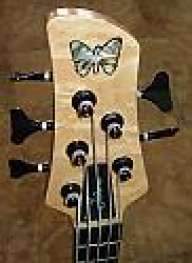
Heres some pics
 

Attachments

  • IMG_3208.jpeg
    IMG_3208.jpeg
    161.3 KB · Views: 89
  • IMG_3207.jpeg
    IMG_3207.jpeg
    183.8 KB · Views: 99
  • IMG_5825-Edit.jpeg
    IMG_5825-Edit.jpeg
    91.9 KB · Views: 101
I’ve heard the same thing in a bass, but it was a bass I purchased used so I know it was a matter of my ears becoming accustomed to what was a different sound than my previous bass along with a high likelihood of my technique subtly and unconsciously changing to fit it. Could be happening to you too.
 
To me that just sounds like new strings going from new to not so new and one getting used to hearing the bass.
I don't know - It ay also be what you think it is..

That said... I do believe in instruments breaking in.
 
Last edited:
Interesting, Yamaha has some process in their guitars that suppose to help to “brake them in”

From Yamaha website “...Stress found between parts like finish, woods, body, neck, fingerboard, nut, bridge, etc., must be released before all of the parts can resonate together as an instrument. It takes time and a lot of playing for this to happen. Using IRA technology, stresses like those between the finish and wood are release by applying specific vibrations to the completed guitars. Once this treatment is complete, the guitar responds accurately to the guitarist's performance, and produces sound more easily...”
 
I’ve heard the same thing in a bass, but it was a bass I purchased used so I know it was a matter of my ears becoming accustomed to what was a different sound than my previous bass along with a high likelihood of my technique subtly and unconsciously changing to fit it. Could be happening to you too.

Agree. I’ve noticed something similar with almost every bass I ever purchased. And it didn’t need to be (nor was it) with anything near as high end as that beautiful Fodera. I think we all make subtle adjustments to our technique once we get some experience under our belts to bring out the best each of our basses have to offer. :thumbsup:
 
  • Like
Reactions: JPMcGuire
I would like to see the results of a double blind test of this before I buy into it being an objective, measurable phenomenon.

It's entirely believable to me that an acoustic instrument (like a double bass) undergoes a change in sound over time, but a solid bodied bass? ...and, over only two weeks?

What can I say? I'm a skeptic. Some people also claim to be able to hear the difference in their stereo systems when the speaker cables are suspended off the ground, versus being laid on the floor.
 
Yes. This describes exactly what I’ve experienced in every new build. Some have a subtle change. Some have more change

Interesting, Yamaha has some process in their guitars that suppose to help to “brake them in”

From Yamaha website “...Stress found between parts like finish, woods, body, neck, fingerboard, nut, bridge, etc., must be released before all of the parts can resonate together as an instrument. It takes time and a lot of playing for this to happen. Using IRA technology, stresses like those between the finish and wood are release by applying specific vibrations to the completed guitars. Once this treatment is complete, the guitar responds accurately to the guitarist's performance, and produces sound more easily...”
 
  • Like
Reactions: Garret Graves
Interesting, Yamaha has some process in their guitars that suppose to help to “brake them in”

From Yamaha website “...Stress found between parts like finish, woods, body, neck, fingerboard, nut, bridge, etc., must be released before all of the parts can resonate together as an instrument. It takes time and a lot of playing for this to happen. Using IRA technology, stresses like those between the finish and wood are release by applying specific vibrations to the completed guitars. Once this treatment is complete, the guitar responds accurately to the guitarist's performance, and produces sound more easily...”

Yamaha's process takes weeks of vibration on a rig to replicate years of being played in, then everything is checked and tightened before the instrument is sold. I'm not sure playing an instrument for a few weeks could have the same effect.

Do instruments bed in? Absolutely. Is the shift dramatic and would it be noticeable in a few weeks? Unlikely, in my opinion. Our ears do attenuate to a particular instrument though. If I play my Warwick Thumb for a few weeks then switch to my Yamaha Attitude LTD II, the Yamaha sounds almost overpoweringly fat and bassy at first. Once I get used to it, it sounds fine and then going back to the Warwick, it sounds nasal and compressed until I get used to it again.