

Enjoy the benefits of a premium membership!
Upgrade Account
-
TalkBass has been independent since 1998. Add your voice.
Create a free account to reply to discussions, view embedded media, and browse with fewer display ads.
Join free Log in
Want zero display ads or expanded classifieds tools? Compare plans.
You are using an out of date browser. It may not display this or other websites correctly.
You should upgrade or use an alternative browser.
You should upgrade or use an alternative browser.
New Fodera "Settling" in
- Thread starter JPMcGuire
- Start date
More options
Who Replied?

Strings, not the Fodera, broke in. Or your ears got accustomed to the new bass tone.

I’m a firm believer that it takes a bass several weeks/months/years to fully settle in. The wood/joints/glue/hardware etc all have to settle in. The vibration of the strings, the sweat and oils off the hands & body etc all play a role in that ‘settling’ process IMO. I always tell folks a brand new instrument has to realize it’s no longer a tree/wood/separate parts to start functioning like it’s a bass.
It may all be BS, as I have no scientific research to back this up. That’s just my thoughts from my own experiences with owning brand new instruments.
Play the hell out of that beautiful new Fodera and it should only get sweeter with age!
It may all be BS, as I have no scientific research to back this up. That’s just my thoughts from my own experiences with owning brand new instruments.
Play the hell out of that beautiful new Fodera and it should only get sweeter with age!

OP, you could've just done a normal NBD and even added recordings to show off its sweet tones, but adding claims that you know most people are going to doubt is a sure-fire way to get a bunch of us who can't stop ourselves from calling BS on BS to go forth and fail to just let you enjoy your nice things.
Curious to see if this manages to not get closed.
Curious to see if this manages to not get closed.
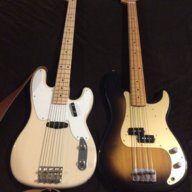
I’m a firm believer in the “break in” period. I’ve noticed it with every brand new bass I’ve bought. My experience tells me that it takes a lot longer than a month and that the difference is not going to be nearly as dramatic as with a pure acoustic instrument .

I have multiple basses, and play almost every weekend. I pick which bass I am going to play a weeke ahead of time, and practice with it all week. I notice my bass (whichever one I pick) getting better sounding every week. Part of what you’re hearing is the strings breaking in. The rest is happening between your ears.
You’re bonding with it. It’s a good thing.
You’re bonding with it. It’s a good thing.
Yeah I'm calling BS on this one. If anything it's just the strings breaking in. I know you said that you put on new strings and still noticed the change, but it's probably your brain playing tricks on you. There's really no way to prove or disprove it since we don't have before and after recordings...so I guess there's that?

I have definitely had this happen on ukulele. With that instrument, the articulation/clarity and “shrillness” is really evident. My newest Kamaka became waaaay warmer over its first month, even with two string changes. I’ve never observed it happen with a bass but wouldn’t doubt the effect, especially on a Fodera with sections in the top, neck joint, etc all settling.


I guess all those basses that have been on the floor at GC for months or years should all sound fantastic.

Here’s an article that makes some sense. I’m referring to a brand brand new instrument like this article sites.
Invalid Link Removed
Invalid Link Removed
I heard this in the custom Alembic I had built. Mica Wickersham would tell me, 'sooner or later the wood will realize it's NOT a tree anymore', and I believe it, albeit some instruments manifest this more that others. Relatively rare in any case. And it all depends on the ears in question.
Yamaha takes care of this process when it builds its higher end BBP Line.
“I.R.A. (Initial Response Acceleration)
Invalid Link Removed
Any bass benefits from being "played in," a process in which the instrument matures and opens up as the stresses between the wood and finish, neck and fingerboard, and body and hardware are released, resulting in better sound and playability.
Yamaha’s exclusive Initial Response Acceleration (IRA) technology releases those stresses by applying specific vibrations to the completed instruments as part of the crafting process and gives a "played in" bass from day one.”
Believe the hype. Look at the big board!!!
“I.R.A. (Initial Response Acceleration)
Invalid Link Removed
Any bass benefits from being "played in," a process in which the instrument matures and opens up as the stresses between the wood and finish, neck and fingerboard, and body and hardware are released, resulting in better sound and playability.
Yamaha’s exclusive Initial Response Acceleration (IRA) technology releases those stresses by applying specific vibrations to the completed instruments as part of the crafting process and gives a "played in" bass from day one.”
Believe the hype. Look at the big board!!!
I have found in basses with more laminated pieces like an alembic, Fodera custom deluxe etc the effects can be greater imo. A fun discussion. I knew would prompt some interesting responses! Lol
I heard this in the custom Alembic I had built. Mica Wickersham would tell me, 'sooner or later the wood will realize it's NOT a tree anymore', and I believe it, albeit some instruments manifest this more that others. Relatively rare in any case. And it all depends on the ears in question.

New bassist, old drummer here. I had a custom drum kit built in 2007, and was initially disappointed with the sound. Over many hours of playing, they have definitely changed in positive ways, overall a more pleasant drum sound. Is it my finding the complementry heads / learning how to play them to match my ear? Probably to some degree, but I really think something additional has changed that improved the musicality of the drums.
On a side note, the drums are clear lacquered maple, and over time have really developed a lovely patina. While they were giggled quite a bit, they were rarely exposed to smoky environments (these were my babies, I had a separate kit for smoky bar gigs), so the change is really just natural aging
On a side note, the drums are clear lacquered maple, and over time have really developed a lovely patina. While they were giggled quite a bit, they were rarely exposed to smoky environments (these were my babies, I had a separate kit for smoky bar gigs), so the change is really just natural aging
Last edited:
Makes sense. Sustain, volume and evenness of frequency changes, especially freshly built first week or so
Yamaha takes care of this process when it builds its higher end BBP Line.
“I.R.A. (Initial Response Acceleration)
Invalid Link Removed
Any bass benefits from being "played in," a process in which the instrument matures and opens up as the stresses between the wood and finish, neck and fingerboard, and body and hardware are released, resulting in better sound and playability.
Yamaha’s exclusive Initial Response Acceleration (IRA) technology releases those stresses by applying specific vibrations to the completed instruments as part of the crafting process and gives a "played in" bass from day one.”
Believe the hype. Look at the big board!!!


Build an instrument. Make it well, and when you glue it, do so with good mating surfaces, proper glue technique, and the right clamps.
Once the glue dries, that joint is not “settling in” if it was clamped properly. It’s done. It’s already settled in.
Once the glue dries, that joint is not “settling in” if it was clamped properly. It’s done. It’s already settled in.

Hmmm, I'm nor sure I buy the "settling in" theory... I think I'll need to buy a new Fodera and test this myself 
Unless you are comparing before and after recordings of the bass made with the same settings playing the same music, it's more likely that you're just becoming accustomed to the sound of the bass. The more you hear, see, taste, whatever, a certain thing, the more familiar it becomes the more comfortable it becomes, the more you like it. That's how our brains work.
Latest posts
-

-

-
 How can Fender release a "Vintage" series with an unplayable bridge?
- Latest: MIJ Fender Guy
-

